September 8, 2026
Merck’s EXPrESSIVE program is investigating the efficacy of alimatravir (AMI) for monthly oral PrEP. With support from the Gates Foundation, AVAC works to ensure there is strong, consistent engagement with community representatives to influence the design and implementation of the trials, with an eye toward future rollout and access planning for AMI.
Leveraging expertise in community engagement and human-centered design (HCD), AVAC worked in partnership with community-based organizations on three continents to co-create communications materials for the EXPrESSIVE-11 trial – conducted among men who have sex with men (MSM), transgender, and non-binary people – that are driven by community perspectives and lived realities. The result is a series of tailored, localized materials designed to foster community interest, awareness, and engagement in the trials and in the novel concept of a monthly oral formulation. This work represents a transformative approach to community engagement in materials development for clinical trials.
Starting with communities
HCD is a participatory, iterative process that centers communities in the development of research, materials, processes, or services to understand and incorporate their perspectives, preferences, and lived experiences into the final product. HCD uses creative participation techniques to fully explore and understand community perspectives, rather than traditional survey methods. The co-creation process to develop the EXPrESSIVE-11 communication materials started before the trial began.
“What was different about this process was the timing”, says AVAC’s Senior Program Manager Kate Segal, who led this work. “We were really thinking about community engagement and awareness raising early on. Normally it happens when the product starts to go to market, but we had community realities shape the materials from before the trial began. Because the insights centered on their holistic lives and lived experiences, they can be a starting point to think about future demand generation much sooner instead of waiting for product rollout.”
The project focused on eight trial countries in three regions: Argentina, Brazil, and Peru in Latin America; Kenya and South Africa in Africa; and the Philippines, Thailand, and Vietnam in Asia. In each region, AVAC partnered with local organizations – Fundación Huésped and Fiocruz in Latin America, Matchboxology and NENDO in Africa, and APCOM in Asia – to engage local facilitators directly from the community who were trained on the methodology and recruited fellow community members for the HCD sessions. This approach ensured that the right participants were reached, fostered trust among participants, and generated more candid and honest insights.
“We partnered with local community organizations so that this work was really rooted in the community in terms of who was facilitating these workshops and how participants were recruited,” says Segal. “Organizations were already working with the focus populations, so they were able to recruit from communities where they already had relationships and trust. Community was front and center throughout the process.”
Partnering with communities, and allowing them to define the process, concept, and design ensured that materials directly reflected the people the study intended to engage. Looking back on the partnership with AVAC, Luciana Kamel, who leads the Community Education Team for HIV studies at Fiocruz in Brazil, said:
“What stood out most to me was the trust in our work and the respect for the process we have developed with the community. That trust gave us the space to build the materials in a way that was grounded in local realities and in the perspectives of the people we were working with.”
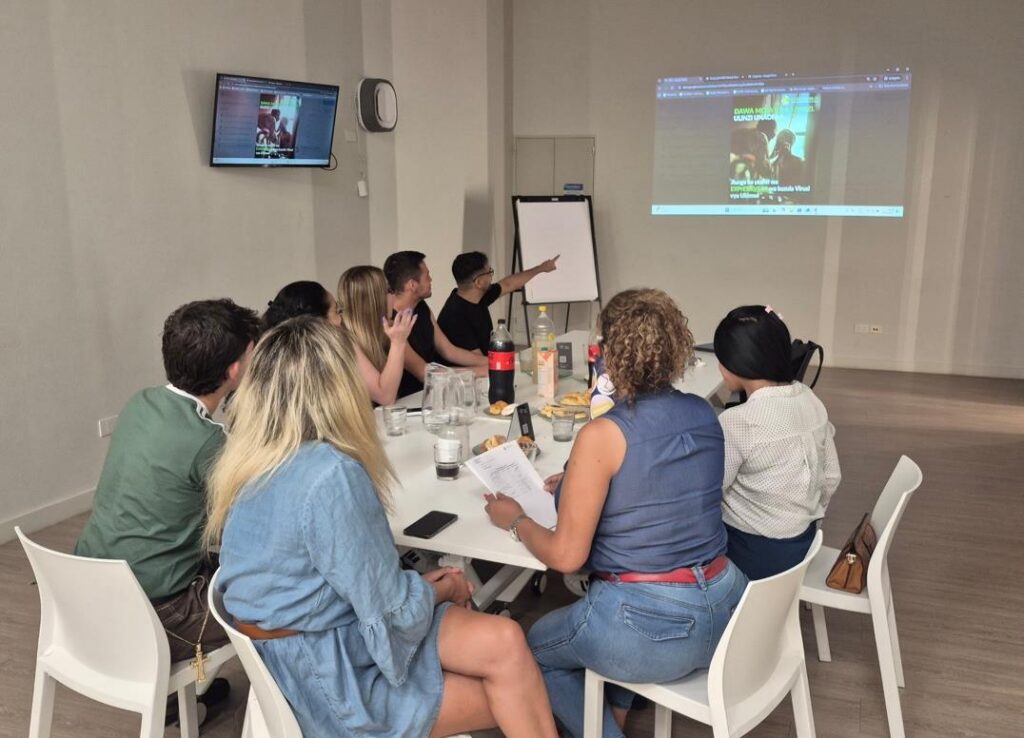
Focus group discussion held with community members for co-creation of EXPrESSIVE-11 communication materials
Turning community perspectives into recruitment materials
The process began with small group HCD immersions, or in-depth focus group discussions. These discussions created space for participants to explore how HIV prevention fits within their lives across four domains – Home, Heart, Health, and Hustle – what might make a monthly prevention option relevant to them, and how they wanted their communities to be represented in engagement materials.
“One thing that stayed with me,” recalls Fundación Huésped’s Gastón Devisich, “was how consistently participants pushed us away from images that felt too aspirational, overly symbolic, or disconnected from their everyday lives. They wanted to see themselves — not an idealized version of the community. That meant thinking about much more than gender or sexuality. It was also about body diversity, age, ethnicity, socioeconomic background, and the places and situations in which people actually live, socialize, connect, and make decisions about their health. In Argentina and Peru, this led us to deliberately recreate everyday moments of intimacy and social connection rather than relying on conventional representations of HIV prevention or sexuality.”
Insights from the local immersions informed two global campaign concepts which were then shared with community participants for feedback. After synthesizing feedback from each country and multiple rounds of review, a single global campaign with unified messaging and imagery that resonated with a broad audience was finalized. Then, the global materials were adapted to fit the local contexts of each region and ensure cultural relevance. The adaptations included language translations, visual adaptations, refined messaging, and other design elements that reflected local communities. Given the diversity of the communities represented among the potential EXPrESSIVE-11 trial participants, this was a critical step in the process to ensure local resonance.
Numan Afifi, Senior Policy and Research Officer at APCOM in Thailand, reflected on the value of locally adapting the materials and what it looked like in practice:
“For me, that was the strongest part of the process. The materials felt more relevant because they were shaped by local communities, languages, cultures and experiences. We were able to talk about how people in our own contexts understand HIV risk, stigma, privacy, and what might make a monthly pill feel realistic and useful in their lives.”
The final materials were shared first with EXPrESSIVE-11 trial sites, some of which sought local IRB approval to use as trial recruitment materials, and at the International AIDS Conference in July 2026. With the trial almost fully enrolled, the materials will be used for continued engagement around the trial.
Representation in the final product
This process showcases a practical application of Good Participatory Practice – meaningfully engaging communities in clinical trial design and conduct from the start. Throughout this process meaningful community engagement meant establishing trust and ensuring local ownership of the process.
Kamel shared: “The biggest lesson from this experience was the possibility of developing materials based on our own realities and cultures, without a predefined vision imposed by the funder… Above all, I think the partnership that was established between us and AVAC was fundamental. The trust, openness, and respect for our work with the community made it possible to move beyond simply producing recruitment materials and instead build something that reflected the people and contexts the study was intended to engage.”
In an unexpected outcome, some participants chose to become the faces of the campaign themselves, embodying their call for images to truly look like them and their communities.
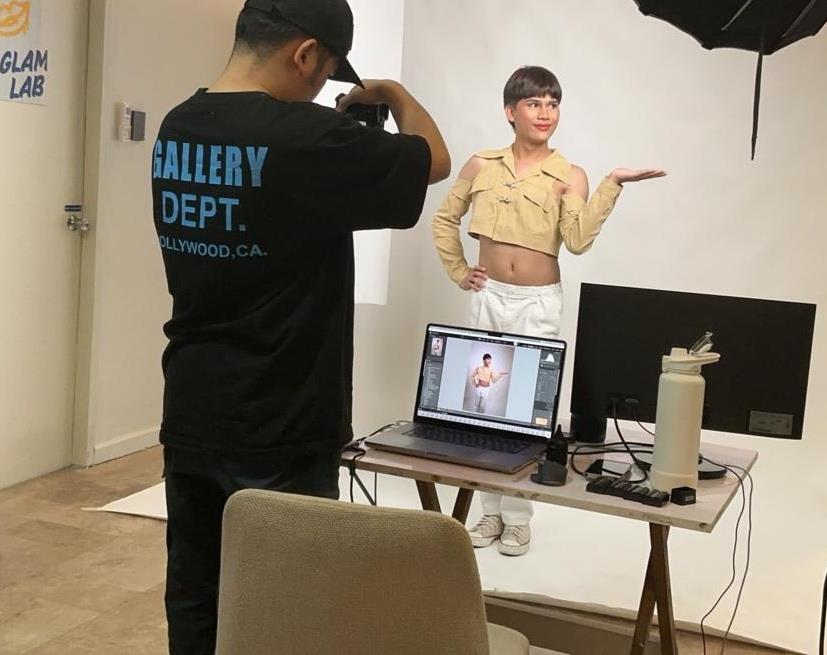
Community members who participated in the development of communication materials also posed as models.
As Segal reflected, “A lot of participants opted to be the models in these materials. We didn’t plan it that way, but we really heard that feedback, and they were really excited to participate in that way.”
For Kamel, what made that representation meaningful was when those same participants saw the printed posters at the Global Village during the AIDS 2026 conference: “They were very happy and excited to see themselves represented. For me, that was also an important part of the process: the people represented in the materials could recognize themselves in them and feel that they were part of something they had helped shape.”
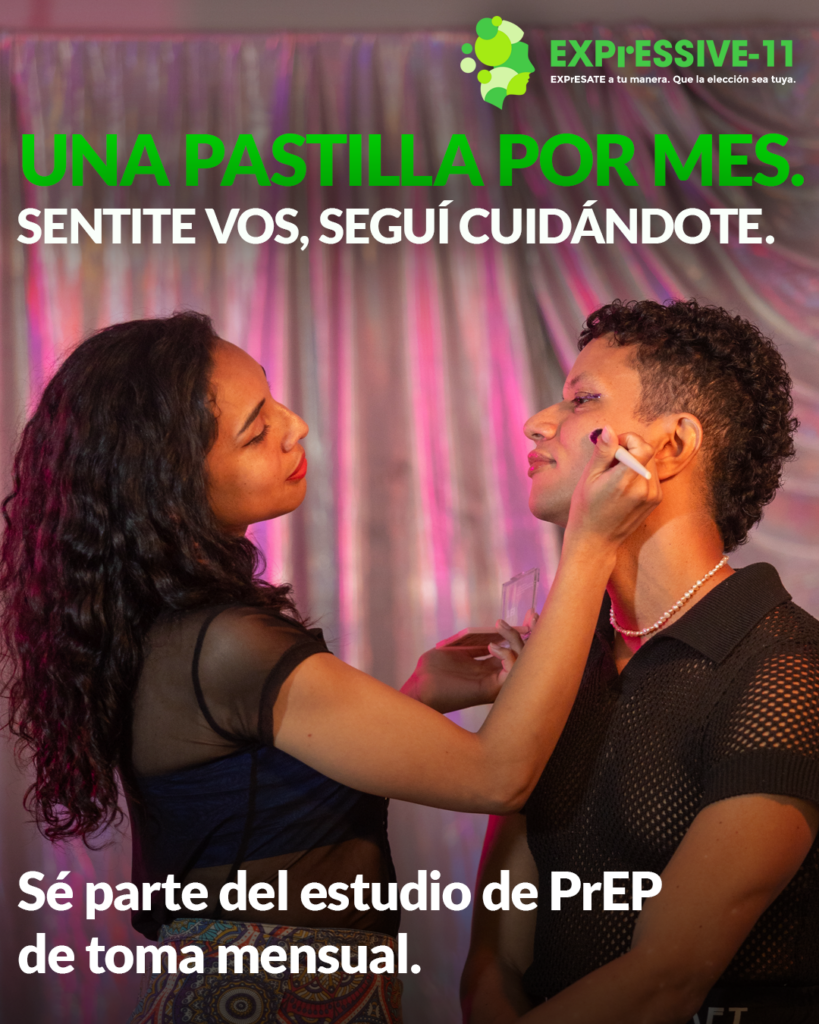
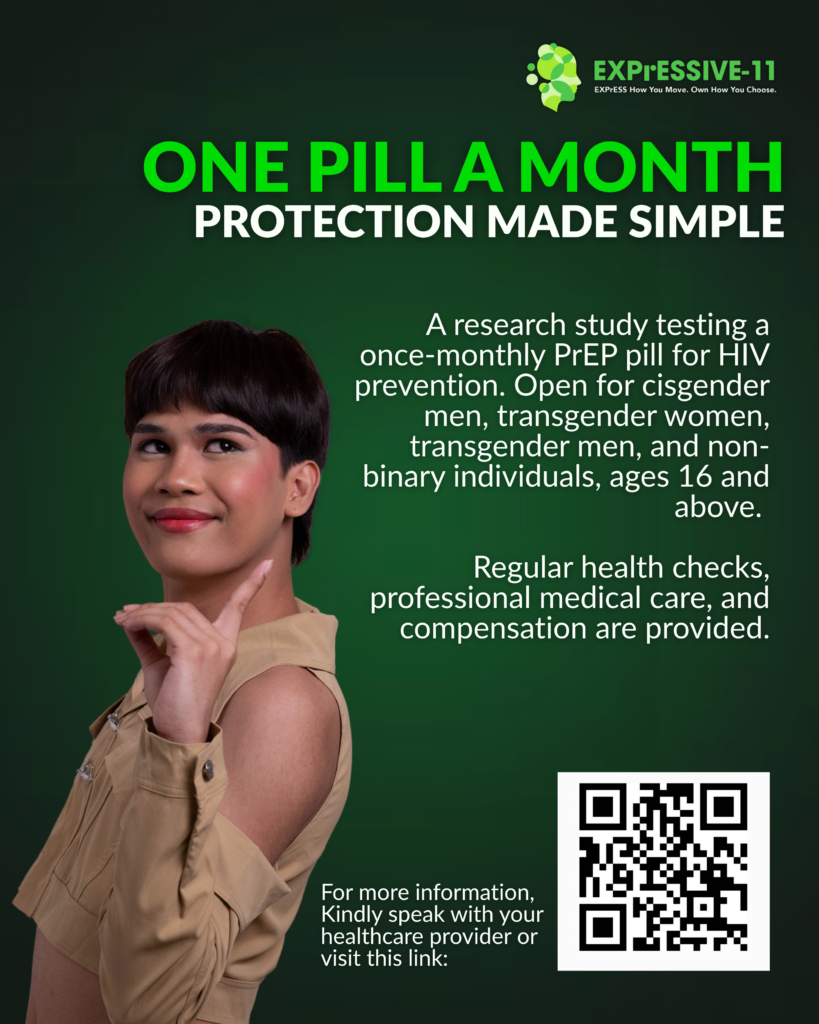
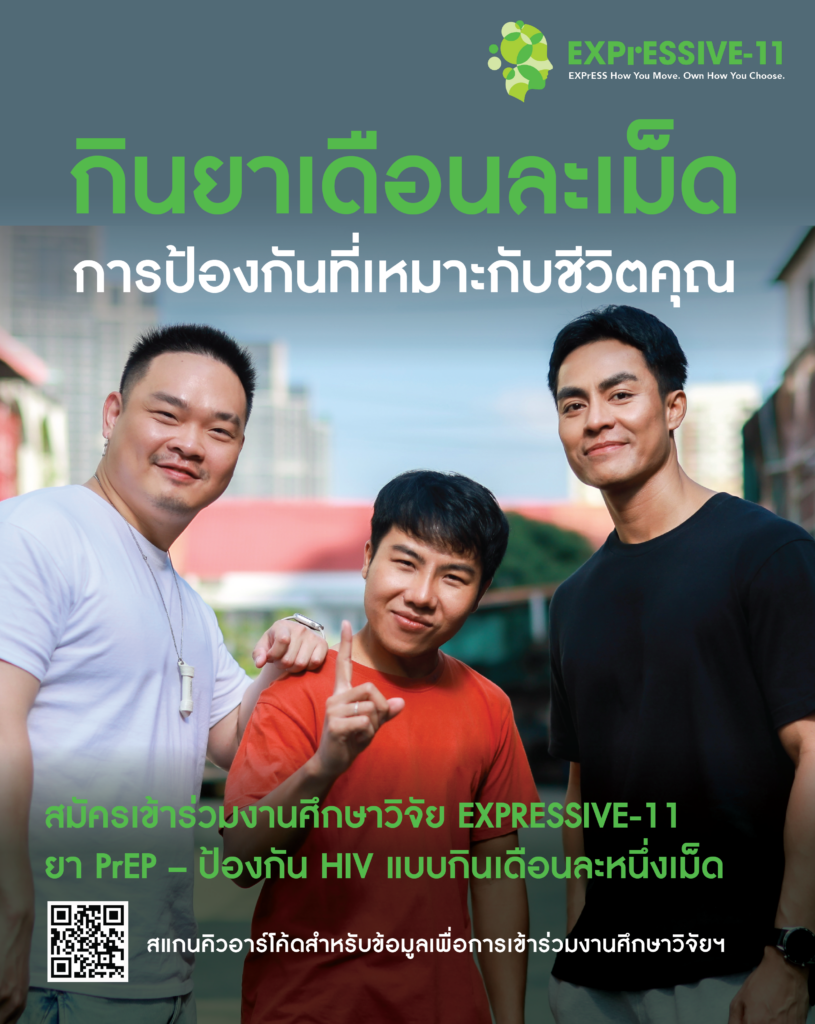

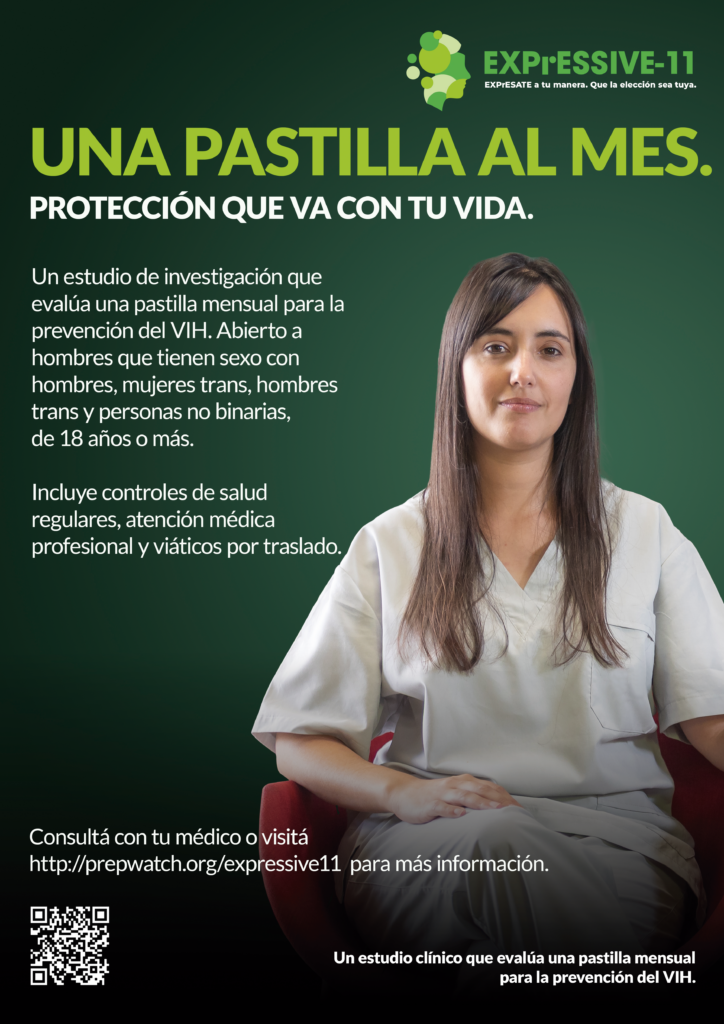



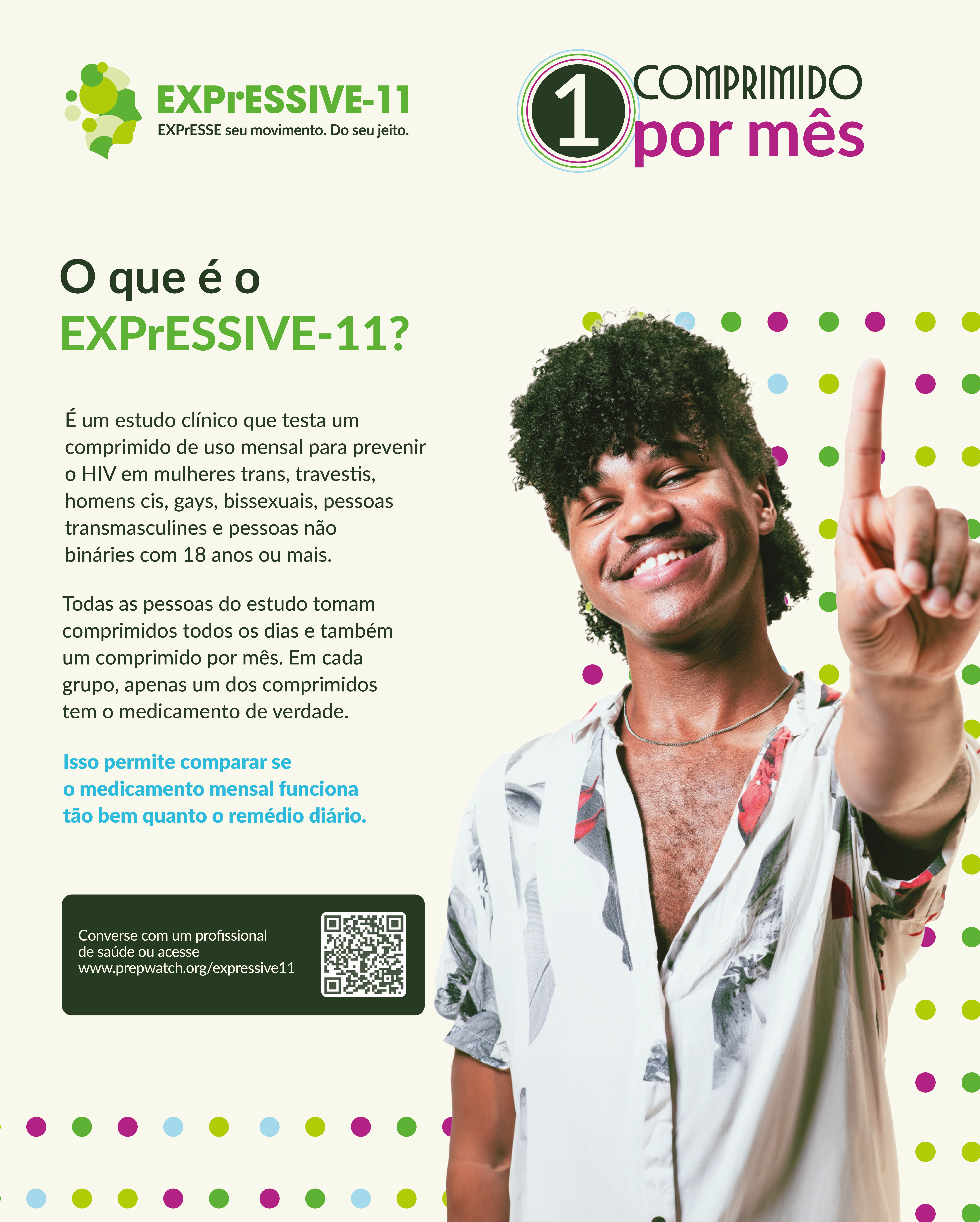
The final EXPrESSIVE-11 communications materials
Inclusivity not just in trials, but for product access too
The insights surfaced through the process can serve as a starting point for understanding how communities perceive a once-monthly oral PrEP pill beyond the trial, and what messaging is most likely to support demand generation if AMI is found safe and effective.
At the same time, this experience highlights that meaningful engagement cannot end once community input has been gathered or when the trial is complete. Merck/MSD’s recent voluntary licensing announcement, made while the trials are ongoing, represents a terrific opportunity in preparing for accelerated access to generics, although it also excludes most Latin American and some Asian countries from the voluntary license, reflecting recent roadblocks to accessing other PrEP products.
“I think it is important to be honest about both sides of this experience – how meaningful and powerful the co-creation process was, and also the uncertainty and concern about whether the people and countries who helped build this work will actually have equitable access to what emerges from it,” said Kamel.
Numan adds: “This is why I think community engagement needs to continue beyond the development of the materials. People should not only help shape how a product is introduced; their experiences and demands should also influence decisions around price, access, eligibility, and implementation.”
Kamel and Numan’s concerns highlight what needs to happen next. Creating materials that reflect people’s lives and priorities is valuable, but real-life impact is only achieved if the prevention products actually reach the communities they are meant to serve. Continuing the practice of GPP, intentional access planning well in advance of efficacy results by product developers, funders, advocates, communities, and other stakeholders will be critical to ensuring that meaningful community engagement translates into tangible access and impact.

“I think there is an important lesson in the timing of the process. This was the first time I have been involved in a process where communities were brought in this early to think about communications and demand generation for a product still in development, and that was a significant step forward. … So, while this represents progress compared with the usual timing of community engagement, it also shows how much earlier these processes need to begin if we genuinely want community input to shape implementation rather than simply prepare materials alongside an already-moving trial.”

“Developing these materials was an incredible experience, particularly because we were able to build something that reflected the real face and experiences of the community. As we have discussed in presentations, stigma and where people can actually access prevention are central issues.”
“Overall, I found the process valuable because it built both useful materials and stronger relationships between AVAC and us. It showed what is possible when there is trust, openness, and genuine respect for community knowledge. I hope we can carry that approach into future work… and continue pushing to ensure that the communities involved can actually benefit from the products they helped shape.”