Background
Alimatravir (AMI) is an investigational monthly pill for HIV prevention developed by Merck/MSD. AMI is currently in phase 3 efficacy trials: EXPrESSIVE-10 and EXPrESSIVE-11. EXPrESSIVE-10 launched in November 2025 among cisgender women in Kenya, South Africa and Uganda, and is anticipated to run through October 2027. EXPrESSIVE-11 launched in August 2025 among cisgender men who have sex with men, transgender men, transgender women and gender non-binary individuals in 16 countries (Argentina, Brazil, Chile, Colombia, the Dominican Republic, France, Guatemala, Kenya, Malaysia, Peru, the Philippines, South Africa, Switzerland, Thailand, the USA and Vietnam), and is anticipated to run through July 2027. If the EXPrESSIVE trials demonstrate safety and efficacy, AMI could enter the market as early as 2028.
Setting a new benchmark for access planning, Merck/MSD has already granted seven direct licenses to generic manufacturers to produce and market the drug in 129 low- and middle-income countries, including all of Africa and much of Asia, while the trials are still enrolling. The agreements would substantially accelerate the research to rollout process if AMI is found to be efficacious, but challenges remain to ensure future access is equitable and widespread among the populations that need it most. Several countries that are participating in the efficacy clinical trials are left out of the voluntary license territory, reflecting a broader trend of excluding Latin American countries and some Asian countries from voluntary licenses. Merck/MSD did subsequently sign a memorandum of understanding with Fiocruz, a Brazilian manufacturer, to supply AMI for Brazil and the region, but the terms, timing and next steps remain unclear. Furthermore, key populations in high-income countries also face access disparities.
An analysis presented at AIDS 2026 suggests that AMI could be manufactured at large scale by generics and sold for around $3 per person per year—potentially making it the least expensive ARV-based HIV prevention option ever brought to market. Introducing AMI with speed, scale and equity will require coordinated action across stakeholders, with communities at the center – a 2026 priority raised by communities in the People’s Research Agenda. Throughout the EXPrESSIVE program, AVAC has worked to facilitate strong, consistent community engagement, and continues to work with communities in preparation for trial results. If AMI is safe and efficacious, it would add a new option to the growing menu of HIV prevention methods – an important step towards expanding prevention choice.
AVAC will continue to share updates on the trials, results and access planning as developments are available.
Explore AVAC’s AMI Resources
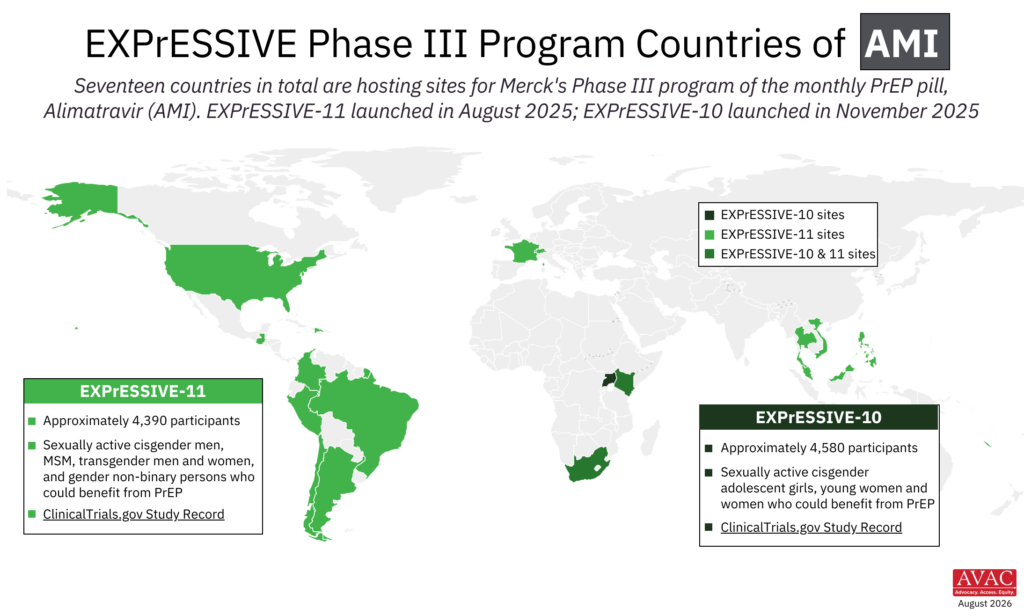
This map shows the 17 countries that are hosting sites for the Phase 3 efficacy trials of AMI, EXPrESSIVE-10 and EXPrESSIVE-11.
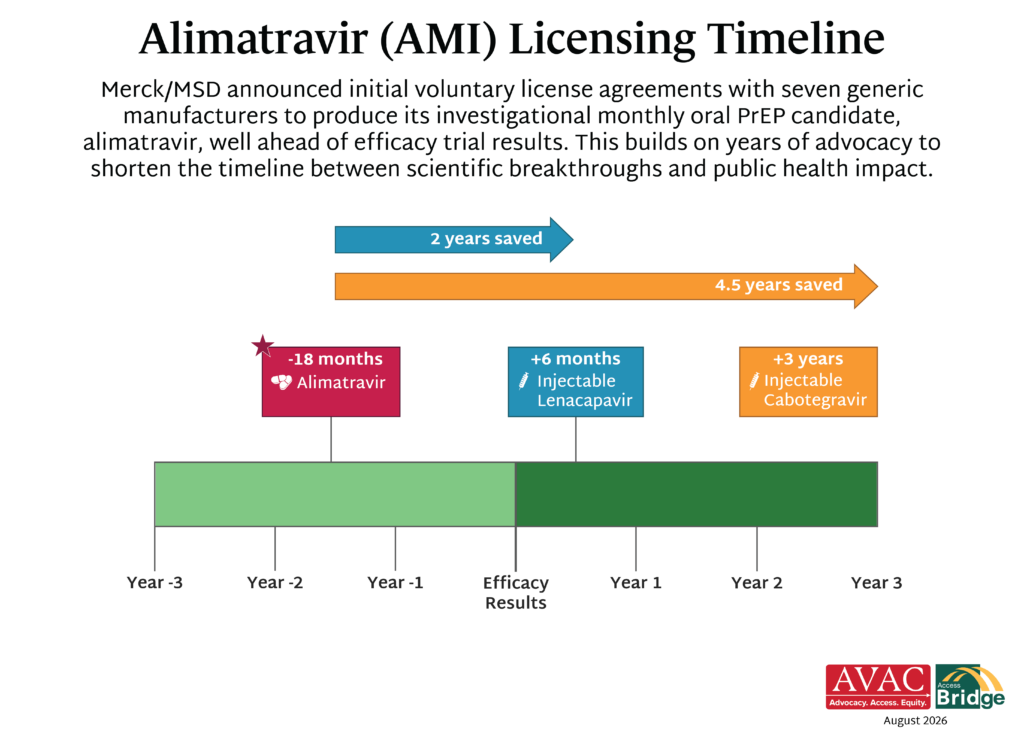
This timeline demonstrates the speed of generic licensing for AMI compared to lenacapavir (LEN) and cabotegravir (CAB).
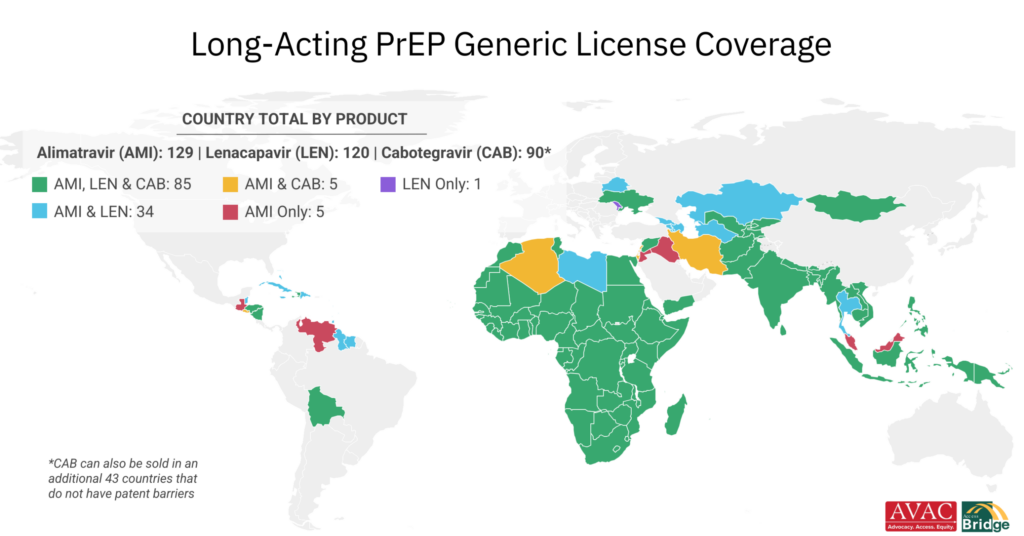
This map shows country coverage under current voluntary licensing agreements for generic versions of three long-acting PrEP products: AMI, CAB and LEN. This reflects publicly announced licenses and does not indicate product registration, availability or access within countries.

Downloadable materials to foster community interest, awareness and engagement in the EXPrESSIVE-11 trials, tailored to the local languages and reflecting the lived realities of communities in Argentina, Brazil, broader Latin America, Kenya, Philippines, South Africa, Thailand and Vietnam.
Read
Research
- Planning for Success: R&D Engagement for Alimatrivar and Beyond
AVAC’s work to ensure strong community engagement in the AMI program, ensuring the trials follow Good Participatory Practices (GPP), planning for accelerated access, socializing the concept of a monthly PrEP pill in focus communities early and mobilizing a comprehensive strategy for antiretrovirals (ARVs). - EXPrESSIVE-11 Clinical Trial Page
AVAC’s work on EXPrESSIVE-11 communications materials and a resource for potential participants to learn more about the trial. - Using a Transformative Human-Centered Design Approach to Co-Create Communication Materials for the Alimatravir Efficacy Trial, EXPrESSIVE-11
Impact of AVAC’s work with communities to create a series of localized materials designed to foster community interest, awareness, acceptance and engagement in the EXPrESSIVE-11 trial.
Access
- PxWire Volume 16, Issue 3
AVAC’s quarterly update on HIV developments from research to rollout, featuring an in-depth analysis of generic licensing for AMI and what it means for the field. The issue also features an explainer on generic licensing agreements and current coverage across long-acting prevention products, examines their promise for advancing affordable, equitable access and raises questions about the persistent and worrying gaps in these agreements. - AVAC and Access Bridge Applaud Monthly PrEP Pill Access Announcement; Call for Speed, Scale and Equity in Future Monthly Oral Alimatravir Introduction
AVAC and Access Bridge’s statement on what the AMI generic licensing agreement means for the field and what needs to happen next. - From Research to Access: The Community Statement from the Global Community Advisory Group (GCAG) on the Future of Alima (Alimatravir) for HIV Prevention
The EXPrESSIVE-10 GCAG’s statement on AMI reflects community perspectives and priorities around prevention choice, meaningful community engagement, equitable access and ensuring that communities have a voice as research progresses toward potential introduction.
Watch/Listen
- AVAC’s Take on AMI News at AIDS 2026
In this video, AVAC Executive Director Mitchell Warren unpacks Merck/MSD’s announcement on AMI generic licensing in the context of the broader HIV prevention landscape. - PxPulse Podcast: Next Up: A monthly pill for PrEP?
In this AVAC podcast, Merck/MSD Scientist Rebeca Plank and AVAC Regional Manager for Research Engagement Grace Kumwenda explain why a monthly pill could be so important to HIV prevention and how GPP is shaping the design and rollout of the trials.
In the News
- Merck Announces Initial Access Plans for Alimatravir, an Investigational Once-Monthly Oral HIV Pre-Exposure Prophylaxis in Phase 3 Development
Merck/MSD’s press release detailing its early access strategy for AMI, including voluntary licensing and plans to support regional manufacturing in Africa and Latin America if the product is approved. - #Aids2026: Daily pill. Monthly pill. Six-monthly jab. Why choice matters
This Bhekisisa article explores why offering people choices—including the potential addition of a monthly oral option like AMI—could help more people find a method that works for them. - With Hopes High for New H.I.V. Prevention Pill, Merck Takes Steps to Ensure Access
This New York Times article examines Merck’s plans for AMI and the promise of a new monthly HIV prevention option, while highlighting the need to ensure it is affordable and accessible to the people who need it most. - Monthly PrEP pill could be made for US$3 a year, but Latin America is shut out of generic licensing
This aidsmap article highlights the potential for AMI to be manufactured and sold at a very low cost, while raising concerns about Latin America being left out of generic licensing agreements and what that could mean for equitable access.