PxWire Volume 16, Issue 3
Takeaways
- Significant challenges persist in the wake of cuts to PEPFAR funding and programs, as the ripple effects continue to be felt across the field and organizations grapple with how to maintain services with fewer resources.
- Merck/MSD’s decision to provide generic manufacturing agreements for alimatravir (AMI) more than a year out from efficacy trial results is unprecedented—but not all advocacy demands were met.
- The HIV research pipeline continues to evolve, especially around long-acting interventions, including promising results for a new weekly pill for HIV treatment.
- Recent research has made combo bNAbs even more complicated, but the CAPRISA 012c study continues to deepen understanding of HIV and the immune system, and will continue to inform vaccine design, cure research and the next generation of prevention strategies.
This issue showcases updates presented at the AIDS 2026 conference in Rio de Janeiro, Brazil. As the field continues to grapple with the impact of PEPFAR funding cuts on HIV services, amfAR shared their latest analysis from the PEPFAR Pulse Study. AVAC’s latest infographic unpacks the current status of generic licensing agreements for long-acting PrEP products, including alimatravir (AMI), reflecting significant progress in speeding up access as new products enter the market, while also highlighting persistent and worrying gaps in these agreements. Recent trials on long-acting treatment and broadly neutralizing antibodies (bNAbs) for prevention were also shared at the conference. A new weekly pill for HIV treatment demonstrated non-inferiority, while a combination of two bNAbs did not provide protection from HIV. Both results provided important insights and implications for the current status of the HIV prevention and treatment pipelines.
Read below or download a PDF version of this issue.
Progress in PrEP Uptake

Source: PEPFAR Pulse Study
- Significant challenges persist in the wake of cuts to PEPFAR programs, as the ripple effects continue to be felt across the field and organizations grapple with how to maintain services with fewer resources.
- At the start of the conference, amfAR released a report detailing the results from their recent PEPFAR Pulse study. The study provides the first concrete evidence and key details on the impact of PEPFAR cuts: surveying 166 organizations in 46 countries, they found that nearly 2,000 service sites had been forced to shutter.
- The results from the study were significant: almost no organizations were able to fill the funding gap with other donors. Services for key populations (KPs) were “decimated”: 73% of implementing partners stopped at least one KP service and 67% stopped outreach services.
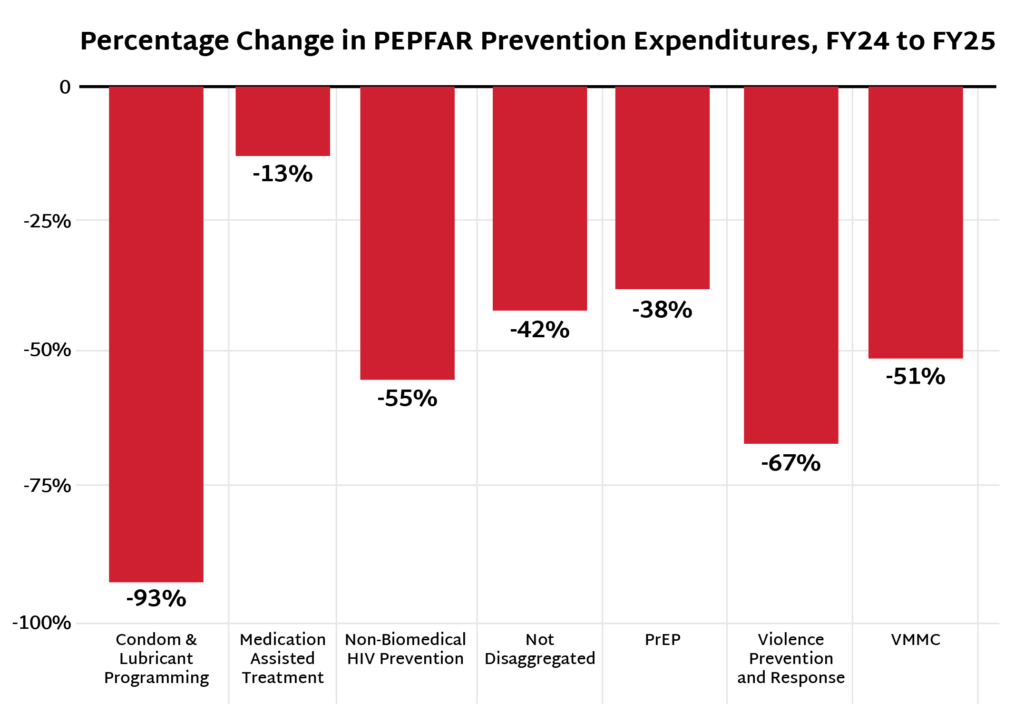
- HIV prevention services overall took a huge hit: PEPFAR expenditures for condoms and lubricants were almost completely cut, while non-biomedical HIV prevention and VMMC expenditures were cut in half and PrEP expenditures were reduced by 38%. Expenditures for associated services such as violence prevention and response were also cut by two-thirds.
- As a result, almost half of respondents reporting that they had halted key prevention activities such as condom or PrEP distribution. Two-thirds reported interruption of PMTCT and nearly one in four stopped providing prevention of mother-to-child transmission services entirely. As outlined in amfAR’s accompanying JIAS article analyzing service delivery data from PEPFAR-supported facilities, these cuts have resulted in drastic reductions in the number of people served.
- Additionally, the release of UNAIDS’ United to End AIDS special report and a companion KFF-UNAIDS analysis shared results on the global picture of the AIDS epidemic and donor funding landscape.
- The report shows HIV financing entering one of its most precarious periods in decades, with international assistance declining 18% between 2024 and 2025. Donor government funding fell by $2.1 billion in 2025—the largest annual decline since global HIV funding began scaling up—and epidemiological progress has stalled, with new HIV infections remaining essentially unchanged for the third consecutive year.
- Taken together, these findings underscore the broader challenges facing the field in effectively translating scientific progress into the impact needed to end AIDS as a public health threat by 2030.
PrEParing for New Products

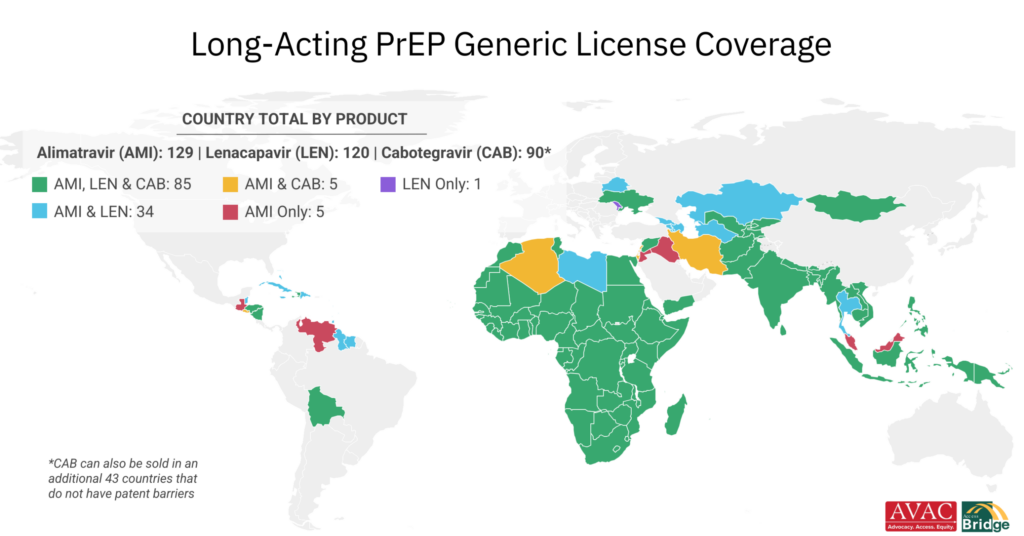
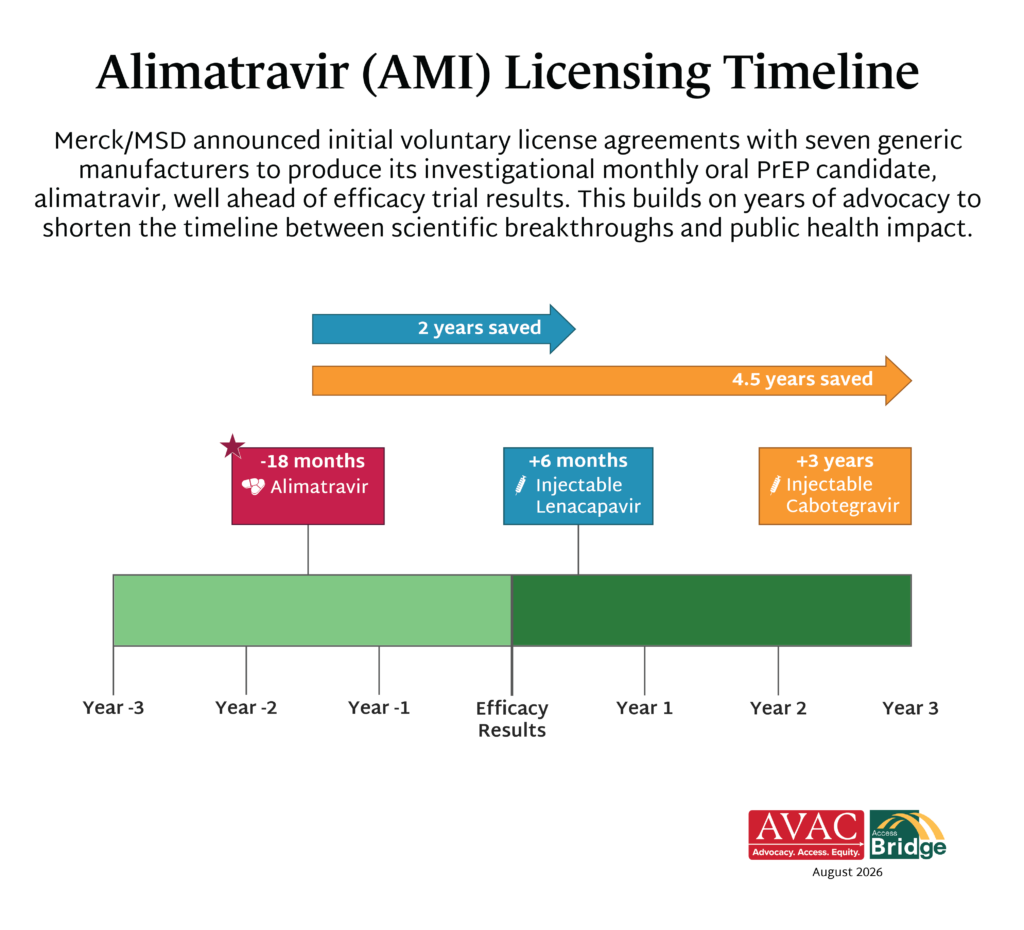
- Just before the AIDS 2026 conference, Merck/MSD announced that it had signed bilateral voluntary licenses for their investigational monthly PrEP pill, known as alimatravir (AMI, or MK-8527) with seven generic manufacturers to supply 129 low- and middle-income countries.
- Notably, the seven generic manufacturers for AMI include three based in Africa (Kenya, South Africa, and Uganda). This is an important step forward to secure local continuity of supply in high-burden countries.
- Merck/MSD’s decision to provide generic manufacturing agreements more than a year out from efficacy trial results is unprecedented. The move reflects the impact of deep engagement with advocates throughout the planning and implementation of the EXPrESSIVE clinical trial program and responsiveness to longstanding calls to accelerate the research to rollout process.
- But not all advocacy demands were met. A number of countries – including Brazil, the host country for AIDS 2026 and a site for clinical trials of AMI (and CAB and LEN, previously) – was again left out of the voluntary license territory. (Merck/MSD did subsequently announce they signed a memorandum of understanding with Fiocruz, a Brazilian manufacturer, to supply AMI for Brazil and the region, but the terms, timing and next steps remain unclear.)
- As the map above demonstrates, this reflects a broader trend of excluding Latin American countries, as well as some Asian countries, from voluntary licenses despite their participation in clinical trials for the same products, largely due to their World Bank economic categorization, and not their epidemiologic reality.
- Furthermore, these agreements do not address the access disparities in high-income countries that disproportionately impact key populations – men who have sex with men, people who use drugs, sex workers, transgender people, and others – especially in the United States where access to prevention products hinges on health insurance coverage.
- The World Trade Organization’s TRIPS Agreement does explicitly allow governments compulsory licensing under specific public health crises or anti-competitive practices. This could potentially authorize the production and use of a patented drug without the consent of Merck/MSD, but it can be a lengthy process that further delays access. An extended voluntary license to all low- and middle-income countries would allow for the quickest rollout and maximum impact.
What is Generic Licensing?
- Generic drugs are bioequivalent to originator products and are produced by a generic manufacturer. They are sold at much lower prices than the originator drug, usually because they are not manufactured in high-income countries and can make use of economies of scale.
- Generics manufacturers are allowed to sell their version of the product once the product’s patent and terms of exclusivity expire—usually after 10-20 years. However, a developer can choose to grant a voluntary license before patent expiration, allowing generics to be manufactured and marketed earlier. Original drug developers can either grant this license directly to manufacturers or via the Medicines Patent Pool.
- The developer decides which countries the license covers; normally high-income countries are excluded, as the developer will continue to sell the brand product in these markets at higher prices for a profit.
- Countries without a voluntary license to use generic versions of an originator drug may declare the drug to be in the public interest and issue a compulsory license enabling the purchase of the less expensive drug from generic manufacturers.
Time Saved on AMI Generics Licensing
- The successive introduction of each new PrEP product has gone faster than the previous one, including notable reductions in the amount of time to establish licensing agreements with generic manufacturers.
- Granting voluntary licenses while clinical trials for AMI are still enrolling, before it is known if the product is effective, sets a new benchmark for the field, potentially eliminating years of delay between evidence, licensing and generic production.
- This accelerated timeline gives the field ample opportunity to plan for broad and rapid access to AMI and should help preempt the supply constraints currently facing LEN and CAB.
- Local manufacturing in the three African countries included in the generic licensing agreement should also facilitate faster access in the region with fewer supply constraints.
The Latest R&D in the Prevention Pipeline
The latest development for long-acting treatment research
- The HIV treatment pipeline continues to evolve, especially around long-acting options. Over the past year, AVAC has added long-acting treatment (LA-ART) to our pipeline tracking efforts, reflecting the evolving continuum across ARV product development and the need for a comprehensive agenda for the development of novel and longer-acting products that includes PrEP, PEP, and treatment.
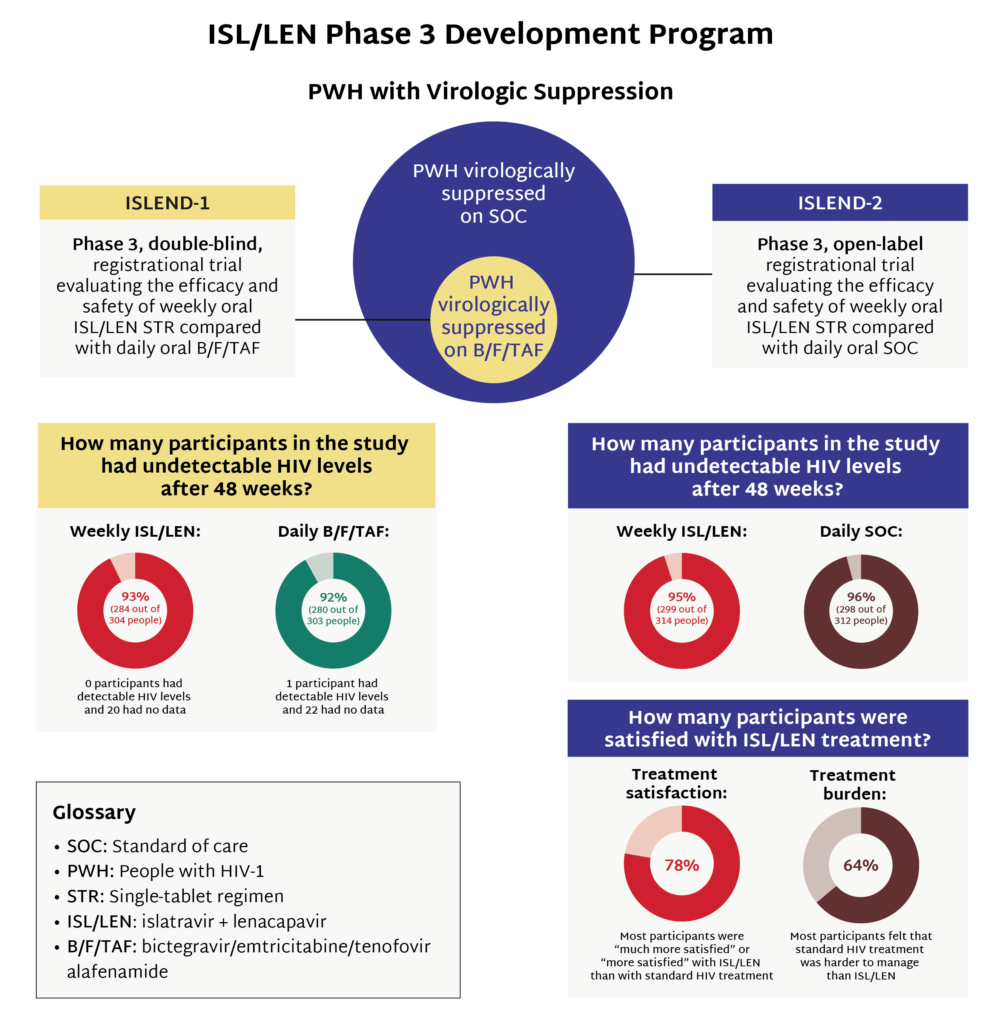
- At AIDS 2026, Merck and Gilead presented detailed results from the Phase 3 ISLEND trials, showing that an investigational weekly oral single-tablet treatment regimen combining islatravir (ISL) from Merck/MSD and lenacapavir (LEN) from Gilead sustained viral suppression as effectively as daily oral antiretroviral therapy (ART) at week 48; the studies will continue to week 96.
- Importantly, trial participants in ISLEND-2 reported strong satisfaction with the ISL/LEN treatment option and felt that it was easier to manage compared to standard HIV treatment options.
- Given the mechanisms of action of ISL and LEN, which target HIV at multiple stages of the viral life cycle, the combination regimen could offer an important, novel option for people with virologically suppressed HIV. The companies plan to file ISLEND data with regulatory authorities globally, with a potential launch in 2027.
- These Phase 3 data are an exciting indication of the evolving HIV treatment landscape, with additional long-acting options in the pipeline and oral options for people who may not prefer an injection.
Combo bNAbs get even more complicated
- Broadly neutralizing antibodies (bNAbs) remain at the center of research toward immune-based prevention. In particular, researchers are advancing the concept of “combo AMP,” i.e., passive delivery of a combination of bNAbs targeting multiple sites on the viral envelope, achieving broader and stronger protection than with a single bNAb.
- At the conference, the CAPRISA team from Durban, South Africa, announced results from the CAPRISA 012c Phase 2 trial examining a combination of two bNAbs as prevention.
- The trial, conducted with approximately 1,100 young women in South Africa and Zambia, found that a six-monthly combination of the CAP256 and VRC07 bNAbs was safe, but there was no statistically significant difference in HIV incidence rates between the bNAb and placebo arms, meaning it did not provide protection against HIV acquisition.
- One reason for the lack of efficacy was the high rate of viruses detected amongst the women who acquired HIV that were resistant to one or both of the bNAbs. This was unexpected, and one conclusion from this trial is that the evolving sensitivity of circulating viruses to the bNAbs manufactured for trials should be carefully considered.
- Antibody research has always been about more than product development. The CAPRISA 012c study continues to deepen understanding of HIV and the immune system, and will continue to inform vaccine design, cure research and the next generation of prevention strategies. But it is still not clear if bNAbs can be a prevention option on their own.
Prevention Playlist
AVAC develops a wide range of resources to inform decision making and action. Check out the latest:
Join
- Sign up for Global Health Watch: AVAC’s weekly newsletter to keep advocates informed, prepared and connected
- Sign up for AVAC’s STIWatch newsletter: a curated resource on the latest in STI vaccines, diagnostics and other prevention tools and strategies
Use
Watch/Listen
- AVAC’s AIDS 2026 video recaps
- The Choice Agenda webinar: The Persistence Paradigm: Ensuring the Longevity of Health Equity Research
- GBGMC podcast: Let’s Talk About PrEP: The Future of HIV Prevention
- ITPC podcast: The Future of PrEP: Lenacapavir & the Fight for Access
Read
- Accelerating Policy Approval and Uptake of the Dual Prevention Pill in Zambia through Early Stakeholder Engagement
- The State of HIV Prevention: Big News, Big Moves: Reflections from AIDS 2026 in Rio de Janeiro, Brazil
- A Rocky Rollout: A powerful new prevention drug could help end the HIV epidemic—but supply is falling far short
- The Future of the HIV Response: Sustaining Progress in an era of Political Uncertainty and Scientific Opportunity
Was this content helpful?
Tell us how we can improve the content.
Was this content helpful?
Thank you for your feedback!