In Montreal the pressure was on.
AIDS 2022 showed the global response to HIV at a crossroads. The field has achieved groundbreaking advances in biomedical solutions. But intensifying disparities in HIV prevention and global health at large threaten to eclipse these achievements. Scrutiny of the inequities was center stage in Montreal. While the UNAIDS report In Danger, released at the conference, documents what HIV advocates have known—that during the earliest phases of the COVID-19 pandemic, progress against HIV did not just stall, it actively lost ground—the HIV Prevention 2025 Road Map by the Global HIV Prevention Coalition released just days later navigates a path to get back on track.
Advocates see how much is at stake at this moment and were making the connections to crises across the field of global health. Their call to action was constant. Protests, formal and informal, were diverse and targeted. They demanded political support and full funding to rollout the dapivirine vaginal ring (PrEP Ring), confronted the developer of injectable cabotegravir for PrEP to go further in affordable and transparent pricing, took on an anemic response to monkeypox (POZ coverage here, TheBodyPro coverage here), challenged ongoing criminalization of sex workers and other key populations, and criticized Canada for blocking the visas of hundreds of delegates to the conference.
Veteran voices such as Fatima Hassan of the Health Justice Initiative were calling out the implications of “vaccine apartheid” in the COVID response and the “pandemic profiteering” that drives it. Global health activist and epidemiologist Gregg Gonsalves called on health advocates to go beyond “the technocratic solutions… and fight our way back to equity.” Advocates challenged the legacy of colonial imperialism in global health, and some voices demanded total reform of the intellectual property and trade system, to name a few of the issues and actions raising the heat.
Are They Listening?
Important steps in decolonizing global health are beginning to take shape. Advocates from the Global South hosted and co-hosted meetings with key decision-makers to make the urgent case for faster and more equitable access to new PrEP options—including meetings with Winnie Byanyima of UNAIDS, Amb. John Nkengasong of PEPFAR and Atul Gawande and Han Kang of USAID. These discussions, as they go beyond community engagement and towards community leadership, represent a model for how the global response must change—voices from communities where HIV is hitting the hardest must be in leadership at every stage, for every crucial decision. The UNAIDS, PEPFAR and USAID leaders say they are listening. Advocates are watching this space closely. Accountability, at every level, is essential—for HIV prevention, treatment, human rights, health systems and health equity.
Getting Rollout Right
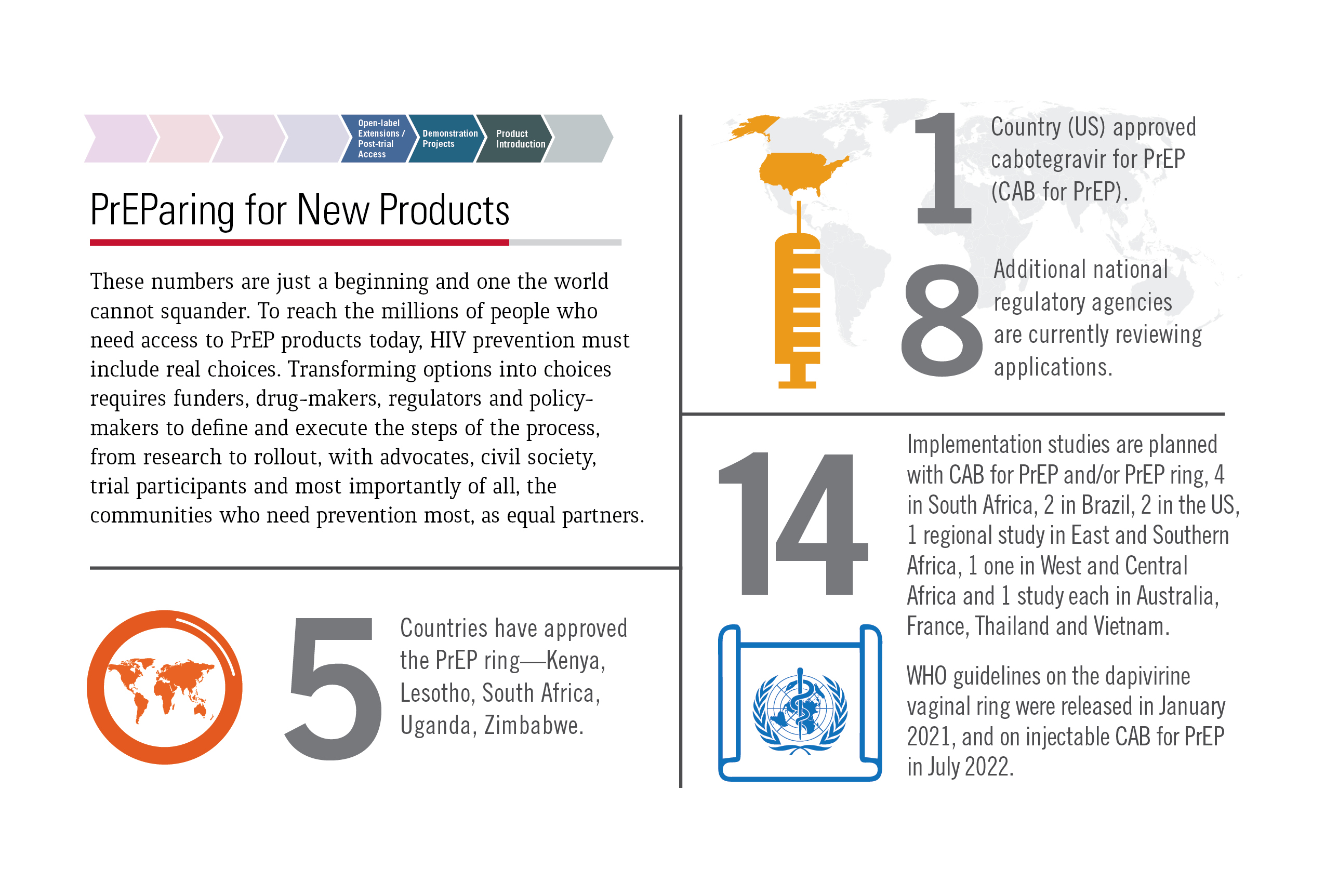
Fulfilling the current promise of new HIV prevention options requires advancing a people-centered, integrated approach for introducing proven products. This priority was also center stage in Montreal. The Coalition to Accelerate Access to Long-Acting PrEP (with AVAC serving as the secretariat), The HIV Prevention Road Map announced by the Global HIV Prevention Coalition, and the just-launched WHO guidelines for injectable PrEP that simplify PrEP delivery, are helping to lay the groundwork. The agreement between the Medicines Patent Pool (MPP) and ViiV is also a welcome step toward a sustainable market of generic manufacturers for injectable CAB and future products.
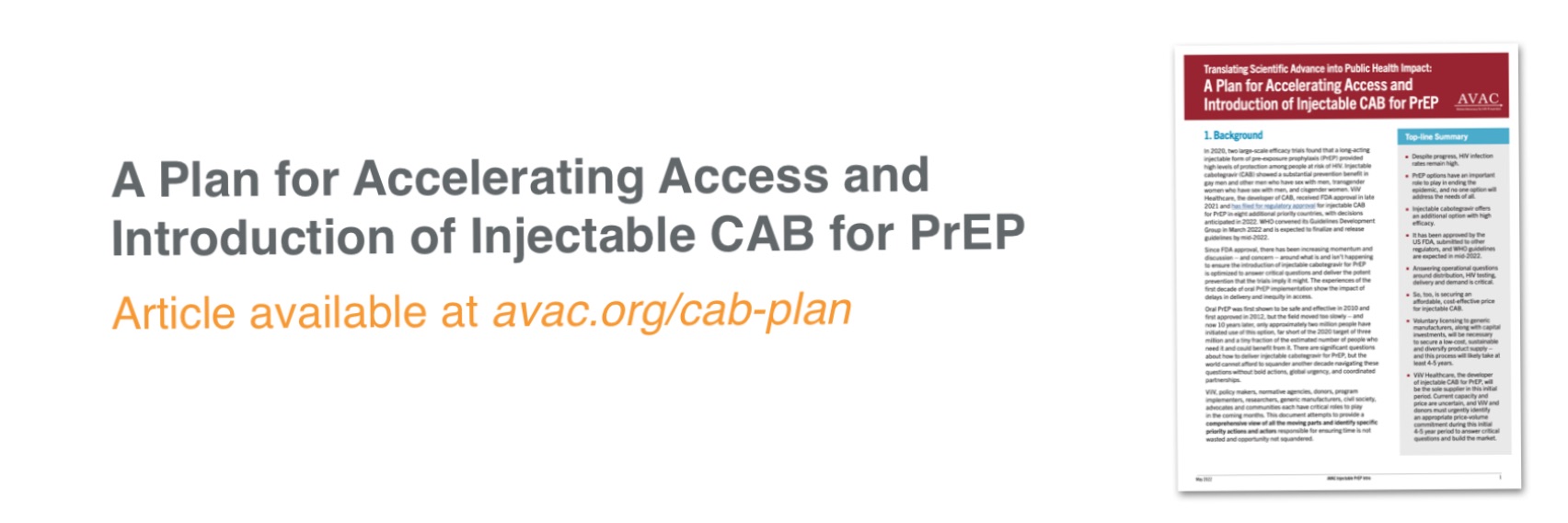
But more must be done. Delivering the fruits of science must become as urgent as their development. Putting in place the right programs, policies and investment to deliver choices at scale and bend the curve of the epidemic utterly depends on a commitment to integrated, equitable, people-centered, and community-led approaches. Be sure to read AVAC’s Plan for Accelerating Access and Introduction of Injectable CAB for PrEP, (or a summary of it), which outlines why funding commitments, creating demand, WHO guidelines, implementation studies, technology transfer, generic manufacturing and more must be coordinated and expedited now.
Several sessions and events at AIDS 2022 took a deep dive into why and how this people-centered, integrated approach must frame product introduction. Here are quick highlights on key sessions:
- Accessing long-acting HIV prevention and treatment innovations: Landscape, service delivery, and pathways to affordability. This session included CAB drug-maker, ViiV, on the panel, and advocates disrupted the session turning up the fire on demands for a speedy rollout of affordable CAB for PrEP. Uganda’s Lillian Mworeko said, “we cannot talk about five years, we need to talk about now” and called for strong accountability.
- Equitable roll out of health products: What will it take? Panelists discussed the need for much greater integration between product development and getting those products to the people who need them. The most efficacious product will fail without investment in innovative, tailored programs. This session also discussed how advances in HIV self-testing and adaptable community-based access do support effective product delivery.
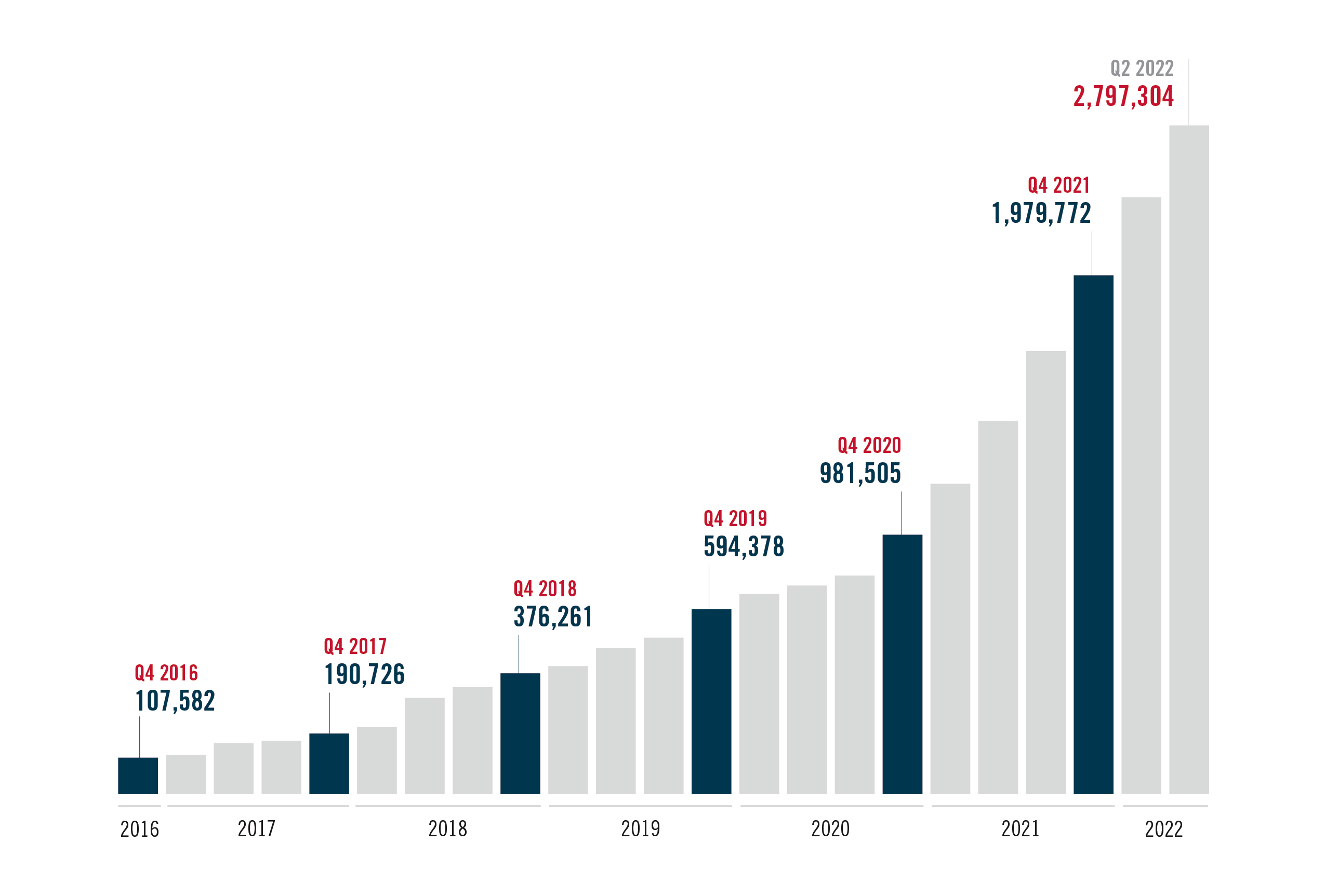
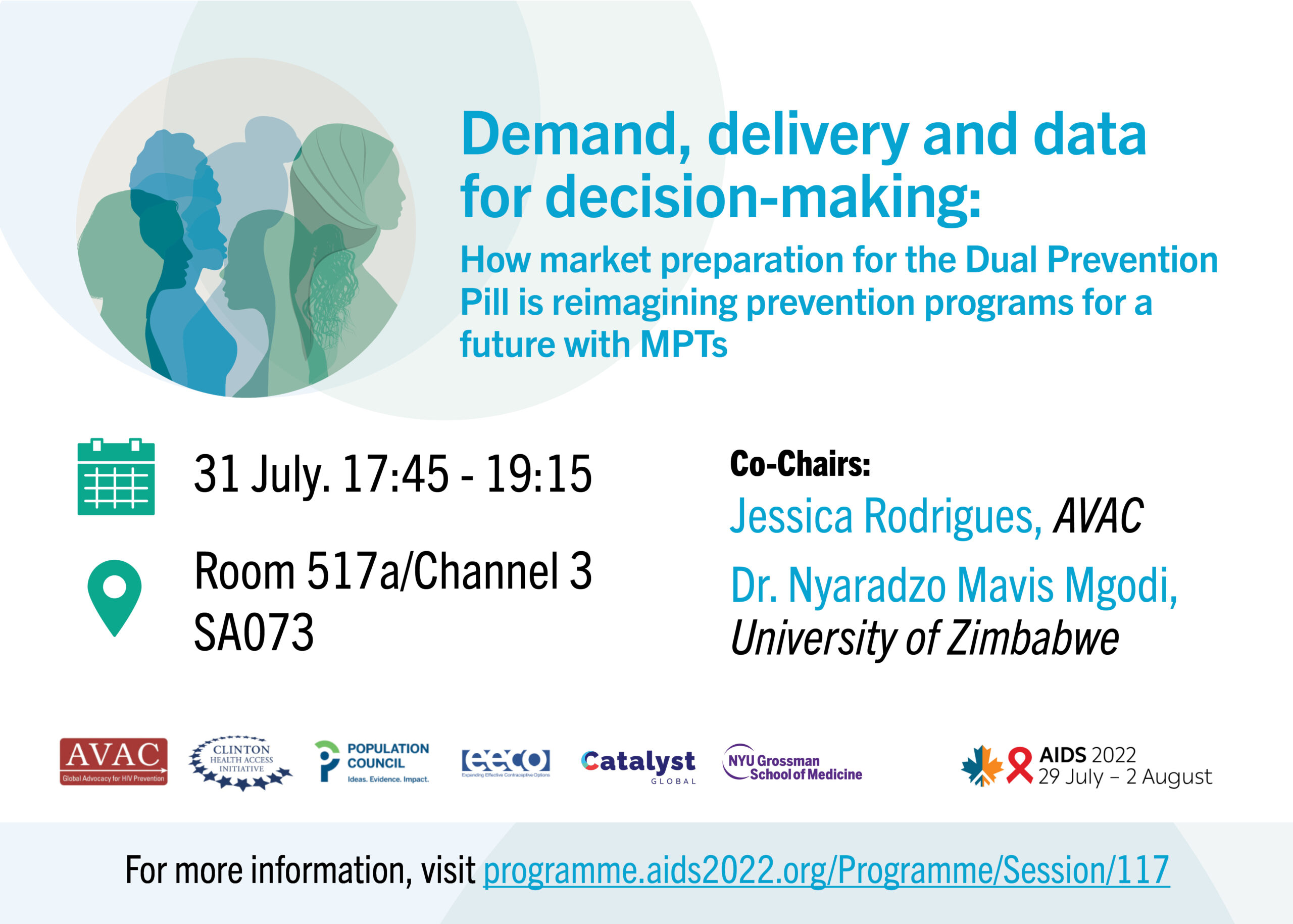
- PrEP-ing for 2030: Why optimization and scale-up of the PrEP service and product mix is critical to addressing unmet PrEP need and supporting effective use towards 2030 HIV prevention goals. 3 million people have started oral PrEP by June 2022; however, this represents a small fraction of the tens of millions who could benefit from it. This session provided a look at PrEP scale-up and examples of community-led delivery that propelled increases in the number of people starting PrEP. AVAC’s Jessica Rodrigues detailed the factors contributing to this unprecedented increase, most notably the role of PEPFAR funding in major gains in PrEP uptake.
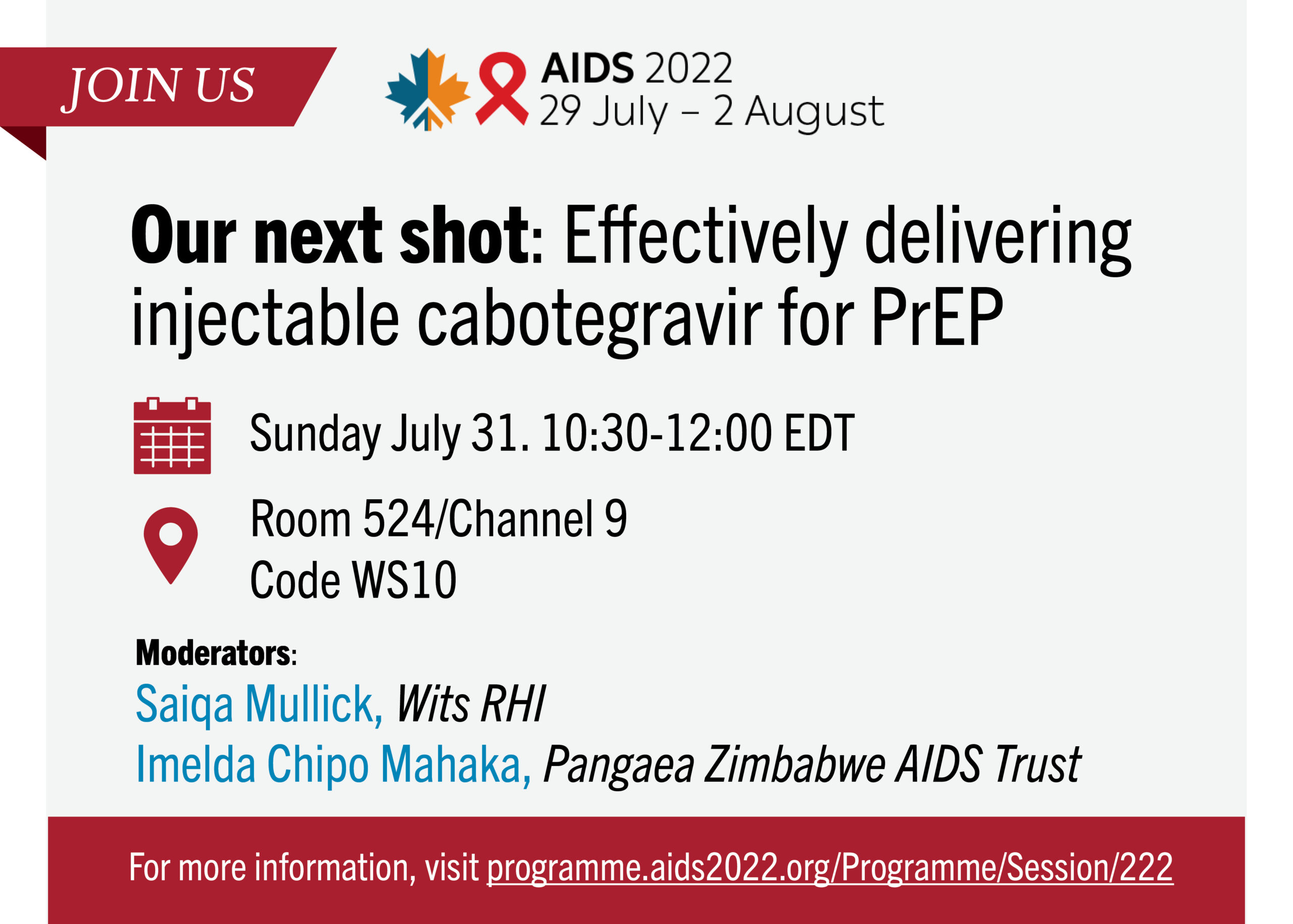
- Our next shot: Effectively delivering injectable cabotegravir for PrEP. Imelda Mahaka of MOSAIC and Pangaea Zimbabwe AIDS Trust (PZAT) discussed barriers to rolling out CAB including cost, testing, service provider capacity, and access.
Scientific Advances
The meeting saw incremental progress in research on several of the pandemics destroying life around the world today. Sessions on TB, HIV, COVID-19, monkeypox, and STIs drew lessons from the COVID-19 response. But with all that the world is learning, research and discussion have yet to tackle how to create the integrated systems needed for a truly effective global health response. This kind of pandemic preparedness means advancing health equity.
Our friends at aidsmap provided in-depth reporting on a number of sessions; you can check out their highlights here. In the meantime, here is a brief summary of some of the scientific advances we found interesting at AIDS 2022:
- A study looking at the use of the antibiotic doxycycline as a post-exposure prevention (PEP) for sexually transmitted diseases (STIs) was stopped early due to its high efficacy.
- New analysis from Imbokodo data showed that trial participants with high antibody response to a target on HIV known as the V1/V2 loop showed an association with protection. But it was NOT statistically significant enough to serve as a correlate for measuring protection. For more on the implications of these findings check out the aidsmap coverage of this analysis.
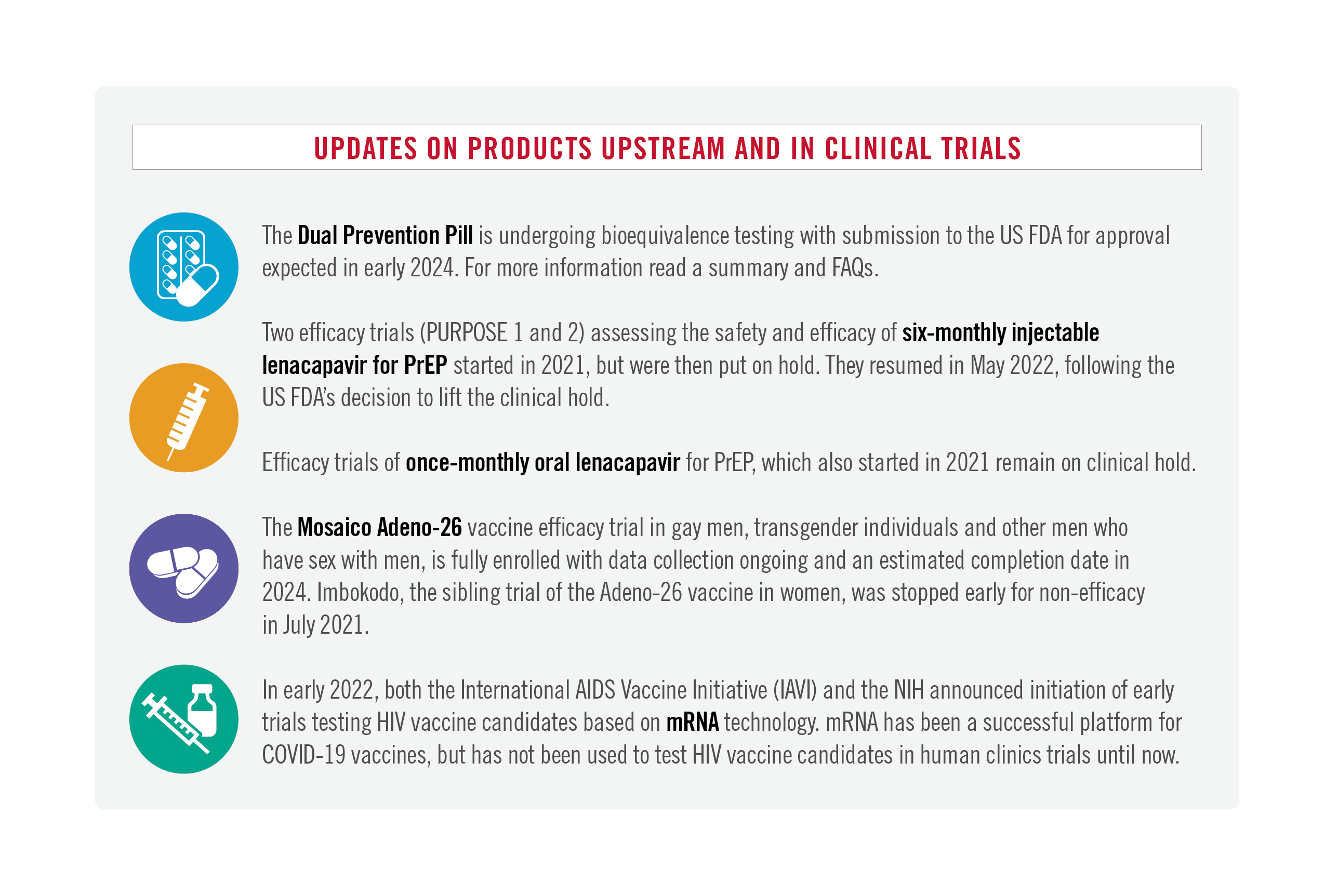
- Several sessions discussed the future of vaccine and bNab research, including the role of mRNA technology, and experimental medicine trials. It’s still not known if mRNA will speed up HIV vaccine development, nor if a neutralizing antibodies will finally be the ticket to vaccine efficacy. The HIV vaccine field must bring clarity about the state of the science to community and stakeholder engagement processes, and prepare now so that equitable access goes hand in hand with vaccine development and licensure. As Ntando Yola from the Desmond Tutu Health Foundation and Advocacy for Prevention of HIV and AIDS in South Africa said during a discussion on mRNA, “there is excitement but we need to understand that excitement doesn’t prevent infections; important science needs clear communication, sustained engagement and commitment to equitable access”.
- A case of an additional patient to achieve a possible cure was announced (check out AVAC’s new guide for HIV cure terminology). The City of Hope patient has remained free of HIV since ending HIV treatment 17 months ago. He is now the fifth known case of an HIV cure after receiving a stem cell transplant. And the case of a Barcelona woman, a long-term, post-treatment controller, was also announced at AIDS2022. The Barcelona case involves sustained undetectable levels of HIV without treatment (no stem cell transplant involved), though sensitive tests detect some viral reservoir of HIV. As the science accelerates for HIV cure, advocates are stepping up, and the focus is on moving cure research to Africa. The session Africa HIV cure research: Strengthening industry-community engagement in clinical research brought home the need for community engagement in cure research. As AVACer Nandi Sikwana said, “It is never about one trial, one community or one issue… it is about relationships that transcend a trial.”
- A years-long study led by the NIH’s Vaccine Research Center has identified 44 genes associated with latent HIV. While this is early laboratory science, the resulting sensitive gene assay could unlock a path to discovering strategies that target the HIV reservoir and a potential cure.
Populations and Products in Focus
The following sessions put an important spotlight on particular populations or products:
AVAC at AIDS 2022
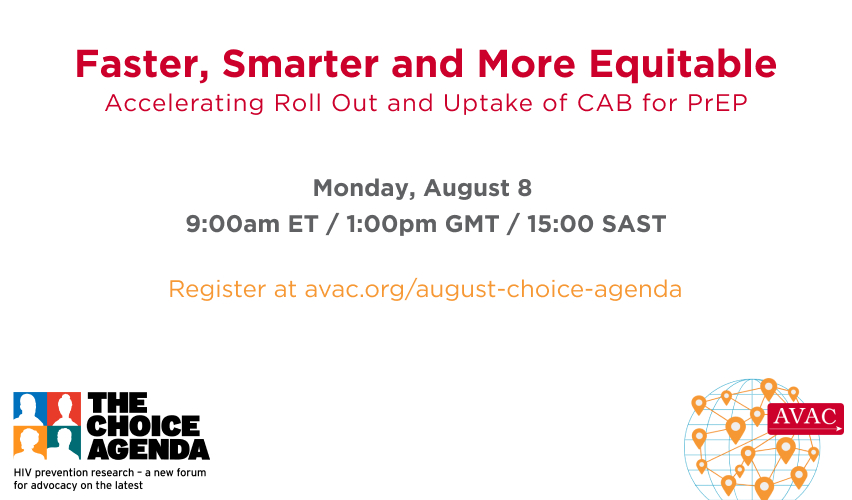
For a look at AVAC’s work at AIDS 2022 go to our dedicated page. And in case you missed it, the latest webinar from The Choice Agenda provided a status update on the rollout of injectable PrEP, with presentations from providers, researchers, the WHO and others.
The picture of HIV prevention today is full of promise and peril. Navigating the challenges is both possible and imperative. Here’s how AVAC Executive Director Mitchell Warren put it at the launch of the new Global HIV Prevention Roadmap:
“In 41 years we’ve never had such opportunity in prevention. We have a package of proven methods for the first time, and global health leaders are offering renewed commitments to spearhead and sustain programs that are designed to reach those who need prevention most. These programs should be focused on integrating HIV services with sexual reproductive health and rights. But we won’t get this done without going beyond simple community engagement and the old siloed models of delivery. Now is the time to integrate, coordinate, and invest. Now is the time for a global response that is community led.”