Don’t Miss These New Resources on AVAC.org

Happy New Year! We hope that you started your year refreshed for important work ahead–and to help get you started, we’ve rounded up a few select resources from AVAC.org that we hope you’ll consider as you set your agenda for 2019. We think these cross-cutting and thought-provoking tools help to frame the most pressing issues facing HIV prevention in the year ahead.

Px Wire: 10 questions for 2019
The final Px Wire of 2018 lays out 10 questions on issues confronting the HIV prevention field. We raise questions and offer brief analysis of: NIH funding and the future of research on user-initiated prevention options; anticipated results from the ECHO and DISCOVER trials; how programs and policies for rolling out oral PrEP—and possibly the dapivirine vaginal ring—need to evolve; how condom programming should be prioritized, and so much more. The centerspread features an infographic linking the timeline of prevention research with the pace that’s needed for implementation.

Next-Generation Trial Design
Has HIV prevention research seen its last placebo-controlled efficacy trial? As trials become increasingly complex, researchers are exploring how to continue to successfully study new strategies. AVAC has two new resources to help you understand the issue and the implications for advocacy and stakeholder engagement.

amfAR’s new database on PEPFAR
The PEPFAR Monitoring, Evaluation and Reporting (MER) Database, is a new web tool created as part of the COMPASS Africa collaboration. It gives HIV advocates access to a wide range of PEPFAR program data, such as district-level data with descriptions of what each indicator means, how the results are measured, and how the data can be interpreted. These data are presented in a variety of formats including data visualization, maps and downloadable PDFs.

Special Supplement on GPP
In October, the Journal of the International AIDS Society published a special supplement, Science, Theory and Practice of Engaged Research: Good Participatory Practice and beyond. It documents good participatory practices and explores their value to stakeholder engagement at clinical trials across research areas, geographies and populations. You might also like how one of the authors of the JIAS supplement laid out the issues in this piece, cross-posted on AVAC’s blog, P-Values.

Women Need Effective Choices: Do research dollars reflect this priority?
A growing number of voices are recognizing the importance of choice in HIV prevention – including a year-beginning statement from Maureen Goodenow, the Director of the Office of AIDS Research at the National Institutes of Health. The need for better choices is especially imperative for women who carry a disproportionate burden of HIV risk compared to men. The Resource Tracking for HIV Prevention R&D Working Group’s annual report looks closely at investment trends and features an infographic depicting the status of 2017 investment in research investigating PrEP for women.

Young Women Demand Inclusion
The best way to understand the diverse needs of those who face a risk of HIV is to listen to the people themselves. At the HIV Research for Prevention conference in Madrid in October, a group from the Young Women’s Leadership Initiative organized a protest to demand their inclusion in the process of planning for research. Read their statement, get inspired and heed the call in your work in 2019!

Sharpening the Blunt GPP Instrument: A call for focused stakeholder engagement in designing the efficacy trials of the future

Stacey Hannah is AVAC’s Director of Research Engagement. Ruth Assefa is an AVAC consultant, aspiring medical student and formerly AVAC’s program coordinator for research engagement.

Is HIV prevention research seeing its last placebo-controlled efficacy trials? Will the field have to radically reimagine how to answer efficacy questions?

HIV prevention research is indeed set to see changes in clinical trial conduct. Successes in research and implementation are making it easier for many people across the globe to protect themselves from HIV—and, at the same time, harder for researchers to test new interventions. Trials of the future might be bigger, more expensive, and require new types of analysis. As researchers and regulators navigate this territory, they’ve made a call for community input. Attendees recently heard this call at HIV Prevention Efficacy Trial Designs of the Future, a symposium convened by a group of leaders in prevention research in November to discuss new approaches to trial design.

With equations, statistical models, and new trial-design concepts, these were complex conversations indeed. And community input did have a place at the symposium. Jeremiah Johnson of the Treatment Action Group gave a plenary articulating the priorities of some communities, and the day’s panel discussions each included a community representative.

It was a good start, but only a start. As Jeremiah made sure to say, a white, cis-gendered man can’t represent all communities who will be affected by new and complex trials in HIV prevention research.

At AVAC, we’ve given a lot of thought to how to sharpen implementation of the guidelines on Good Participatory Practice to get the field beyond the mere rhetoric of community engagement and towards a strategy-driven engagement of stakeholders. A critical first step for researchers and civil society alike is to define the ongoing role community representatives will have as issues arise from evolving trial design. Will engagement focus narrowly on securing broad support for trials—or something more? (We hope the latter.) Specific objectives of engagement will certainly develop and change with the issues, but they need to be articulated clearly and planned for accordingly. And this should be a two-way street. Those who lead trials have a duty to articulate what they need and want from affected communities and stakeholders, but those stakeholders have an equal duty to probe the issues and articulate their priorities.

What should advocates be thinking about now to prepare for this issue in 2019? For some time, prevention researchers have discussed the possibility of screening trial participants before randomization to identify individuals who may be more or less able to use a given product. Some years ago, microbicides researchers actively explored the idea of screening cis-gender women after enrollment and before randomization to identify those likely to be adherent to a product, since low use can return a low-efficacy result that doesn’t reflect the actual prevention benefit of a product.

Now the question is whether it is feasible, acceptable and ethical to randomize participants who are low adherers, or who don’t want to use a daily product like tenofovir-based oral PrEP, into a trial arm where daily oral PrEP wouldn’t be a part of the control arm. (In all trials, all participants should be provided with a comprehensive prevention package that includes the offer of or referral for PrEP wherever it is available; even in these trials, all participants would be free to choose PrEP on their own. For a lexicon on emerging issues in HIV prevention trials, checkout AVAC’s HIV Prevention Trial Terms: An advocate’s guide.) Communities and advocates will have critical and unique insights into whether affected communities might support such a design–or whether it might provoke controversy—and how such a trial might be implemented.

Discussions and decisions should be as locally relevant as possible, and one can expect they will be moving to Southern and East Africa, where a bulk of these new, innovative trials for next-generation products will happen. HIV-focused civil society networks at country and regional levels need to be involved with trial leaders, product developers, statistician and ethicists in providing input and engaging constituents about these and other issues.

Check out our most recent podcast episode on Px Pulse for an in depth discussion exploring advocate views on this fast-moving issue. Stay tuned for more AVAC resources to help advocates navigate the ins and outs of the trial designs of the future.

The Weekly NewsDigest will return January 11

There will be no issue for the next two weeks. The NewsDigest will return on January 11, 2019. Our best wishes for happy holidays and a peaceful new year, and our thanks for reading!

Looking Back, Looking Ahead and Sending our Best Wishes

As 2018 comes to an end, AVAC extends gratitude to all HIV prevention advocates—those we work with, those whose names we do not know—for the hope and fierce commitment that you bring to the work every day.

This year, perhaps the best news was also the most sobering: UNAIDS finally fully acknowledged that there is a prevention crisis, which must be resolved for the epidemic to controlled. A global view hides sites of hope: there are places where there is progress. Our fervent wish for next year is that this progress spreads, as it can and must when we stand together demanding human rights, prevention options and programs built on a foundation of informed choice for all bodies and all lives.

Fighting for justice is only possible when we find time to restore ourselves and connect with our loved ones and communities. We wish you rest and joy—and hope to see you in 2019 for the work that still needs to be done. Want to preview what’s going to require close attention? Check out:

  • The current issue of Px Wire, which offers our list of the top 10 questions that need to be answered in 2019.
  • The latest episode of Px Pulse, which features a gripping, tripartite conversation among prevention research advocates on the changes in store for trial design and what it means for community engagement.
  • AVAC Report 2018: No Prevention No End, which has urgent action items for 2019—and beyond.

With tremendous gratitude, we wish you happy holidays and our very best for the New Year.

Community Engagement and HIV Prevention Research

This December, Px Pulse features a gripping, tripartite conversation between activists Morenike Giwa-Onaiwu, Stacey Hannah and Jeremiah Johnson about what their long histories fighting for community engagement in HIV prevention research have taught them, and how these lessons can be applied today, and in the future. Tune in to hear three fierce voices with fresh perspectives on how to continue designing trials, and engaging communities, in today’s landscape of expanded, but inadequate, prevention choices.

With daily oral PrEP, VMMC, partner testing and treatment that leads to virologic suppression available as potent biomedical tools, along with condoms and a range of other structural interventions, clinical trials of biomedical HIV prevention strategies to block sexual transmission are more complex, in terms of design and conduct, than ever before.

Listen to this episode of Px Pulse on iTunes or at www.avac.org/px-pulse to learn why this conversation is at a critical moment and how to manage the opportunities for an innovative and collaborative effort with the research community.

Also, in case you missed it, check out the latest issue of Px Wire, which is hot off the presses. Our year-end edition offers 10 questions for activists to galvanize their work in the year ahead. We consider the future of NIH funding for HIV prevention and its research priorities, anticipated results from the ECHO trial, what’s next for the dapivirine ring and much more! The centerspread visualizes a single time frame for trial results and critical targets for incidence reduction and scale up of primary prevention-an essential perspective for the work ahead.

Finally, please don’t forget, your support makes our work possible. Help us continue with a year-end donation at www.avac.org/donate. You can also use smile.amazon.com for your online shopping and select AVAC as your charity of choice. A portion of your purchase price is donated to AVAC—at no additional cost to you!

Happy listening and reading, and happiest of holidays!

The Latest Issue of Px Wire! What to Watch in 2019

As 2018 winds down, we’re struck by the many moments, and movements, in the past year that have depended on listening, without bias and also without loss of conviction. From a bold activist challenge in an elevator, to an array of young women speaking their truths about HIV prevention—the future has hinged on being willing to listen, and on demanding to be heard.

In that spirit, our year-end edition of Px Wire offers 10 questions for activists to pose, with curiosity and conviction, in 2019. What answers do you want, what do you hear, what needs to happen next? We’ll be listening!

Download the new issue here.

Our questions take on the upcoming announcement of how future NIH funding of HIV research will shape biomedical prevention, the anticipated results of the ECHO trial looking at how different contraceptive options impact women’s risk of HIV, the future of the dapivirine vaginal ring and much more.

In our centerspread, we provide a visual for uniting biomedical prevention research and implementation—a necessary fusion for our work in the coming year, and beyond.

Also necessary: your continued support. AVAC depends on your contributions of work, ideas and, yes, funds for our work! We appreciate your support in one or more of the following ways:

  • Donate: Visit www.avac.org/donate.
  • Amazon Smile: Shop at Amazon.com? Visit smile.amazon.com and select AVAC as your charity of choice and a portion of your purchase price is donated to AVAC—at no additional cost to you!
  • US Combined Federal Campaign: If you are a US government employee, support our mission through the Combined Federal Campaign, CFC #12308.

Many thanks for your continued support, partnership and inspiration.

Cure Research: Why it matters, how to talk so that people will listen and a few thoughts on what you might hear

Rob Newells, Executive Director of AIDS Project of the East Bay, PxROAR member, and minister and founder the HIV program at Imani Community Church in Oakland, delivered this address to the amfAR Cure Summit in November.

Thank you to Dr. Rowena Johnston and all the good folks who organized this Summit for allowing me the opportunity to share some thoughts about my vision for HIV Cure research. I won’t be before you long… and if you’ve ever been to a black church, you know that’s the lie that the preacher tells before they put you to sleep with a 2-hour sermon… but I promise, I’ll try my best not to do that this early in the program.

I’m not here to talk to you about all of the new and exciting things that are happening with cure research. There are people with degrees that will share that stuff with you later. I am a community advocate. Yeah… I’m the Executive Director for the oldest HIV services community-based organization in Alameda County… but at my core, I am a community advocate.

I am a 48 year-old, same gender loving black man born and raised across the Bay in Oakland. I’m a 70s baby, so I saw the city go from 50 percent black when I was a teenager to 25 percent black now. (Gentrification is real.) I went to middle and high school with the children of some of the country’s most legendary drug kingpins of the 70s and 80s. I’m pretty sure I grew up middle class… but sometimes I think white middle class and black middle class are totally different. I’m a United States Marine Corps veteran who didn’t figure out he was gay until halfway through college, which for me was after my military service… Which means that I became sexually active when the epidemic was still at the top of the national news.

I started doing work around HIV prevention education in 1999. (I had a cousin and some friends living with HIV, and I had lost an uncle, a couple of church choir directors, and a choir member to the disease by then.) I tested positive for HIV in 2005. Seven years later, in 2012, I became a licensed Baptist minister… as a gay man living with HIV. (My ordination is next Sunday in Oakland in case you’re interested.) 2012 is also when I formally started working with AVAC on biomedical HIV prevention research advocacy, and talking to black men in Oakland about what was coming down the prevention pipeline. I had learned a little about cure research by then, but my real intro was at the HIV Cure Community Workshop and Pre-Conference Symposium in Durban, South Africa, before the 2016 International AIDS Conference.

That’s where I met my brother Moses Supercharger from Uganda. Getting to know Moses and his work helped me to understand that there isn’t much talk among members of my community about the need for an HIV cure mostly because in this country we’ve been driving home the message that we already have the tools we need to end the HIV epidemic. PrEP has been approved for 6 years now. Treatment as Prevention works. Undetectable really does equal untransmittable. And condoms still work. So why do we need a cure?

Moses asked the question a couple of years ago, “How do you end the HIV epidemic if people are still living with AIDS?” It’s a simple question, but when government agencies and charitable foundations are deciding where to send limited research dollars, it starts to get complicated. Why do we need a cure?

Cure may not be at the top of the HIV wish list for much of my community, but for our brothers and sisters in Africa – the continent most affected by the virus – cure is essential. U.S. citizens enjoy the privilege of traveling to countries around the world without having to obtain a visa. Africans living with HIV are routinely denied travel visas. And the social stigma of living with HIV in Africa is many times greater than it is in the United States… and the pill burden is often greater. While Americans have multiple options for once daily single-tablet regimens, Moses told me that he takes seven pills each day: three in the morning, one in the afternoon, and three in the evening. He’s been living with HIV for 20 years now. He’s tired of taking pills. Hell! I’m tired of taking pills. We’re tired of taking pills. And everybody doesn’t even have the option. Everybody doesn’t have access to treatment. So the 36.9 million people living with HIV and AIDS globally need a cure.

So… even if we can all agree that we need an HIV cure, do we really know what that means? Nope. We don’t know because y’all don’t know. A cure could be total eradication of the virus from the body. Or it could be more like remission is with cancer. Or it could be a “functional” cure where the virus remains in the body at undetectable levels without the continued use of antiretroviral medications. Who knows? There are all sorts of extremely smart infectious disease specialists, oncologists, geneticists, mathematicians, social scientists, physicists, lions, tigers, and bears (Oh, my!) working to make something happen. Something that will mean I don’t have to take any more pills, and I won’t infect my partner by having condomless sex, and my HIV test will come back negative. Well… maybe not me… but maybe my little cousin’s oldest son who called me while I was at the airport on my way back from the International AIDS Conference in Amsterdam this summer to tell me that he had just tested positive for HIV. Maybe he’ll get a cure.

This is my second year working with the Community Advisory Board for the Institute, and I’m still learning. As you can tell, I am not a scientist, nor am I trying to be one. I see my role as asking the questions my community members would want answers to, and understanding enough about what the researchers are doing to be able to talk about it in plain language with the folks who live and work and play and worship in the same circles where I live and work and play and worship. So catch phrases from researchers like

Block and Lock…
Shock and Kill…
Reduce and Control…

…those all sound a lot like…

“Catch and Release” from immigration officials or
“Stop and Frisk” from law enforcement officials…

These cutesy little shorthand ways of talking about getting to some sort of cure might work for some folks, but… as for me and my house… these phrases can be triggering. As much as I would love to be cured of my HIV, the language we use has the potential to keep a lot of my cousins away.

As unbelievable as it may sound, everyone doesn’t want a cure for HIV. There are folks who are afraid of a cure for HIV. The freedom from daily pill-taking and the (maybe) reduced stigma, depending on what type of cure we end up with, are huge pluses, but are we really ready for a cure?

I was in Madrid for the HIV Research for Prevention conference last month, and there was a poster about what HIV prevention researchers should know about what HIV Cure means to what they called “HIV disparity populations” in the United States. Some researchers in Chicago talked to groups of young men who have sex with men, men of color who have sex with men, transgender women, and cisgender women of color about HIV cure research. This fear kept coming up.

For a lot of folks, having a cure for HIV would bring a kind of freedom… freedom from pill-poppin’… freedom from HIV stigma… freedom from discrimination and criminalization… But for a lot of folks, having a cure for HIV would just make it okay for people to start having lots of crazy, condomless, raw sex. (Oh, no!!) The folks implementing PrEP have heard all this stuff before.

I mean… HIV has made us afraid of our sex. That’s absolutely horrible. It’s bad enough that we are ashamed of our sex… but we have been afraid of our sex… afraid our sex would kill us… for almost 40 years now. What will it take to address that fear? How long will it take? Who’s gonna handle that? Seriously. We’ve got to have some real conversations about what sexual freedom looks like post-HIV in the years leading up to a cure if a cure for HIV is going to be widely-accepted in communities where effective treatment is already an available option.

So, I guess my vision for HIV cure research is not really about advancing the science. Y’all are gonna do that. My vision for HIV cure research is about the freedom. (I think about my freedom a lot in our current political environment.)

My vision for HIV cure research is about freeing all of us from disease and stigma and shame. It is about freeing all of us from these daily handfuls of pills for treatment of HIV and the other stuff that comes with it… but it’s also about freeing all of us up to, without fear, have as much (or as little) good, guilt-free sex as our little souls desire…

So, researchers… I need you to be having lots of good, guilt-free sex. Get out of the lab or the clinic or the office and go get some. I need you to be free, too! As Bishop Yvette Flunder says, “Free people, free people.”

And I believe in y’all. You can do it. I believe that the smart people in this room are gonna help develop a cure for HIV. And every once in a while, when you’re in your lab or your clinic or your office, you’re gonna think about me and my baby cousin and the other folks you’ll meet today who are living with HIV… and you’ll be thinking about all the good, guilt-free sex we wanna have… and you’re gonna come up with something that will work… even for folks who don’t trust you and your little research… and it’s gonna be good. I need you all to believe that… because I am believing in you.

Thank you for your time.

Beyond the Trial: What impact does engagement and participatory practice have on HIV research outcomes?

This post originally appeared on FHI 360’s Research for Evidence blog.

Good Participatory Practice (GPP) has become a central part of biomedical HIV prevention research over the past 10 years. Developed in response to global controversies that disrupted the first trials seeking to test whether antiretroviral drugs could prevent the sexual transmission of HIV, GPP provides a framework for researchers working amid historically-based concerns about exploitation and within the pervasive social, economic and political inequalities that travel with the HIV pandemic. GPP guidelines are built on a broader movement toward partnerships between health researchers and sponsors on the one hand, and patients, communities and advocates on the other.
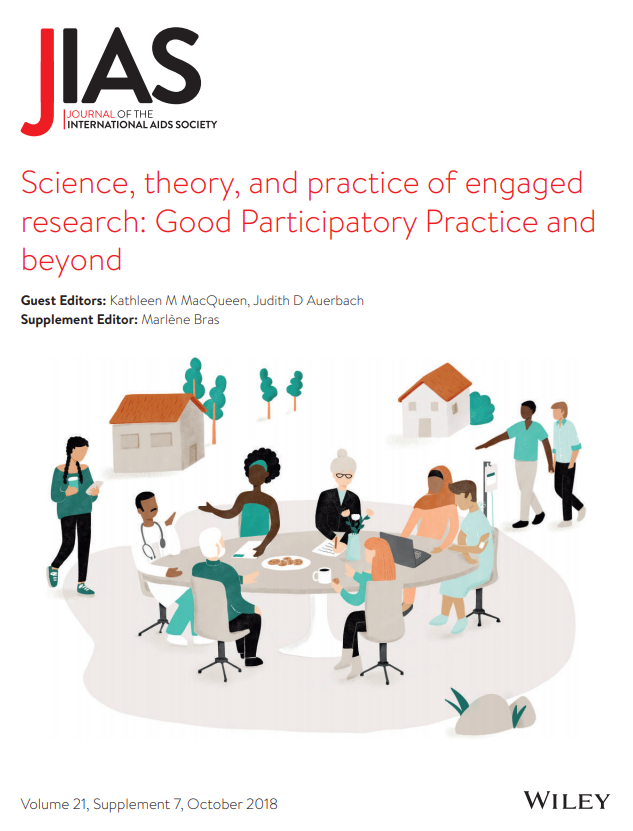
journal cover image

Doing participatory research well requires expertise, resources and time. It is also an approach where everyone learns mainly by doing, whether they are researchers, funders, patients or advocates. It is challenging to evaluate principled, action-based approaches. But without thoughtful evaluation we may end up investing in well-intended practices that align poorly with desired long-term outcomes or miss opportunities to innovate for greater impact.

To highlight the accumulating evidence on how engagement and participatory practices have been applied, and with what results for HIV prevention, I recently collaborated with Judy Auerbach (UCSF) to guest edit a special supplement of the Journal of the International AIDS Society (JIAS), on “Science, theory, and practice of engaged research: Good Participatory Practice and beyond.” The supplement was released in conjunction with the HIV Research for Prevention (HIVR4P) conference held in Madrid in October 2018. Here I highlight three articles from the supplement.

Theory: Ethics review to strengthen engagement

While there is considerable overlap between the goals of GPP and those of research ethics review, they are nonetheless distinct and complementary processes. Ethics review is a largely regulatory process that establishes standards and formalizes accountability, as a way of ensuring that people recruited and enrolled into research are treated with respect, provided optimal benefits while subject to minimal harm, and with fair and equal distribution of both the benefits and risks of participation. In the context of HIV prevention, research participants, community members and other stakeholders may be at risk of harm due to the potential for social marginalization, stigma and discrimination. This could result from intentional exploitation, or from well-intentioned but poorly informed actions by researchers.

GPP, and stakeholder engagement more broadly, centers on fostering collaboration among researchers, the people engaged in the research and the communities impacted by the research. This is quite different than the protectionist framework of most research ethics guidelines. It carries a risk that the trust built with participants and communities could be exploited – as happened with the infamous 40-year CDC study of syphilis in a poor Black area of Tuskegee, Alabama. But it also carries the potential to transform clinical research through increased innovation, better implementation and broader benefits for participants and communities.

Given these tensions, Catherine Slack and colleagues at the HIV AIDS Vaccines Ethics Group (HAVEG) at the University of KwaZulu-Natal in South Africa ask whether stakeholder engagement is a legitimate component of ethics review, and, if so, what core features and practices of engagement should be included in that review.

In their article, “Strengthening stakeholder engagement through ethics review in biomedical HIV prevention trials: Opportunities and complexities,” Slack, et al. note that multiple guidelines direct research ethics committees to consider community participation and engagement as part of their review of HIV prevention research. According to the authors, the key features that committees should consider are whether the engagement is broad and inclusive, early and sustained, and responsive and dynamic. When reviewing practices, committees should consider if researchers appropriately evaluate the local context, put their engagement plans into writing, and adequately resource the plans.

In their discussion, Slack, et al. stress that if research ethics committees find that “planned engagement does not meet ethics recommendations, they should not recommend rejection of a protocol but rather make constructive recommendations for improvement so plans resonate better with ethics guidance” (p. 23). The authors advocate against requiring protocol amendments, emphasizing instead “rapid engagement responses” with notification to the committee as appropriate. If overly rigid, ethics committees with limited understanding of community dynamics could constrain researchers from addressing emergent crises in ways that minimize harm and maximize benefit.

This topic is the focus of a new online course to be released by the AIDS Vaccine Advocacy Coalition (AVAC) in partnership with HAVEG. The course takes a “guidance-grounded” approach – highlighting how ethics guidelines actively encourage research ethics committees to review engagement, and foregrounding the features and practices of engagement valued in ethics guidance. The course will be available in January 2019 on engage.avac.org.

Practice: Implementing GPP across multiple trials, multiple sites

GPP guidance documents stress the importance of continuous engagement with communities and stakeholders throughout all stages of the clinical research process, from protocol development through planning implementation of clinical trials to post-trial dissemination of results and access to effective interventions and treatments. The documents outline practices and activities that can be undertaken at each step in this kind of timeline for a given trial, in a given setting.

In reality, GPP is rarely so easily packaged and delivered. What happens to the relationships built with communities and stakeholders between the end of one trial and the beginning of the next? How is the timeline managed if the research site is implementing multiple trials with overlapping timelines and participant populations? What if that site is leading the implementation of two or more trials across overlapping sets of research sites in multiple country settings? Researchers at the Wits Reproductive Health and HIV Institute (Wits RHI) in Johannesburg, South Africa, find they needed to address all these challenges.

The Wits RHI studies described by Deborah Baron and colleagues in the special supplement include five studies with implementation start dates ranging from 2011–2015 and end dates from 2014–2020. All studies include multiple sites within South Africa and two also include sites elsewhere in Africa (Kenya, Swaziland, Tanzania and Zambia). In their article, “Collateral benefits: How the practical application of Good Participatory Practice can strengthen HIV research in sub‐Saharan Africa,” Baron, et al. thoughtfully reflect on what did, and did not work for addressing a wide range of challenges.

Through accumulation of experience, capacity building within the organization, and leveraging of funding resources, Wits RHI institutionalized GPP with the aim of establishing the first GPP Centre of Excellence. Baron and colleagues outline recommendations within four key research phases for advancing GPP.

In the planning and readiness phase, Baron, et al. stress the need for commitments to provide human resources, funding, documentation, and monitoring and evaluation of engagement outcomes and impact. During implementation, they stress training, monitoring for quality improvement, and continuous engagement activities. During close-out, research teams need to pro-actively plan for different outcome scenarios, post-trial access, and how dissemination and communications will be supported after the trial ends but results are not yet available. For overall sustainability, the authors advise research teams to develop generic GPP tools, templates and standard operating procedures they adopt across research projects, ensure knowledge and experience are embedded in institutional memory, and to invest in their GPP champions through training and other internal supports.

Beyond GPP: Community mobilization as intervention

If we assume that “the clinic” is the home base for improving health outcomes, we can quickly lose sight of the fact that many of the drivers of those outcomes are powered outside the clinic, in the communities where people live their day-to-day lives. This is especially true when thinking about prevention or chronic health conditions.

Over the years I have often heard health researchers acknowledge the important determining role of social conditions on health but then throw up their hands and say, “What do you want me to do? Cure poverty? Cure prejudice? Find a cure for gender-based violence?” Well, yes.

Of course, it is important to conduct clinical research that targets pathogens and toxic exposures, or that seeks ways to rebuild broken biological systems (e.g., immune, cardiovascular, digestive, nervous). But if social conditions increase the transmission of pathogens and toxins or help break down bodily systems, why not do research that also targets those social conditions? Why try to cure only the part of the problem that can walk into the clinic setting?

The article by Sheri Lippman and colleagues, “Village community mobilization is associated with reduced HIV incidence in young South African women participating in the HPTN 068 study cohort,” draws on data from multiple studies to evaluate the impact of community mobilization on HIV incidence. The authors derived population-level data from an annual census, the Agincourt Health and socio-Demographic Surveillance System (HDSS), undertaken in a rural area in South Africa. The HIV Prevention Trials Network (HPTN) 068 trial – active through 2012 – used a randomized design to see if cash transfers conditional on school attendance could reduce HIV incidence among a cohort of adolescent girls and young women ages 13 to 20 residing in the Agincourt HDSS study area.

During the same time period, a separate community mobilization intervention study centered on the intersection of HIV risk and gender norms was implemented in 11 of 22 randomly selected villages in the Agincourt HDSS area. The community mobilization study was evaluated through baseline and follow-up cross-sectional surveys in Agincourt HDSS villages, including those where HPTN 068 was implemented. The surveys included measures reflective of seven components describing the level of mobilization in each village.

In their analysis of the combined data, Lippman, et al. find that living in a community with higher levels of mobilization is associated with lower HIV incidence among the adolescent girls and young women enrolled in the HPTN 068 cohort. They also find a relationship between specific mobilization components and HIV incidence. The authors state the “overall findings indicate that [adolescent girls and young women] experience reduced HIV infection in villages where residents feel connected, dialogue and address their circumstances, consider HIV an important community issue and have leadership that is present and accountable” (p. 64).

Taken together, the three articles described above from the JIAS special supplement underscore the ethical basis for participatory, engaged research, the growth of collective expertise in and leadership for its implementation, and the potential for transitioning from participatory support from communities and stakeholders for research to mobilization as a key intervention component. It is time to fully situate clinical research as part of the communities where the work takes place.
Support AVAC This Holiday Season

The Tuesday after the Thanksgiving holiday in the US is often referred to as #GivingTuesday, which is meant to be a day of giving during the holiday season. We are enormously grateful for our partnerships around the world, and we hope you will consider offering your support to AVAC.

With World AIDS Day right around on the corner on December 1st, there’s no better time to reflect on the progress to date and the work that lays ahead to end the epidemic in our lifetimes. Your charitable contribution helps AVAC to continue what we do best—advocating for comprehensive, integrated and sustained HIV prevention.

In our recently released AVAC Report 2018 – No Prevention, No End we look at the challenges that frustrate efforts to bring down the number of new cases of HIV and propose concrete solutions to address these challenges. Confronting these issues is a necessity. The world is not on track to bring down the rate of the new cases fast enough to achieve goals for epidemic control by 2020.

It’s a call to action, and AVAC is answering the call with timely updates from the field, educational materials that help advocates shape the conversation, deep collaboration with partners around the world to accelerate programs, and thoughtful messages that keep pace with the rapidly evolving field. In all this, AVAC puts human rights, sexual and reproductive health, choice and investment in research and development at the center of the conversation.

Help us sustain this essential work with your support in one or more of the following ways:

Donate: Visit www.avac.org/donate.

Amazon Smile: Shop at Amazon.com? Visit smile.amazon.com and select AVAC as your charity of choice and a portion of your purchase price is donated to AVAC—at no additional cost to you!

US Combined Federal Campaign: If you are a US government employee, support our mission through the Combined Federal Campaign, CFC #12308.

Trial Participant and Courageous Advocate: This year’s winner of the Falobi award

Without women like Gcobisa Madlolo, it’s impossible to see how HIV prevention would advance.
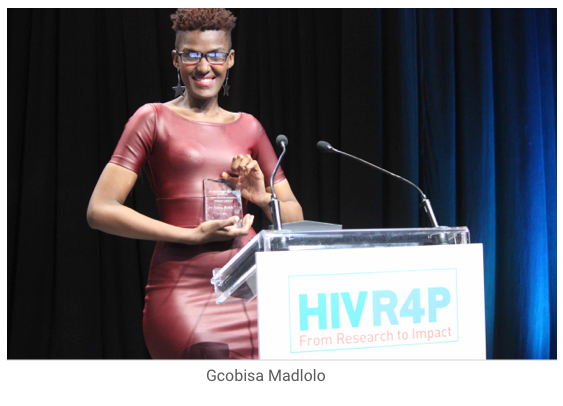
As a young South African woman, she learned about a study called EMPOWER (Enhancing Methods of Prevention and Options for Women Exposed to Risk), which was investigating a combination prevention strategy that included PrEP for young women in Tanzania and South Africa. Madlolo enrolled. She became an early adopter of PrEP and began to speak out about her experience—a loud and proud champion of PrEP, of HIV prevention, and of sexual health rights for women.

Gcobisa Madlolo

When EMPOWER ended in 2017, Madlolo, a mother of twins and a writer and activist, doubled down on her commitment to find and support interventions that work for herself and her community. She transitioned from EMPOWER to a demonstration project known as POWER (Prevention Options for Women Evaluation Research), which is helping to inform the introduction of oral PrEP among African women. Madlolo continued her advocacy too, seizing opportunities to talk openly about PrEP and why it makes sense for her and others.

“I take PrEP because I cannot put the keys to my own health in someone else’s pocket – I want young women and men everywhere to realize that they have to take control of their health,” she said.

For her courageous and inspiring voice and her commitment to participate in these HIV prevention studies, Madlolo was awarded the 2018 Omololu Falobi Award for Excellence in HIV Prevention Research Community Advocacy.

A group of HIV prevention advocacy organizations—African Microbicides Advocacy Group, AVAC, IRMA, Journalists Against AIDS and NHVMAS—gives the award, established in 2008, in memory of Nigerian activist Omololu Falobi, a talented journalist, social justice activist, and advocate for prevention research. Falobi put a spotlight on the importance of Africans taking ownership of their own HIV care and prevention. This was the first time the Committee sought nominations of young people who were study participants and/or early adopters of new prevention interventions and who used that experience to advocate for prevention rollout and inclusion of other voices.

In nominating Madlolo, Professor Sinead Delany-Moretlwe of the Wits Reproductive Health and HIV Institute (Wits RHI), which sponsored EMPOWER and POWER said, “She’s a real powerhouse, and truly the present and future of women’s HIV prevention advocacy. Gcobisa grabs every opportunity to share her PrEP journey, the importance of support, how she is able to adhere to PrEP and how going on PrEP was a life-changing decision for her.”

For young women to consider and ultimately embrace strategies for HIV prevention the role of women like Madlolo, who stands at once as peer, role model, leader and advocate, is indispensable. Madlolo told an audience at the awards ceremony at the Research for HIV Prevention conference in Madrid in October that she too understands how important her voice can be.

“This recognition means that I must go out there even more, more especially to the communities where young women have very limited resources to share, and inspire and encourage them to make the right health choices. I am more determined than ever to be the face of PrEP. I want to go out there to every village, every town, every city and talk to other young people about the importance of protecting themselves.” she said.

Manju Chatani-Gada, Director of Partnerships & Capacity Strengthening at AVAC said, “Omololu was a visionary leader, journalist and HIV prevention activist, who accomplished much in his too-short life. He dedicated himself to HIV prevention research advocacy in Nigeria, Africa and worldwide and to championing the voices of civil society. Omololu would be so proud that the award is celebrating the contributions of trial participants and he’d be even prouder of Gcobisa and her fierce advocacy on behalf of herself and other young women.”

The world needs many thousands of women like Madlolo to widen the road toward prevention….and they are beginning to make themselves known, for which we should all be grateful. Among them, the award committee honored two other women who participated in studies and used that experience to inspire others:

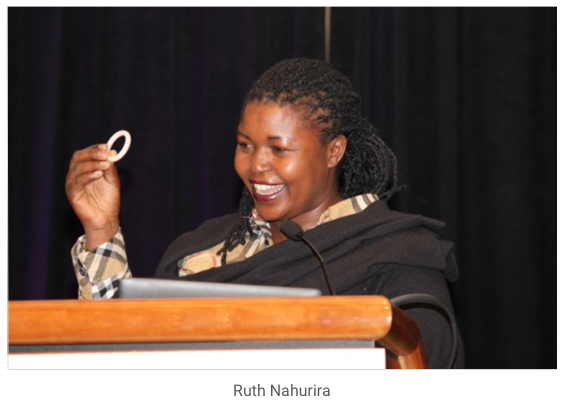
  • Ruth Nahurira, a former participant in the ASPIRE (A Study to Prevent Infection with a Ring for Extended Use) trial and the HOPE (HIV Open Label Prevention Extension), two studies of the dapivirine vaginal ring. Ruth has used her personal story and experience to help sensitize communities – those close to her home in Kampala, Uganda and even globally – about the importance of HIV prevention research, particularly for women. Within the trials themselves, she mentored other study participants, encouraging them to use their assigned rings and to comply with study procedures.

Ruth Nahurira

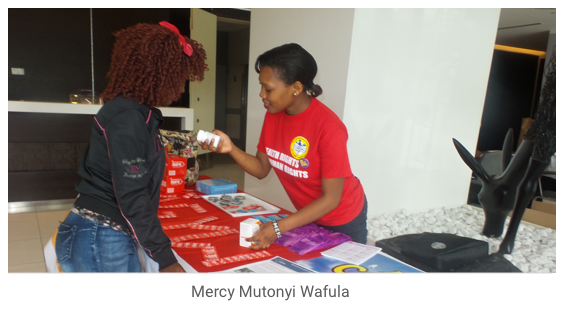
  • Mercy Mutonyi Wafula is a passionate advocate and one of the earliest adopters of oral PrEP in Kenya. Mercy has been part of the PrEP journey from trial phase to someone who has chosen PrEP as her intervention of choice for HIV prevention. Her work with sex workers earned her an opportunity to not only work as a lead PrEP Ambassador, but also as a co-investigator of a PrEP demonstration project. She is also the coordinator of a DREAMS Innovations Challenge project at the Bar Hostess Empowerment & Support Programme (BHESP) that is focusing on creating awareness and demand for PrEP among sex workers in Nairobi.

Mercy Wafula

Since 2008, the Omololu Falobi award has been presented as an ongoing legacy that recognizes his commitment and lasting contributions to HIV prevention research advocacy and honors those who follow in his footsteps. Madlolo received support to attend HIV R4P along with a cash award to help advance her advocacy work for prevention options for young people. The runners up also received a cash award.
Profiles of Madlolo and the two runners up as well as more information about the award, Falobi, and previous recipients are online at www.avac.org/falobi. Click to watch the presentation ceremony at the HIV Research for Prevention Conference.