Feedback is invited from investigators in academia, industry, health care professionals, patient advocates and health advocacy organizations, scientific or professional organizations, federal agencies, and other interested constituents and the community [regarding] possible future directions to maximize benefits of investments in HIV/AIDS research. Click here for more information.
Request for Information: FY 2018 Trans-NIH Plan for HIV-related Research
Funding Opportunity Revision: Applications for US-South Africa Program for Collaborative Biomedical Research
Purpose: To provide supplementary funds to current R01 [U01] awardees to add or expand activities focused on establishing or enhancing substantive research opportunities for underrepresented scientists in the biomedical research workforce in South Africa. Letters of intent are due by July 2, 2016 and applications are due by August 2, 2016. Visit here for more information.
Not If, But When: Gay men gather in Jo-burg to plot PrEP access
It’s been 12 years since I first encountered the notion of PrEP, which was at the AIDS 2004 conference in Bangkok. Before activists trashed Gilead’s booth for alleged trial misconduct, I sat in a session listening to then-Family Health International (now FHI 360) describe its trial designed to see if daily oral tenofovir could prevent HIV in sex workers in Cambodia. I was intrigued by the idea but later on, after several of the PrEP trials were shut down in a swarm of controversy, I lost both hope and track of the trajectory of PrEP. Fast forward over a decade later and PrEP is poised to become a success story. This is why last week’s meeting of mostly gay African men devising advocacy plans for PrEP access felt long overdue, but also perfectly timed.
First of all, the meeting, which was spearheaded by a coalition of out, proud, gay African men from AMSHeR, AVAC, Desmond Tutu HIV Foundation and MSMGF, among others, fell right in the wake of the musician Prince’s death. The gender-bending legend broke all rules about what black men should be and took ownership of his own path. Likewise, the PrEP meeting of over 80 participants made history as the largest gathering of gay and MSM African men to demand PrEP for HIV prevention as part and parcel to achieving social justice.
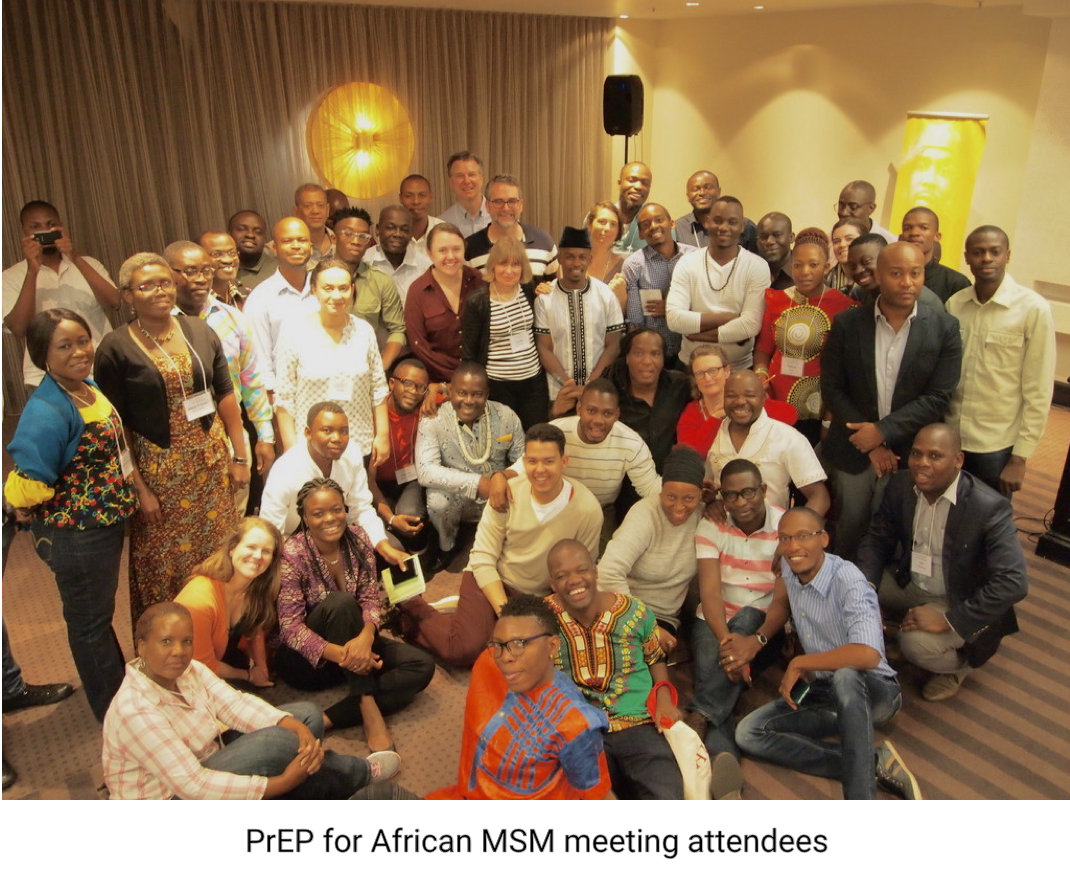
Keletso Makofane (MSMGF and Anova Health) summarized the importance of PrEP when he opened the meeting by stating, “PrEP is overdue but supposed to be delivered by the very systems that are failing us.” He went on to explain that PrEP is necessary for gay men on the continent “because of its efficacy and prevention power and because of the excitement of having sex in a way we haven’t for 30 years.” He also asserted that PrEP could be used as a catalyst to improve HIV care and health services in general. This set the tone for the remainder of the meeting which mapped out how to bring PrEP to scale for gay and MSM communities in Africa.
It’s difficult to capture all that was shared in the three-day meeting but below are some recurring themes.
One of the agreed-upon tactics was to ally with other “key populations”—those over-burdened and underserved communities—so that the push for PrEP for gay men is embedded within the demand for PrEP for all those at substantial risk. This would help avoid gay “exceptionalism” of which there are already reported rumblings.
Convincing national governments that PrEP for MSM would not be an added burden to already strapped health systems is key. To get around this, participants discussed the need for innovative service models that minimize impact on doctors, perhaps through nurse-led PrEP implementation, community-based delivery and self-testing. There’s also a need to tap existing providers such as STI clinics and reproductive health units. Activists at the meeting also discussed that another key way to convince governments of PrEP’s worth and desirability is through costing studies looking at models of test and start along with PrEP.
Jim Pickett (IRMA), the formidable gay prevention activist with folk hero status, entertained participants with snapshots of PrEP promotions from around the globe. The audience was riveted by his hometown Chicago’s prep4love campaign, with pretty yet provocative pics of queer couples. But afterwards, some delegates were disheartened, saying they could not run such gay-forward campaigns in their countries. Not yet, at any rate.
Members from each of the 14 countries represented at the meeting caucused and drafted advocacy plans to jumpstart the post-meeting national coalition work. A WHO rep in attendance promised she’d take these national priorities directly to the WHO representatives of each country to be shared with their health ministers.
The meeting closed on an inspirational note. We now have a roadmap for PrEP as an entry point to bring real change, leading human rights activist and former AVAC Fellow Gift Trapence noted. Or, as another dearly beloved leader put it, “I got a lion in my pocket and baby he’s ready to roar.”
Introducing the VARG: Focusing local lens on global advocacy for HIV vaccines
It has been said that advocates haven’t played a strong enough role in the HIV vaccine field. While this could be debated, it is true that the role of a vaccine advocate is complicated. How can advocates push to support slow-paced, expensive science, that over its history can be seen as having more low points than highs?
These questions and this conundrum simply highlight the need for focused, strategic advocacy to push forward the goal of vaccine development.
Two weeks ago, a group of HIV vaccine advocates known as the Vaccine Advocacy Resource Group (VARG) came together in Johannesburg to meet this need. They discussed the field, dialogued with researchers, and aired concerns and questions about the field’s current status and key developments. The VARG is a global team of AIDS prevention research advocates—made up of 11 individuals from countries key to vaccine research and well connected in those countries to broader HIV advocacy. Since its formation in 2012, the VARG has been convened virtually, and the chance to meet face-to-face for the first time could have been one of the reasons the room buzzed with excitement as the meeting began.
Another reason for the buzz could have been the current state of the field. With vaccine (P5 and Janssen) and antibody research (VRC01-AMP study) fields at exciting junctures, VARG members had a lot to discuss. Some of their questions included:
- What will the results of the AMP study mean for the future of passive immunization? And for vaccine development? Will people really sit for an infusion for 30 to 60 minutes?
- Why is there so much attention around the go/no-go decision making criteria in HVTN 100? What happens if the data indicate a no-go for HVTN 702?
- Would the Clade C vaccine to be tested in HVTN 702 be relevant to other regions? What would the implications be for other countries if the vaccine is found efficacious in South Africa, the only country where 702 would be conducted?
- How are vaccine research groups addressing the inclusion of PrEP in efficacy trials? How will stakeholders be involved as trials are planned and PrEP rollout evolves globally?
Vaccine efficacy trial results are a few years away, but we’re now at a time where advocacy roles are becoming clearer and clearer. VARG members left the meeting together with a new sense of priorities and actions. Watch this space!
To read more about the trials and science mentioned above, please visit www.avac.org/vaccines.
Women’s Prevention Works If Women’s Realities Are Appreciated and Prioritized
Seventy-five advocates from across Africa—friends, allies, researchers—came together for a one-day meeting in Johannesburg on April 14 to discuss the recent dapivirine ring results, what they mean in the broader context of women’s HIV prevention, what comes next and key milestones to plan for.
The recently released results of the dapivirine vaginal ring for HIV prevention demonstrated, for the first time, that an ARV-containing vaginal ring could prevent HIV acquisition. The trial data caused celebration and immediate conversation about what would happen next given that the trial showed both that the ring works and that there may be real challenges with adherence, particularly in younger women.
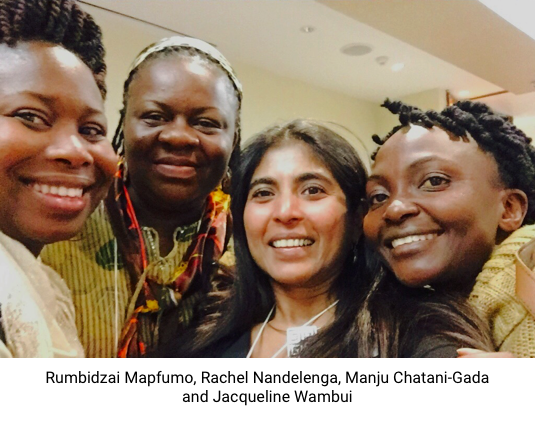
With new programs, funding initiatives and research specifically targeted for women and girls, this workshop convening was an important juncture to pause, take stock, consider the next few years and plan key advocacy priorities. The discussions highlighted the exciting and complicated road ahead for rings and for prevention options for women generally.
This meeting provided an opportunity to unpack and interpret the dapivirine ring results, understand and interrogate next steps, situate the next two years for women’s HIV prevention (research, implementation and funding), and identify advocacy opportunities and areas for further engagement.
Two young women living with HIV set the stage for the day with their personal stories and perspectives on where HIV prevention sits in the context of the lives of young African women. Their stories became a frame for the day—recognizing the special needs young people have for contextualized education about HIV and sexuality, but more importantly that young women are the most powerful champions and MUST be involved in designing and delivering any interventions and decision-making processes that impact their lives.
There was rich discussion on advocacy priorities for the next year or so and what is needed to ensure that women’s prevention is prioritized. Two of the issues raised underpin the way forward for women’s HIV prevention and serve as a call to action for those attending this meeting and other communities across Africa: (1) the need to roll out PrEP now as we wait for rings; and (2) the need to revive activism in the HIV prevention movement.
One of the most important takeaways was that as we consider the exciting biomedical prevention interventions to change the trajectory of the epidemic—race, gender and the unique aspects of women’s lives will continue to affect access to care and prevention. It is critical to situate the research and access in the realities of women’s, and especially young women’s lives, and that context is always important.
Please visit www.avac.org/ring-results-and-next-steps to access meeting presentations and materials.
Where the Rubber Hits the Road…
It’s been an exciting month at AVAC for many reasons, but one of them is because AVAC’s Advocacy Fellows Program hit a milestone: with the welcoming of its seventh class, the program now boasts 50 Fellows and Alumni. In fact, that number is closer to 100 since working alongside each Fellow is a dedicated host [organization] supervisor. AVAC’s Advocacy Fellows Program supports emerging advocates in countries with ongoing or planned HIV prevention research and/or rollout of proven interventions. Fellows, with the support of a local host organization, develop and execute a 12-month work plan to address local or national policy or research gaps.
Since the program’s launch in 2009, 31 women and 19 men from China (1), Kenya (11), Lesotho (1), Malawi (4), Nigeria (2), Rwanda (2), South Africa (11), Uganda (7), Zambia (3), Zimbabwe (8) have used this opportunity to impact their respective countries’ HIV/AIDS agendas. These fearless advocates have played and continue to play a critical role in engaging in research processes, influencing policy, watchdogging, working with media, engaging global funding mechanisms, creating local and international synergies, and amplifying community voices in delivering, demonstrating and developing new HIV prevention and treatment options.
The 50-person mark was achieved in April 2016 when a new class of Advocacy Fellows started their one-year program. As has been the custom since the program’s inception, the year kicks off with an orientation workshop—and this year was no different as Fellows past and present gathered in Johannesburg April 11-13. At the workshop, 2016 Fellows got the opportunity to present their plans for the year ahead, receive feedback from peers, mentors and supervisors, build networks with colleagues from their respective countries and regions and to start the building blocks in biomedical HIV prevention research, implementation and advocacy around it. This workshop was also an opportunity to celebrate the achievements of the 2015 Fellows who graduated from the program.
The graduating Fellows had many wins worth celebrating—influencing major research funding decisions such as a recent one involving next steps of the microbicides rings (e.g., two 2015 Fellows, Anna Miti and Maureen Luba, were invited to a high-level meeting at the National Institutes of Health to help inform the next steps after positive efficacy results of two microbicide ring trials); executing evidence-based advocacy to influence guideline development and implementation plans, (e.g., PrEP in Kenya and South Africa); building coalitions with other civil society partners to identify needs and gaps and creating joint plans to address them, (e.g., viral load testing in Uganda, and coalitions pushing for PrEP for key populations including sex workers, men who have sex with men, and adolescent girls and young women in Kenya, Malawi, Uganda, South Africa and Zimbabwe); advocating to influence funding, including with major donors such as PEPFAR and the Global Fund; building research and implementation literacy amongst civil society, policy makers and the media; and engaging key populations to ensure that HIV prevention research/rollout agenda is sensitive to their unique needs, among others.
“What an opportunity this Fellowship gives to these emerging advocates! I’ve worked in the research field for a while, but this is the first time I’ve seen a deliberate effort to seek out someone from a marginalized group like sex workers and put them at the front and center of leading an advocacy project targeted at that group. We all need to do more of this,” said Kenyan researcher Dr. Kawango Agot, a Supervisor to a 2016 Fellow after a presentation on advocacy for PrEP for sex workers by 2015 Fellow Carolyn Njoroge.
The bar for excellence has been high since the program’s inception, and from what we saw at the workshop, the 2016 Fellows are up for the challenge. The new Fellows and their Supervisors vowed to move the HIV prevention research and implementation agenda to where it needs to be to impact the agenda today.
For the most part, the issues they will be tackling are similar to past Fellows, but the environment is different. For example, in Kenya and South Africa, Truvada (TDF/FTC) is now approved for use as PrEP for HIV prevention; in most priority countries, voluntary medical male circumcision (VMMC) programs continued to rise yet funding to achieve the 80 percent coverage levels in target age groups remain elusive. The DREAMS Initiative is now underway at different levels in most of the countries where 2016 Fellows come from (Kenya, Lesotho, Malawi, South Africa and Zambia); the field recently received positive results from the microbicide dapivirine ring; and new research on vaccines, antibodies for prevention, and long acting injectable PrEP has begun or is expected to begin in some of the Fellows’ countries. These are a few of the many issues that new Fellows will be grappling with and trying to influence over the next year.
The work that these advocates and their partners do, and where they do it, is where the rubber hits the road! To follow the current and Alumni Fellows’ work, go to the Fellows page.
New Film Series Captures Activists United by Urgency for HIV Prevention in Europe
In January 2016, the European AIDS Treatment Group (EATG) and AVAC jointly convened the Second European HIV Prevention Summit in Brussels. This unique meeting brought pharmaceutical companies, public health experts, academics and leading scientists in the field of prevention research together with over 50 European community-based advocates for three days of information exchange and debate.
Participants discussed the latest scientific and policy developments in the field of HIV prevention and formulated demands for researchers, medicine manufacturers and decision makers. The community urged concerted action and clear financial and political commitment to achieve effective prevention of HIV/AIDS in Europe. Specifically, the Summit called for the accelerated approval and rollout of PrEP in countries across the region, following France’s recent example as the first and only in Europe to officially implement and fund PrEP programs for men and women at substantial risk of HIV. The meeting also concluded with a call for the continuation of research for HIV vaccines, and rectal and vaginal microbicides, along with better systems for tracking the epidemic, including where new cases occur and where and how access is happening.
The packed agenda of the European HIV Prevention Summit included detailed reports on and discussions about groups of people at highest risk of HIV across Europe, including gay men, trans people, sex workers, people who inject drugs, migrants and the African diaspora. Timely information from completed, on-going and planned PrEP implementation studies was presented along with new civil society initiatives to provide PrEP and other prevention tools to those who need it. For a rare moment, stakeholders involved in the field of HIV prevention could gather in a space to exchange scientifically sound and politically meaningful ideas about way of slowing down the HIV epidemic in Europe.
In order to make the meeting accessible to those who were unable to attend in person, EATG and AVAC commissioned a three-part video series designed to give an overview of the main topics of the meeting: PrEP, Testing & Treatment, and the Future of HIV Prevention. The first of these films, focusing on PrEP, is now available here. The meeting report is also available for download.
Advancing the development and licensure of vaginal rings and innovative systemic methods for prevention of HIV infection in women
The United States Agency for International Development (USAID) is seeking applications from qualified U.S. and Non-U.S. organizations to fund a project entitled “Advancing the development and licensure of vaginal rings and innovative systemic methods for prevention of HIV infection in women”. For more information click here.
Dapivirine Ring—Past, Present and Future
AVAC’s new issue of Px Wire is an advocate’s guide to the past, present and future of the dapivirine ring for HIV prevention. It features a timeline of key milestones that could lead to licensure, a simple comprehensive Q & A, and a closer look at where sub-Saharan African women will have access to daily oral PrEP and/or the Ring via open-label extension studies. We hope this resource will be used to spark discussion and guide plans for further engagement.
Click to download the new issue of Px Wire.
The full issue of Px Wire, as well as our archive of old issues and information on ordering print copies, can be found at www.avac.org/pxwire.
Introducing Implementation and Access Resources on PrEP Watch
Daily oral PrEP is moving from an idea to an offering in more countries and communities every day. And in the places where it isn’t being offered, demand is growing!
To help advocates track implementation on the ground in detail, AVAC has developed a new section of PrEP Watch (a clearinghouse of information on PrEP science, research, cost, access and advocacy) focused specifically on implementation efforts underway.
On the Implementation Initiatives page, you can find information about some of the different initiatives funding PrEP implementation in sub-Saharan Africa, including the USAID-supported OPTIONS Consortium and the PEPFAR DREAMS Initiative. Information about funder-defined initiatives can help advocates understand who’s who and what’s planned—and to follow the money!
You can also learn about the full spectrum of work happening at country level in Kenya, South Africa and Zimbabwe. As PrEP is rolled out in additional countries, more case studies will be added.
PrEP Watch will continue to grow as PrEP introduction and rollout moves forward and as new efforts and initiatives are started.
Reach us at [email protected] if you have comments or questions.