SRH + HIV integration advocacy, Pandemic Accord, GPP and more!
AVAC’s round-up of resources, updates and insights this week includes a new roadmap for sexual and reproductive health (SRH) and HIV integration, resources to support an equitable Pandemic Accord, innovations in Good Participatory Practices (GPP) and more!
The power of choice in contraception, sexual health and HIV prevention this World Contraception Day
Copper Rose Zambia, as a part of CASPR and AVAC launched a new resource addressing the critical need for integrated SRH and HIV services. This roadmap provides key steps for success, focusing on collaboration, strategic mapping and targeted advocacy.
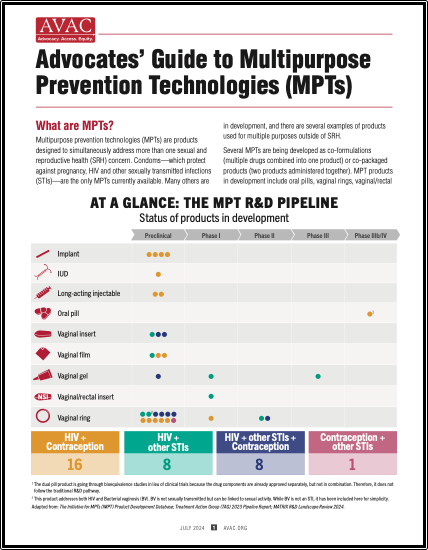
MPTs are products designed to simultaneously address more than one sexual and reproductive health concern. This advocates’ guide shows the pipeline of products in development, discusses why MPTs are needed, investment, and what advocates can do to push for MPT development and introduction.
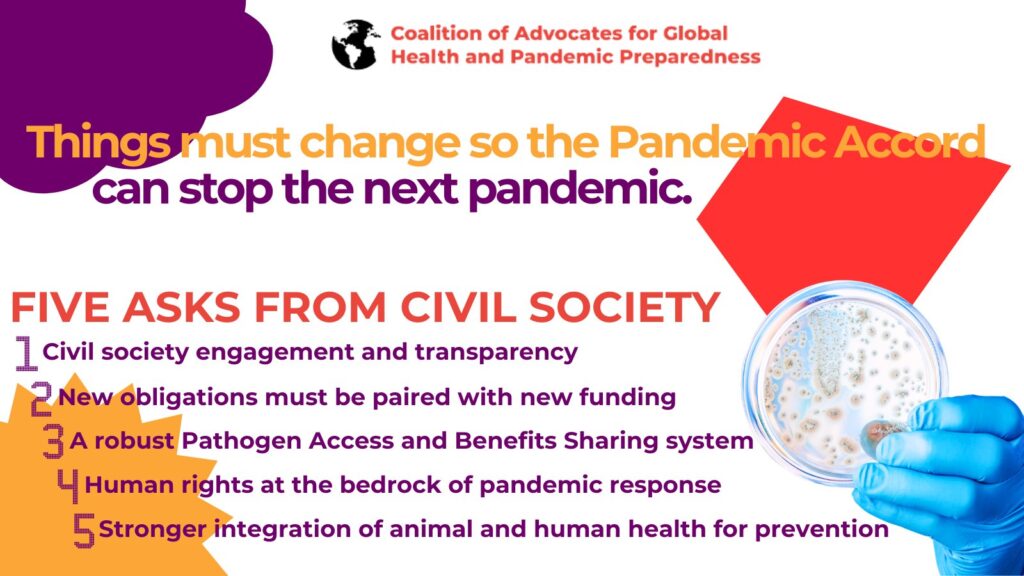
A group of organizations advocating for an integrated and holistic approach to preparedness that emphasizes equity, inclusion, and synergies of multiple global health programs in advancing preparedness, shares five priorities in Pandemic Accord negotiations.
AVAC’s Sam Rick moderated CISDI’s event alongside Nina Schwalbe, Lawrence Gostin, Eloise Todd and others, reminding the audience that for pandemic prevention, preparedness and response (PPPR) to succeed, lessons from the HIV response must be integrated into the architecture being built for PPPR.
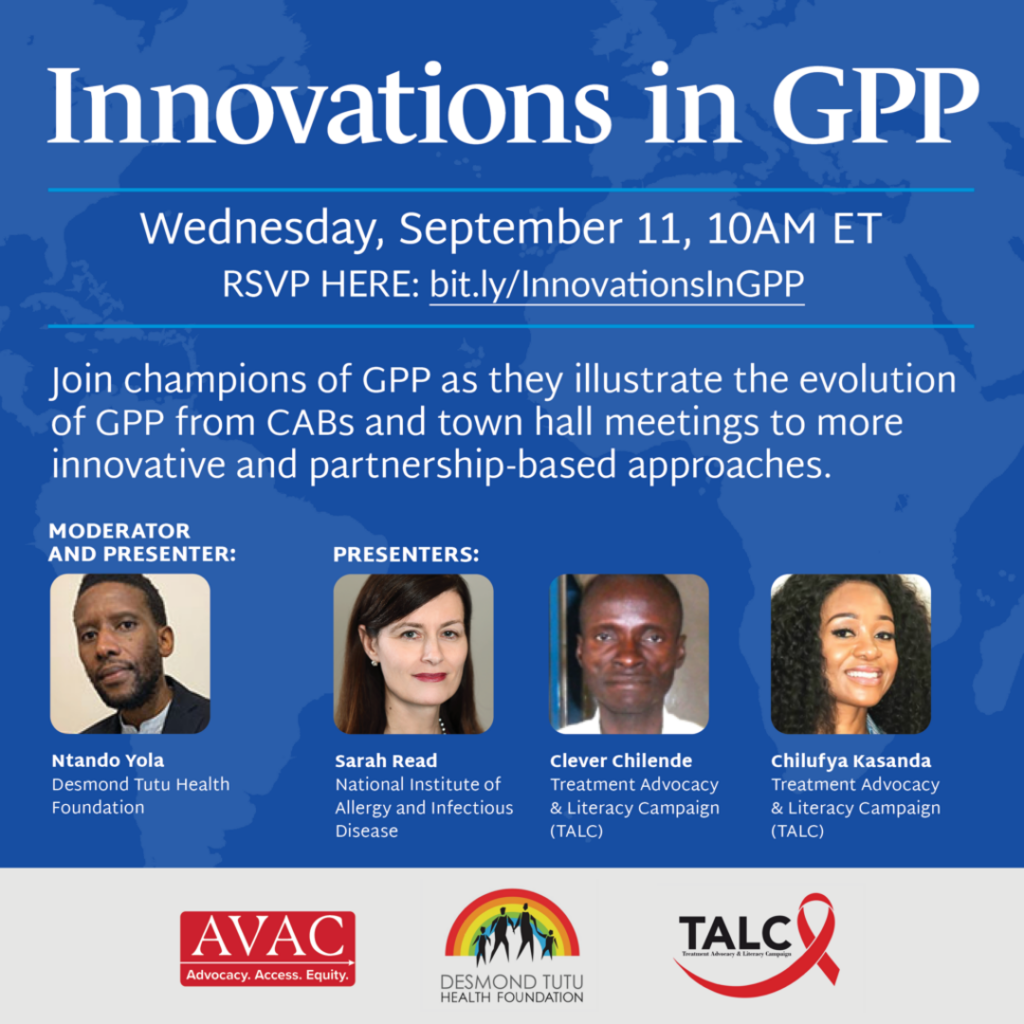
The 2024 Good Participatory Practice Online Course is now accepting applications for 30 spots! This course offering will run 14 October – 20 December 2024. The application deadline is 9 October.
Harnessing private sector strategies for family planning to deliver the Dual Prevention Pill, the first multipurpose prevention technology with pre-exposure prophylaxis, in an expanding HIV prevention landscape
Working with colleagues, AVACers Cat Verde Hashim and Kate Segal published this research article in the Journal of the International AIDS Society. The researchers undertook qualitative research in Kenya, South Africa and Zimbabwe to prioritize private sector service delivery approaches for the introduction of the DPP.
First Full Day of AIDS 2024
Lenacapavir for PrEP has taken center stage at the 25th International AIDS Conference, #AIDS2024, which opened Monday with many highlighting its potential for long-acting PrEP for HIV prevention. Some advocates took to the halls in protest calling on LEN’s maker to price the product low. Leaders across HIV voiced the need for urgency in galvanizing support for the introduction of lenacapavir. “It is gobsmackingly exciting to see zero in a clinical trial” AVAC’s Mitchell Warren told Forbes. The potential to bend the curve of the epidemic depends on speeding access to prevention options like LEN, that show high efficacy.
At the same time, it’s imperative to remember that neither lenacapavir, nor any other single product, now or in the future, will ever be a ‘miracle drug’, and LEN must not be equated with a vaccine, as seen in some conference media reports.
Ongoing investment in the pipeline for HIV prevention must be founded on the principle of choice, offering a range of products to meet diverse needs among people facing the risk of HIV. We hope that vaccines will one day be among those choices, as will long and short-acting products, and topical and systemic products. Clear communication that allows product users to understand how products are different supports widespread adoption of HIV prevention and moves the world toward finally ending the epidemic.
See AVAC’s statement calling for early planning to accelerate LEN’s regulatory review and for ambitious introduction plans, and the joint civil society call to action with specific priorities about what needs to happen next. Our primer, the Lens on LEN, also offers advocates a guide in explaining the findings from the Purpose 1 trial and next steps for advocacy.
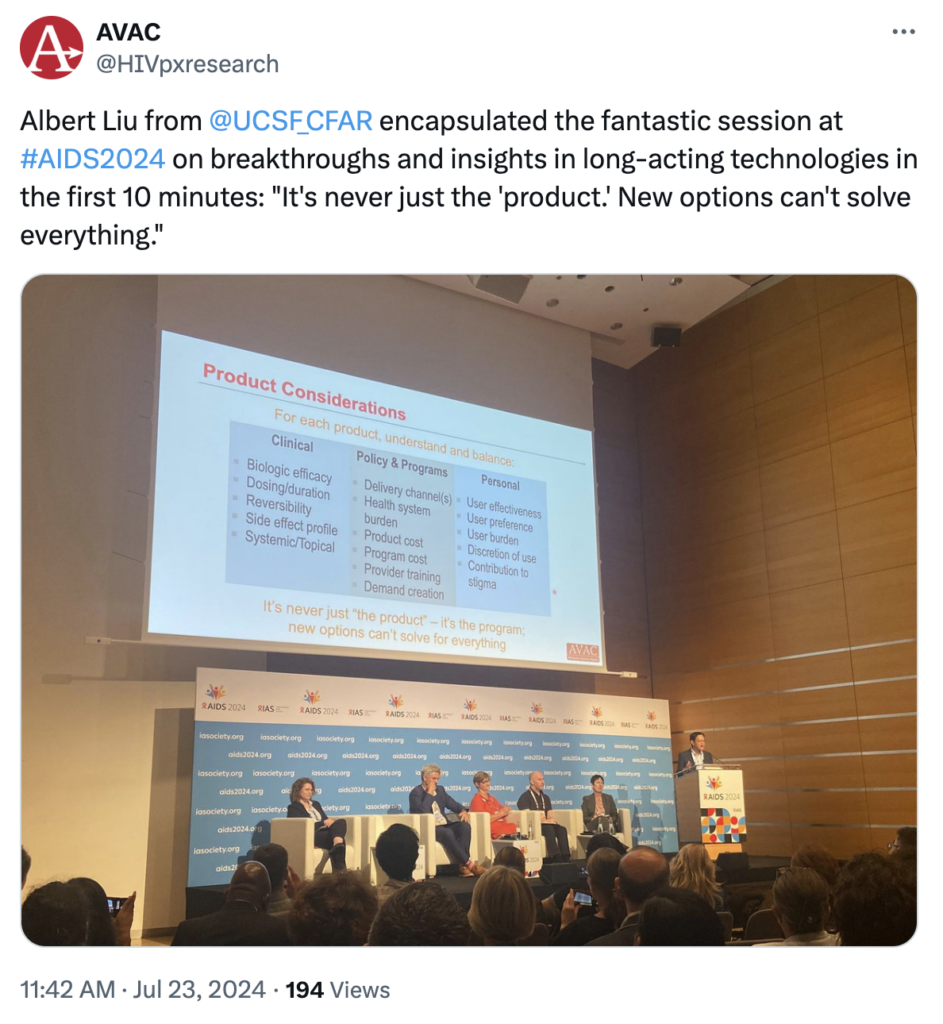
As Albert Liu from UCSF’s Center for AIDS Research told delegates in the symposium on breakthrough and insights in long-acting technologies, “It’s never just the ‘product.’ New options can’t solve everything.” Atul Gawande of USAID reiterated a similar message at the satellite focused on women’s prevention, “The critical message to understand is that there isn’t going to be a magic bullet for prevention. What we have to understand is that there are also considerations that affect the likelihood that women will have what they want and what they’re likely to use.”
People First
The conference theme, “Put People First,” is the main message we all must hear. Lillian Mworeko of the International Community of Women living with HIV/AIDS East Africa (ICWEA) captured the essence of the meeting: “I am not just a recipient of care. I need a seat at the table to meaningfully engage and tell people what I need and how I need it.”
Monday’s opening session underscored the vital role of community engagement and the necessity for inclusive policies that address disparities affecting marginalized populations. Jay Mulucha of Fem Alliance, Uganda, the first trans man to speak at the International AIDS Conference, delivered a compelling message to the 12,000+ delegates attending both in person and online: “As a trans man living in Uganda, I am asking you to stop leaving us behind. Nothing about us, without us.”
New UNAIDS Report
UNAIDS released a report, The Urgency of Now, AIDS at a Crossroads calling out funding disparities and the need to dismantle the discrimination and stigma that are pushing the most marginalized people away from health care. The report warned of the peril in delayed funding decisions; investment needs to happen urgently for long-acting treatment and prevention options to reach all low- and middle-income countries and meet 2025 targets.
Money, Money, Money
Making the most of investment in HIV prevention fundamentally depends on political will, but the field needs the right data, too. Monday’s satellite session, Money, money, money: Building towards a sustainable end state for HIV prevention, called for better data that goes beyond PrEP initiation numbers. “[PrEP initiations] alone do not tell us how much product is needed or how long people stay on PrEP. We are not collecting the right data,” said Katherine Kripke of Avenir Health. AVAC’s Mitchell Warren described the vicious cycle of small pilot projects generating limited data on PrEP use, resulting in unpredictable demand and cautious investment. “We have lots of small examples, and then we don’t scale it up because governments don’t know what it will cost. And still the world has 1.3 million new infections. We have to break the cycle.”
Sharon Hillier of Magee-Women’s Research Institute noted, “What we’ve learned in our research is that women care about efficacy, but it’s just one element of what they consider when they decide on prevention. They’re quite interested in safety, ease of use, discretion, price, availability, and accessibility.”
Stay tuned for more highlights from AIDS 2024 and visit our curated conference webpage, which includes new resources and summaries of the preconference sessions.
On this episode of the Advocacy Chronicles: a look at advocacy in Uganda for the Dual Prevention Pill (DPP), a new product combining oral PrEP and oral contraception.
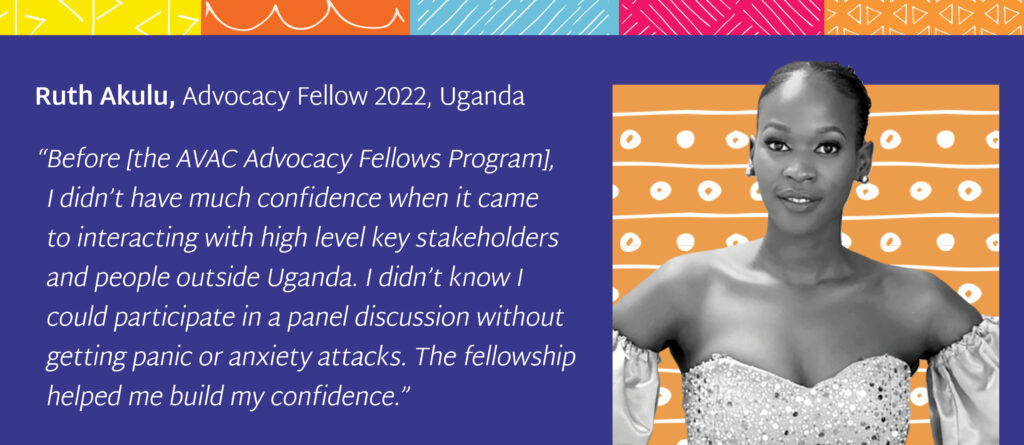
Ruth Akulu is a Youth Representative of the Uganda Country Coordinating Mechanism Board for Global Fund, member of the DPP Civil Society Advisory Group, and a 2022 AVAC Advocacy Fellow. Akulu talks about her work to mobilize regulatory authorities to prepare for the DPP. And while she was at it, the establishment of a groundbreaking new initiative, the Product Regulator’s Engagement Committee, which is supporting ongoing engagement between government regulators and young women representing their communities.
Listen to learn why the DPP is a priority for young women and HIV prevention, the challenges Ruth confronted and tactics that supported the success of this advocacy.
AIDS 2024: New Ways for the Next Wave: Innovative R&D for the future of women’s prevention
This session will be 9:30AM to 11:00AM Munich time.
Women need a range of HIV prevention options to meet different needs, preferences and life circumstances. Currently available pills, rings and injectables are necessary but insufficient. How might we accelerate the delivery of methods we have while developing additional ones – including systemic and non-systemic methods, short-acting and on-demand products, to complement longer-acting ones? Product developers and advocates are collaborating on new approaches to expedite R&D of additional HIV prevention options. Notably, MATRIX is taking a unique approach, endorsed by the CASPR network of advocates, that aims to improve the odds of success of new products – through development, delivery and use.
This session will focus on new efforts to identify and develop promising options, strategically engage all stakeholders, decolonize R&D and involve potential users in all their diversities throughout the process.
Speakers:
Jeanne Marrazzo, National Institute of Allergy and Infectious Diseases
Sharon Hillier, University of Pittsburgh / Magee-Womens Research Institute
Kelly Chibale, Holistic Drug Discovery and Development Centre -H3D, University of Cape Town
Nyaradzo Mgodi, University of Zimbabwe- Harare Health Research Centre
Jerop Ruth Limo, Ambassador for Youth and Adolescents Reproductive Health Program (AYARHEP)
Moderators:
Navita Jain, AVAC
Kenneth Ngure, Jomo Kenyatta University of Agriculture and Technology
Session Chairs:
Sharon Hillier, University of Pittsburgh / Magee-Womens Research Institute
Imelda Mahaka, Pangaea Zimbabwe
This satellite session will be co-hosted by CASPR and MATRIX, with support from USAID and PEPFAR.
Tracking PrEP Rollout & Learning Lessons
Accelerating the rollout of the full range of proven HIV prevention options depends on learning from what’s been done in the past and investing in coordination and innovation to put improved solutions in place. The Biomedical Prevention Implementation Collaborative (BioPIC) is doing just that. Over the last two years, BioPIC—a project led by AVAC with support from the Gates Foundation—has been gathering and sharing evidence on these critical lessons to ensure the next generation of HIV prevention products reaches everyone who needs and wants them with much greater speed and equity.
What We’re Learning—Highlights from 2024 Convenings
An ongoing series of think tanks, convened by BioPIC and WHO since 2021, are generating key insights for people-centered product delivery. Below, read the latest reports from these think tanks that are informing decision-making on priorities for accelerating access to PrEP. Go to the BioPIC’s page on PrEPWatch to find reports on all think tanks since 2021.
Early Insights from EBONI and PILLAR, February 2024: Early insights from ViiV Healthcare, the manufacturer of CAB for PrEP, from two CAB for PrEP implementation studies, EBONI and PILLAR. Conducted by ViiV in the US, these are among the first studies gathering data in real-world settings. Learn more
Taking Stock of PrEP Evidence, March 2024: An analysis of current data and priority evidence gaps. This inquiry was not focused on any one PrEP product, and its findings are informing the focus of future think tanks. Learn more
Discussing Early Results from the SEARCH Dynamic Choice Study, April 2024: Professor Moses Kamya of Makerere University shares early insights from the SEARCH Dynamic Choice Study in Kenya and Uganda, which gave participants a choice between oral PrEP, PEP, and CAB for PrEP, and analyzes the role of choice in PrEP coverage. Watch here
PrEP and the Role of HIV Self-Testing, May 23: Highlights from the WHO guidance on use of self-testing (HIVST) as an innovative way to increase PrEP access and coverage and further simplify PrEP delivery. Panelists also share experiences with procurement, costing, rollout and scale-up. Watch Here
We hope you will book mark these resources, and stay up to date on findings from future think tanks and webinars in 2024 on the BioPIC page of PrEPWatch.
Avac Event
The More We Know: Evolving our understanding of PrEP for cisgender women
Science and real-world experience continue to demand a re-assessment of our collective understanding of the safety and effectiveness of PrEP options for women, including oral, vaginal ring, and injectable options. For instance, a new paper in the Journal of the American Medical Association by Dr. Jeanne Marrazzo (HIV Pre-Exposure Prophylaxis with Emtricitabine and Tenofovir Disoproxil Fumarate Among Cisgender Women) challenges the notion, baked into policies, programs and “conventional wisdom”, that cisgender women need to be “super-adherers” to achieve protection utilizing oral PrEP. In this webinar, we discussed this important paper and more.
Speakers: • Dr. Jeanne Marrazzo, National Institute of Allergy and Infectious Diseases • Joyce Ng’ang’a, WACI Health
Remembering a Legacy and Celebrating AVAC Fellow Alumni
For over a decade, the AVAC Advocacy Fellows Program has played a role in shaping the landscape of HIV prevention by strengthening leadership skills and building a growing and evolving network of fierce and unstoppable advocates. Last year, AVAC released A Legacy of Impact: The power and reach of AVAC’s Advocacy Fellows to tell the story of the Fellows program and to share testimonies of impact from research to policy, and beyond.
Today, on Martin Luther King Jr. Day, a day dedicated to the importance of advocacy to influence change, AVAC honors its nearly 100 Fellow alumni and applauds our most recent class which closed out their fellowship in December.
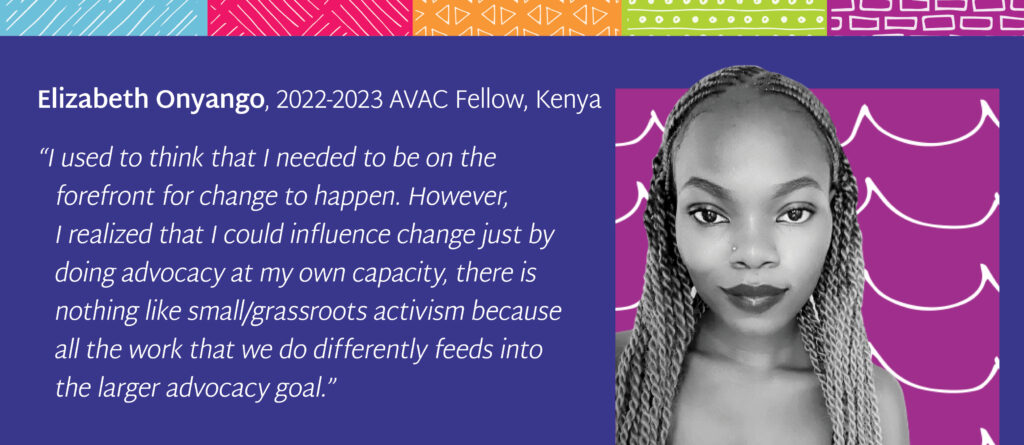
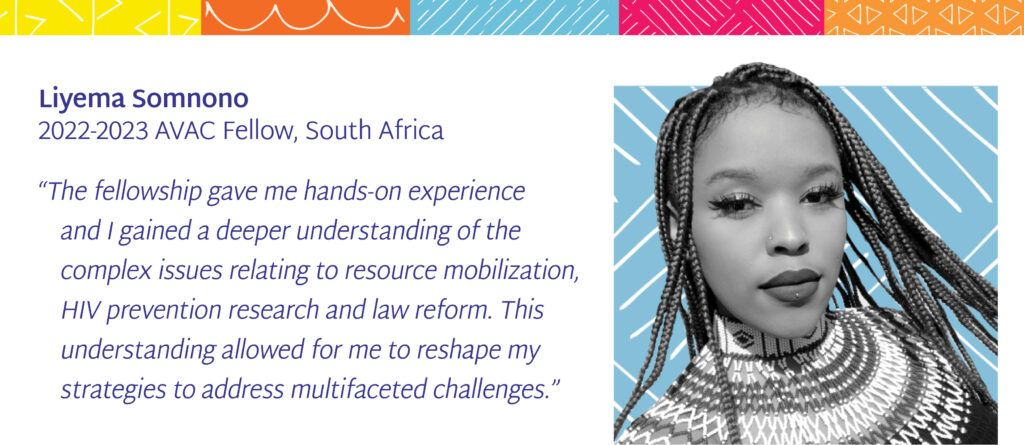
Read on for testimonies from the AVAC 2022/2023 Fellows and explore their work in their individual pages.
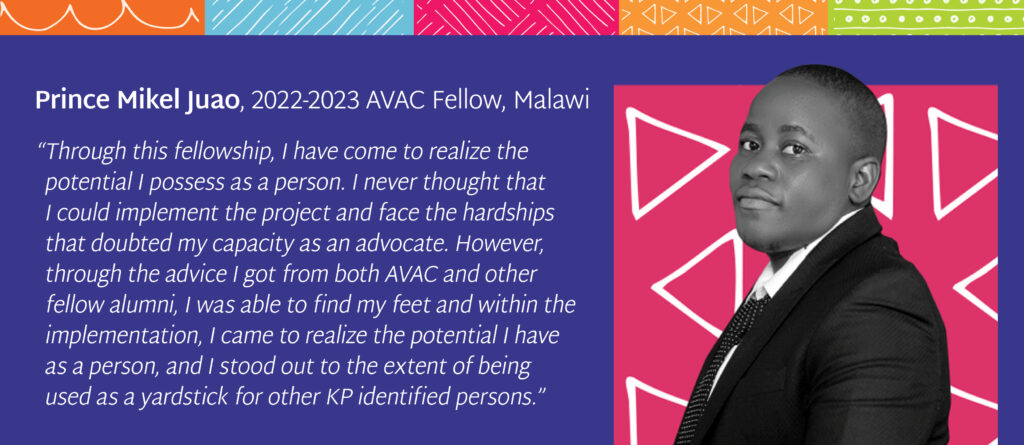
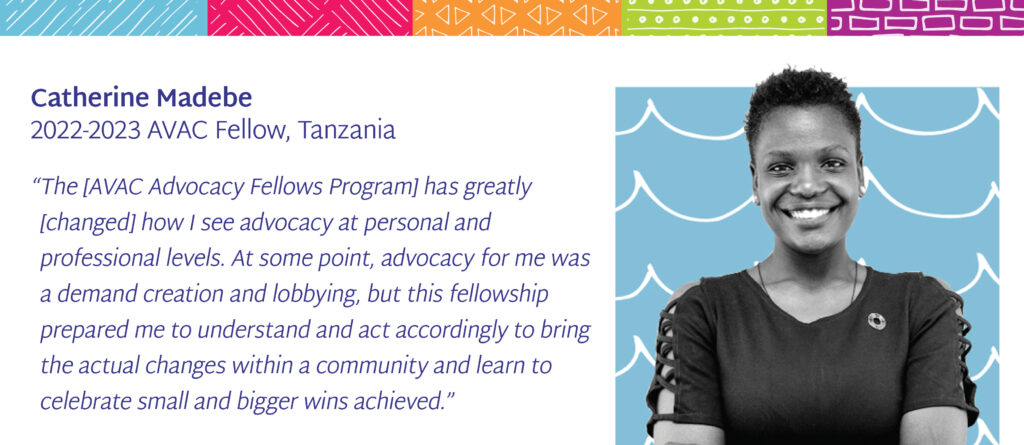
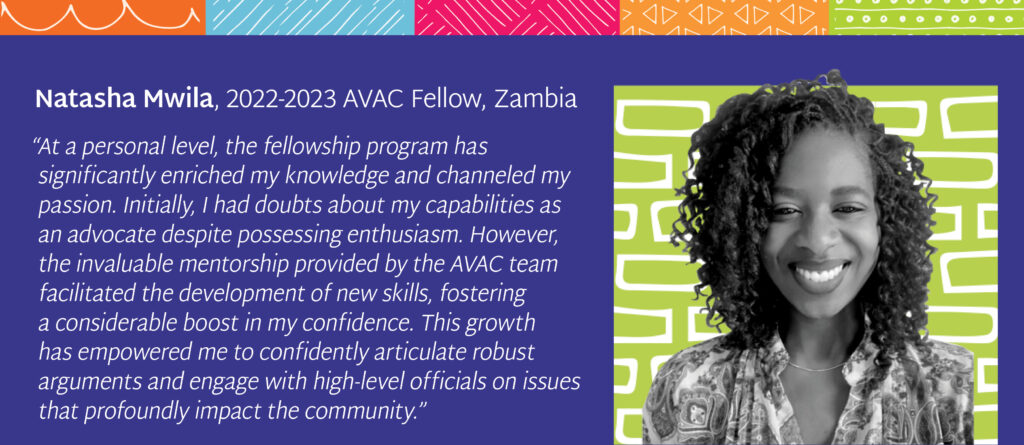
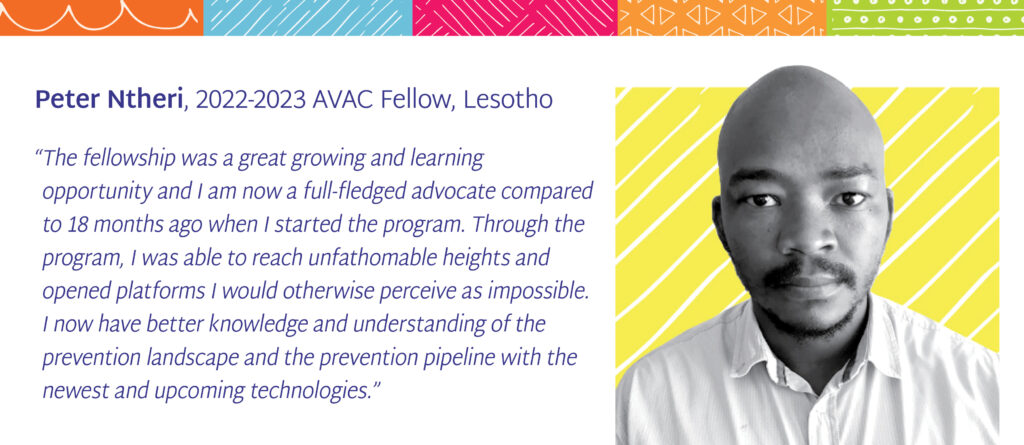
AVAC 2022/2023 Fellows in their words
Learn about Ruth’s work around the approval and rollout of the dual prevention pill (DPP) in Uganda here.
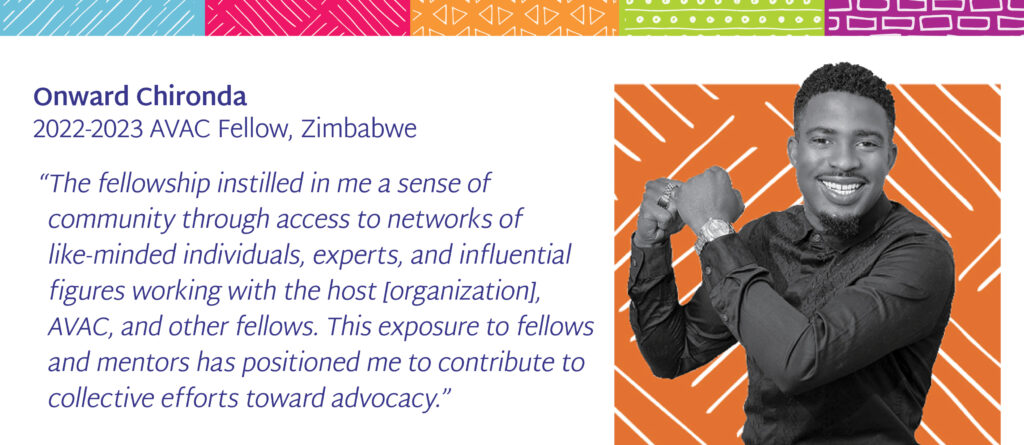
Learn about Onward’s work with engaging religious institutions on adolescent sexual and reproductive health in Zimbabwe here.
Learn about Prince’s work ensuring access to injectable CAB for PrEP for trans people in Malawi here.
Learn about Catherine’s work in the rollout and implementation of the dapivirine vaginal ring for adolescents and young women (AGYW) in Tanzania here.
Learn about Natasha’s advocacy for the approval of the dapivirine vaginal ring and injectable CAB for PrEP in Zambia here.
Learn about Peter’s work with differentiated service delivery of PrEP and expediting new PrEP tools in Lesotho here.
Learn about Elizabeth’s work advocating for sex workers and people who use drugs (PUD) here.
Learn about Liyema’s work on advocating and implementing the decriminalization of sex work in South Africa here.
Get to know the full AVAC Fellows community by exploring the full alumni database and stay tuned to meet the 2024/2025 class to be announced in April!
New Year, New PrEPWatch Resources
In 2024 we look forward to continuing to provide advocates with tools to support our collective work to ensure access to PrEP in all its forms to all who can benefit from it.
PrEPWatch.org has grown significantly in the past year, reaching a growing number of implementers, policy makers and advocates with continually updated tools and information that are instrumental to delivering the growing range of HIV prevention options. Throughout 2023, visitors from every country in the world have used PrEPWatch.org, a one-stop online clearinghouse of data, guidelines, tracking tools and other resources to help the global community speed the delivery of every proven method of PrEP to everyone who needs it. Check out what’s new and updated on PrEPWatch.org!
PrEPWatch has added 35 new country pages where you can find the status of drug registration for PrEP products, data on PrEP initiations by product, country-level PEPFAR targets, and links to key policy documents and guidelines.
The Integrated Study Dashboard
Produced under the BioPIC project, the Integrated Study Dashboard tracks all currently known activities relating to implementation research, modelling, clinical research, and landscaping for new biomedical HIV PrEP options, including CAB for PrEP and the dapivirine vaginal ring (DVR), and has been recently expanded to include links to study results and study websites. The dashboard is updated in real time, and links to results will be added as they become available.
More Essential Resources on PrEPWatch.org
Tracking Country Planning for Product Introduction
The Country Planning for Product Introduction Matrix tracks key indicators for the introduction of injectable CAB and the DVR by country, including regulatory status, late-stage clinical trials and implementation research, procurement plans, and recent oral PrEP provision.
Training PrEP Champions
Among the most popular resources on PrEPWatch, the HIV Prevention Ambassador Training Package and Toolkit prepares potential and current PrEP users to be leaders – and “Ambassadors” – in the rollout of PrEP for HIV prevention in their communities. Developed as part of the MOSAIC project, it includes a training manual and resources for Ambassadors to use in peer outreach and community education.
Trends in PrEP Initiations
The Global PrEP Tracker provides quarterly updates on global trends in PrEP initiation by geography, delivery models, and more. The Global PrEP Tracker has become an indispensable resource for following the state of the field in delivering PrEP.
We hope these tools, created through strong partnerships and joint effort, support your work to accelerate the delivery of HIV prevention options. We are always interested in collaboration to ensure needed resources are developed and up to date. If you have information to share or resource needs, please let us know by reaching out to [email protected] and [email protected].