This was the third webinar in our series addressing a range of topics in HIV prevention research, hosted jointly by NAM and AVAC. We were joined by an expert panel discussing treatment as prevention, who took questions following their presentations. To view the full Flash animation of the webinar, click here.
Avac Event
Treatment as Prevention: Evidence from Europe and beyond
Avac Event
Treatment as Prevention Perspectives in Europe: An update
Hosted jointly by NAM and AVAC, the last webinar for 2013 in our series addressed a range of topics in HIV prevention research, including the development of the EATG/NAM community consensus statement on treatment as prevention, a set of principles intended to guide policy on access to antiretroviral therapy for prevention purposes for people with HIV, to be launched in January.
To view the full Flash animation of the webinar, click here.
Avac Event
US Conference on AIDS
Thousands of community leaders, front-line workers, policy makers, physicians and advocates from throughout the US met for the United States Conference on AIDS (USCA). What follows is a short list of biomedical HIV prevention research and implementation-related sessions and links to the Black Treatment Action Network/PxROAR Advocates’ Roadmap and full conference program. (The Black Treatment Action Network is a project of the Black AIDS Institute.)
The BTAN/PxROAR Advocates’ Roadmap highlights workshops, seminars and roundtables on a range of issues such as HIV prevention advocacy, access to treatment, linkage to care and the treatment cascade. Advocates who attend Roadmap sessions at the conference are eligible for prizes. Click here for more information.
Sessions of interest for biomedical HIV prevention advocates included:
Saturday, September 7
- National Black Treatment Advocates Network pre-conference session: “Reaching Viral Suppression in the Black South”.
Sunday, September 8
- Workshop: Structural-level Interventions for HIV Prevention – Strategies for program implementation.
- Workshop: An HIV Cure: How close are we?.
Monday, September 9
- Workshop: Biomedical HIV Prevention as a Comprehensive Approach to Reaching an AIDS Free Generation.
Tuesday, September 10
- Workshop: PrEP Messaging.
Wednesday, September 11
Avac Event
New WHO guidelines on the use of ARVs for treating and preventing HIV
On June 30, the World Health Organization (WHO) released updated Consolidated guidelines on the use of antiretroviral drugs for treating and preventing HIV infection. AVAC, Global Network of People of Living with HIV (GNP+), the International HIV/AIDS Alliance (Alliance), and STOP AIDS NOW! (SAN!) held a webinar to discuss the guidelines and a new tool—Community Guide to Treatment as Prevention Programming.
The call included a brief overview of the guidelines by Gottfried Hirnschall, the Director of the Department of HIV/AIDS at WHO, as well as other resource people who were involved in the development of the guidelines and are engaged in translating these guidelines into practice.
In addition, Moono Nyambe from GNP+ discussed the “community” reactions toward the guidelines and described the collaborative effort led by GNP+, Alliance and SAN! to develop the Community Guide (to help communities understand the substance of the WHO guidelines and get involved in programming and implementation at country level).
Ntokozo Zakwe
Ntokozo is an HIV prevention and women’s health rights advocate. She currently works with Community Media Trust (CMT) as the DREAMS Safe Spaces Facilitator. Her passion for advocacy for women’s well-being has been intensified by her personal experiences as a young woman in South Africa who has struggled to stay HIV-negative, withstanding all the challenges and factors that leave women vulnerable to HIV. She has worked for the NGO Health Systems Trust, serving as a District Administrator in their DREAMS program and was chairperson of the UMgungundlovu District AIDS Council Youth Sector.
Fellowship Focus
Ntokozo’s project sought to influence young women’s access to gender-based violence (GBV) prevention, care and support in their communities as part of a comprehensive HIV prevention package in South Africa. She successfully spearheaded the inclusion of PrEP in centers that care for survivors of violence in KwaZulu Natal. She established a coalition of young women warriors who understand and influence GBV and HIV prevention policies and programs and she advocated for a roadmap for comprehensive GBV services and care in HIV prevention research in South Africa.
In Their Own Words
We must advocate and fight for the vulnerable populations and to ensure that the next generation does not go through half of the things we went through and that they won’t have to fight the same battles we’ve had to fight.
Ntombozuko Kraai
Ntombozuko has been a coordinator of Wellness Foundation’s Young Urban Women project in partnership with ActionAid International. She is a human rights activist focusing on young women and sexual and reproductive health with a special interest in gender-based violence. She has mobilized and educated the community around voluntary medical male circumcision, PrEP, microbicides, clinical trial conduct and more. She has also represented community on the protocol development teams for the vaccine study, HVTN 097, and the microbicide ring study, ASPIRE 020. Ntombozuko is raising three children—two boys and a daughter—and her desire is to see them respect women and to see violence of any kind as a crime.
Why I want to advocate for HIV prevention in 2016?
In South Africa, the HIV incidence rate amongst females aged 15-24 is four times higher than males the same age. There has been a lot done on HIV treatment, care and support, despite the current challenges of antiretroviral stock-outs. Activism has been built for many years and many HIV positive heroes have changed the status quo. We can learn as prevention activists from the ARV rollout but research is still a new concept for many communities. There is a need to educate young women on new biomedical prevention methods, the importance of research and how it’s done so that they will become champions of an HIV free generation.
Grace Kumwenda
Advocacy Accomplishments for the Year
During Grace’s Fellowship project year, she led the drafting of PrEP guidelines for Malawi’s Ministry of Health, ensuring the inclusion of PrEP for key populations in the 2018 treatment guidelines. Grace also identified the need for viral load testing as a key advocacy gap in Malawi where she worked on demand creation for its scale up. Her proven leadership as a Fellow facilitated her selection to be co-investigator for Malawi’s first PrEP demonstration study for sex workers. Grace’s work also paved the way for her organization Pakachere to become a selected member of the newly formed Global Coalition for HIV Prevention.
In Her Own Words
The project has changed my perception of advocacy totally. The fellowship year taught me the power of one’s voice, the power of coordinating with others to strengthen that voice and most importantly I learnt the importance of evidence, data and learning. I come out of the fellowship believing that I CAN influence change unthinkable, believing that I don’t need to be a medical doctor to be a bio-medical prevention advocate. I have learnt that advocacy is about talking to the right people in the right forums and that no voice is small!
Materials
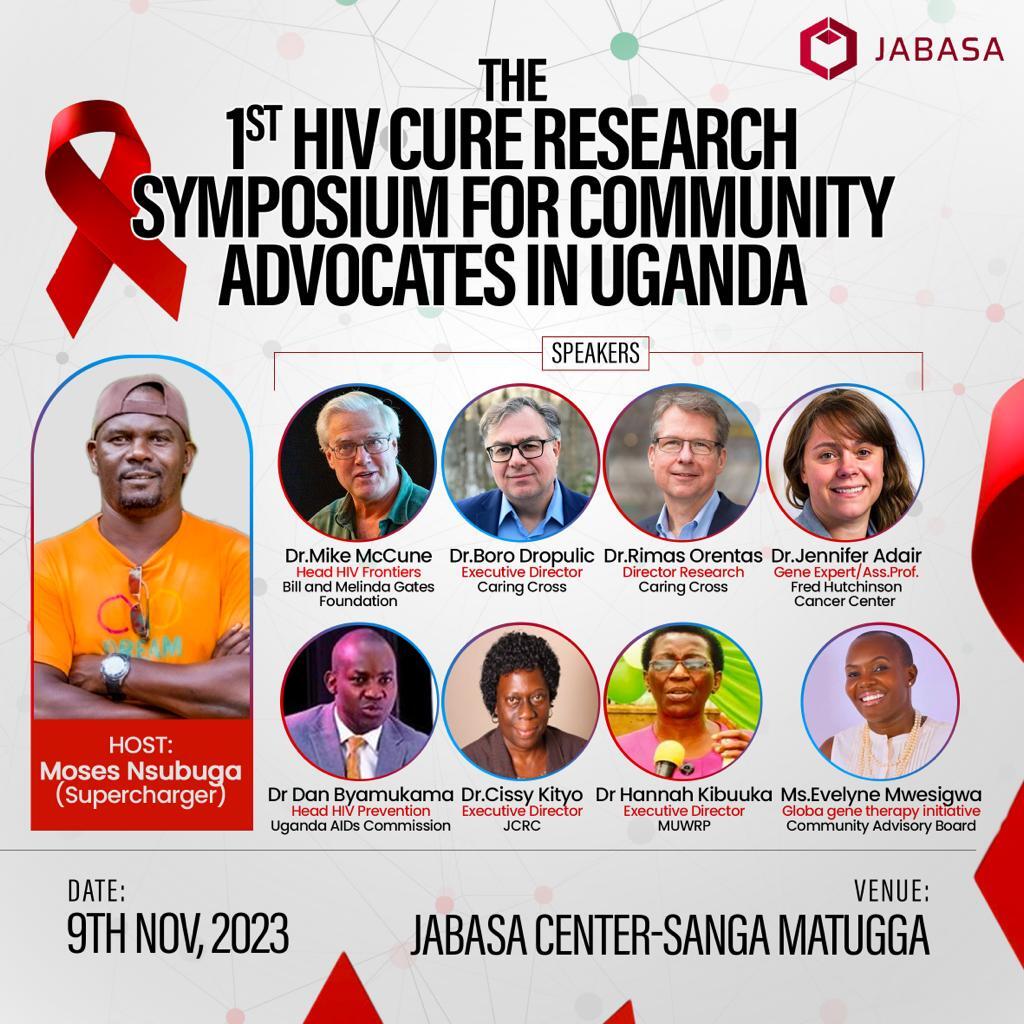
Moses “Supercharger” Nsubuga
Moses is a musician, radio and TV presenter and HIV advocate who has lived with HIV since 1994. He has used the courage from the early days of his diagnosis to propel himself to the global stage as one of the most formidable HIV prevention, treatment and cure research community advocates. He currently chairs the Joint Clinical Research Centre’s Community Advisory Board and represents the African community on the ACTG, INSIGHT and AIGHD boards. He is currently training new prevention and cure research advocates and is also fundraising and constructing an HIV treatment and adherence center in Uganda.
Fellowship Focus
Moses’ Fellowship advocacy objective was twofold: to campaign for widespread use of viral load testing along with third-line treatment for those with ARV drug resistance and to put the need for cure research front and center in Uganda. He achieved the commitment of third-line therapy with support from PEPFAR. He also created the CRAG (Cure Research Advocacy Group) and co-hosted Africa’s first cure meeting for civil society advocates with IAS and AVAC. He projected the need for cure research through his radio program, and as a musician, has spread the word through songs about HIV drug resistance.
In Their Own Words
I will continue with my advocacy and spread the gospel to end the epidemic in every area. I hope to continue organizing cure meetings and plan to lobby IAS to take the cure academy to West Africa. I continue to lobby the Ministry of Health to regionalize third-line services and promote adherence interventions.
Materials
- The 1st HIV Cure Research Symposium for Community Advocates in Uganda – Nov 9, 2023
- I Traveled Home Next to my Coffin to Die, HICGI News Agency
- Video: Crying for Third Line in Africa
- Drug Resistance Flyer
- Song: Say No to Resistance
Moses was featured in a BBC World Service podcast. Listen to “Travelling Home Next to My Coffin”. He also appears in an article “I was diagnosed with HIV 25 years ago” in The Daily Monitor.
Sylvia Nakasi
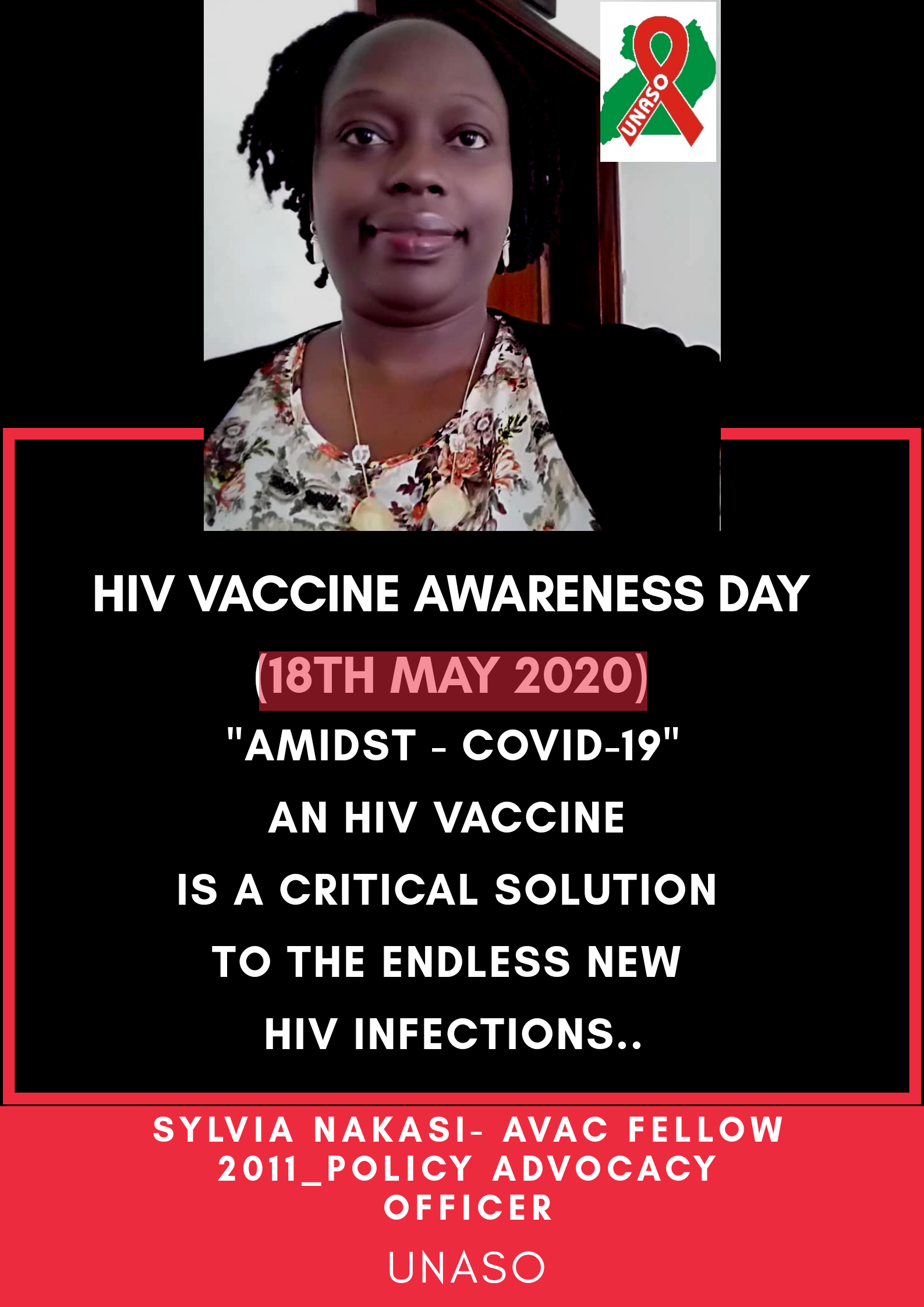
Sylvia is currently the Acting Executive Director for the Uganda Network of AIDS Service Organisations (UNASO). She has extensive experience working on HIV prevention, research advocacy and program development and management, with specific focus on project cycle management, resource mobilization, capacity building, networking and advocacy at the community, district, national and international levels.
Fellowship Focus
Sylvia documented lessons learned about VMMC for HIV prevention implementation and influenced its rollout in Uganda. She also explored and documented perspectives regarding ARV-based prevention in Uganda in order to prepare for the possible introduction of pre-exposure prophylaxis (PrEP), 1% tenofovir gel and treatment as prevention.
In Their Own Words
In my opinion, as advocates it’s our duty to bridge the knowledge gap in our communities, sensitize the communities and help change their attitudes and behaviors towards interventions that would most benefit communities to make prevention and treatment a reality.
Sylvia’s Advocacy
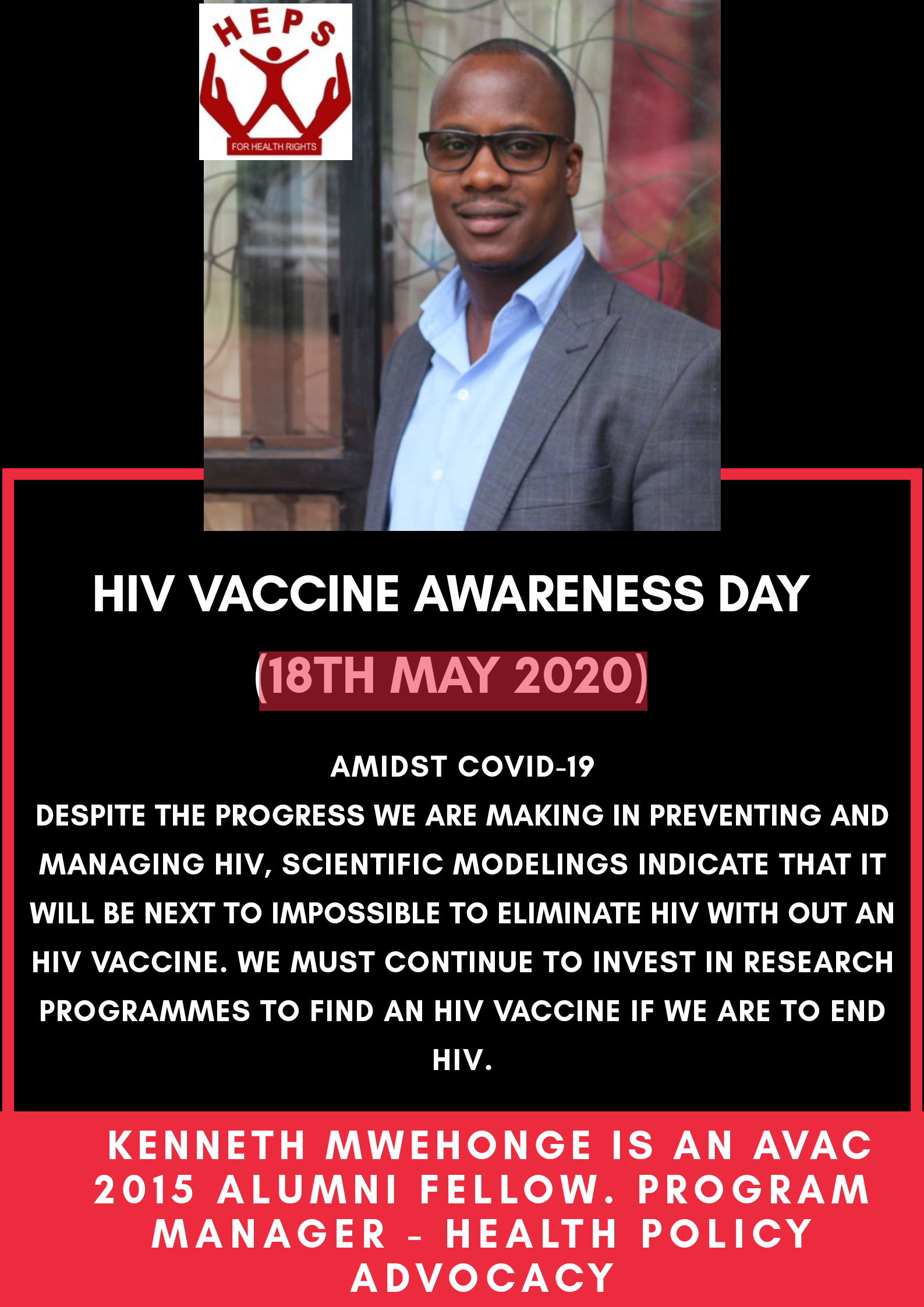
Kenneth Mwehonge
Kenneth is currently implementing a new social accountability model that pairs a community scorecard with PEPFAR Site Improvement Monitoring Systems (SIMS) to strengthen the community/civil society accountability of PEPFAR programs in Uganda. He also coordinates CSO engagement with PEPFAR at the country level and oversees the implementation of community-led monitoring in Uganda. At the time of his project, he had more than six years’ experience in health promotion and advocacy. He has worked with both grassroots communities and national level stakeholders in promoting health and the rights of people living with HIV in Uganda by advocating for consumer-friendly policies.
Fellowship Focus
Kenneth’s project focused on promoting universal access to viral load monitoring services in Uganda. He established a national viral load monitoring advocacy group through the Uganda Coalition for Access to Essential Medicines, which contributed to creating overwhelming demand for the services. He also set up a community network of champions for monitoring a quality viral load services campaign and informed and shaped Uganda’s viral load rollout plan to set ambitious targets and succeeded in getting PEPFAR, the Global Fund and other stakeholders to commit more financial resources to the program.
In Their Own Words
More than ever, there is growing evidence that an HIV cure is possible. The AIDS response has come a long way, from a death sentence to now a manageable and preventable disease. Despite the availability of HIV treatment and prevention tools, we continue to lose one million lives annually due to lack of access, poor adherence and sporadic stock-outs of lifelong treatment in many parts of the world. To me, an HIV cure is the magic bullet to the zero death target, and this is my greatest inspiration.
My Work as a Fellow
- Fact sheet on viral load testing: Kenneth developed this basic fact sheet for civil society and other stakeholders to use in their advocacy/work on viral load testing.
- World AIDS Day statement: Kenneth worked with other civil society partners to write a statement on World AIDS Day 2015 calling for fast tracking of rollout of viral load monitoring in Uganda.
- Policy brief: Policy makers are key for all advocacy initiatives, and Kenneth developed this “Policy brief on viral load monitoring in Uganda” specifically targeted at Uganda’s policy makers.
- AIDS2016 Abstract: Kenneth’s advocacy on viral load monitoring in Uganda got highlighted when an abstract about it was accepted for presentation at the 2016 IAS Conference in Durban.
- Fellowship summary report: “Increasing universal access to viral load testing for HIV treatment monitoring” is the final report that summarizes Kenneth’s Fellowship experience and activities.
Materials