Comparing the annual price of oral TDF/FTC vs. the dapivirine vaginal ring and injectable cabotegravir. For product approvals, volumes, implementation, and price comparisons of long-acting PrEP, visit our dashboard on PrEPWatch.org.
PrEP Price Comparison
HIV-Specific Neutralizing Antibodies by Target
A number of broadly neutralizing antibodies that target various regions of HIV’s Env protein are being developed for HIV prevention.
Broadly Neutralizing Antibody Combinations
Overview of the combinations of broadly neutralizing antibodies (bNAbs) under investigation in early clinical studies for HIV prevention.
Moving a Product to the Real World
The rollout of oral PrEP demonstrates that people don’t take PrEP simply because it’s available—there needs to be a demand for it, and it needs to be accessible, acceptable and used effectively by those who need and want it. These are the lessons the field is applying to the rollout of the dapivirine vaginal ring (DVR), and injectable cabotegravir (CAB) and lenacapavir (LEN) for PrEP. To reach the UNAIDS target of 10 million PrEP users by 2025, initiations of oral PrEP alone will not be enough—and this graphic shows that the field is beginning to apply past lessons to accelerate introduction of injectable PrEP options.
And for the latest on lenacapavir, visit here.
Preparing for LEN
Learning Lessons, Accelerating Access, Reducing Time to Impact
In the first year since efficacy results were reported, LEN for PrEP has achieved critical milestones in record time compared to oral PrEP, the dapivirine vaginal ring, and injectable cabotegravir. Speed, scale, and equity are still needed to deliver impact.
View the interactive version on our comprehensive page on all things lenacapavir. And the animated GIF version is available for download.

Source of Programmatic Cabotegravir for PrEP Supply
The first supplies of injectable cabotegravir for programmatic use (as opposed to use in implementation studies) began to arrive in countries in 2024. Currently, 16 countries are rolling out CAB for programmatic use, with the majority of supply provided by PEPFAR, and some additional quantities procured by the Global Fund.
Global Health Watch Timeline
43 Weeks of Crisis, Context & Resources to Respond
During these challenging times, Global Health Watch has been the go-to source for tracking and analyzing attacks on global health and the HIV response, pandemic preparedness, and human rights: from the US government’s foreign aid freeze and subsequent funding collapses to the politicization of science and erosion of public health infrastructure.
This timeline tracks selected milestone events in 2025, both massive disruptions in global health along with advocacy responses and wins in the midst of madness.
Long-Acting PrEP: Priority Slides
Slides with the current status and proposed priorities for long-acting PrEP products, regulatory approvals, planning & budgeting, delivery, and much more. PDF and PPT versions available above. For slide 1, current status, click here. Slide 2, proposed priorities, is also available.
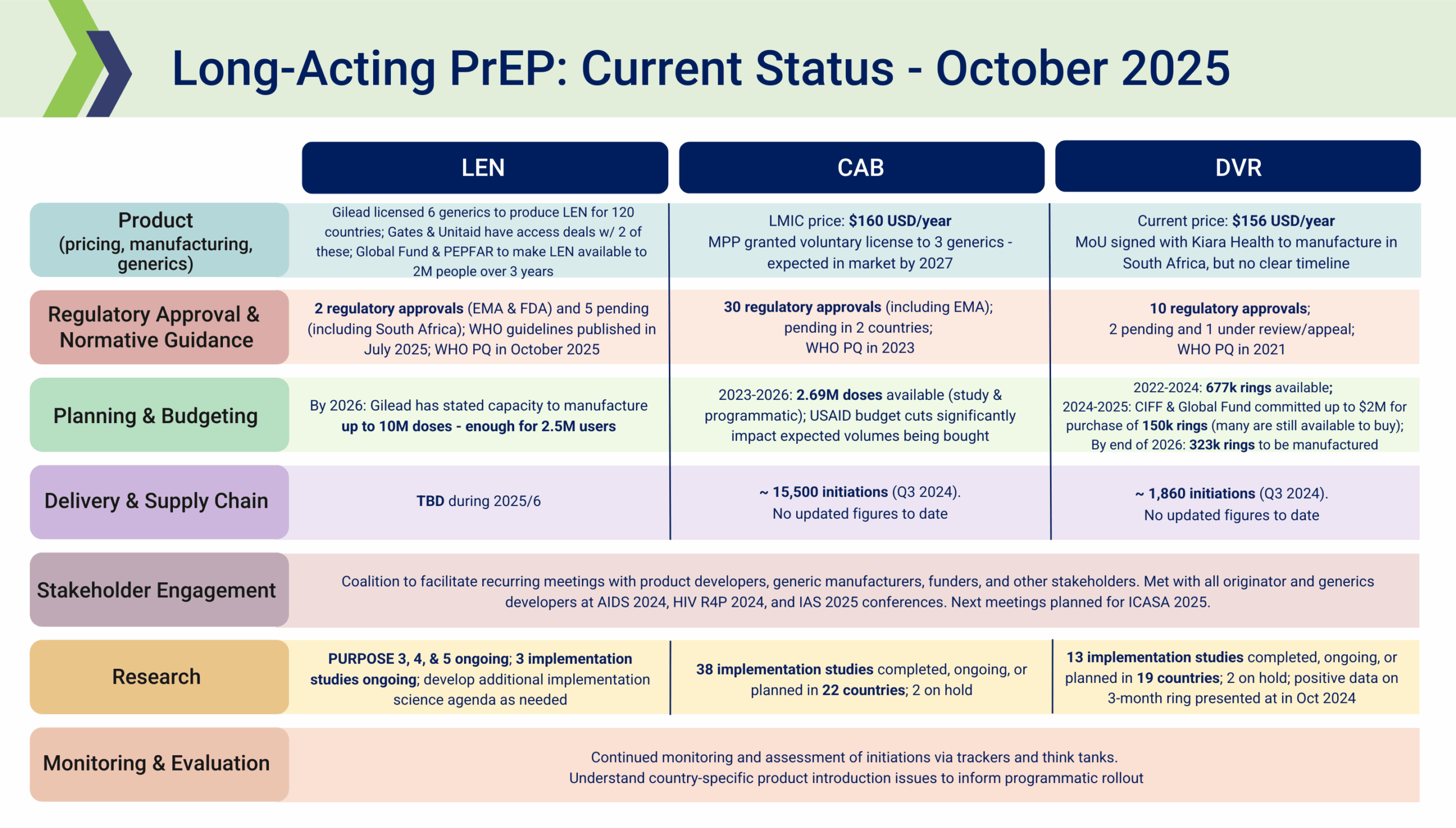
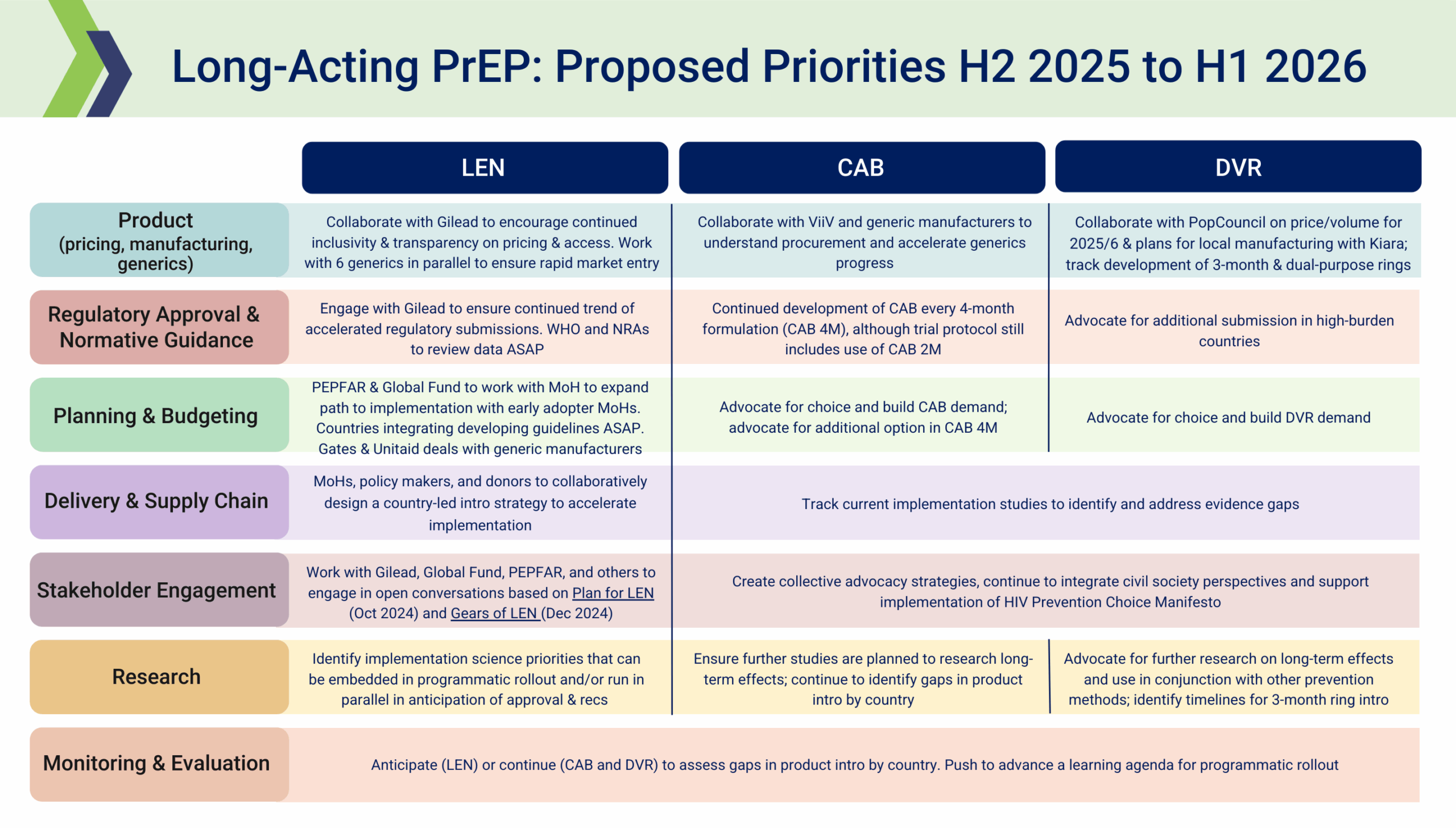
For product approvals, volumes, implementation, and price comparisons of long-acting PrEP, visit our dashboard on PrEPWatch.org.
Cabotegravir Implementation
Implementation studies completed, ongoing, or planned for cabotegravir as of October 2025. For product approvals, volumes, implementation, and price comparisons of long-acting PrEP, visit our dashboard on PrEPWatch.org.
Dapivirine Vaginal Ring Implementation
Ongoing and planned implementation studies for the dapivirine vaginal ring as of October 2025. For product approvals, volumes, implementation, and price comparisons of long-acting PrEP, visit our dashboard on PrEPWatch.org.