PxWire is AVAC’s quarterly update covering the latest in the field of biomedical HIV prevention research and development, implementation and advocacy. Each issue includes updates, emerging issues and upcoming events. A PDF version of this report is also available.
Progress in PrEP Uptake
In 2020, the world missed the UNAIDS’ goal of reaching 3 million PrEP users. The updated target for 2025 is 10 million. Is the 2025 target achievable based on the current trends in PrEP uptake? Applying an Autoregressive Integrated Moving Averages (ARIMA) model to data from the Global PrEP Tracker since Q3 2016, we forecasted cumulative PrEP initiations through 2025. Based on this model, the world will surpass 10 million global cumulative PrEP initiations by Q1 2025, and by Q4 it will reach 12.4 million. This data reflects oral PrEP initiations, not continued use.
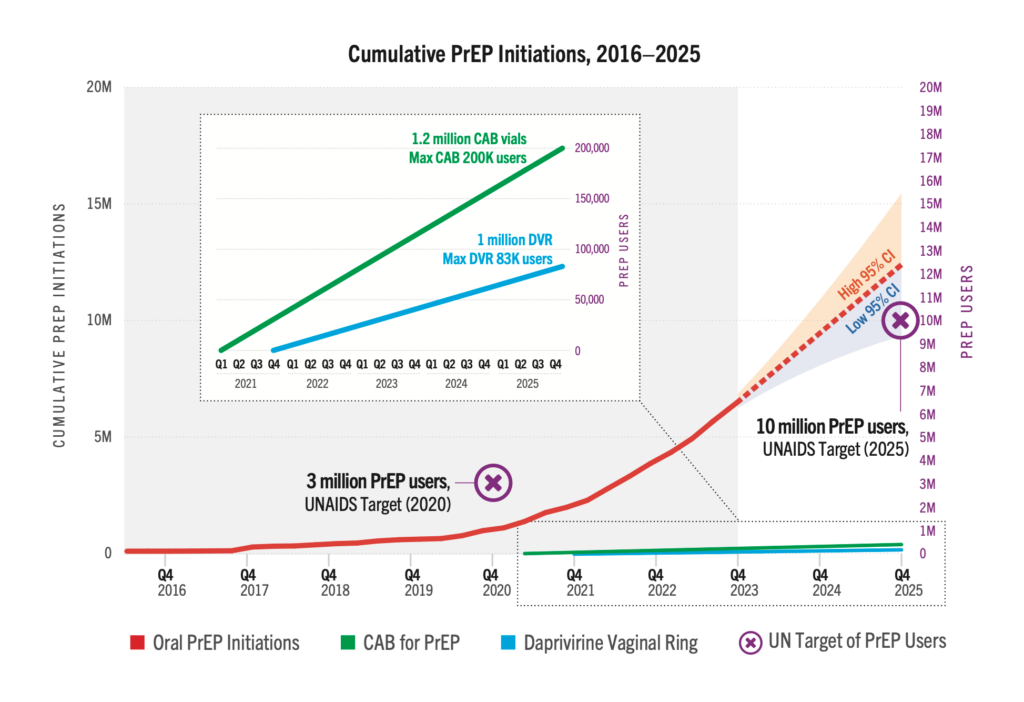
- PrEP users and PrEP initiations are different. Data on initiations do not distinguish between new versus repeat PrEP users. We are unable to predict if the UNAIDS goal of achieving 10 million PrEP users by 2025 will be successful. This forecast shows the possibility and the promise of current momentum. But fulfilling this promise is not certain. It depends on overcoming key challenges around access and choice.
- These updates from AVAC’s Global PrEP Tracker analyze trends and showcase data reflecting Q4 2023 updates.
Global Milestones from October-December 2023
- The PrEP Tracker documented 6,220,507 cumulative initiations of some form of PrEP worldwide: 6,216,310 oral PrEP (including TDF/FTC, event-driven oral PrEP, and F/TAF), 2,695 injectable cabotegravir (injectable CAB), and 1,502 dapivirine vaginal ring (DVR).
- Global PrEP uptake increased by about 500,000 PrEP initiations this quarter, modestly slower than in the last two quarters. Last year at this time, global PrEP initiations stood at 3.8 million, so this year’s increase demonstrates relatively high uptake compared to the previous year.
Country-level Milestones
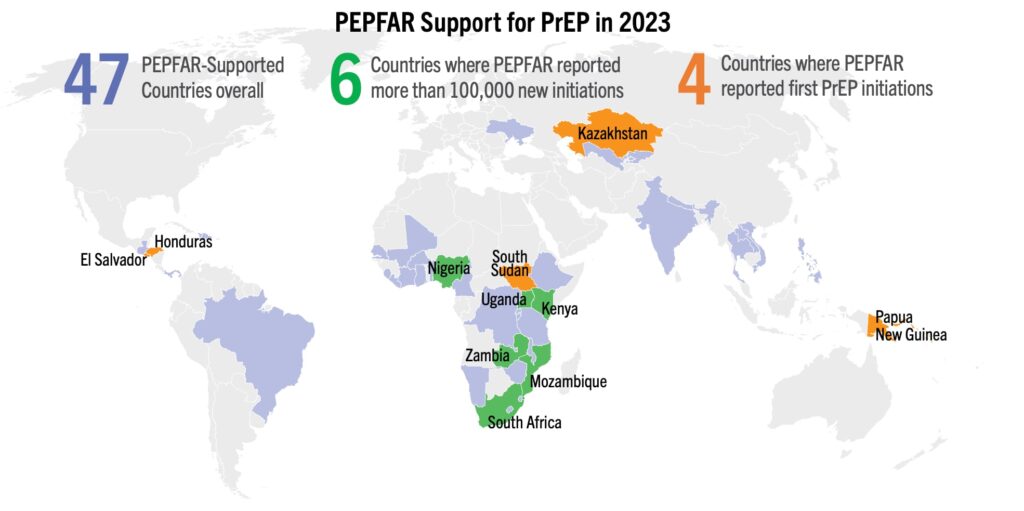
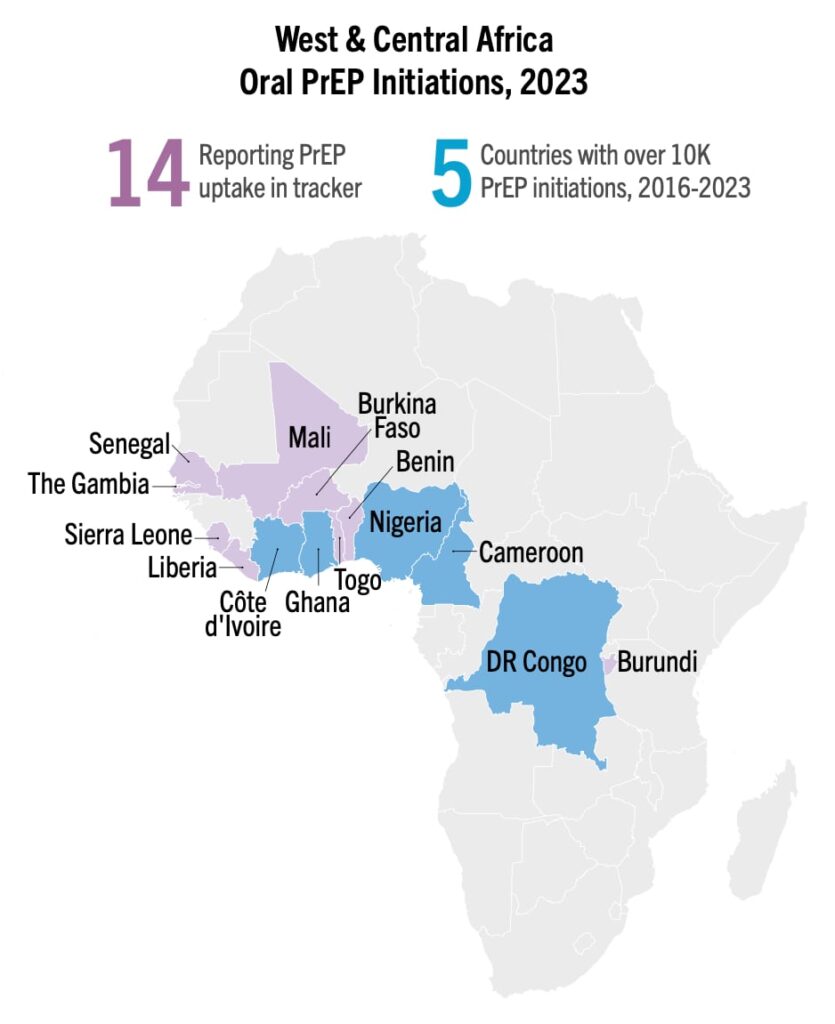
- South Africa surpassed 1.3 million oral PrEP initiations; Zimbabwe surpassed 250,000 initiations. In less than a year, Malawi more than doubled its oral PrEP initiations and now stands at over 100,000. Rwanda surpassed 30,000, Cote d’Ivoire surpassed 20,000, and Sierra Leone surpassed 10,000 initiations.
- Other countries outside of Africa had modest increases in oral PrEP uptake: Brazil counted over 150,000 initiations; the Philippines surpassed 20,000 initiations.
PrEParing for New Products
Product Updates
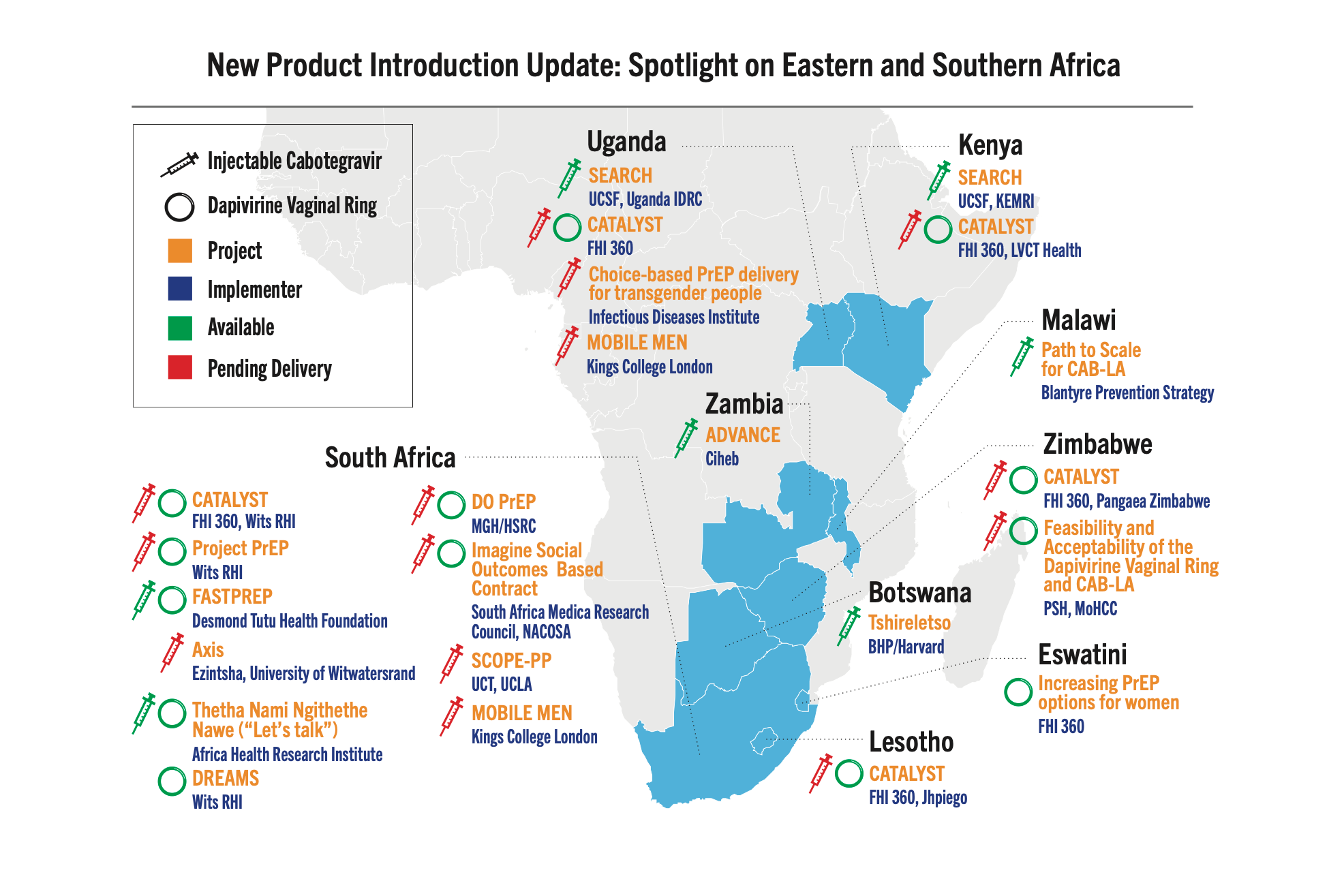
- In February, Zambia launched its injectable CAB program, making it the first country outside the US to include injectable CAB in its HIV prevention services. And the Desmond Tutu Health Foundation in South Africa also announced “the first jab” of injectable CAB administered in its FASTPrEP study. As these programs get underway, more country approvals and product launches are anticipated.
- This quarter, Namibia approved the dapivirine vaginal ring (DVR), bringing the total to 11 approvals in the region.
- Uruguay approved F/TAF (Descovy). Additionally, Descovy is under review in Mexico.
- Peru, Nigeria, Thailand, and Uganda have approved injectable CAB.
- Injectable CAB is under review in the United Kingdom, Cote d’Ivoire, Mozambique, Rwanda, Tanzania, and Canada. CAB was granted WHO prequalification status, finding it to be safe, effective, and supported by studies.
- PrEPWatch added 35 new country pages detailing the status of drug registration for PrEP products, data on PrEP initiation by product, country-level PEPFAR targets, and links to key policy documents and guidelines.
- At ICASA, the Population Council presented preliminary results from a dual prevention pill (DPP) acceptability study with adolescent girls and young women (AGYW) in Zimbabwe. The study found 2/3 of participants preferred a proxy for the DPP (which combines contraceptives and PrEP) compared to 1/3 who preferred taking oral PrEP and oral contraceptive pills separately. Results from another DPP acceptability study in South Africa are forthcoming and the HPTN 104 study is expected to kick off later this year, expanding the evidence on end-user experiences.
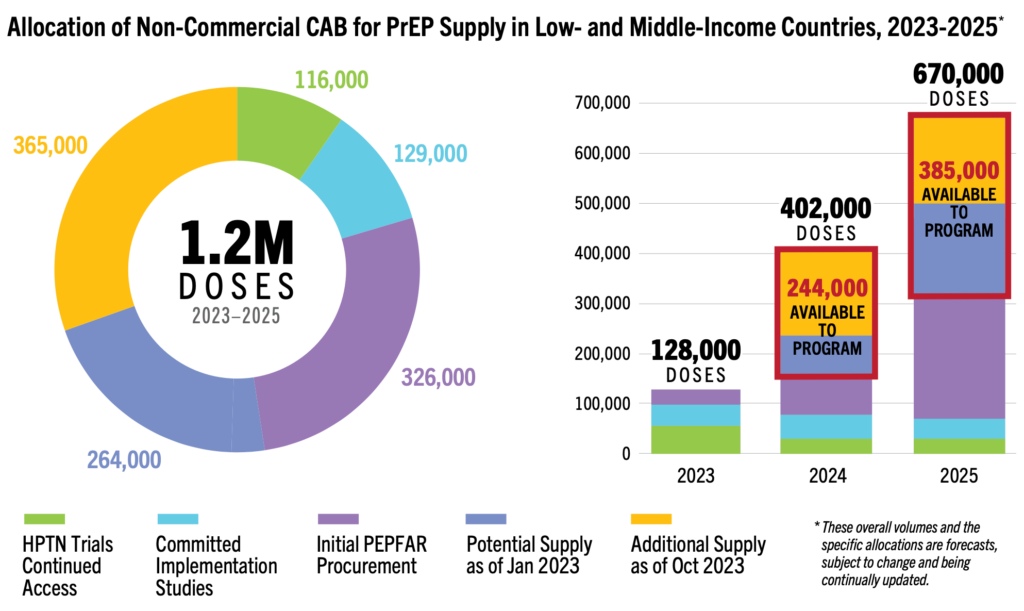
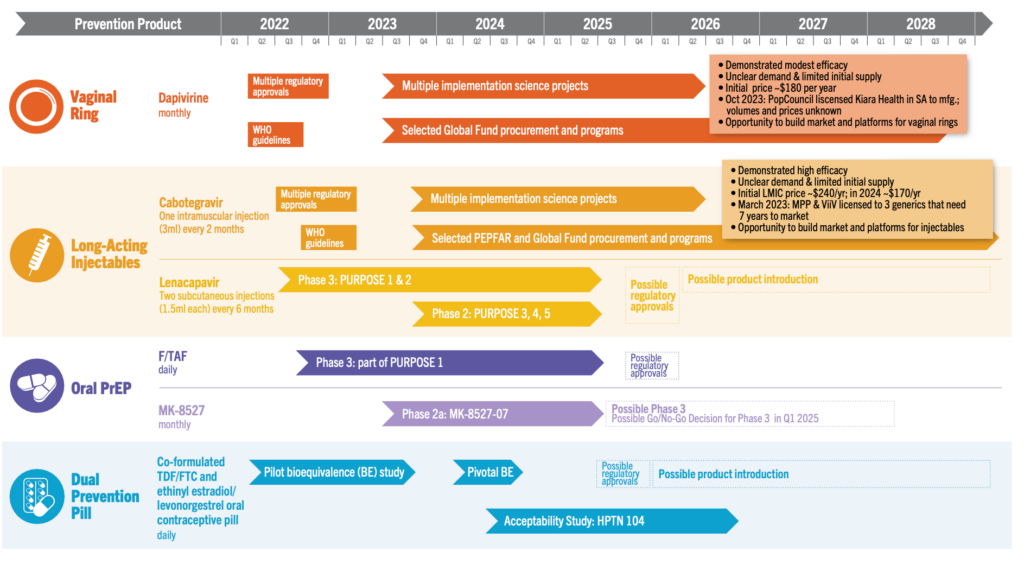
- Alongside oral PrEP, introduction of the dapivirine vaginal ring (DVR) and injectable cabotegravir (CAB) will play a role in the scale of PrEP uptake. At least 1.2 million vials of CAB are now available for procurement and prevention programming in low-and middle-income countries over the next two years. At the same time, one million vaginal rings are projected to be distributed over the next two years. But even with these additional options, oral PrEP will continue to play a big role in PrEP uptake in the short term.
- For a full global perspective on product introduction, check out the Integrated Study Tracker and Country Planning Matrix and see our graphic on the status of implementation scient studies on the next page.
The Latest R&D in the Prevention Pipeline
In 20 years of research and across 12 trials, only two positive signals have been observed in HIV vaccine and antibody studies.

- In December 2023, the PrEPVacc team announced no efficacy from the vaccine candidates in the study. This was folowing a review by the independent data monitoring committee. PrEP interventions in the study, comparing TAF/FTC (Descovy) to TDF/FTC (Truvada) will continue. The termination of vaccine arms of the PrEPVacc study represents the most recent HIV vaccine or antibody trial to end without efficacy.
- Ensuring equitable access to safe, effective, and affordable vaccines involves advocacy across multiple areas. AVAC covers the issues in a series of advocates’ guides, From the Lab to the Jab.
Prevention Playlist
AVAC develops a wide range of materials and resources to inform decision making and action. Check out the latest:
Join
CROI 2024 Community Breakfast Club Webinars
- Session 1: Spotlight on Social and Behavioral Sciences at CROI 2024
- Session 2: Living with HIV for a Lifetime— It’s Complicated
- Session 3: Research Roundup: Scientists and Advocates Offer Fresh Perspectives and Seasoned Analyses of CROI 2024 Research
Read
- Long-lasting HIV jab marks ‘new era for prevention’ in Africa, The Telegraph.
- GPP Body of Evidence, demonstrating the power of GPP
- Global HIV Prevention Roadmap for Key Populations
- Mobilizing People of Faith to Overcome Homophobia
- What can modelling tell us about the scale-up of CAB for PrEP?
- New licensing agreement set to double HIV vaginal ring supply in Africa
Watch and Listen
- HIV Cure and the Environment: How location informs cure research
- AVAC in Conversation with NIAID’s Jeanne Marrazzo
- PrEPVacc: An in-depth look at the trial and what’s next
- Cervical cancer awareness month webinar series
- Reporting the African Science Story: Decoding scientific research to support public health in Africa
- Sex, Gender & HIV Cure Research
- The Adolescent Medicine Trials Network (ATN): Research addressing HIV health inequities among US adolescents and young adults
Use
- From the Lab to the Jab, a series of advocates’ guides to advance access to safe, effective and affordable vaccines
- The HIV Prevention Ambassador Training Package and Toolkit prepares potential and current PrEP users to be leaders—or “Ambassadors”—in the rollout of PrEP
- HIV Prevention User Journey Tool supports providers and adolescent girls and young women to explore what prevention method fits best in their lives
- PrEP for Pregnant and Lactating People-Clinical Guidelines and Training Package
- Communicating the PrEP Category to Adolescent Girls and Young Women—a strategy brief to support demand generation for PrEP among AGYW
- Online Course: Unlocking the Potential of Implementation Science and Good Partcipatory Practices