Press Release

HIV Vaccine Research Must Continue Following Disappointing Result from Imbokodo Trial

Underscores need for expanded access to proven, available HIV prevention options, says AVAC

Contact

Kay Marshall, +1 (347) 249-6375, [email protected]

New York City, August 31, 2021 – Today, Johnson & Johnson and partners announced that the Imbokodo study, a large-scale HIV vaccine proof-of-concept trial also known as HVTN 705/ HPX2008, did not significantly reduce the overall risk of HIV acquisition among over 2,600 women in five sub-Saharan African countries. The Adenovirus26-based mosaic vaccine regimen was shown to be safe, but it did not meet pre-defined criteria for efficacy to warrant moving forward for longer follow-up. A companion study, the Phase III Mosaico trial, will continue.

“AVAC recognizes the enormous contribution of the 2,637 women from five countries in Southern Africa who participated in the trial, and we congratulate the trial teams at sites and across the globe for their work on a superbly run study,” said Nandisile Luthuli, AVAC’s Regional Stakeholder Engagement Manager. “We applaud Johnson & Johnson for working in collaboration with the HIV prevention community, for their leadership in HIV vaccine research and for their longstanding commitment to Good Participatory Practices (GPP) that must be continued to maintain trust in vaccines and in research.”

“We always hope that efficacy trials will show positive results that lead directly to new prevention options,” said Mitchell Warren, Executive Director of AVAC. “It is very disappointing that this particular vaccine candidate did not work in this trial, but the trial was well-conducted and got an answer quickly. HIV remains a global threat, and a safe, efficacious and accessible HIV vaccine is still needed to contribute towards curbing new infections and providing a durable end to the pandemic.”

“This is in no way the end of the search for an HIV vaccine,” added Warren. “We still hope for a positive outcome from the ongoing Mosaico and PrEPVacc studies. Yet, now more than ever, the vaccine field needs diversity and creativity — and even more collaboration — in deciding what comes next as research priorities as there are no other vaccine candidates currently on a clear track to licensure. The field must focus on new hypotheses driven by this result and the recent antibody-mediated prevention study results, both of which showed some trends towards efficacy.”

“Just as decades of HIV research paved the way for effective COVID-19 vaccines, HIV vaccine developers now need to draw on the creativity, speed, agility and decision-making of COVID-19 vaccine development in product development, trial design and regulatory pathways,” said Stacey Hannah, AVAC’s Director of Research Engagement. “AVAC calls on donors, research groups and industry to join in strategic discussions with civil society and trial communities to map out a comprehensive strategy for the future of HIV vaccine research, product development and selection, and trial designs.”

A renewed commitment to this type of engagement within the HIV vaccine field would build on lessons learned from COVID-19 vaccine development and lead to a strategy that is coordinated, appropriately resourced, includes relevant target product profiles, and commits to share data across research groups and trials.

“For the last two decades, we have seen HIV prevention trials reporting annual incidence rates of four percent or higher among women trial participants in various East and Southern African countries. Sadly, Johnson & Johnson noted a high rate of HIV infections in this trial as well. There is a moral and ethical obligation to provide women living in contexts of HIV risk with prevention options that work for them,” added Warren. “The Imbokodo study is yet another stark reminder of the need to work harder and faster to roll out effective HIV prevention options at scale to the people who need them most, and to provide appropriate support to those using prevention options, even and especially within clinical trials.”

Safe and effective HIV prevention options, including male and female condoms, voluntary medical male circumcision and daily oral PrEP are all available now, but not rolled out to scale. Additional prevention options are nearing availability, including the Dapivirine Vaginal Ring and injectable cabotegravir, and several next-generation PrEP options are now entering advanced clinical trials.

“As the Imbokodo study participants return for their final visits, it is essential that they not only receive the research results, but are offered access to all available prevention options, including oral PrEP – which is available in all countries where the trial took place – and linked directly to these services,” added Luthuli. “In addition, the trial team and sponsors should explore innovative approaches to offering these trial participants the opportunity to enroll into new introduction projects offering the Dapivirine Vaginal Ring and injectable cabotegravir. The Imbokodo study team did a remarkable job of recruiting participants at high risk of HIV infection, and they now need to link the women to prevention options that work and can help them remain HIV-negative.”

The recent results of the HPTN 084 trial of injectable cabotegravir showed very low incidence rates among women in both the intervention arm and the comparative daily oral PrEP arm, making it clear that both forms of PrEP are effective prevention options. These options need to be taken to scale with urgency where they are most needed. In addition, going forward, AVAC calls for HIV prevention researchers, funders and sponsors to learn from the HPTN 084 success and better integrate these options into all future trials, even though this will require larger and more innovative trial designs.

The Imbokodo study evaluated whether an Adenovirus26-based mosaic vaccine regimen could safely and effectively reduce the rate of new HIV infections among 2,637 cisgender women in 23 sites in Malawi, Mozambique, South Africa, Zambia and Zimbabwe. Participants received a total of four doses over 12 months of either a prime-boost vaccine regimen of a mosaic viral-vectored vaccine, Adeno26.Mos4.HIV (Ad26 prime) and an aluminum phosphate-adjuvanted clade C gp140 protein (boost), or a placebo. Johnson & Johnson reported today in a press release that primary analysis of the data showed an efficacy estimate of 25.2 percent, but with a wide confidence interval that crossed zero (-10.5% to 49.3%). The press release also noted high HIV incidence rates among the women in the trial.

The Mosaico study uses a similar regimen with the same Ad26 platform for the prime vaccine, but using a different form of protein boost. The Phase III study, also known as HVTN 706/HPX3002, is currently enrolling 3,800 men and transgender people in eight countries in the Americas and Europe.

While the Imbokodo study did not provide sufficient protection to continue, there were no safety concerns with the Adenovirus26-based mosaic vaccine candidate. The Ad26 platform delivers a protein, known as an antigen, to stimulate an immune response. The platform has proven effective in other successful vaccines, including for Ebola and COVID-19. There is every reason to have confidence in the effectiveness of the Ad26-based Ebola and COVID-19 vaccines that have been important in helping to curb Ebola outbreaks and blunt the current COVID-19 pandemic. It is important to remember it is not the platform that provides protection, it is the immune reaction to the antigen within the platform. Unfortunately, HIV is a particularly challenging virus that more easily evades the immune system compared to many other viruses.

“We need an HIV vaccine to provide a durable end to the HIV pandemic, but we can’t wait for a vaccine,” added Warren. “Now is the time to go all in on providing comprehensive HIV prevention options that already exist and the programs needed to support people in using their chosen options, while also re-engaging in vaccine research. If we’ve learned one lesson from the COVID-19 response, it is that political will, sufficient funding and unprecedented cooperation in the face of a global threat is possible. HIV has been for decades — and remains — a global threat; it is past time to act boldly to confront it.”

###

About AVAC: Founded in 1995, AVAC is a non-profit organization that uses education, policy analysis, advocacy and a network of global collaborations to accelerate the ethical development and global delivery of HIV prevention options as part of a comprehensive response to the pandemic. Follow AVAC on Twitter @HIVpxresearch.

Press Release

New Manifesto, No Data No More, Compellingly Analyzes HIV Research Gaps and Biases Against Trans and Gender-Diverse Communities

Embargoed for release: Monday July 19, 2021 at 11:00 ET / 17:00 CEST

Manifesto offers practical guidelines for change

Contact

Kay Marshall, +1 (347) 249-6375, [email protected]

Worldwide, trans and gender-diverse (TGD) people face a highly disproportionate burden of HIV but are frequently and often systematically left out of HIV prevention research and responses. That ongoing exclusion is a major barrier to efforts to end the global HIV pandemic, according to No Data No More, a new HIV prevention manifesto written by TGD advocates from South Africa, Europe and the United States, with support and solidarity from AVAC. The embargoed report and materials are available here.

No Data No More analyzes how TGD communities are left out of HIV prevention research and responses through structural barriers such as discriminatory attitudes and punitive laws, non-inclusive language, failure to recognize the diverse and unique identities of different members of TGD communities and a lack of understanding of the role of gender-affirming hormone therapy (GAHT) in TGD health.

“Whether through ignorance or bias, the engagement of trans and gender-diverse people in HIV research and responses continues to fall behind the devastating impact of the pandemic on our communities,” said Tshepo Ricki Kgositau of Accountability International. “No Data No More presents a clear analysis of these obstacles from the perspective of those directly affected, along with concrete recommendations to enhance global HIV prevention by making TGD communities an essential part of the response.”

The need for change in HIV research and prevention for TGD people is clear. Trans women, for example, are 49 times more likely to be living with HIV than the general population. HIV prevalence among trans men in the U.S. is a startling high 3%, and reaches 38% in some communities, such as among trans male sex workers in Zimbabwe. And data on HIV impact on gender nonbinary people, which may make up 25-30% of trans populations, is virtually nonexistent.

Yet TDG communities continue to be underrepresented in or excluded entirely from HIV prevention research and programs. To date, no HIV-primary endpoint trials have focused specifically on transgender individuals. The number of TGD participants in efficacy trials has historically been too small to derive statistically significant data. And trans and gender diverse researchers and community members are often excluded from positions of power in trial design, prioritization, funding and analysis.

“The gap between the extremely high impact of HIV on TGD communities and the extremely low level of engagement of our communities in HIV research and responses can only lead to more infections and a prolonged epidemic,” said JD Davids of JD Strategies and The Cranky Queer Guide to Chronic Illness. “No Data No More is a global wake-up call for HIV prevention researchers, funders and program implementers.”

“Some laudable efforts, such as those led by NIAID’s Cross-Network Transgender Working Group, are important steps forward in increasing trans representation in research,” said Immaculate Mugo, consultant on gender, intersectional sexual & reproductive health and rights. “Globally, however, too much research and too many HIV prevention access efforts are informed by only a passing knowledge of or interest in TGD communities and issues, and most lack real participation from TGD individuals and leaders. The result is an epidemic that continues to disproportionately affect TGD people worldwide.”

No Data No More provides a vision for a relevant and inclusive TGD research agenda that can change that trajectory. The manifesto includes clear and practical recommendations to:

  • Track epidemiological data on HIV incidence and prevalence that accurately reflects the large and growing HIV acquisition rates of TGD populations.
  • Support best practices in language use, informed by TGD researchers, advocates and trial participants.
  • Address fundamental structural barriers that limit TGD people’s access to HIV research and prevention.
  • Provide GAHT across the HIV research, prevention and care continuum, resolve existing questions about potential interactions between HIV PrEP and GAHT and ensure future studies address potential interactions between HIV prevention products and GAHT.
  • Improve TGD-inclusion in randomized clinical trials and ensure that these recognize, address and evaluate the impact of differences among sub-groups of TGD people.
  • Include TGD leadership in clinical research, including study design and implementation.
  • Fund and strengthen the capacity of local research sites to recruit TGD participants in alignment with the Good Participatory Practice Guidelines.

“Forty years into the global HIV pandemic, which is endemic to most trans communities, it’s beyond time to align HIV prevention research with trans and gender-diverse realities,” said Max Appenroth of Global Action for Trans Equality (GATE). “The best way to reduce HIV in TGD communities is to invite our communities to participate meaningfully in the response. The No Data No More manifesto is an invitation to recognize the fundamental and critical role that empowered TGD communities can play in protecting our own wellbeing and reducing the global toll of HIV.”

“AVAC is proud to support the development of No Data No More as part of our ongoing commitment to inclusive, representative HIV research and the Good Participatory Practice Guidelines,” said AVAC Senior Manager for Partnerships Cindra Feuer. “Much work remains to make the perspective and participation of trans and gender diverse communities central to HIV response, but this manifesto charts an essential path forward for researchers, advocates and implementers worldwide.”

###

About AVAC: Founded in 1995, AVAC is a non-profit organization that uses education, policy analysis, advocacy and a network of global collaborations to accelerate the ethical development and global delivery of HIV prevention options as part of a comprehensive response to the pandemic. Follow AVAC on Twitter @HIVpxresearch.

Press Release

Little Change in HIV Prevention R&D Funding in 2019, New Analysis Finds

Continued investment in HIV prevention research critical for keeping the HIV response on track in the coming decade

Contact

Kay Marshall, +1 (347) 249-6375, [email protected]

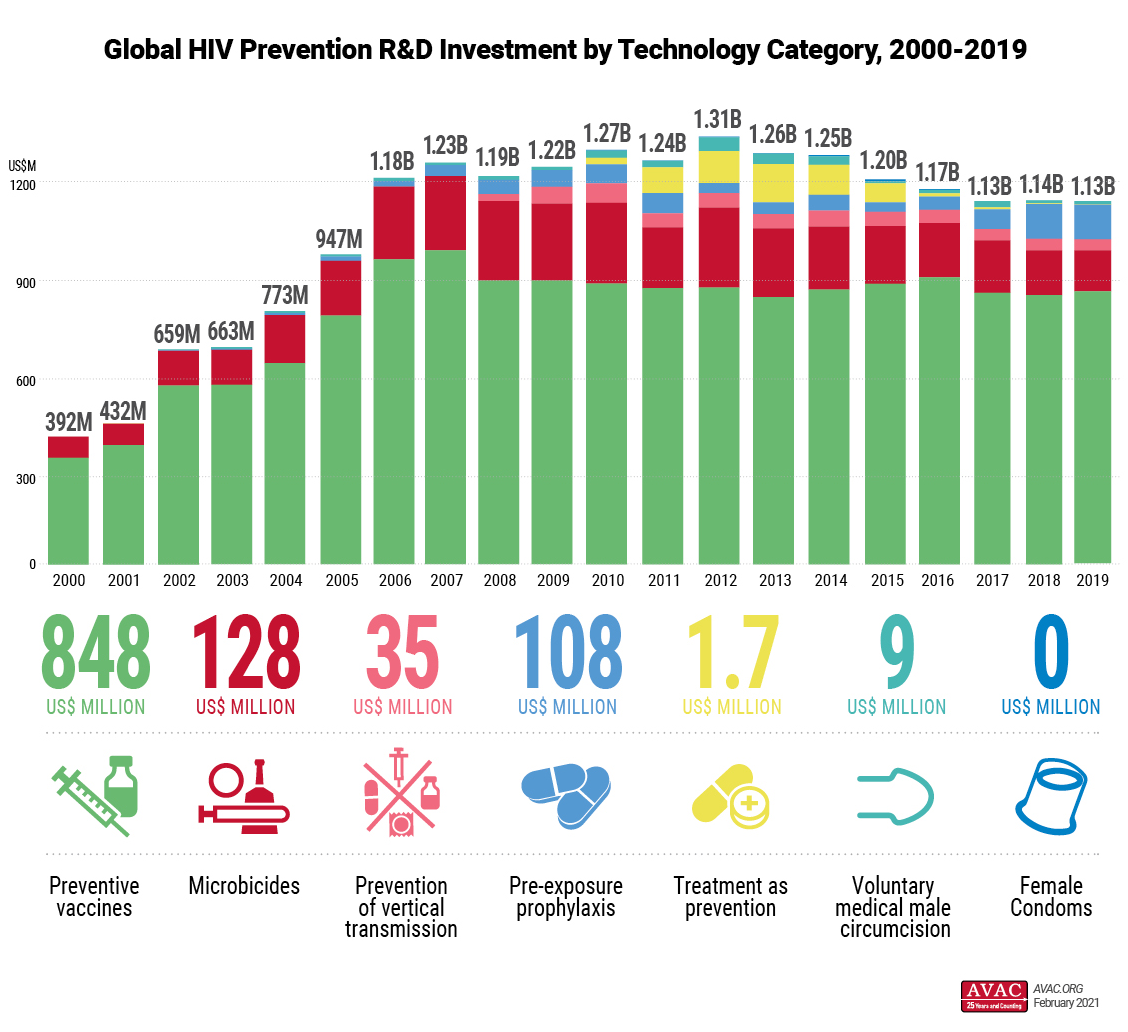
New York, February, 4, 2021 – Funding for HIV prevention research and development (R&D) in 2019 followed familiar patterns seen for almost a decade – overall funding declined slightly in 2019, reversing a slight upward trend seen in 2018 and continuing the overall trend of flat or declining funding since 2012. Total funding for HIV prevention R&D in 2019 was US$1.13 billion according to a new analysis from The Resource Tracking for HIV Prevention R&D Working Group highlighted today at the HIV Research for Prevention Conference (HIVR4P Virtual).

This analysis comes at a time when the field has delivered important clinical trial results that will in coming years broaden the range of HIV prevention options for many people and help the field determine critical next steps in research, development and delivery. Decades of funding for HIV prevention research also helped jumpstart research for COVID-19 interventions, including vaccines and antibody research.

The report found that funding increased for preventive HIV vaccines and female condoms in 2019, while investment in all other evaluated technology categories declined from the previous year. A detailed breakdown of investment by technology category is available on a newly launched website that provides detailed breakdowns of investment accompanied by graphics.

As in the past, public funding made up the majority of funding at US$902 million (80 percent of total funding) and 95 percent of that funding came from the US government. US government funding increased in 2019, with a notable ¬¬increase of five percent from the US National Institutes of Health. Funding in almost every other category, including from European governments, global philanthropies and industry, declined.

New HIV prevention options are moving from labs and clinics toward people’s lives and exciting new products are moving forward in the research pipeline. Decades of sustained funding for HIV prevention R&D has made this possible, although the pace of research has often been slowed by falling or static funding.

It is unclear what impact the turn to COVID-19 R&D support by many of the key funders of HIV prevention R&D will have on funding in 2020 and beyond, but the Working Group warned that funders must continue to support HIV prevention to build on the important gains being made in current research.

The Working Group also noted the running start HIV vaccine R&D gave to the COVID vaccine enterprise. The three-decades-long US$15 billion-dollar-plus quest for a preventive HIV vaccine laid the groundwork for COVID-19 vaccine R&D through advances in computational vaccinology, genetic and vector-based vaccine platforms, antibody assays, viral imaging, clinical trial site infrastructure and other innovations that were successfully repurposed to develop safe and effective COVID-19 vaccines in record time.

Conversely, cutting-edge platforms and technologies developed to combat the COVID-19 pandemic offer new tools and promise in the quest for vaccines against HIV and other infectious diseases, but research to repurpose these advances for HIV R&D must be adequately financed now.

“Even as unprecedented amounts of funding and support continues to flow into the COVID-19 pandemic response, funders must continue – and increase – funding for HIV prevention research and development. Responding to this new pandemic must not take resources away from the ongoing HIV pandemic or the world will see an even greater public health crisis. We’ve learned from COVID-19 that unprecedented funding and cooperation among governments, industry and research groups can speed development of new technologies. Just as COVID research benefited from long-term HIV research investments, lessons learned most recently in COVID vaccine development must now urgently be applied back to HIV prevention R&D,” said Mitchell Warren, AVAC executive director.

“The COVID-19 response has given us incredibly valuable insights and approaches for accelerating the development vaccines and monoclonal antibodies—the foundations of which were significantly enabled by decades of HIV vaccine research innovation,” said Mark Feinberg, President and CEO of IAVI. “As we’ve seen throughout HIVR4P Virtual, the current HIV prevention research pipeline is rich, and the technologies and collaborations that facilitated the rapid discovery and development of efficacious COVID-19 vaccines and therapeutics are already being applied in efforts to advance the development of HIV vaccines and broadly neutralizing antibodies. To build on decades of research progress, we must sustain cross-sectoral investment and collaboration and dedicate increased focus on partnership innovation – which will be as critical as scientific innovation in hastening the end of the HIV pandemic.”

“COVID 19 response has demonstrated that focused efforts and investments can result in the roll out of multiple preventive options against SARS-COV-2 within a record time. Addressing HIV response needs similar efforts and urgent scale-up of investments for HIV interventions and research to end the epidemic.” said Shannon Hader, Deputy Executive Director, Programme at UNAIDS.

The Resource Tracking for HIV Prevention R&D Working Group has employed a standardized methodology since 2004 to generate comprehensive statistics on investment in HIV prevention research and development. Investment estimates that allow comparison across years, prevention options, sectors, and countries provides greater transparency for funders and helps assess the trajectory and impact of policies and funding decisions. The trends documented by the Working Group help predict future funding scenarios that can impact the progress of the historic scientific agenda to find new prevention options to help end the HIV pandemic.

###

About the working group: Since 2000, the Resource Tracking for HIV Prevention R&D Working Group has employed a comprehensive methodology to track trends in research and development (R&D) investments and expenditures for biomedical HIV prevention options. AVAC leads the secretariat of the Working Group, that also includes the International AIDS Vaccine Initiative (IAVI) and the Joint United Nations Programme on HIV/AIDS (UNAIDS). This year’s report is additionally made possible by the support of several donors, including the Bill & Melinda Gates Foundation and the American people through the US President’s Emergency Plan for AIDS Relief (PEPFAR) and the US Agency for International Development (USAID). The contents are the responsibility of AVAC and the Working Group and do not necessarily reflect the views of PEPFAR, USAID or the United States Government.

Press Release

AVAC Applauds Biden Administration Repeal of the Global Gag Rule

AVAC calls for further reforms to support women’s health programs and the fundamental human right of reproductive choice and health access

Contact

Kay Marshall, +1 (347) 249-6375, [email protected]

New York City, January 28, 2021 — AVAC applauds the executive action taken today by US President Joe Biden to repeal the Mexico City Policy, also known as the Global Gag Rule (GGR), which prohibits many foreign groups receiving US foreign aid from speaking about, referring for, advocating for access to, or providing abortion. The GGR has had an enormous deleterious effect on US-funded global health work and led to loss of life and harm to cisgender women, adolescent girls and young women worldwide.

As COVID-19 exacerbates gender-based violence, disrupts contraceptive programming and threatens HIV prevention for women in all their diversities, this repeal is a welcome, necessary action—and must be the first step in broad, bold US government commitment to the health and wellbeing of girls and women.

There is much more that needs to be done now to undo the damage done by the policy, including immediate communication about the repeal, and proactive outreach to ensure partners who declined US funding while the GGR was in place are brought back into US-supported networks of prevention, care and support. Steps must also be taken to ensure that the GGR is eliminated as an option for controlling women’s health programming. AVAC stands in solidarity with allies, including Health GAP, who have been clear in demanding that the Biden Administration correct the extensive harms already done and end this cycle by establishing a permanent policy that supports sexual and reproductive health and rights for all, in the US and globally.

Four years ago, the Trump Administration reinstated and expanded the GGR (originally enacted by Ronald Reagan in the 1980s and reinstated in all successive Republican administrations). The Trump expansion of the Global Gag Rule vastly increased the range of groups subjected to its lethal restrictions. As it has in every prior era, the 2016-2020 imposition of the GGR resulted in increased unintended and high-risk pregnancies, unsafe abortions and maternal deaths, and hampered introduction HIV and sexual and reproductive health and rights programs that are urgently needed worldwide. It will take years to rebuild the programs that were damaged by this policy, and the damage done to women’s lives is incalculable.

The Biden Administration must ensure immediate, multi-channel communication with partners about the repeal of the GGR; it must also launch an urgent review of all federal guidance and rules to purge the references to the GGR that may still affect funding and programs. The Office of the Global AIDS Coordinator must immediately clarify that section 5.9.4 of its 2021 Country Operational Plan guidance on implementation no longer applies, including to plans for the coming year. The administration must also allow PEPFAR funds to be used to procure a range of contraceptives beyond condoms, as is the current policy. Women’s health should not be divided between one clinic to access HIV treatment or prevention and a separate one to access contraceptives and other sexual health interventions. It is past time for PEPFAR to support integrated health options for women, especially in the context of the COVID-19 pandemic.

Along with expanding PEPFAR support, the administration should immediately reinstate funding for UNFPA to help ensure increased and sustained funding for contraceptive options for women.

The Administration must also work with the US Congress to ensure that the GGR is permanently legislatively repealed so that it cannot be easily reinstated by a future administration. To this end, the Administration should enthusiastically support the Global Health, Empowerment and Rights (HER) Act, which was introduced today by bi-partisan leadership in the House and Senate and would ensure the US could make permanent and long-lasting partnerships in support of women’s health and rights without fear of programs being rolled back with each new administration.

The Biden Administration has spoken of a desire to dismantle white supremacy and racist structures in the US. That commitment must extend to its foreign policy and development programs. For too long, US global health and development support has relied on policies and programs that at their worst are colonialist and antifeminist. Repealing the GGR is an important step in the right direction, but AVAC looks to the Biden administration to work with advocates and public health experts to examine all current policies and programs with a lens of anticolonialism and human rights and make the necessary changes to truly bring US foreign policy for health and development into the 21st century.

###

About AVAC: Founded in 1995, AVAC is a non-profit organization that uses education, policy analysis, advocacy and a network of global collaborations to accelerate the ethical development and global delivery of HIV prevention options as part of a comprehensive response to the pandemic. Follow AVAC on Twitter @HIVpxresearch.

Press Release

Data from Antibody-Mediated Prevention Studies Advance the Field and Show the Challenges that Lie Ahead

HIV Research for Prevention Conference Presents Important Research Insights Across a Range of New Options

Contact

Kay Marshall, +1 (347) 249-6375, [email protected]

New York City, January 26, 2021 — Today at a press conference hosted by the HIV Research for Prevention (HIV R4P) conference, research teams presented a range of data from ongoing studies of antibody-mediated prevention, long-acting injectable PrEP, a monthly PrEP pill, and trends in daily oral PrEP use. Together, they point to a future of biomedical HIV prevention research and programs with a greater understanding of mechanisms of prevention, enhanced trial designs and a wider range of prevention options.

HIV R4P Virtual 2021 begins officially on January 27th. Today’s press conference offered top-line findings from the full scientific presentations that will be made later this week. These data have not yet been published in peer-reviewed journals but warrant close attention for their implications for the field.

At the press conference, researchers from the NIH-funded HIV Vaccine Trials Network (HVTN) and HIV Prevention Trials Network (HPTN) presented initial data from the Antibody-Mediated Prevention (AMP) trials of an HIV-specific broadly neutralizing antibody (bNAb) called VRC01, delivered intravenously once every eight weeks. The trials enrolled cisgender women in sub-Saharan Africa and gay men and transgender persons who have sex with men in Brazil, Peru, Switzerland and the United States. According to Larry Corey, AMP Studies protocol chair and principal investigator of the HVTN, VRC01 did not significantly reduce the overall risk of HIV acquisition in participants who received the antibody compared to those who received the placebo. However, VRC01 did safely and effectively reduce the risk of acquiring HIV strains classified as “highly-sensitive” to neutralization by VRC01.

“These were complex and well-designed trials of a novel HIV prevention concept, and the results move the field forward in important ways,” said Mitchell Warren, AVAC Executive Director. “The AMP trials show that a broadly neutralizing antibody can reduce the risk of acquiring viruses that are very sensitive to that antibody. This is welcome news; it is the first evidence in humans that intravenous infusions of a broadly neutralizing HIV antibody can reduce a person’s risk of acquiring HIV via sex.”

The AMP results also demonstrate the extent of the challenge that lies ahead for antibody-mediated prevention. There are multiple strains of HIV circulating through communities. The trial team used lab tests to predict how many HIV strains in trial communities would be sensitive to, and blocked by, VRC01. The trial data didn’t match these predictions. Fewer viruses were highly-sensitive to VRC01 than the AMP team had hoped. The trials showed that a bNAb like VRC01 does not offer sufficient protection on its own and that a combination of bNAbs is likely needed if broad protection is to be achieved.

“AVAC is grateful to the research teams, trial participants, clinic staff and community advocates who made these trials possible. The next step for the prevention field is to determine how these results can be used to guide the selection of combination bNAb products to advance to efficacy trials. Advocates should monitor — and be engaged in — these deliberations,” said Stacey Hannah, AVAC’s Director of Research Engagement.

“With new prevention options like the Dapivirine Vaginal Ring and injectable cabotegravir for PrEP advancing towards licensure, people at risk of HIV will have more choices. This is a great thing. As choice expands, efficacy trials of future products will need to be designed in new ways, and advocates’ support for investigation of bNAbs as part of this prevention pipeline is crucial,” said Hannah, who also led the development of AVAC’s Advocates’ Trial Design Academy that is engaging with developers and trial designers in considering the future.

Participants in the AMP trials received one of two different doses of VRC01 or a placebo administered every eight weeks via intravenous infusion. Some participants — in both the placebo and VRC01 arms — acquired HIV in spite of counseling, condom provision and PrEP referrals and counseling at all study sites. Viruses from these participants were isolated from their blood samples, sequenced and analyzed in the laboratory to determine the concentration of VRC01 that blocked viral activity. Viruses neutralized with a <1 microgram/mL, a measure of the virus’s susceptibility to neutralization by VRC01, were classified as highly-sensitive. Participants who received VRC01 were significantly less likely to acquire a virus highly-sensitive to VRC01 compared to those who received the placebo. For viruses with a sensitivity greater than 1, no statistically significant protection was observed.

Importantly, the study’s findings have shown that a specific test, or assay, used in the study may predict whether future antibodies are likely to provide protection against a broader range of HIV sensitivities when used alone or in combination. The identification of such an assay that can be used to evaluate whether the future bNABs, alone or in combination, are likely to protect is an important step forward for the field and may help predict the combination and amount of antibodies needed for protection.

In the press conference update, AMP investigators reported that no difference in trial findings across gender and in the context of regions where clade B and clade C predominate (HVTN 704 and 703 trials, respectively.) This is the first time that a trial in humans has shown that an intravenously-administered bNAb reaches the mucosal surfaces where sexual exposure occurs, and that it can protect at these surfaces.

The AMP results were presented alongside other important HIV prevention advances, including interim results of the HPTN 084 efficacy study showing safety and efficacy of injectable cabotegravir amongst cisgender women presented by Sinead Delany-Moretlwe, protocol chair, director of research at Wits Reproductive Health and HIV Institute. The data also provided more information on how injectable CAB-LA compared to daily oral PrEP in terms of reducing risk of HIV. The investigators reported that, while rates of HIV in cisgender women were low in both trial groups, CAB-LA was more effective than daily oral PrEP. The efficacy a product shows in a clinical trial is just one factor affecting its effectiveness. As the contraceptive field has long known, the most effective product is the one that fits into a person’s life and is used. HPTN 084 provides more information to help cisgender women make informed choices.

At the press conference, Sharon Hillier of the Magee-Women’s Research Institute at the University of Pittsburgh reported on an interim analysis of the Phase 2a trial of the once-monthly pill form of the antiretroviral Islatravir, which found it to be safe and well-tolerated, with presence in the blood over time that researchers believe will correlate with protection. Islatravir is moving into efficacy trials in 2021.

An analysis of oral PrEP uptake data from AVAC’s Global PrEP Tracker, showed increased initiation of daily oral PrEP, even in the midst of the COVID-19 pandemic, but also noted that the rate of increase is slowing down — a sign that work must be done to ensure expanded uptake of existing options even as new ones become available Kate Segal, Program Manager for Product Introduction and Access at AVAC said, “Many of the countries with the highest PrEP initiations exhibit shared traits that have contributed to their success with scaling up PrEP: early adoption of PrEP, national commitment to scale-up, and programs tailored to populations at high risk offering community-led, accessible, non-discriminatory services and linkages to social support.”

“Taken together, this suite of studies being presented at HIV R4P offer a set of clear imperatives for HIV prevention: national governments, funders and advocates must work to continue to increase access to daily oral PrEP; and work to ensure that today’s PrEP programs provide a platform for tomorrow’s products, including injectable cabotegravir and the Dapivirine Vaginal Ring. At the same time, research must continue, including efficacy trials of Islatravir and other next-generation PrEP options and research that builds on the AMP results to inform both antibody and vaccine development,” Hannah said.

AVAC looks forward to working with researchers, funders, policy makers, advocates and activists to ensure that the results of these trials are translated into impact.

###

About AVAC: Founded in 1995, AVAC is a non-profit organization that uses education, policy analysis, advocacy and a network of global collaborations to accelerate the ethical development and global delivery of HIV prevention options as part of a comprehensive response to the pandemic. Follow AVAC on Twitter @HIVpxresearch.

Press Release

US FDA COVID vaccine authorization important step toward ending the COVID-19 pandemic

AVAC and TAG call for global cooperation to ensure equitable rollout of vaccines and other COVID-19 interventions

Contact

Richard Jefferys: [email protected]
Kay Marshall, +1 (347) 249-6375, [email protected]

New York City, 11 December 2020 – Today’s decision by the US Food and Drug Administration (FDA) to grant an Emergency Use Authorization (EUA) for the Pfizer-BioNTech mRNA vaccine is an important step toward bringing the COVID-19 pandemic under control in the United States. The US joins Bahrain, Canada, Mexico, Saudi Arabia and the UK in granting regulatory authorization of the Pfizer-BioNTech vaccine. More countries are expected to authorize this vaccine in the coming days, and the FDA will next week consider an EUA for the Moderna mRNA vaccine. One or more other vaccines are expected to follow in the coming weeks and months, with potential for full regulatory approval for one or more by mid-2021.

An EUA is an important step in the race to get vaccines to all who need them. However, public health history shows that only fully and fairly deployed vaccines will actually end this pandemic. It is past time for a comprehensive global plan that provides a clear framework, funding and clear accountability for equitable access to everyone in the world, regardless of income and ability to pay.

AVAC and TAG call for action in three areas:

  • A robust, integrated research plan: Policy makers and public health programs need to start planning now for follow-on research related to follow-up of trial participants, expanded populations, operational research to optimize deployment, and the prevention of infection and onward transmission (in addition to prevention of disease). Regulators and trial sponsors must provide a plan for ethically continuing follow-up of participants in the Pfizer-BioNTech trials, including plans for when and how participants will be unblinded and placebo recipients will be offered the vaccine. National regulatory agencies, the World Health Organization, researchers, ethicists, and community representatives must develop recommendations for control arms of ongoing and planned COVID vaccine and prevention trials. In addition, vaccine developers, in conjunction with the FDA and other regulators and in consultation with communities, must articulate and implement a plan for accelerated vaccine research and regulatory review for populations not included in the original studies, including pregnant women and other people who are pregnant and children of all ages. We note that while the efficacy trial included a small number of people with HIV, safety data have yet to be reported due to insufficient follow up–these data should be made available as soon as possible, given that there are likely to be people living with HIV among the priority populations for vaccination.
  • Rational, fully-funded deployment plans in the US: Under the current administration, there is no well-articulated national deployment plan, and state and local efforts are starved of funding. The Trump administration must immediately begin to work closely with the incoming Biden administration to ensure a coordinated national plan that supports and fully funds local efforts. This must include community-led and -developed plans to build trust in vaccination programs, particularly among historically marginalized populations who have reason to distrust government-sponsored public health plans. These plans should include data-driven programming to ensure that populations most at risk of COVID and on the front lines of essential work have access to vaccines as quickly as possible. And these programs must have effective communication campaigns to address side-effects, safety, and potential adverse events to ensure that concerns, which will inevitably arise, are addressed in a clear, transparent, evidence-based and coordinated manner. Distribution plans must also include equitable vaccine allocation based on risk and need. In addition to the importance of vaccinating people whose age, profession, or preexisting conditions place them at high risk, incarcerated and detained populations have notably not been prioritized in COVID-19 vaccine distribution frameworks, and are absent from some preliminary State plans, despite being one of the most at-risk groups. Black, Latinx, indigenous, and other communities of color face high risk of COVID-19 and of poor outcomes from it due to entrenched structural and racial injustices, and also must be prioritized equitably.
  • Global commitments to equitable global access: COVID anywhere is COVID everywhere. Vaccine nationalism is unethical and is counterproductive to ending this pandemic. New data released this week shows that 9 out of 10 people in poor countries will not have access to COVID-19 vaccines in the next year, while the world’s richest countries have reserved up to 5 times as many vaccine doses as they need for their citizens. The US and other wealthy countries must abandon this vaccine nationalism and work with COVAX and other international programs to ensure equitable global access. In addition, the research pipeline must be optimized to speed development of vaccine formulations that will be easier to store and deliver in areas with underdeveloped health infrastructure. Vaccine manufacturing capacity must be enhanced, including technology transfer and waiving intellectual property protection during the pandemic, to ensure the maximum number of doses of safe and effective vaccines and in keeping with the massive public investments that have underwritten the development and distribution of these innovations.

In testimony at the FDA Advisory Committee hearing on Thursday, Mitchell Warren, AVAC executive director said: “The FDA process is not just about authorization or approval; it is a beacon of independent review and transparency that will help foster the trust necessary to re-build confidence in vaccines, in science and in our public institutions.”

“This is a tremendous step forward,” Warren said. “But if we’ve learned anything in almost four decades of fighting HIV, it’s that proven and approved interventions only reach those who need them most when there are well designed, fully funded programs to deliver them.”Mark Harrington, executive director of the Treatment Action Group (TAG), adds “the rapid development of safe, effective vaccines for preventing COVID-19 is a testament to what can be achieved with sound science, political will, and adequate resources. In addition to ensuring that all have access to these innovations in keeping with the human right to science, our governments must expand investments in research and delivery to ensure similar achievements to end other infectious pandemics, including HIV, tuberculosis, and hepatitis C.”

###

About AVAC: Founded in 1995, AVAC is a non-profit organization that uses education, policy analysis, advocacy and a network of global collaborations to accelerate the ethical development and global delivery of HIV prevention options as part of a comprehensive response to the pandemic.

About TAG: Treatment Action Group (TAG) is an independent, activist and community-based research and policy think tank fighting for better treatment, prevention, a vaccine, and a cure for HIV, tuberculosis, and hepatitis C virus. TAG works to ensure that all people with HIV, TB, and HCV receive lifesaving treatment, care, and information. We are science-based treatment activists working to expand and accelerate vital research and effective community engagement with research and policy institutions.

Press Release

Efficacy News from Second COVID-19 Vaccine Trial Underscores Need for Transparency and Cooperation between Outgoing and Incoming US Administrations

Americans are dying. Politics cannot be allowed to slow vaccine roll out.

New York City, November 16, 2020 — AVAC and Treatment Action Group (TAG) welcome today’s announcement that preliminary data from the efficacy trial of Moderna’s mRNA COVID-19 vaccine indicate a high-level of protection against COVID-19. This is much needed good news as the US and other countries continue to see dangerously rising rates of COVID-19. As our organizations expressed in a statement last week about the Pfizer mRNA vaccine news, caution is warranted in interpreting this preliminary information as we wait for additional data from Moderna and further actions from the US Food and Drug Administration (FDA) and other global regulatory authorities.

In light of these hopeful announcements, planning for distribution of both of these vaccines must be accelerated. In the US, that planning – and potentially the beginning of distribution – will span two presidential administrations. It is clear that on January 20, 2021, there will be a change in executive leadership, even while the election results have not been certified and the Trump campaign continues to baselessly contest the results through lawsuits in a number of states.

AVAC and TAG call on the Trump campaign and administration, senior elected officials in the Republican Party and the leadership of the Republican National Committee to put the lives of the American people ahead of politics and move to ensure that there is a smooth transition of power that focuses on transparency. The GOP must work hand in hand with the incoming Biden Administration to maximize the impact of the limited number of vaccine doses that are expected to be available late in 2020 and early 2021.

The Biden transition team has laid out plans for a comprehensive COVID response that give us hope that – especially with the deployment of highly effective vaccines where they are needed most – the pandemic may begin to be controlled in 2021. That work will be more effective and will save more American lives if the incoming administration has all possible information about stockpiles, distribution plans and other logistics along with the ability to meet with and work with current administration officials and state and local officials.

But there is also urgent work to be done by the current Congress and Administration. Deploying these vaccines will be one of the most ambitious public health undertakings in history. A comprehensive, fully-funded and nationally-directed deployment plan must be developed now to complement the billions of dollars invested and the time, talent and commitment of thousands of researchers and trial participants who gave us these results. Vaccine costs should reflect the significant contributions of public financing to their design and development. Congress must come together in a bipartisan way to ensure that the CDC and state and local health departments have the funding, technology, training and support needed to ensure that vaccines can be deployed as quickly as possible to reach the most at-risk populations, accompanied by appropriate, evidence-based and trusted public health information.

We have lost almost 250,000 Americans to this virus, and new infections are rising every day. It is past time to put American lives ahead of politics.

###

About AVAC: Founded in 1995, AVAC is a non-profit organization that uses education, policy analysis, advocacy and a network of global collaborations to accelerate the ethical development and global delivery of HIV prevention options as part of a comprehensive response to the pandemic.

About TAG: Treatment Action Group (TAG) is an independent, activist and community-based research and policy think tank fighting for better treatment, prevention, a vaccine, and a cure for HIV, tuberculosis, and hepatitis C virus. TAG works to ensure that all people with HIV, TB, and HCV receive lifesaving treatment, care, and information. We are science-based treatment activists working to expand and accelerate vital research and effective community engagement with research and policy institutions.

Press Release

Landmark Trial in East and Southern Africa Finds Injectable PrEP Safe and Effective for Cisgender Women

Regulatory review and introduction plans must be accelerated

Contact

Kay Marshall, +1 (347) 249-6375, [email protected]

New York City, November 9, 2020 — AVAC enthusiastically welcomes the news that another trial of the long-acting, injectable antiretroviral cabotegravir (CAB-LA) for HIV prevention for HIV pre-exposure prophylaxis (PrEP) has demonstrated safety and efficacy, this time among cisgender women. Today’s announcement from ViiV, the US National Institute of Allergy and Infectious Diseases (NIAID), and the HIV Prevention Trials Network (HPTN) is based on a scheduled review by an independent data and safety monitoring board (DSMB) of the HPTN 084 study. Data reviewed by the DSMB found that CAB-LA provided significant protection from HIV. The trial also re-confirmed the safety and efficacy of daily oral TDF/FTC (brand name Truvada). Earlier this year, HPTN 083, a companion trial of CAB-LA among cisgender men and transgender women who have sex with men, reported similar results.

“This is extremely encouraging and exciting news for women around the world,” said Maureen Luba Milambe, AVAC’s African Regional Advocacy Advisor. “We congratulate the trial team and thank especially the more than 3,200 women from Botswana, Eswatini, Kenya, Malawi, South Africa, Uganda and Zimbabwe, whose participation in the study provided this important advance for HIV prevention.”

Data from the trial showed a clear protective benefit from cabotegravir, with an 89% percent risk reduction compared to oral TDF/FTC for PrEP. Overall incidence in the study was 1%, with 1.79% percent in the daily oral PrEP arm and 0.21% in the CAB-LA arm. Of 38 total HIV infections in the study, only four occurred among women who were receiving cabotegravir. Importantly, even though the rate of HIV infection was higher among women taking daily oral PrEP, 1.79% was the lowest incidence among women in a randomized trial of daily oral PrEP to date, underscoring the effectiveness of daily oral PrEP. Over the past 15 years, rates of HIV infection in HIV prevention trials in the region have consistently been closer to 4% when no active drug was provided. HPTN 084 demonstrates that both oral and injectable PrEP are safe and effective options.

As reported today, the HPTN 084 DSMB recommended that the blinded, randomized portion of the study be stopped early and all trial participants be told which active drug (CAB-LA or oral TDF/FTC) they were receiving as part of the study. The study will continue to completion with all participants being offered their preferred product.

“We now know that CAB-LA is highly protective against HIV for both men and women. The urgent work now is for policy makers, funders, program implementers and communities to design and build HIV prevention programs and health systems that can deliver the growing array of biomedical PrEP options, including oral, vaginal ring and injectable, and make them feasible choices for all people at risk of infection,” said Mitchell Warren, AVAC Executive Director. “This is essential work that can and must begin now, while we await further data, regulatory review and potential normative guidelines. Key to those efforts will be ensuring that we don’t repeat the delays that have slowed daily oral PrEP rollout over the past eight years.”

In preparation for the HPTN 084 study results, AVAC, along with a cadre of cisgender women in Africa, Europe and the US, have been working to identify potential issues, opportunities, challenges and concerns about the introduction of a new injectable HIV prevention product. This group will work with other networks of advocates for sexual and reproductive health and rights to continue to articulate an agenda for introduction of CAB-LA in the context of these welcome positive results.

“A new HIV prevention option for women is cause for celebration,” said Chilufya Kasanda Hampongo, a Zambian women’s health advocate with the Treatment Advocacy and Literacy Campaign (TALC). “We know that real choice depends on giving women—and all people—full information about risks and benefits, pros and cons of different methods, and of making sure that those methods are available for people to select from. An injectable will be a great choice for some people; for others, daily oral PrEP or the Dapivirine Vaginal Ring will be the right strategy for reducing HIV risk.”

“We must advance biomedical strategies in the context of comprehensive, community-led programs to deal with violence, stigma and discrimination. COVID-19 has shone a light on the epidemics of sexual and gender-based violence that help drive HIV,” said Yvette Raphael, Executive Director of Advocacy for Prevention of HIV and AIDS (APHA) in South Africa. “To be truly effective, injectable HIV prevention and other biomedical options must also be accompanied by investments in women-led work to break the cycles of violence in our societies.”

Advocates also emphasize the remaining need for significant work to understand how this new product can be effectively delivered in communities and among populations where it is most needed. Understanding user preferences, health system capacity needs, the price of the product and the programs that will deliver it, the potential risk of drug resistance and other issues are all critical parts of the puzzle that must be addressed as quickly as possible.

“In 2018, AVAC and the Clinton Health Access Initiative (CHAI) established the Biomedical Prevention Implementation Collaborative (BioPIC) to work with a wide range of stakeholders to develop an introduction plan for CAB-LA and other next-generation HIV prevention options. Today’s announcement gives new urgency to that work of translating promising research results into public health impact,” said Jessica Rodrigues, AVAC’s Director of Product Introduction and Access. “Operational research to find out how communities and individuals can best be supported to access the drug, and how health systems can be strengthened to deliver it should it be approved for use, is a critical next step and planning must begin now,” said Rodrigues.

Additional HPTN research is ongoing and is needed to understand safety and efficacy of CAB-LA for prevention among adolescent girls and pregnant and breastfeeding women, populations that are often at increased risk for HIV infection. In addition, while oral PrEP, the vaginal ring, and now injectable PrEP expand potential options, continued research is still needed on additional methods to expand options that can meet the needs of all populations.

“People need choices for HIV prevention that will work in their lives,” Luba Milambe added. “As we continue the work to increase access to daily oral PrEP, and plan for regulatory review and introduction of the Dapivirine Vaginal Ring, today’s exciting news on cabotegravir brings us another step closer to ensuring more real choice for effective HIV prevention.”

###

About AVAC: Founded in 1995, AVAC is a non-profit organization that uses education, policy analysis, advocacy and a network of global collaborations to accelerate the ethical development and global delivery of HIV prevention options as part of a comprehensive response to the pandemic.

Press Release

Treatment Action Group and AVAC Statement on Pfizer/BioNTech COVID-19 Vaccine Efficacy Announcement

Treatment Action Group and AVAC Statement on Pfizer/BioNTech COVID-19 Vaccine Efficacy Announcement
Preliminary results suggest the strategy of immunizing with the SARS-CoV-2 spike protein is efficacious, but details are lacking, and the exact nature and duration of the effect is unclear

Contact

Richard Jefferys: [email protected]
Kay Marshall, +1 (347) 249-6375, [email protected]

New York City, November 9, 2020 — Treatment Action Group (TAG) and AVAC welcome today’s announcement that preliminary data from the efficacy trial of Pfizer/BioNTech’s mRNA COVID-19 vaccine indicates a high-level of protection against COVID-19. Our organizations urge caution, however, given the very limited information that is available only through a company press release.

The manufacturers have reported that greater than 90Ω protection was observed in a preliminary, pre-scheduled assessment of confirmed COVID-19 cases that occurred at least seven days after trial participants received the second injection of the two-dose vaccine regimen. A total of 94 cases of confirmed COVID-19 were included in the analysis, suggesting that nine or fewer were among recipients of the vaccine.

The information was disclosed after an interim analysis by the trial’s Data Safety Monitoring Board (DSMB) and no further details or data were provided (according to reporting by STAT News, even the companies are not privy to additional information). No serious safety issues have been documented to date, but a thorough, independent review of all adverse events will be necessary prior to any marketing of the product. The DSMB has recommended that the trial continue as planned and the final efficacy analysis will be performed after 164 confirmed COVID-19 cases, which may become possible before the end of the year.

The US Food and Drug Administration (FDA) has requested at least two months of safety follow up after the second vaccination before considering an Emergency Use Authorization (EUA), and Pfizer’s CEO Albert Bourla said sufficient safety data to meet this requirement should be available by the third week of November. This is a bare minimum for any review, and TAG and AVAC call for these data to be evaluated by the FDA’s Vaccines and Related Biological Products Advisory Committee (VRBPAC) in December before any action is taken. At the recent VRBPAC meeting on October 22, several members expressed concerns about the implications of vaccine EUAs and suggested that expanded access programs would be a preferable means of providing emergency access prior to full approval.

The Pfizer/BioNTech vaccine is designed to induce immune responses against the SARS-CoV-2 spike protein, a strategy that is also employed by many other candidates that are in efficacy trials. This provides some cause for optimism that multiple other vaccines will prove efficacious.

However, many questions remain given the lack of details available. Pfizer/BioNTech must be maximally transparent in releasing full information and data sets from the trial as they become available. Among the issues that will need to be addressed:

  • The exact details of the numbers involved, endpoints analyzed, and statistical findings including confidence intervals and p-values;
  • Efficacy against the range of possible COVID-19 outcomes, from asymptomatic (but potentially transmissible) SARS-CoV-2 infections to severe COVID-19 disease;
  • Efficacy across diverse populations, particularly those most vulnerable to severe COVID-19 such as the elderly and those with health conditions that may make COVID-19 outcomes worse;
  • Efficacy in populations that have been omitted from most studies to date, including children and pregnant women;
  • Full characterization of the safety profile;
  • Identification of correlates of vaccine-induce immune protection (such as antibody responses);
  • Investigations into why vaccination did not work in the study participants who acquired COVID-19;
  • Duration of protection. Studies suggest that immunity to seasonal cold-causing coronaviruses is typically short-lived (~6 months to a year), and it will be important to conduct long-term follow up to learn whether regular re-vaccination may be necessary;
  • Equitable vaccine distribution in the United States and globally. Factors that will need to be considered include cost, pace of production, availability of supply, and logistical considerations such as refrigeration (the Pfizer/BioNTech mRNA vaccine needs to be stored at -80° C until just before administration);
  • Ensuring any EUA (if deemed more appropriate than expanded access by FDA) places specific requirements for continued data collection and clearly articulates the pathway and timeline for a full application for licensure; and,
  • Implications for efficacy trials of other candidates, given that it may become inappropriate for participants to continue to receive placebos if an effective vaccine is available.

Today’s news offers hope that it will be possible to quell the COVID-19 pandemic with vaccination campaigns backed by strong public health measures. However, the data are still preliminary, and a safe, effective, and equitably delivered vaccine will require a great deal more verified, peer-reviewed data and regulatory decisions. Once a vaccine is available, equitable access depends on political will in the form of evidence-based messages, fully funded vaccination campaigns in all countries and communities, and a globally coordinated effort to ensure that supply and demand reflect need, not greed or nationalist responses. TAG and AVAC support the call for a people’s vaccine to made universally available to all at no cost.

TAG and AVAC are heartened by the news of the incoming US administration’s plans for dealing with the COVID pandemic and commend them for the decision to rejoin the World Health Organization (WHO) as soon as possible. We urge them to join multilateral efforts to ensure equitable global allocation and distribution of COVID-19 vaccines. No country in the world, including the United States, will end this pandemic with isolationist responses. The fact that the first report of COVID-19 vaccine efficacy emerged from a collaboration between a German and US company (the former founded by Turkish immigrants; the latter founded by German immigrants) underscores this point.

###

About AVAC: Founded in 1995, AVAC is a non-profit organization that uses education, policy analysis, advocacy and a network of global collaborations to accelerate the ethical development and global delivery of HIV prevention options as part of a comprehensive response to the pandemic.

About TAG: Treatment Action Group (TAG) is an independent, activist and community-based research and policy think tank fighting for better treatment, prevention, a vaccine, and a cure for HIV, tuberculosis, and hepatitis C virus. TAG works to ensure that all people with HIV, TB, and HCV receive lifesaving treatment, care, and information. We are science-based treatment activists working to expand and accelerate vital research and effective community engagement with research and policy institutions.

Press Release

Global AIDS Policy Partnership Statement in Support of Heroes Act 2020

Contact

Kay Marshall, +1 (347) 249-6375, [email protected]

The Global AIDS Policy Partners (GAPP) issued the following statement regarding the Health and Economic Recovery Omnibus Emergency Solutions Act, or Heroes Act, released today:

The Global AIDS Policy Partnership (GAPP) applauds and strongly supports the provision of much-needed funding to global health efforts as part of the next COVID-19 relief package, led by the House Appropriations Committee Chairwoman Nita Lowey and House Speaker Nancy Pelosi.

Including at least $3.5 billion for the Global Fund to Fight AIDS, Tuberculosis and Malaria (GFTAM) to support low to middle income countries to bolster health systems and respond to the outbreak, and $1 billion for the President’s Emergency Plan For AIDS Relief (PEPFAR), will be essential to advance COVID-19-related support for these programs and to resume pre-pandemic work addressing the full array of challenges that these programs now face.

The COVID-19 pandemic has harmed efforts to control HIV and other global health programs and could reverse a decade of progress. In fact, according to UNAIDS, just a six-month disruption in HIV treatment access could lead to an additional 500,000 HIV-related deaths in sub-Saharan Africa alone. We are in the early stages of this new pandemic but have already seen the effects on these other long-standing epidemics. TB case detection programs have stalled in many countries; PEPFAR programs have had to adapt or have halted prevention programming; a number of HIV treatment centers have reported fewer people are accessing antiretroviral treatment raising the threat of greater mortality and HIV infection; and some malaria campaigns have been suspended.

Years of sustained PEPFAR and GFTAM investment has strengthened supported countries’ laboratory networks, surveillance capacity, health care workers and supply chains, allowing them to respond efficiently and effectively to COVID-19. But capacity has become strained as the need to fight both epidemics simultaneously takes hold. While this represents a critical investment in addressing the primary and secondary effects of the COVID-19 pandemic and the resulting recession, much more is and will be needed in the months to come in order to preserve decades of US investments in global health and economic development globally.

Funding allocated in the Heroes Act would allow us to safeguard decades of progress against HIV, TB and malaria and save millions more people from these diseases. This additional funding for the global response to COVID-19 will protect the more than $80 billion investment United States taxpayers have made in stopping three of the world’s most pernicious killers, while allowing the programs designed to combat HIV, TB and malaria to support the response to COVID-19.

###

The GAPP is a coalition of over 60 advocacy and implementing organizations committed to expanding and improving global HIV/AIDS programming.