Lvcthealth · Kenya
Lessons from Kenya’s LEN launch
What Kenya’s experience can teach future PrEP rollouts.
Download the Kenya Snapshot (PDF)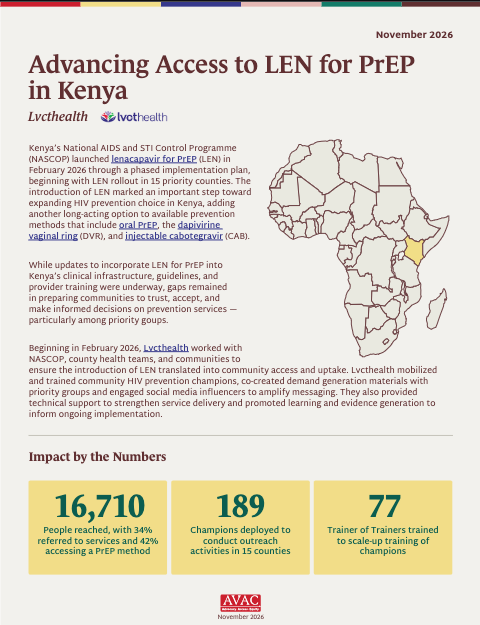

Background
Kenya’s National AIDS and STI Control Programme (NASCOP) launched lenacapavir (LEN) for PrEP in February 2026 through a phased implementation plan, beginning with LEN rollout in 15 priority counties. The introduction of LEN marked an important step toward expanding HIV prevention choice in Kenya, adding another long-acting option to available prevention methods that include oral PrEP, the dapivirine vaginal ring (DVR) and injectable cabotegravir (CAB).
While updates to incorporate LEN for PrEP into Kenya’s clinical infrastructure, guidelines and provider training were underway, gaps remained in preparing communities to trust, accept and make informed decisions on prevention services – particularly among priority groups.
Beginning in February 2026, Lvcthealth worked with NASCOP, county health teams and communities to ensure the introduction of LEN translated into community access and uptake. Lvcthealth mobilized and trained community HIV prevention champions, co-created demand generation materials with priority groups and engaged social media influencers to amplify messaging. They also provided technical support to strengthen service delivery and promoted learning and evidence generation to inform ongoing implementation.
Partners

Impact by the Numbers
189
champions deployed to conduct outreach activities in 15 counties
16,710
people reached, with 34% referred to services and 42% accessing a PrEP method
77
Trainer of Trainers trained to scale-up training of champions
Outcomes
Lvcthealth’s efforts helped bridge national LEN rollout to community-level implementation, contributing to outcomes that include:
- Increasing awareness and demand for LEN and PrEP choice among priority groups: Co-creating demand generation messages and communication materials with community stakeholders, and working with social media influencers to amplify choice messaging, ensured resources resonated with and reached the right audiences.
- Fostering community trust and informed decision-making: Training community champions to be credible messengers helped influence health-seeking behaviors, increase awareness of prevention options and promote service uptake.
- Strengthening LEN implementation at county and facility levels: Promoting regular coordination and learning, and providing continued technical support to use electronic medical record (EMR) systems, informed decision-making and helped increase implementation reporting accuracy.
Lessons Learned
Efforts to engage community champions and county health teams highlighted several lessons for sustaining demand generation and scale-up, including:
Sustainability
Building on existing structures helped establish a foundation for sustained demand generation and future PrEP scale-up. Following formal approval of the new demand generation materials and approach, the associated materials and tools were handed off to NASCOP for ongoing use and adaptation. Additionally, training a large number of county government trainers and community champions created a pool of local expertise to support future training and expansion to other counties. Finally, working with community networks that are already embedded within the health system and local structures ensures continued promotion of choice and connection of communities to services.
Future Implications
Continued investment in community champions and government-supported trainers will be critical to sustaining awareness and demand generation as LEN and other PrEP products reach the market.
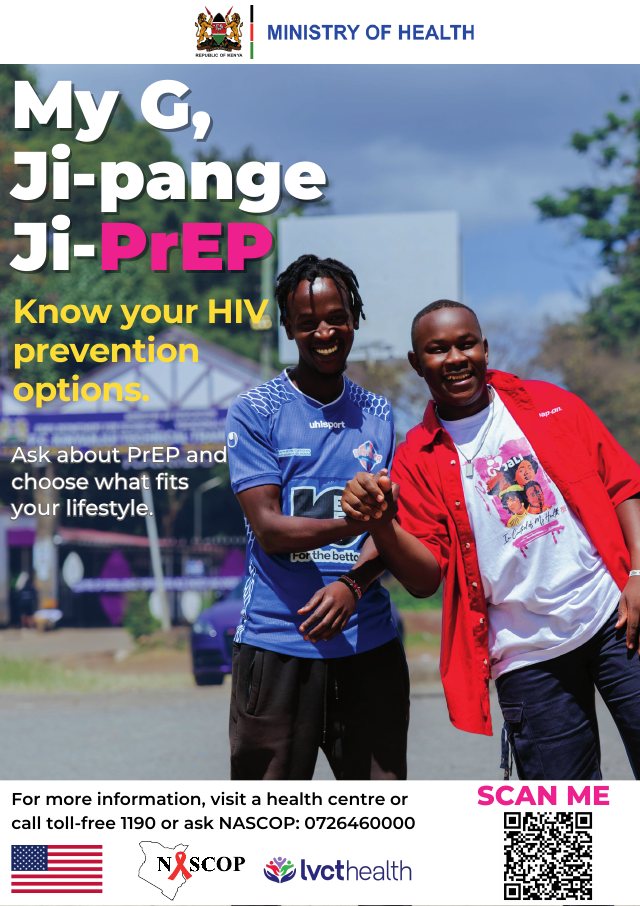

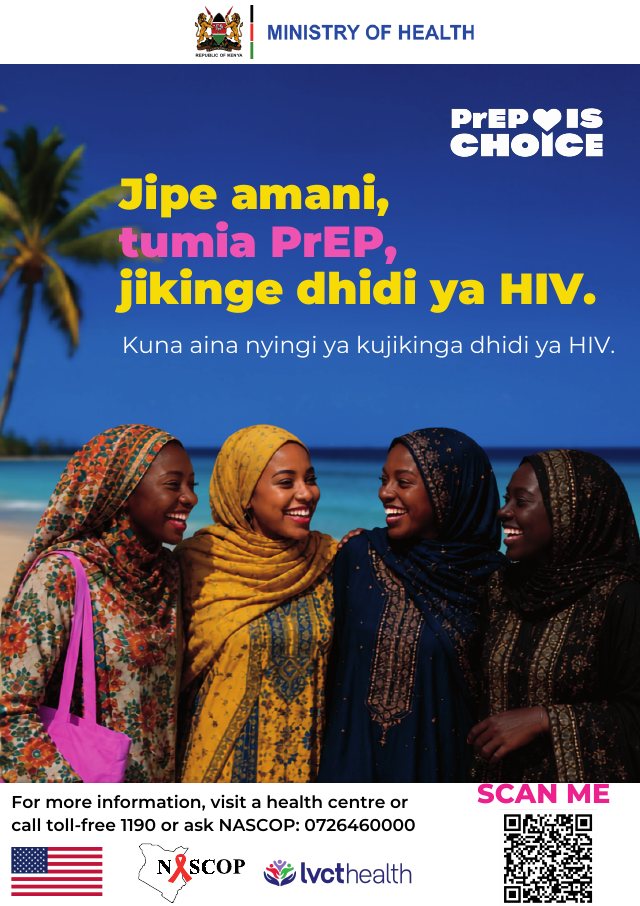
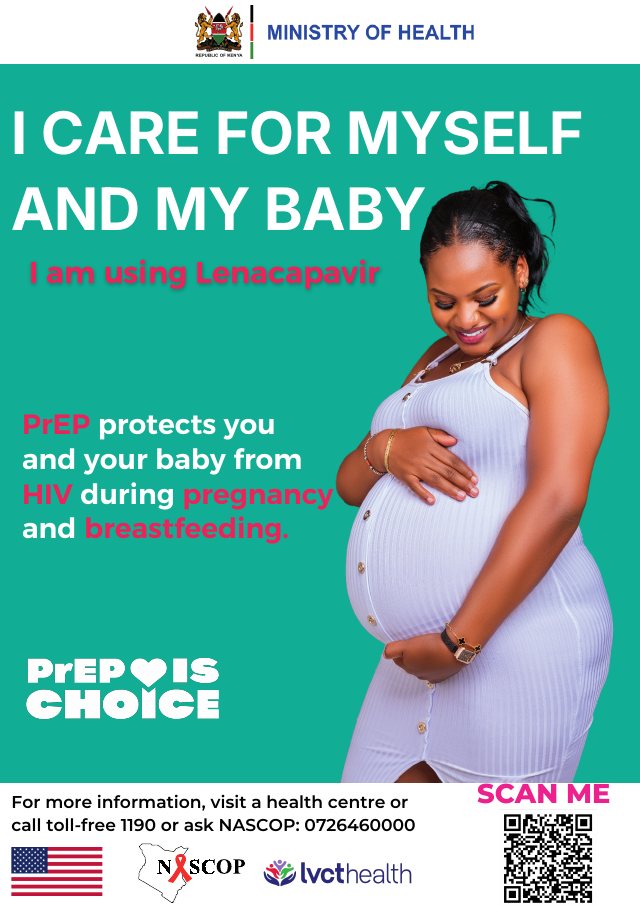
National demand generation posters, co-created with communities, reflect messaging and imagery that resonate with target audiences. A total of 20 materials were developed, approved and distributed across 15 counties.
Lvcthealth LEN Introduction Support: Key Activities
Community engagement and demand generation
Co-created and disseminated community-informed messages and materials for adolescent girls and young women (AGYW), adolescent boys and young men (ABYM), and pregnant and breastfeeding women (PBFW).
Community training and mobilization
Trained and mobilized prevention champions to promote choice, address misconceptions and connect communities to services.
Implementation support
Provided technical support to counties and facilities to identify service delivery challenges, support implementation, and improve coordination and reporting.
Encouraging learning and reflection to inform future scale-up
Convened county representatives to reflect on implementation experiences, share lessons and identify priorities for continued PrEP scale-up.
Learning in Practice · Reports from Our Partners
Supporting the Ministry of Health to Implement LEN In-Country
Read Kenya’s blog