Global Health Watch: Reflecting on 1 Year of Chaos and What’s Next, Congress Pushes Back, the Future of WHO, US Undermines African Authority

Issue 52

This week marks 365 days of disruption and chaos across global health, with many organizations and journalists reflecting on one year after the foreign aid freeze and what the future of global health looks like. This week also saw the US Congress beginning to reassert its role on health funding, ongoing US disengagement from WHO, and new reporting on the hepatitis B vaccine trial in Guinea-Bissau.  

We are also watching closely for news of an expanded Global Gag Rule, that is reportedly coming out later today, just as this issue goes to press. It is anticipated that this new gag will include a dramatic expansion beyond abortion and now underscore the US administration’s war on gender, diversity, equity and inclusion. We’ll cover this in next week’s Global Health Watch; the struggle, most definitely, continues.

365 Days of Chaos and Disruption, What Comes Next for Global Health 

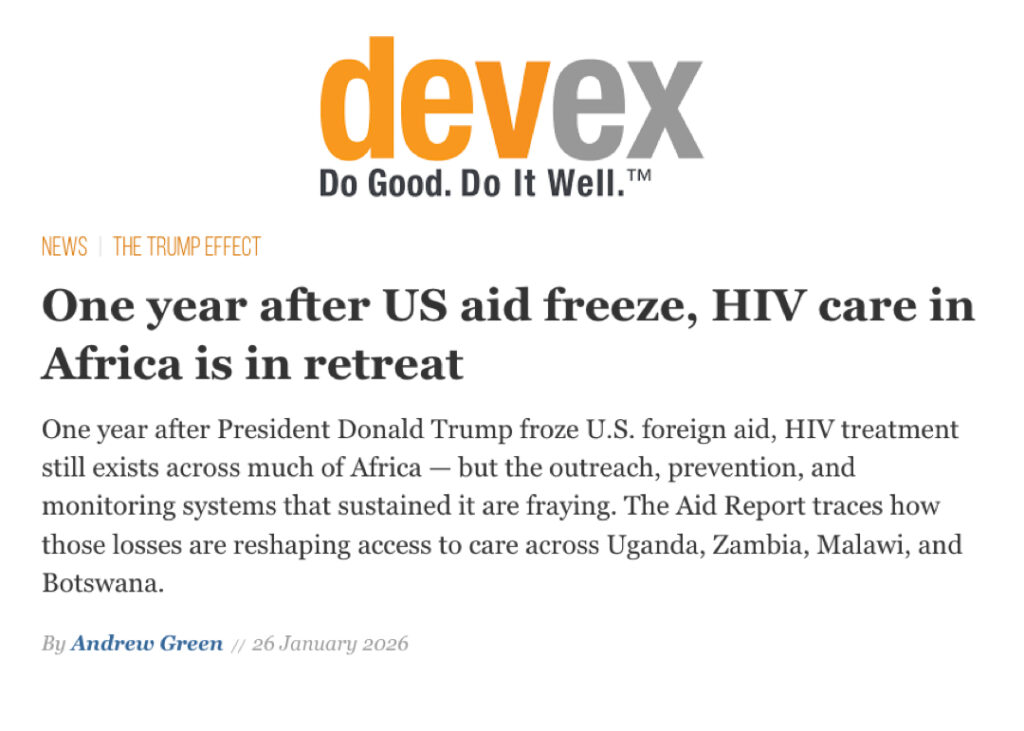
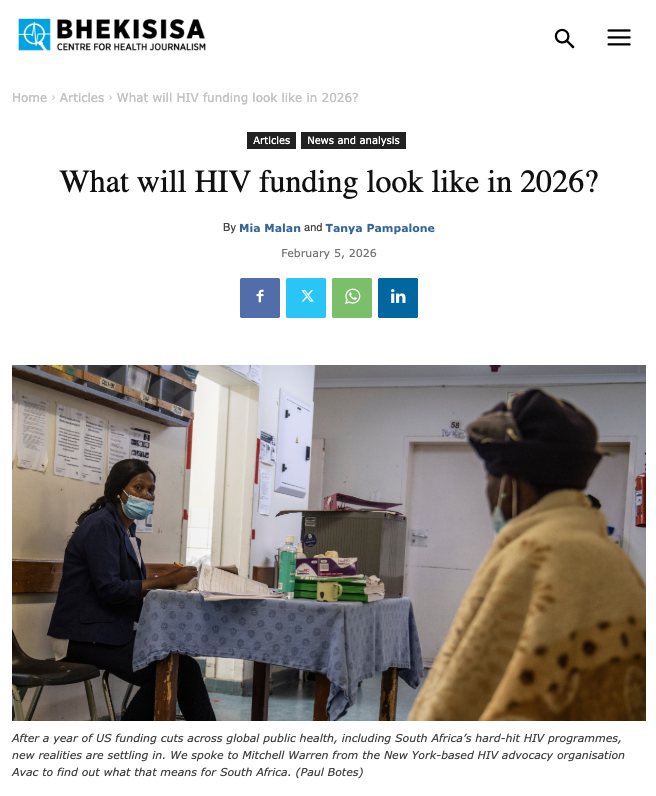
This week marks one year since the US Presidential administration issued a deeply cruel executive order freezing foreign assistance, halting billions of dollars in already-approved funding under the bad-faith claim of a “90-day review”. What followed was not a brief pause, but a drawn-out, chaotic disruption that stopped life-saving work across the globe, shutting down valuable organizations, and harming lives, health, and livelihoods. And that was just the beginning of a year of chaos. Many organizations and media coverage noted a growing recognition that the past year’s disruptions to global health were not just destructive, but catalytic, forcing a reckoning with how systems are built and for whom. Reporting from Bhekisisa reflected on how the sudden halt in US HIV funding exposed deep vulnerabilities in over-reliance on external aid, while also accelerating conversations about domestic financing, integration, and sustainability in the HIV response moving into 2026. At the same time, analyses from Health Policy WatchScienceNature, and The Lancet laid bare the human and scientific costs of abrupt policy shifts, shuttered programs, fractured research networks, and lost trust, while underscoring that simply restoring old funding streams will not be enough to meet future challenges. 

IMPLICATIONS: Together, these stories and analyses point to the need to rethink and rebuild with stronger country ownership, diversified and predictable financing, resilient research institutions, and governance structures that prioritize equity, accountability, and community leadership. Rather than recreating the same architecture, reimagined global health systems must be less dependent on external donors and political ideology. As Global Health Watch has tracked for 52 weeks, the path forward is not about returning to the pre-foreign aid freeze status quo, but about using this period of disruption to construct a more durable, equitable, and responsive global health architecture. As Canadian Prime Minister, Mark Carney, said so clearly at this week’s World Economic Forum in Davos, Switzerland, “Nostalgia is not a strategy.”

READ:  

Congress Steps Up In Defending Domestic and Global Health

The US Congress is beginning to reassert its constitutional role in shaping federal spending. The joint House and Senate FY26 funding bill released last week covering foreign operations would maintain funding for core global health priorities, including HIV, tuberculosis, malaria, polio, family planning and reproductive health, neglected tropical diseases, Gavi, and UN agencies such as UNAIDS, UNICEF, and UNFPA. This week, legislators rejected nearly $2 billion in proposed cuts to US domestic HIV and related programs through the Labor, Health and Human Services Education and Related Appropriations Act (LHHS), a “major victory” credited to sustained advocacy by people living with HIV, advocates, and service providers. The proposed bill largely preserves funding for domestic public health and biomedical research. As AVAC’s Suraj Madoori said in a statement, “These crucial wins for global and domestic HIV now require us to not hold back, and urge Congress to swiftly approve all the FY26 bills, push the President to sign them, and for us to ensure accountability in the administration to spend and implement this lifesaving funding as instructed by the people and those who represent us in Washington D.C.” 
 
IMPLICATIONS: Together, these bills signal a return to a bipartisan appropriations process and, if enacted, provide a basis to push back against unilateral cuts by the administration. They also signal bipartisan pushback against attempts to cut health and scientific research investments. By rejecting the steep cuts proposed by the administration, they stabilize lifesaving programs and protect the research enterprise. The House passed the bills on Thursday, and the focus now shifts to the Senate, which must pass the bills by January 30. Then onto the President to sign, and, most critically, for the administration to actually spend all Congressionally appropriated funds.

READ:  

US Disengagement and the Future of WHO

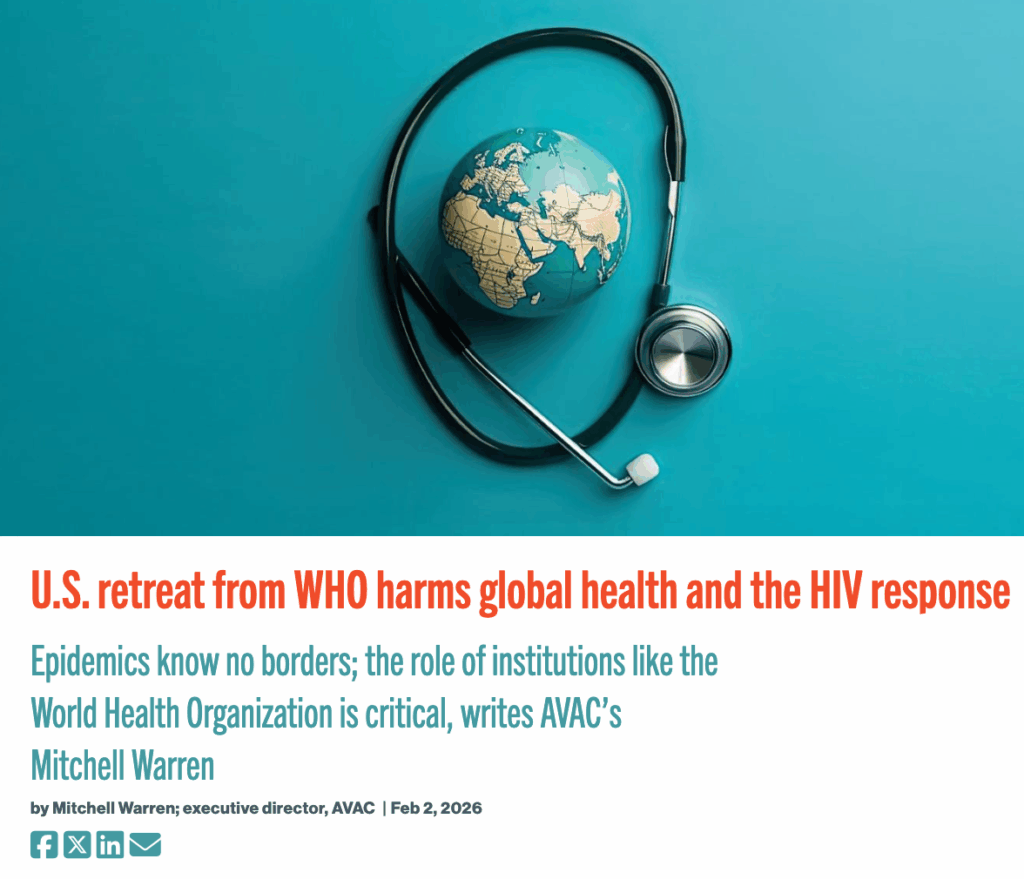
This week also marks one year since the US announced its intended departure from World Health Organization (WHO). Debate over its future and the US’ role within it intensified as pressure from parts of the administration collided with growing concern over the consequences of disengagement. US officials and policymakers aligned with the “America First” strategy call for WHO to be fundamentally reformed or replaced. Analysts note that the US remains a formal member of WHO until debts are paid. Meanwhile, the US administration continues to withhold funding and delay payments, leaving millions of dollars in unpaid US obligations.  
 
IMPLICATIONS: The current state, where the US remains technically engaged but substantively absent, poses serious risks for global health governance, disease surveillance and pandemic preparedness. As analyses from CSIS underscores, WHO reform is both necessary and possible, but meaningful reform requires constructive engagement, predictable financing, and political leadership, not abandonment.

READ

Hepatitis B Vaccine Trial in Guinea-Bissau Undermines African Authority

Reporting this week is exposing a pattern of US actions that show deep disregard for African public health leadership, ethical research standards, and sovereignty. The US-funded hepatitis B vaccine trial in Guinea-Bissau is at the center of this. As we reported in previous weeks, the unethical trial would delay birth-dose vaccination for thousands of newborns despite overwhelming evidence, and WHO guidance, that immediate vaccination saves lives. According to Rolling Stone, the study was championed by US officials aligned with anti-vaccine ideology and advanced even as Africa CDC officials raised alarm and indicated the trial should be halted. At the same time, the US administration has been marginalizing Africa CDC more broadly, cutting engagement, undermining its authority, and sidelining African institutions in favor of unilateral decision-making. This is being reinforced, as The Guardian reports, by members of the US administration urging US diplomats to emphasize American “generosity” to African leaders even as USAID programs are shuttered and health funding withdrawn. 
 
IMPLICATIONS: Together, these developments signal a dangerous erosion of respect for African expertise, autonomy, and ethical authority in global health. Pushing forward research designs that would withhold proven interventions—while dismissing objections from Africa CDC and African scientists—revives patterns of extractive and unethical research long condemned by the global health community. Undermining Africa CDC while advancing ethically dubious trials weakens trust, damages partnerships, and threatens progress against hepatitis B, HIV, and other diseases where Africa has led with scientific excellence.

READ:  

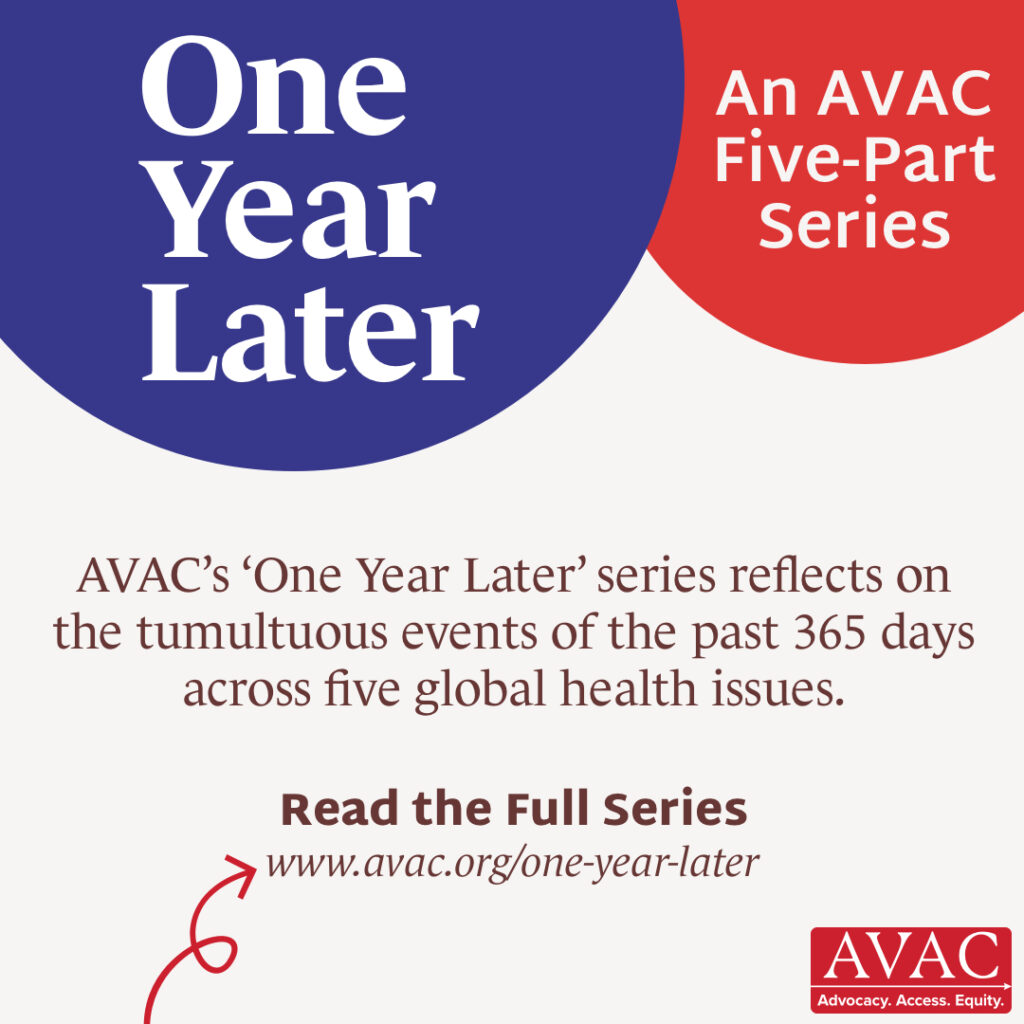
Read AVAC’s ‘One Year Later’ series

This five-part series reflects on the tumultuous events of the past 365 days across five global health issues: the erosion of US foreign aid; dismantling of the research enterprise; attacks on vaccine policy; and shifts in the global health architecture.

READ

What We’re Reading

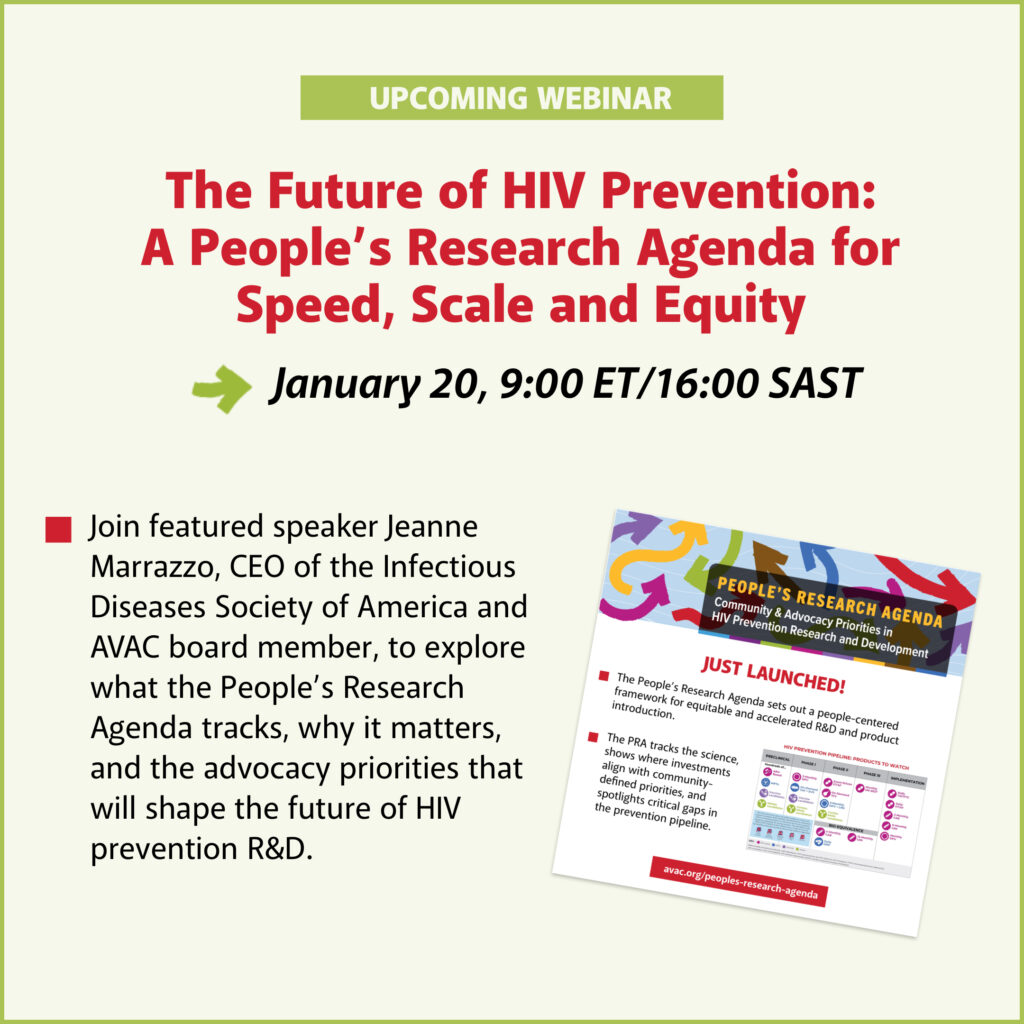
As new IDSA CEO, Jeanne Marrazzo warned in a webinar this week, rising HIV infections threaten progress, but “this is not a time to despair. It’s a time to fight.” Watch the recording and explore the 2025 People’s Research Agenda, which tracks the science, flags gaps, and centers community priorities to keep HIV prevention moving forward.

Resources

One Year Later

Our Reflections on Foreign Aid, Vaccine Science, Research Opportunities and the Future of Global Health

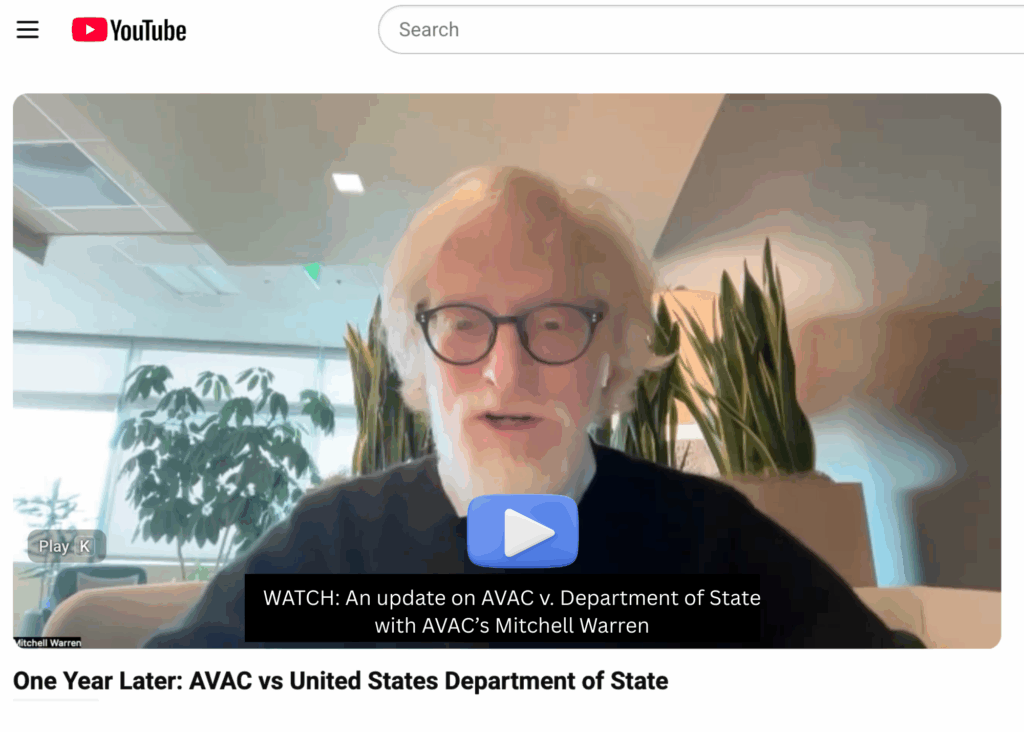
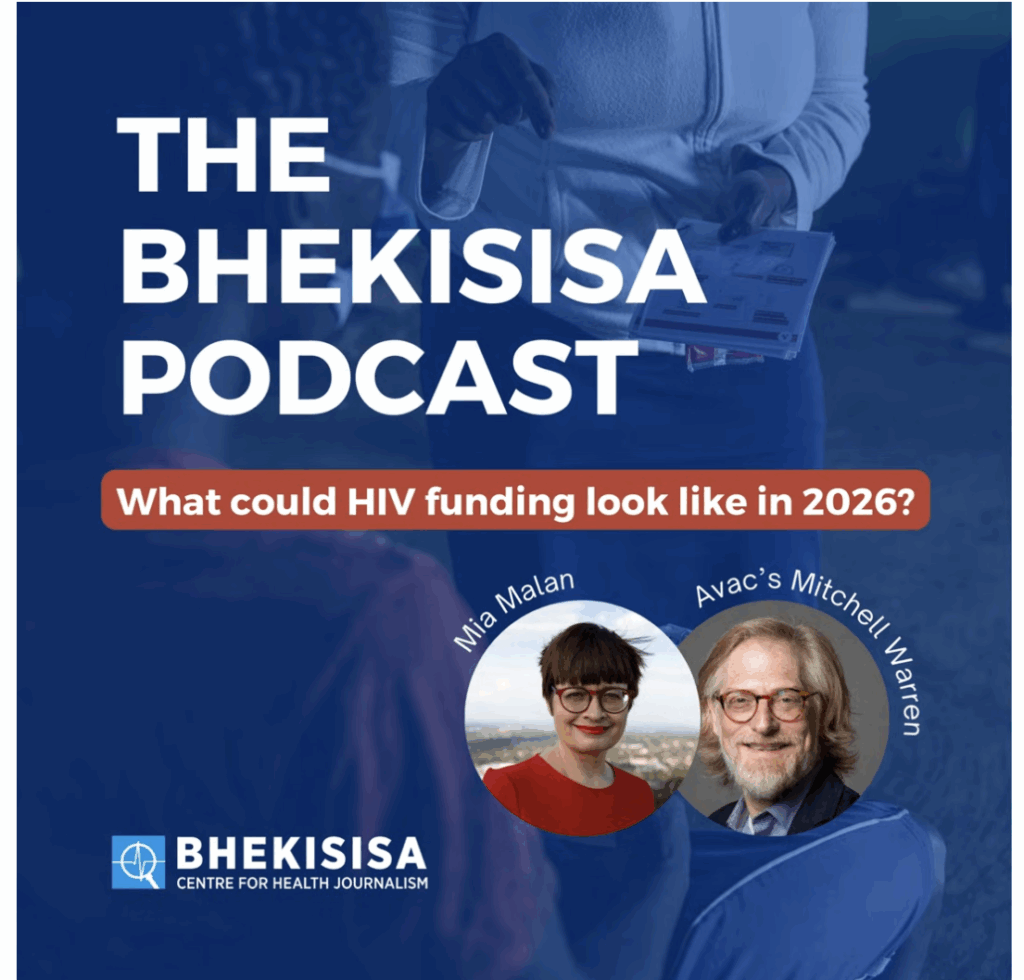
“The last year has been one of chaos, anger, panic, and frustration. I think the coming year has to be one of strategic rebuilding and building something different—not building back but building forward. That means a different architecture at the country level, community level, regional level, and global level. A year from now, I suspect we’ll see fewer acronyms, but hopefully the ones that remain will be stronger than ever.” —AVAC’s Mitchell Warren, Bhekisisa podcast

This week marks one year since the US Presidential Administration issued a deeply cruel executive order freezing foreign assistance, halting billions of dollars in already-approved funding under the bad-faith claim of a “90-day review”. What followed was not a brief pause, but a drawn-out, chaotic disruption that stopped life-saving work across the globe, shutting down valuable organizations, and harming lives, health, and livelihoods. And that was just the beginning of a year of chaos.

To mark this moment, AVAC’s One Year Later series reflects on the impact of the past 365 days on five key areas of global health and development:

  1. The erosion of US foreign aid
  2. The assault on vaccine science and policy 
  3. The dismantling of the research enterprise 
  4. The cruel irony of funding cuts in the context of the breakthrough technology of long-acting lenacapavir for PrEP 
  5. The profound shifts underway in global health architecture

These pieces show how the field navigated a year defined by disruption and resilience—and how policy decisions reverberate through science, programs, and communities. 

The year has been a profoundly transformative one for AVAC. The Devex in-depth retrospective, Fighting for Billions: The legal battle to keep US foreign aid alive, chronicles the ongoing lawsuits brought by AVAC, the Global Health Council and partners challenging the foreign aid freeze. The piece highlights how legal action became a critical line of defense against the dismantling of lifesaving programs and why the outcome still matters.

“For me, the best message I can say is a year later, we as a community are still standing. And that is a resilience in its own right. We are going to succeed in global health and development. Not because of what happened in the last year, but in spite of it.” —AVAC’s executive director Mitchell Warren on Bhekisisa’s new podcast, One year after Trump: The day HIV funding changed forever—and what came next

As Jeanne Marrazzo, the new CEO of the Infectious Diseases Society of America (IDSA) shared on our webinar earlier this week showcasing the 2025 update of the People’s Research Agenda (PRA), “We cannot yell it from the rooftops loud enough that new infections are going to rise and undermine efforts to end AIDS as a public health threat. But this is not a time to despair. It’s a time to fight. It’s a time to dig in and recognize not just what we’ve accomplished and why we need to protect that, but why we need to continue to move forward.” See the recording here and learn more about the PRA, which tracks the science, highlights where investments align—or fail to align—with community priorities and identifies critical gaps that must be addressed to ensure the prevention pipeline meets the needs of diverse populations.  

The past year has reshaped global health—and AVAC—in ways that will be felt for years to come. The events of the past year also show that advocacy, evidence, and community leadership matter. Some courts provided the necessary check on power; advocates rallied; and scientists and civil society raised their voices and documented what was lost—and what must be protected (see 24 Hours to Save AIDS Research). 

With your support, AVAC’s weekly Global Health Watch newsletter, now in its 52nd week, continues to track what happens, elevate what’s at risk, and help all of us navigate what comes next. Thank you to our community which stops at nothing to safeguard hard-won progress against HIV and in advancing global health equity.

One Year Later #5: Rethinking & Rebuilding Global Health

A battleground for equity

One year in from the inauguration of a new American president, the US has stepped back its longstanding support for global health—including an unprecedented absence at the World Health Assembly, withdrawal from the WHO, and eliminating support for joint initiatives like Gavi, the vaccine alliance. Other donor countries are following suit, with widespread reductions in funding for foreign assistance, threatening the 60-year-old architecture for coordination, funding and policy on global health.

In its place, the US is advancing what it calls the “America First” Global Health Strategy, comprised of a series of country-by-country (bilateral) health agreements, with little transparency in the process and many questions about their scope, metrics and accountability.  

But advocates, scientists, affected communities and national governments that are navigating the upheaval are not simply ceding the ground. African leaders have been advancing continent-wide planning and strategy toward health sovereignty, focusing on increased domestic spending, local production of vaccines, drugs and diagnostics, investment in research, and innovative financing models. At least one government, Kenya, is mounting challenges to its MOU with the US. And critically, civil society and HIV prevention champions are organizing to influence policy and demand that affected communities are supported to play a leadership role in the strategy and implementation of effective and equitable access to HIV prevention, and wider healthcare services. 

“The last year has been one of chaos, anger, panic, and frustration. I think the coming year has to be one of strategic rebuilding and building something different—not building back, but building forward. That means a different architecture at the country level, community level, regional level, and global level. A year from now, I suspect we’ll see fewer acronyms, but hopefully the ones that remain will be stronger than ever,” said AVAC’s Mitchell Warren in this Bhekisisa podcast.

“Durable health systems don’t rest on government signatures alone. They depend on buy-in from civil society, professional associations, community groups, and implementing partners who surface problems early and help manage risk before it becomes failure. Right now, consultation has been selective, civil society engagement uneven, and local private-sector voices largely absent. That imbalance is a real vulnerability. That’s why transparency and oversight matter. MOUs should be public. Progress should be measurable. Congressional engagement should be ongoing. Oversight is not a partisan exercise; it’s how durable policy is built,” said Jirair Ratevosian, of the Duke Global Health Institute and author of the Lights, Camera, Equity Substack.

A proactive agenda needs to prioritize what delivers impact. There’s a role for technology, for new kinds of partnerships, and for new leadership. Stakeholders must understand and advance what is absolutely necessary to achieve impact.

Stephanie Psaki, AVAC board member and President Biden’s US Coordinator for Global Health Security, pinpoints where advocacy may find leverage: “The State Department’s strategy seems to recognize the enduring bipartisan support among the American people for long-standing US global health goals, even as it shapes those aspirations to fit the president’s imperatives. Overall, the document appears crafted to win back those among the president’s allies who have long supported US programs in global health.” Psaki notes that the strategy outlines dramatic changes to how the United States has operated in global health historically, posing new challenges as we move forward.

“We recognize the global health landscape has changed. We, as a movement, need to prioritize ruthlessly, collaborate differently, and build systems that governments can lead and sustain, while upholding the rights of impacted communities and key populations. That includes integrating across diseases and aligning with health systems rather than siloed programs. We need to redefine sustainability—not as sustaining a funding stream or an institution but sustaining impact against HIV,” said AVAC’s Director of Policy and Advocacy Suraj Madoori.

This work depends on:

Coordinating and Integrating: The past has shown that innovation all too often does not reach the people who need it most. A new era in global health should design and invest for resilience. Resilience requires coordinated systems that work across diseases. 

Redefining Sustainability with Community in the Lead: Sustainability is not about preserving a budget line, program or organization; it’s about delivering results. Community leadership and local ownership in the creation of systems and programs are integral to achieving these results, and fundamental to any approach to sustainability.

Developing Innovative Models of Financing: Success depends on establishing sources of funding that do not rise and fall on the whims and manipulations of politicians or any single funder. 

In this moment of crisis lies the need for transformation. What is built next must be more effective and resilient than before, and more responsive to the people it serves. Champions of global health must define the architecture of the future, or it will be written by people bent on dismantling it.

One Year Later #4: The Cruel Irony of Lenacapavir for PrEP

The best shot at HIV prevention comes at the most challenging political and economic time

Over the course of the past year, the story of injectable lenacapavir (LEN) for PrEP has been a stark illustration of what’s at stake for global health as the US government defunds and dismantles fundamental programs within the HIV response. A profound contrast can be seen in this moment—on the one hand, there is a historic opportunity of every six-month LEN injections, which provide near perfect protection, and the speed at which the world can move with this intervention. On the other and, the field is facing unprecedented attacks on the infrastructure required to deliver LEN and other HIV prevention options. Science is breaking through formidable barriers in understanding HIV and how to prevent it, just as the infrastructure for delivering groundbreaking technology is defunded and destabilized. 

2025 was a year of extremes. The field reached important milestones in accelerating access to LEN and advancing HIV prevention science. LEN moved with unprecedented speed from regulatory approvals and guidelines to real-world introduction. South Africa and Zambia authorized LEN within months of US and EU regulatory approvals and the World Health Organization (WHO) rapidly issued guidance and prequalification. Initial LEN delivery has now begun in Brazil, Eswatini, South Africa, and Zambia, setting the stage for expanded access as the year ahead unfolds. Each of these efforts reflect a global commitment to learn critical lessons from the all-too-slow rollout of oral PrEP and injectable cabotegravir and get rollout right this time.  

Yet this momentum occurred as the new US administration launched an extensive assault on global health and the systems that make it possible. One of its first actions was the dissolution of the United States Agency for International Development (USAID). Damaging policies imposed on the President’s Emergency Plan for AIDS Relief (PEPFAR) soon followed, including threats that prevention would be restricted to narrow populations at risk. Of equally deep concern, PEPFAR has not released program data since 2024. Data-driven programming, and inclusion of gay men and other men who have sex with men (MSM), transgender people, and other key populations in PEPFAR-supported PrEP programs is essential to the end-goal of achieving epidemic control. AVAC Executive Director Mitchell Warren calls it a time of erasure, “people in greatest need of lenacapavir are not being tracked, counted or engaged by PEPFAR.”

In its place, the US is driving a nationalistic “America First” Global Health Strategy, signing bilateral memorandums of understanding (MOUs) country by country. The process is short on transparency, excludes civil society and rolls back decades of hard-fought wins aimed at ensuring community priorities, and evidence, inform national strategies and spending on HIV prevention. Some MOUs have come under criticism and court challenge for provisions that advantage American interests at the expense of the partner country and at the expense of a genuine effort to advance global health.

In the meantime, other major institutions that advance global health priorities are struggling to maintain momentum. WHO and UNAIDS are confronting steep funding cuts. The Global Fund, which is playing an instrumental role in supplying LEN for PrEP, fell short of its $18 billion goal, securing pledges so far of only $11.34 billion, with several major donors, including the US, pledging lower amounts than in previous years.

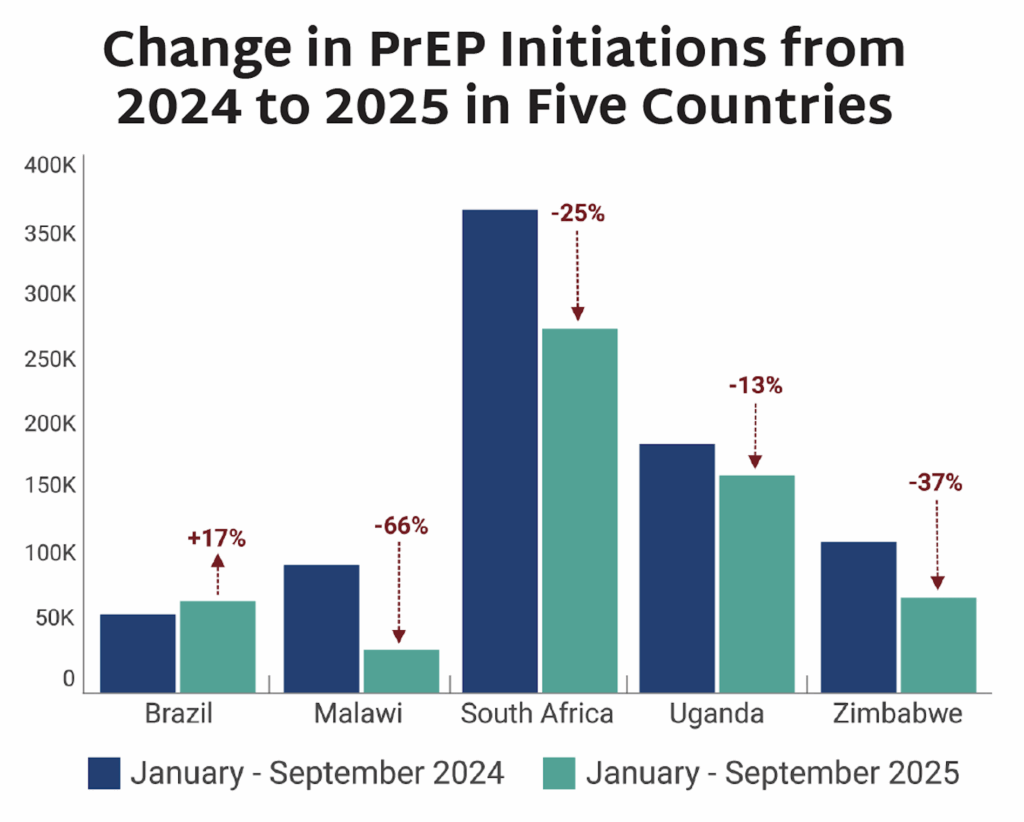
Restrictive, underfunded, siloed or shuttered programming for LEN for PrEP (and other HIV prevention options) threatens this once-in-a-generation opportunity to bend the curve of the epidemic. Moreover, gains the field has fought decades to achieve are threatened. Instead of taking a giant step forward, the world is at risk of tumbling backwards. Instead of ignoring or reinforcing barriers faced by key populations, programs must diversify, decentralize, train and empower providers and peer educators, and innovative to reach marginalized communities with a choice in PrEP options—including LEN for PrEP. Instead of reduced funding to major providers of LEN for PrEP, such as the Global Fund, donors must seize this opportunity to fully fund robust, comprehensive, coordinated efforts to scale it up. Instead of gutting normative agencies such as the WHO and UNAIDS that set targets and standards for achieving impact, international coordination should be reinforced as the foundation for success at a global level.

Global health champions stand at a bend in the road. It’s time to reimagine an HIV response that reaches beyond past success and never backs down in its demand for speed, scale, and equity. Moving forward into this new reality, health leaders, scientists and communities must accept nothing less than a new architecture for global health that brings effective HIV prevention, including LEN for PrEP, and access to care to everyone who needs it.

One Year Later #3: The Undermining of the US Research Enterprise

AVAC’s ‘One Year Later’ series reflects on the tumultuous events of the past 365 days across five global health issues. Our third piece is below. View the full series here.


The United States has witnessed a sustained assault on the research enterprise that underpins global health progress. Documented weekly in AVAC’s Global Health Watch, what has unfolded is a 365-day cascade of policy, programmatic and financial actions that threaten US leadership and the scientific ecosystem responsible for lifesaving breakthroughs from HIV prevention to pandemic preparedness.

In the first month of this US administration, approximately 1,800 National Institutes of Health (NIH) research grants were abruptly canceled, sending shockwaves through universities, research institutes, and global collaborations. In March, Health and Human Services (HHS) began to shrink its workforce by tens of thousands, with approximately 3,500 positions cut at the Food and Drug Administration (FDA), 2,400 at the Centers for Disease Control and Prevention (CDC), and 1,200 at the NIH as part of broader reductions and consolidations. Many scientists, recently hired staff, and early-career researchers lost their jobs, while senior leaders like Jeanne Marrazzo, then-director of the NIH’s National Institute of Allergy and Infectious Diseases (NIAID), and Kathy Neuzil, then-director of the NIH’s Fogarty International Center, were unceremoniously placed on leave or offered reassignment to distant posts as part of the reorganization. As Nature reports, there was an exodus of more than 25,000 people, many of whom were at early career stages across the science agencies. These disruptions hit core functions in disease surveillance, vaccine and drug development, and infectious disease research, and removed institutional capacity and decades of expertise needed to drive science and public health forward.

The administration then proposed restructuring of the NIH itself, alongside the President’s FY2026 budget request that proposed to cut $18 billion from its funding—a nearly 40% reduction. The administration’s proposal signaled a fundamental shift away from sustained investments in basic science and clinical research, the very foundation of discovery that enables future innovation across all health areas and diseases categories.

As AVAC has repeatedly warned, science does not operate with an on/off switch, it depends on sustained investment, stable institutions, and trust. “When the Administration stops research funding abruptly, it rewinds scientific progress. It will take time and even more resources to get these studies back online—squandering the potential of future breakthroughs that are based on established, gold-standard science.”  

In September, the HIV research community responded to the assault on research: AVAC and partners convened 24 Hours to Save AIDS Research, a global, day-long virtual marathon featuring more than 70 scientists, clinicians, advocates, and community leaders to document what decades of federally supported HIV research have delivered—and what stands to be lost if investments continue to erode. Speakers shared firsthand accounts of how sustained NIH funding enabled breakthroughs in HIV treatment, prevention, and vaccine science, and warned that abrupt cuts threaten to dismantle research networks that cannot be easily rebuilt. The effort underscored that defending the research enterprise is essential to protecting lives, progress, and future innovation. Watch the videos here.

In November, HHS ordered the CDC to phase out so-called “non-essential” nonhuman primate research, jeopardizing preclinical studies that were central to the development of HIV PrEP and PEP, vaccines, and other critical interventions. Additional actions, including pauses on some international research collaborations, proposed caps on indirect cost rates that support university infrastructure, and changes to peer review processes, have further destabilized the system that ensures scientific rigor and independence.

These developments come at a pivotal moment of extraordinary scientific promise. Long-acting HIV prevention options like injectable lenacapavir demonstrate what sustained investment can deliver when science is allowed to progress. As AVAC’s Mitchell Warren recently noted, “We are in a golden moment where innovation, evidence, and opportunity align—but breakthroughs only matter if the systems to deliver them remain intact.” Undercutting research infrastructure now risks slowing or derailing the next generation of prevention tools before they ever reach communities and deliver impact.

Meanwhile, Congress is in the midst of negotiations over the FY2026 appropriations process. While lawmakers on both sides have pushed back against the most severe cuts proposed in the Administration’s budget, the outcome remains uncertain. The decisions made in the coming months will determine whether the US can regain its leadership position or retreat at a time when global health challenges demand more, not less, scientific leadership.

The implications extend far beyond US borders. American investments have long anchored global research networks, supported scientists around the world, and accelerated progress against HIV, TB, malaria, and emerging threats. Dismantling that infrastructure weakens global preparedness, fuels mistrust in science, and leaves communities everywhere more vulnerable.

NIH funding, which supports an estimated 60-70% of South Africa’s medical research, significantly disrupted South Africa’s biomedical research enterprise. In March, NIH grant managers were told to “hold all research awards” for the country, labeling South Africa as a “country of concern” and halting sub-awards and freezing or blocking new and existing grants. A briefing in May shared that 27 HIV trials and 20 TB trials would likely be affected. “We will see lives lost. In excess of half a million unnecessary deaths will occur because of the loss of the funding, and up to a half a million new infections,” Linda-Gail Bekker told Al Jazeera. “Though the issues related to research cuts are a global challenge, South Africa does bear the brunt of so much of this new US presidential administration’s ire,” Mitchell Warren told the Financial Mail. “It is very clear that the President is using budgets and terminations of previously agreed to programmes to redefine agendas, and in this case, ones that defy science and are clearly political and ideological.”

Evidence, equity, and public health must remain guiding principles. AVAC will continue to track, analyze, and elevate what’s at stake, because defending the research enterprise is essential to saving lives. The future of HIV prevention, vaccine development, and global health depends on it.

One Year Later #2: An Assault on Vaccine Science and Policy, and the Stakes for Global Health

AVAC’s ‘One Year Later’ series reflects on the tumultuous events of the past 365 days across five global health issues. Our second piece is below. View the full series here.


In less than a year, actions by the new US Presidential Administration have resulted in an unprecedented dismantling of vaccine science and abdication of the country’s historic role as a leader in evidence-based public health. Driven by ideology, these actions have systematically undermined research institutions, disrupted long-standing vaccine programs, and fueled confusion and mistrust in and outside the US. As tracked in AVAC’s Global Health Watch, the cumulative effect of these actions has had worldwide consequences for vaccine development, delivery, and confidence.

The implications for global health moving forward are stark. Vaccine science is cumulative: today’s innovations depend on investments made over many years. Undermining the research infrastructure now risks slowing progress for years to come—for HIV, other STIs and infectious diseases, pandemic preparedness, routine immunization, and emerging threats. And retreating from global partnerships weakens multilateral systems precisely when coordination and solidarity are most needed.

In just 12 months, the US administration has systematically weakened the scientific ecosystem supporting vaccine development and delivery. In May, the National Institute of Allergy and Infectious Diseases (NIAID) announced that funding for the Consortia for HIV/AIDS Vaccine Development (CHAVD) would end after the current grant cycle in June 2026. CHAVD is a network of unique collaborations linking basic immunology and early-stage clinical testing. This decision eliminates approximately $67 million annually (~10% of global HIV vaccine research funding) at a moment when sustained investment is essential to build on decades of scientific progress. Ending CHAVD does not merely reduce funding; it dismantles collaborative networks, erodes institutional memory, and slows the discovery process that vaccine science requires.

The Administration then cancelled $500 million in Biomedical Advanced Research and Development Authority (BARDA) grants supporting mRNA vaccine research and development. These investments had positioned the US as a leader in a platform with transformative potential for cancer, influenza, RSV, HIV, and other infectious diseases. As The Guardian noted, mRNA vaccines represent the future of immunization “with or without Donald Trump.” Abandoning this platform sends a chilling signal to researchers, manufacturers, and global partners alike.

The damage has not been confined to research funding. Members of the Centers for Disease Control and Prevention’s Advisory Committee on Immunization Practices (ACIP), a gold-standard panel of medical experts representing the country’s top experts on vaccine science and the cornerstone of evidence-based vaccine policy, were replaced with a mix of anti-vaccine, anti-science representatives, undermining the independence and credibility of a body that guides vaccine recommendations relied on by clinicians and public health programs worldwide, and prompting wide concern from medical experts, including the American Medical Association. Simultaneously, language on CDC websites was quietly altered to reflect anti-science and anti-vaccine rhetoric, further fueling confusion and mistrust.

In August, Paul Offit, a pediatrician, leading vaccine expert, and co-inventor of the rotavirus vaccine was removed from the FDA’s Vaccines and Related Biological Products Advisory Committee. And soon after, the President publicly challenged pharmaceutical companies to “prove” that their COVID-19 vaccines still work, despite overwhelming and ongoing evidence of their safety and effectiveness.

Compounding these disruptions, new pediatric vaccine recommendations were issued departing from long-standing, evidence-based guidance without scientific justification or consensus from pediatric and public health experts. As Center for Infectious Disease Research and Policy (CIDRAP) reports, providers and families are grappling with mixed messages about vaccine timing, safety, and necessity. As the year ended, a federal court ruled in favor of major medical societies, including the American Academy of Pediatrics to proceed in their lawsuit against the Department of Health and Human Services (HHS) challenging changes to COVID-19 vaccine policy and replacement of members of the ACIP with people who lack the credentials and required experience.

More recently, RFK Jr. appointees at the CDC made an unethical study in Guinea-Bissau a “funding priority”, awarding funds to two Danish researchers who have faced accusations of “questionable research practices”. Katherine Eban describes the full anti-science, ideologic story in Rolling Stone.

Perhaps most alarming for global health, the US halted its support for Gavi, the Vaccine Alliance. For more than two decades, Gavi has been one of the most effective mechanisms for expanding access to life-saving vaccines in low- and middle-income countries. As Seth Berkley wrote in Science, Gavi is “a model for international, public-private collaboration that works with countries to provide vaccines for about half of the world’s children and has been a powerful force behind the halving of global child mortality in the last 25 years. Gavi also… [maintains] the global stockpiles of cholera, Ebola, meningitis, and yellow fever vaccines.” US withdrawal threatens immunization programs far beyond its borders, putting millions of children at risk and destabilizing fragile health systems.

As AVAC’s Alison Footman PhD, MPH warned in an August statement, “These actions dangerously sow vaccine disinformation and mistrust, which has proliferated since the COVID-19 pandemic. Dangerous ideology results in dangerous policymaking, putting many lives at stake and complicating efforts to both discover and implement clinical and cost-effective interventions.” That warning has only grown more urgent. Public trust—once lost—is extraordinarily difficult to rebuild, and vaccine hesitancy fueled in one country reverberates globally through media, politics, and policy.

This moment clarifies what is at stake, and what must be defended. Science works when it is grounded in evidence, and accountable to communities. Vaccines remain one of the most powerful tools in public health history, capable of saving millions of lives when paired with trust, access, and sustained commitment.

One Year Later #1: The Foreign Aid Freeze & Abuse of Executive Power

AVAC’s ‘One Year Later’ series reflects on the tumultuous events of the past 365 days across five global health issues. Our first piece is below. View the full series here.


Nearly one year ago, the new US Presidential Administration issued a deeply cruel executive order: on January 20, 2025, they froze nearly all foreign assistance, halting billions of dollars in already-approved funding under the bad-faith claim of a “90-day review”. What followed was not a brief pause, but a drawn-out, chaotic disruption that stopped life-saving work across the globe, shutting down valuable organizations, and harming lives, health, and livelihoods.

The subsequent 12 months have laid bare the risks when executive power overrides Congressional authority in ways that threaten lives at home and abroad and erode the longstanding US role as a reliable partner in global development. When the freeze first happened, Lauren Bateman from the Public Citizen Litigation Group said, “The Trump administration’s freeze on foreign assistance funding is dangerous and illegal. When programs are abruptly shuttered, the impacts are felt throughout the world—with the most vulnerable people bearing the deadliest impact.”

Medicines sat in warehouses while clinics closed. Organizations across continents suspended HIV prevention services and were unable to meet community needs as critical contracts and grants were terminated or left in limbo without planning or justification. Research was halted, undermining years of trust-building and data-gathering.

The freeze forced AVAC to stop CASPR, a coalition of African civil society organizations that supports research on HIV prevention and provides resources for local communities, including medical research trial participants, journalists, and policy makers.

In response to the freeze, AVAC and the JOURNALISM DEVELOPMENT NETWORK sued the President, the State Department, the US Agency for International Development (USAID), and others, seeking emergency relief. A day later, an additional case was brought against the federal government by Global Health Council and partners and was assigned to the same District Court judge.

One year later, these cases—like many other lawsuits filed against the many unjust and unconstitutional acts of this administration—have become the symbol of something much larger: whether the executive branch can ignore Congressional power of the purse and dismantle decades of bipartisan foreign policy with the stroke of a pen and whether the courts or Congress will step in to stop it.

An early ruling in AVAC’s case successfully unlocked nearly $2 billion in US government payments for work already completed. The judge’s ruling affirmed Congress’ power of the purse and that the executive branch cannot refuse to spend money that Congress has appropriated. But over the course of 2025, the administration filed appeals and sought so-called “emergency relief”.

A partial stay allowed the government to withhold funds while they ran down the clock on the 2025 fiscal year. While they stalled, billions of already-appropriated dollars in foreign assistance expired without being spent, eliminating interventions that would have made America and the world stronger, safer, healthier and more prosperous. As AVAC Executive Director Mitchell Warren said in NPR, “Time and again, this administration has shown their disdain for foreign assistance and a disregard for people’s lives in the United States and around the world. More broadly, this decision, which we will appeal to the extent possible, further erodes Congress’s role and responsibility as an equal branch of government, and the majority opinion makes the court complicit.”

In November 2025, the parties filed a joint statement to the District Court to put the case in abeyance while awaiting separate Court decisions that could inform it. As a result, AVAC’s case remains active in 2026, but lawsuits will never bring back everything that was taken away. As Warren said, “it takes time to build up these programs and relationships … it will take more time to re-build, no matter who funds these efforts.”

A year ago, the foreign aid freeze was falsely framed as a temporary step as the administration began testing the limits of executive power. Today, the reverberations of their cruel and unconstitutional actions are clearer than ever: disrupted care, weakened institutions and relationships, and ongoing chaos and constitutional conflict.

This moment demands more than concern. It demands public outrage, Congressional oversight and legislative safeguards. If lawmakers do not step in to do more, this administration will continue to roll over Congressional decision-making. We cannot accept this as the new normal—and must insist that the rule of law, including the lives it protects, still matters.

Global Health Watch: Health Policy Decisions Reversed, FY26 US Global Health Funding, America First MoUs Scrutinized & LEN for PrEP Advances

Issue 51

United States financing decisions, global governance and scientific innovation collide as US lawmakers advance the fiscal year 2026 (FY26) bills. The foreign assistance budget, passed by the House on Wednesday, if enacted, would restore some global health funds in a broader context of uncertainty, as US bilateral “America First” health MoUs advance without transparent plans for implementation or accountability. At the same time, abrupt reversals by the US Department of Health and Human Services (HHS) of troubling health policy decisions underscore the instability of the Administration’s decision-making process. These developments are taking shape amid momentum around lenacapavir for PrEP, which was approved by the Brazilian regulatory agency and received additional funding from Unitaid to reach more populations in South Africa and Zambia.

US Reverses Harmful Health Policy Decisions After Outcry 

The US rescinded one, and possibly two, very troubling health policy decisions following outcry from communities and experts. Health and Human Services (HHS) reversed plans that would have canceled billions of dollars in funding for overdose prevention and substance use treatment programs. In addition, The Guardian reports that an HHS-sponsored hepatitis B vaccine trial in Guinea-Bissau has been halted following serious ethical concerns related to informed consent, standards of care, and potential exploitation in a low-income setting. While Scientific American reports that the study may still be ongoing, in both cases, sustained objections from public health experts, advocates, and affected communities played a decisive role in forcing scrutiny of deeply troubling decisions. 

IMPLICATIONS: These rapid announcements followed by abrupt reversals and confusion expose deeply flawed leadership at HHS, where ideological hostility to evidence-based public health has driven attempts to dismantle lifesaving programs and advance vaccine-skeptical agendas. At the same time, they offer a clear reminder that advocacy works. Public outcry from communities directly affected by overdose deaths, global health experts, ethicists, and civil society played a critical role in helping to prevent harmful actions. While these outcomes prevent immediate harm, they do not erase the broader instability facing US health policy.

READ:  

FY26 US Global Health Funding Update 

The US House and Senate Appropriations Committees released their negotiated FY26 funding bill covering National Security, the State Department, and Related Programs (previously referred to as the State, Foreign Operations, and Related Programs/SFOPs bill). Also released was a summary statement of what’s in the bill, including timelines, reporting and other requirements for specific budget allocations. Together, these signal a return to a bipartisan appropriations process and, if enacted, provide basis to push back against unilateral cuts by the Administration. The House has approved the bill, and it now heads to the Senate. Overall, approximately $50 billion is allocated for foreign assistance, $20 billion more than the President’s Budget Request, with $9.4 billion directed toward global health programs. Importantly, Congress maintained funding for core global health priorities, including HIV, tuberculosis, malaria, polio, family planning and reproductive health, neglected tropical diseases, Gavi, and UN agencies such as UNAIDS, UNICEF, and UNFPA. As KFF’s analysis shows, the bill reflects strong bipartisan congressional support for global health even as the Administration sought deeper cuts and eliminations across several programs.

IMPLICATIONS: The FY26 bill underscores ongoing uncertainty in US global health priorities and financing. As AVAC’s Mitchell Warren told Devex, “Almost a year since the US administration decimated the U.S. Agency for International Development … Congress is coming back with a bill that rejects the administration’s shortsighted decisions last year. But this is just a start and major challenges remain: Will both houses of Congress approve the bill? Will the President sign it? And, perhaps more importantly, will the President actually spend Congressional appropriations and accept at last that it is Congress, and not him, who has the power of the purse?” Congress’s decision to protect key investments signals continued bipartisan recognition that global health programs, including HIV prevention and treatment, are essential to US and global security. However, the overall funding reduction leaves programs in limbo, prolonging instability for implementing partners and countries that rely on US support.

READ:  

America First Global Health MoUs Under Scrutiny 

Discussion and scrutiny is intensifying around the five-year bilateral Memorandums of Understanding (MoUs) signed with the US under the America First Global Health Strategy. Fifteen nations have now signed these agreements and more than $16 billion has been committed. The Implementation Planning Period, where operational details would be worked out, including who would deliver services, where, and for which populations, was supposed to happen upon signing of the agreements through March 31, 2026. However, as many tracking these agreements suggest, completing the MoUs does not guarantee a detailed, transparent, or people-centered implementation strategy.  

IMPLICATIONS: Without clear implementation plans that specify roles, funding flows, safeguards, and mechanisms for civil society engagement, billions in health assistance could be deployed in ways that weaken coordination, sideline communities, and fail to reach those most affected. As the Implementation Planning Period unfolds, sustained oversight will be essential to ensure these agreements translate into measurable health gains. 

READ

Unprecedented Momentum for Lenacapavir for PrEP

Unitaid, a convener of the Coalition to Accelerate Access to Long-Acting PrEP, announced a new $31 million commitment to accelerate access to injectable lenacapavir for PrEP (LEN) in South Africa and Zambia. The investment aims to expand delivery of LEN beyond traditional clinic settings and reach populations often left behind, including young women and key populations. In addition, Brazil became the 14th regulatory agency to approve LEN this week, and Gilead submitted an application to Peruvian regulatory authorities, marking nine pending regulatory approvals (see AVAC’s regulatory tracker).  
 
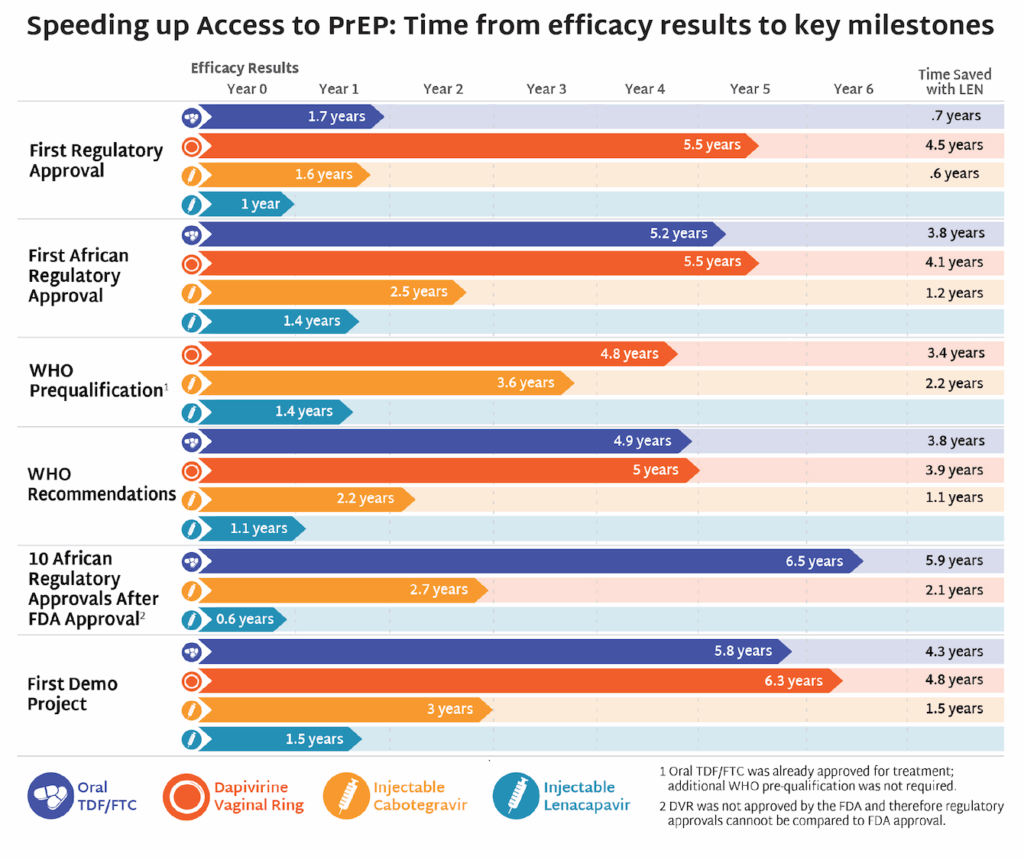
IMPLICATIONS: The momentum of LEN activity to date is unprecedented. In less than 18 months, the field has moved from initial LEN efficacy results to a series of critical milestones (including this week’s announcements) that took over seven years with oral PrEP and three years with injectable CAB. This momentum underscores both what is possible—and what is at risk. Rolling out LEN with speed, scale, and equity must be an uncompromising priority if this breakthrough is to change the trajectory of the epidemic. Without robust community engagement, intentional planning, sustainable financing, and strong delivery systems, high costs and weak infrastructure could confine LEN to a limited number of countries and populations. While this has not yet translated into infections averted at scale, it provides clear proof that faster pathways are possible, and that this accelerated model must now become the new benchmark for how effective global health technologies (not just HIV prevention options) are designed, developed and delivered.

READ:  

What We’re Reading

The Future of HIV Prevention with Dr. Jeanne Marrazzo

January 20 Webinar

[UPDATE] View recording / download slides

As the new year begins, AVAC and partners are hitting the ground running to advocate for speed, scale, and equity in the HIV response and with a focus on The People’s Research Agenda (PRA) to advance critical priorities. First developed in 2024, in partnership with global advocates and communities, the PRA offers essential guidance on community priorities to inform HIV prevention, and features an online dashboard for tracking, translating and advocating for HIV prevention research and development (R&D).

On January 20, join us and Jeanne Marrazzo, IDSA CEO and AVAC board member, for The Future of HIV Prevention: A People’s Research Agenda for Speed, Scale and Equity, a webinar exploring the PRA’s people-centered framework, what the PRA tracks, why it matters and what’s at stake.

In 2026, the fields of HIV and global health are rethinking and rebuilding. The PRA can help power the work ahead, which depends on determined voices fighting for a reimagined and reenergized HIV response—one that doesn’t give up on science, confronts a changed landscape head-on, and is led by the people most impacted by the epidemic.

Global Health Watch: Assault on US vaccine policy, contradictions in HPV and HIV vaccine science; 14 countries sign America First MOUs

Issue 50

The assault on vaccine policy and confidence intensified this week as the US overhauled its childhood immunization schedule, reducing the number of vaccines recommended and breaking decades of evidence-based practice. At the same time, the human papillomavirus (HPV) vaccine recommendations remain intact, and a new Phase I HIV vaccine trial launched demonstrating the contradictions of the moment.

Beyond the US, 14 countries have now signed bilateral health agreements with the US under the America First Global Health Strategy. At the same time, the US President signed a new executive order withdrawing the US from and defunding over 60 international organizations and treaties. And as this issue began to publish, Health Policy Watch reported that Germany plans to cut its funding by half for the World Health Organization’s Hub for Pandemic and Epidemic Intelligence. This suite of decisions shows sweeping upheaval in global health policy, governance and funding.

Continued Assault on Vaccines: US Shifts Vaccine Policy

The US Administration overhauled its childhood immunization schedule, reducing the number of vaccines universally recommended for children and moving several (including rotavirus, influenza, hepatitis A & B, respiratory syncytial virus [RSV], and others) to recommended categories only for children deemed at high-risk. Researchers at the US Centers for Disease Control and Prevention (CDC) and leading pediatric and public health organizations are criticizing the new policy, warning it could weaken protections against preventable diseases and is contrary to decades of evidence-based practice and adds confusion among providers and families. They also note that this change was made without broad scientific consensus or a transparent process and bypassed traditional advisory review. Just after the change in policy, a federal court ruled in favor of major medical societies, including the American Academy of Pediatrics, to proceed in their lawsuit against the Department of Health and Human Services (HHS) challenging changes to COVID-19 vaccine policy and replacement of members of the CDC’s Advisory Committee on Immunization Practices (ACIP) with people who lack the credentials and required experience.  

IMPLICATIONS: These changes to the US vaccine schedule, which come on the heels of reduced US support for global vaccine initiatives such as Gavi, the Vaccine Alliance, and cuts to mRNA vaccine development, represent yet another assault on vaccine science and confidence. By narrowing recommendations for routine vaccines without clear evidence or expert consensus, the Administration risks weakening public trust in vaccine programs at a time when vaccine acceptance is critical to controlling preventable diseases. This policy shift could fragment national standards, spur state-level pushback, and increase disparities in vaccine uptake, undermining decades of progress and complicating global efforts to sustain strong immunization coverage.

READ:  

HPV Vaccine Update and Self-Collection for HPV Test 

Amid these broader changes to pediatric vaccine policy, the human papillomavirus (HPV) vaccine remains recommended for 11–12-year-olds in the US, easing concerns that it might be removed from the routine guidance. The updated guidelines also endorse a single-dose HPV vaccine schedule, which reflects emerging evidence that one dose can be highly effective. At the same time, new recommendations from the US Health Resources and Services Administration say that women ages 30 to 65 with an average risk of cervical cancer can opt for a self-administered HPV test.

IMPLICATIONS: While this shift could simplify delivery and improve uptake, important questions remain. Experts caution that the strongest one-dose data come from studies in females with limited follow-up and note that there is very little evidence on one-dose efficacy in males. As implementation moves forward, continued data collection and careful monitoring will be essential to ensure long-term protection for all. For self-collection of samples for testing, this shift could improve screening rates.READ:  

New HIV Vaccine Strategy Kicks off Amid Larger Assault on Vaccines and Science 

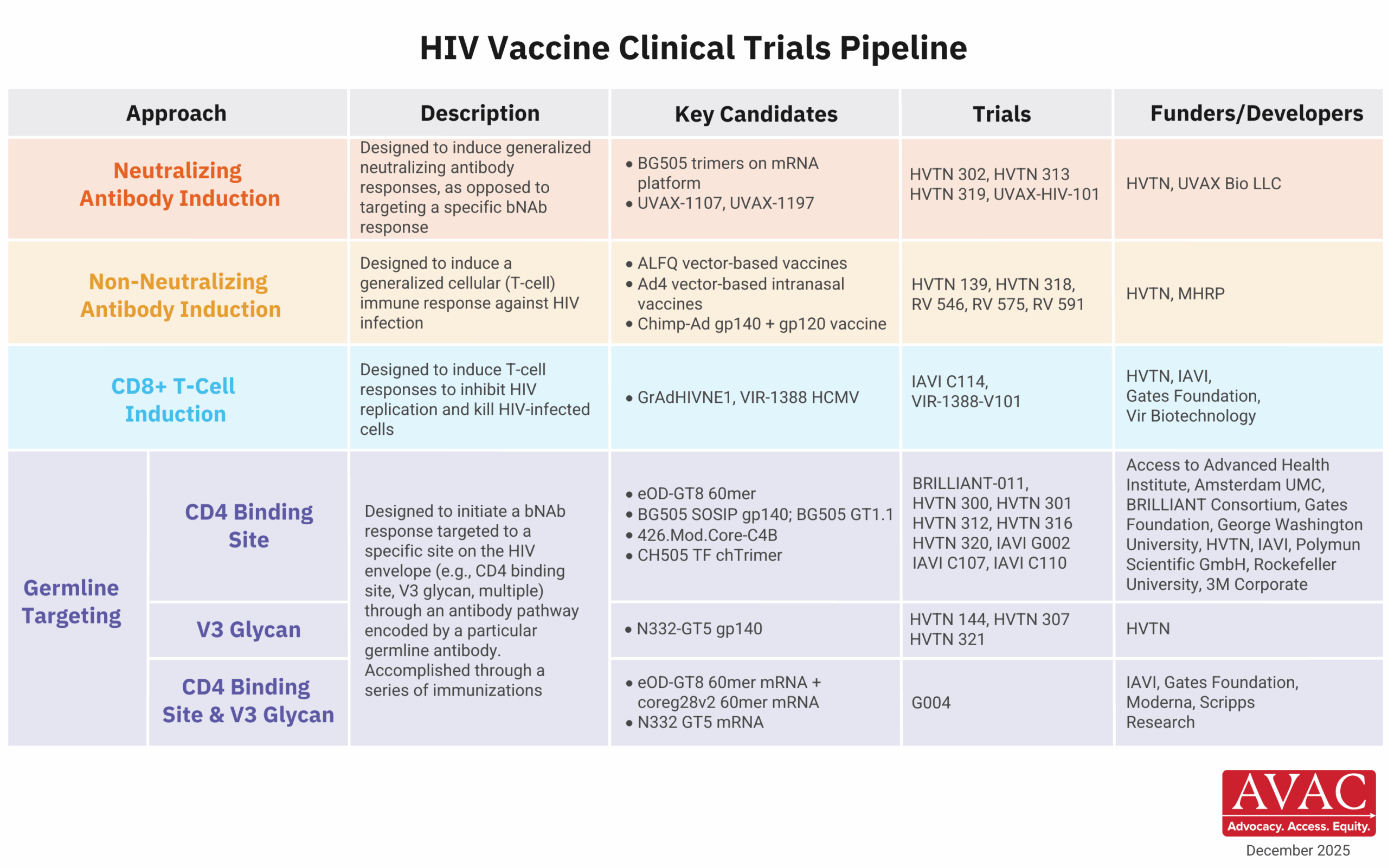
Meanwhile, a new chapter in HIV vaccine research begins as first vaccinations for the IAVI G004 Phase I clinical trial were announced this week. This early-stage HIV vaccine trial stands out because it is the first germline-targeting vaccine designed to induce broadly neutralizing antibodies (bNAbs) against more than one major site on the HIV envelope—specifically both the CD4 binding site and the V3 glycan region. Most prior HIV vaccine candidates have focused on the CD4 binding site alone, making IAVI G004 a long-anticipated scientific advance. Importantly, this trial also reflects recent political shifts: it was initially envisioned as part of a larger NIH-partnered collaboration (DESIIGN), but changes in US government priorities have reduced the size of the trial. See AVAC’s tracker of the full HIV vaccine clinical trials pipeline.  

IMPLICATIONS: This trial continues to show a cruel irony in HIV prevention. Scientifically, it represents a meaningful step forward in germline-targeting strategies that could strengthen immune responses and lead to an eventual HIV vaccine. But, it also highlights how political and funding disruptions are constraining the breadth and depth of vaccine research by limiting collaborations, reducing funding and placing greater strain on already fragile pipelines.

READ

14 African Countries Have Signed Bilateral Agreements with US Under its America First Global Health Strategy

At least 14 African countries have now signed five-year agreements with the United States under the “America First” Global Health Strategy. Recent deals with Botswana, Ethiopia, Ivory Coast, Madagascar and Sierra Leone, cover HIV, malaria, maternal and child health, pandemic preparedness, and other priority areas, require co-investment from partner governments, and include commitments on data sharing (which has been controversial; a court case in Kenya has challenged this provision), and health system reforms. The total now surpasses the $16 billion mark.

IMPLICATIONS: While these agreements may restore some funding after earlier foreign aid disruptions, they also reinforce a shift away from multi-stakeholder cooperation and toward government-to-government agreements with conditions that may come at the expense of low-and-moderate-income countries. As this model extends to more countries across Africa, how nations navigate sovereignty, accountability, and long-term health system strengthening will be critical for ensuring these billions translate into sustained, equitable impact. 

READ:  

What We’re Reading