August 19, 2026
Scientific breakthroughs accelerate HIV prevention—but only when they are matched with bold advocacy, sustained investment and equitable access. This month’s roundup highlights key prevention news, developments and takeaways from AVAC and explores what’s needed and what’s next to ensure the latest innovations move beyond headlines and into the hands of the communities that need them most.
Science Creates the Possibilities, Communities Create the Future
AIDS 2026, the 26th International AIDS Conference, took place 26-31 July 2026. AVAC and partners were there, convening critical conversations, bringing timely analysis and advancing advocacy to turn scientific breakthroughs into public health impact. From the mainstage to the hallways, the importance of moving from innovation to impact rang clear. As AVAC Program Manager Grace Kumwenda shares in her reflections on the conference, “we need to move from products to programs at scale; from clinics to community-centered delivery platforms; from product-focused interventions to choice-based prevention; and from scientific breakthroughs to political courage, financing, solidarity and accountability.”
AVAC’s coverage highlights what it will take to act on evidence with equity and speed. Explore conference highlights, key takeaways and resources from Rio here.
Prevention Access News
High Demand for LEN Faces Real-World Supply Challenges
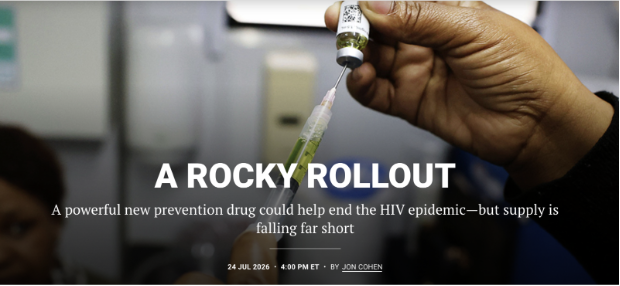
AVAC’s Mitchell Warren recently spent a week in Zambia with AVAC partner Ascend Futures Foundation, which is playing a leading role in the introduction of injectable lenacapavir (LEN) for PrEP. Mitchell was joined by Science’s Jon Cohen, who was reporting on the rollout of LEN and the real-world challenges being faced on the ground, including lack of supply. While LEN has met critical milestones with record speed, AVAC, Access Bridge and partners continue to advocate to ensure the science is matched with political will, financing and community leadership to get LEN to the people who need it most. “Science alone doesn’t change the world – people do,” said Mitchell in the article.
Merck Announces Global Access Plans for Monthly Oral Alimatravir (AMI)
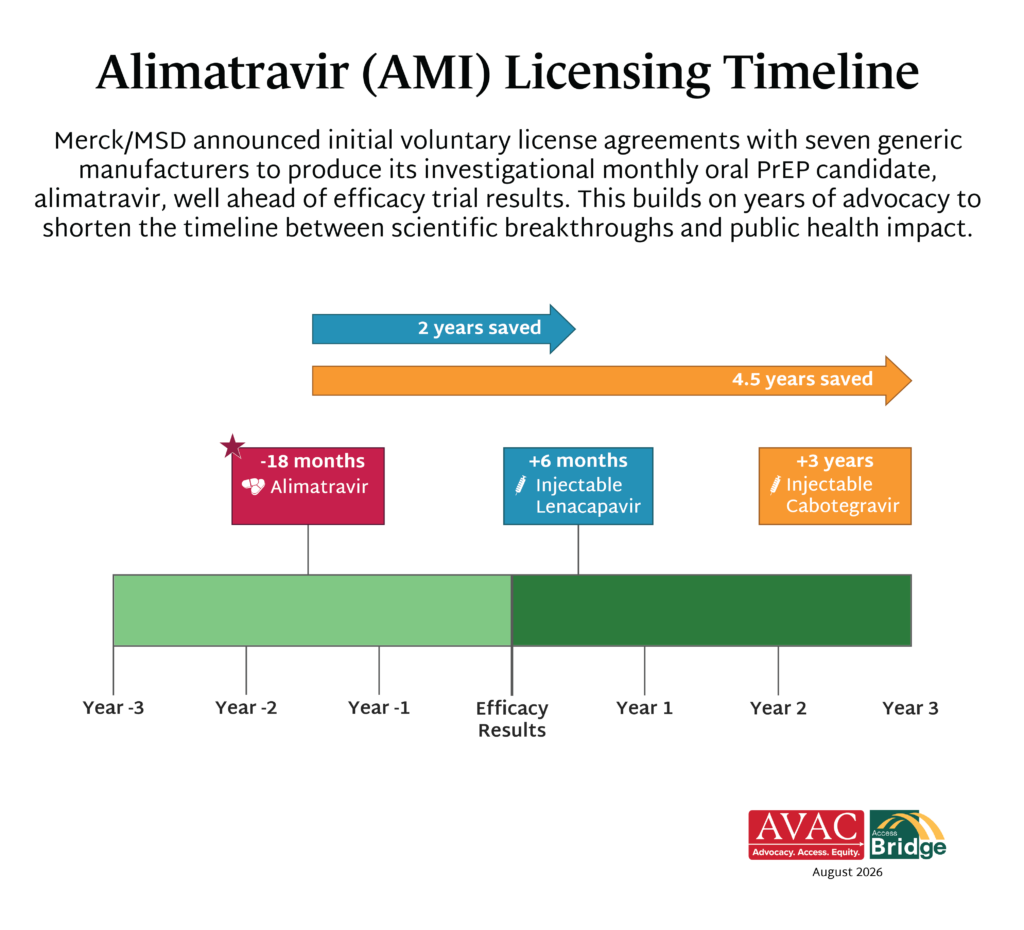
On July 24, Merck announced that it granted seven direct licenses to generic manufacturers – including three in Africa – to produce and market their investigational monthly pill for HIV prevention, known as alimatravir (MK-8527, or AMI), in 129 countries while Phase 3 clinical trials are still enrolling. Since 2012, each successive PrEP introduction has gone faster than the previous one, yet the time to market and to public health impact remains too slow. AVAC is committed to changing that, and has worked to influence trial design and implementation, and to ensure strong engagement with community representatives in the research program. These efforts coincide with broader AVAC efforts to engage stakeholders in preparation for results from the trials, and, in the case of efficacy, building the foundation for a swift path to wide-scale uptake and access.
AVAC partner Kenneth Mwehonge of HEPS Uganda told the New York Times: “Our engagement with pharma has always been fights, but it is amazing to sit with them and have them say, ‘We are learning from the other products’. It all sounds good for now, but we will wait to see how it’s put to action.”
Learn how AVAC and partners have shaped alimatravir trials.
Accelerating policy approval and uptake of the dual prevention pill in Zambia through early stakeholder engagement
The Dual Prevention Pill (DPP), a combination of daily oral PrEP and combined oral contraception, offers a novel, female-controlled option for HIV and unintended pregnancy prevention. However, promising technologies like the DPP often face delays in regulatory approval and uptake due to limited stakeholder involvement early in the introduction process. This new article in AIDS Care, authored by AVAC Fellow alum Rhoda Msiska, AVAC Senior Program Managers Kate Segal and Cindra Feuer, and Dr. Newton Donkola of Copper Rose Zambia, illustrates how early, multisectoral stakeholder engagement could accelerate DPP approval and adoption in Zambia.
Threats to Science in the U.S.
NIH Budget Cuts Threaten HIV Research
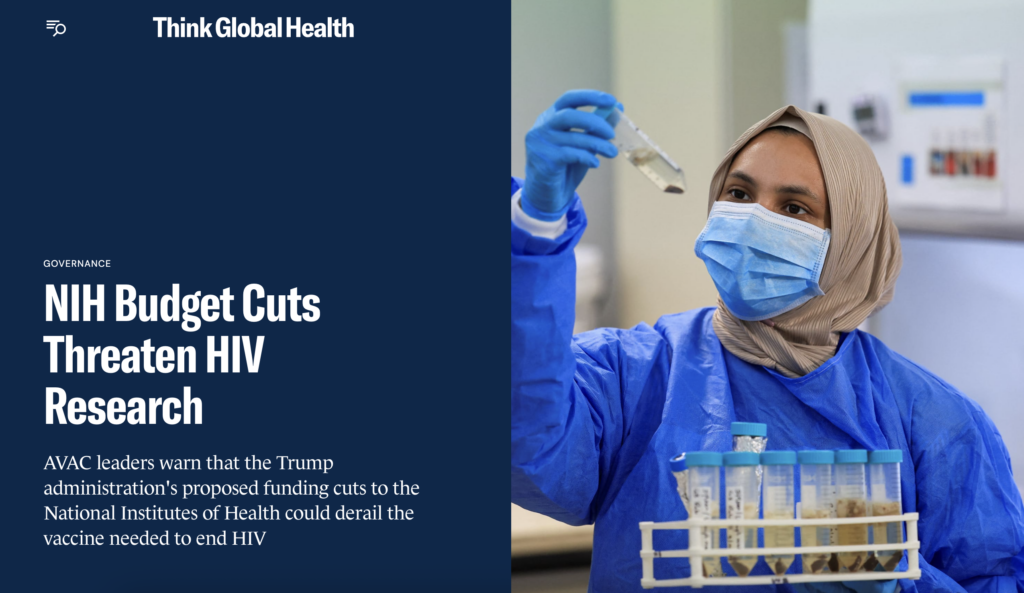
In this commentary for Think Global Health, AVAC’s Stacey Hannah and Mitchell Warren argue that ending the HIV epidemic will require sustained investment in the basic science that makes future breakthroughs possible. They warn that attacks on science and growing anti-vaccine sentiment threaten progress toward an HIV vaccine and could undermine advances across global health. “At a moment when scientific progress is advancing,” they write, “advocates, researchers, policymakers and communities should push back against politically motivated, fringe, anti-vaccine sentiments that threaten decades of investment to develop the tool that would finally break the back of the epidemic.”
AVAC Says Stop the Waste, Fraud and Abuse in the Persecution of Tony Fauci
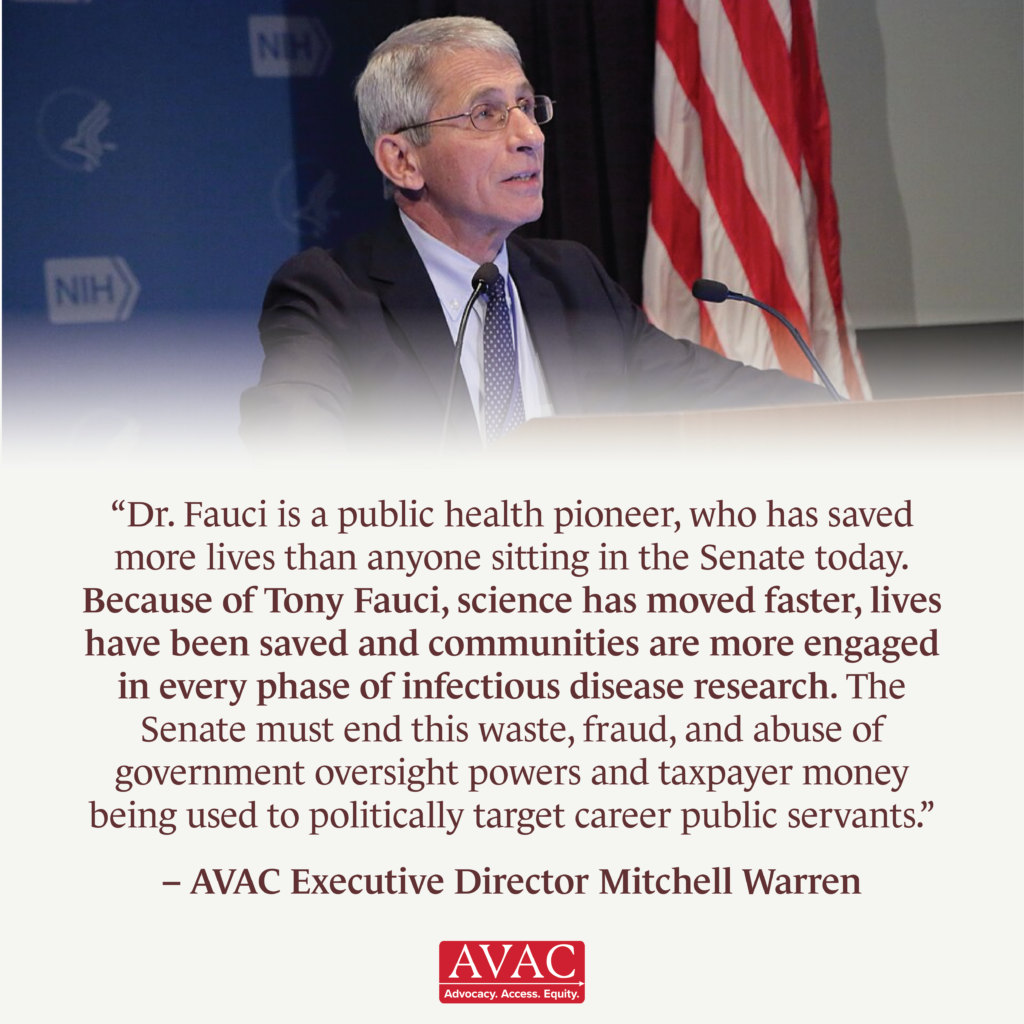
Former NIAID Director and longtime champion for HIV and AIDS research Dr. Anthony Fauci is facing renewed attacks from Congress, after a Senate committee voted to hold him in contempt following a hearing about the COVID-19 response. The attacks on Dr. Fauci raise alarm bells about the current state of congressional oversight, constitutional protections and attacks on science and scientists. In a letter of support for Dr. Fauci, AVAC urged the committee to recognize the deep history of partnership that Dr. Fauci has forged with the HIV/AIDS community; one that has resulted in numerous biomedical innovations and programs that have ultimately saved millions of lives.
Podcasts
Let’s Talk About PrEP: The Future of HIV Prevention with Mitchell Warren

In this new podcast, Mitchell Warren joined Global Black Gay Men Connect (GBGMC) to talk about the future of HIV prevention and what it takes to turn scientific innovation into impact. As Mitchell puts it, “the future of HIV prevention isn’t just about groundbreaking science; it’s about making sure that science reaches the communities who need it most.”
The Future of PrEP: LEN and the Fight for Access
Mitchell also joined ITPC’s Make Medicines Affordable podcast to discuss the future of PrEP. While LEN is a transformative option for HIV prevention that is being rolled out with unprecedented speed, Warren discusses why scientific progress means nothing without fierce political will, stronger, resilient health systems and true equity for low- and middle-income countries.