Working with colleagues, AVACers Cat Verde Hashim and Kate Segal published this research article in the Journal of the International AIDS Society. The researchers undertook qualitative research in Kenya, South Africa and Zimbabwe to prioritize private sector service delivery approaches for the introduction of the DPP.
Harnessing private sector strategies for family planning to deliver the Dual Prevention Pill, the first multipurpose prevention technology with pre-exposure prophylaxis, in an expanding HIV prevention landscape
Avac Event
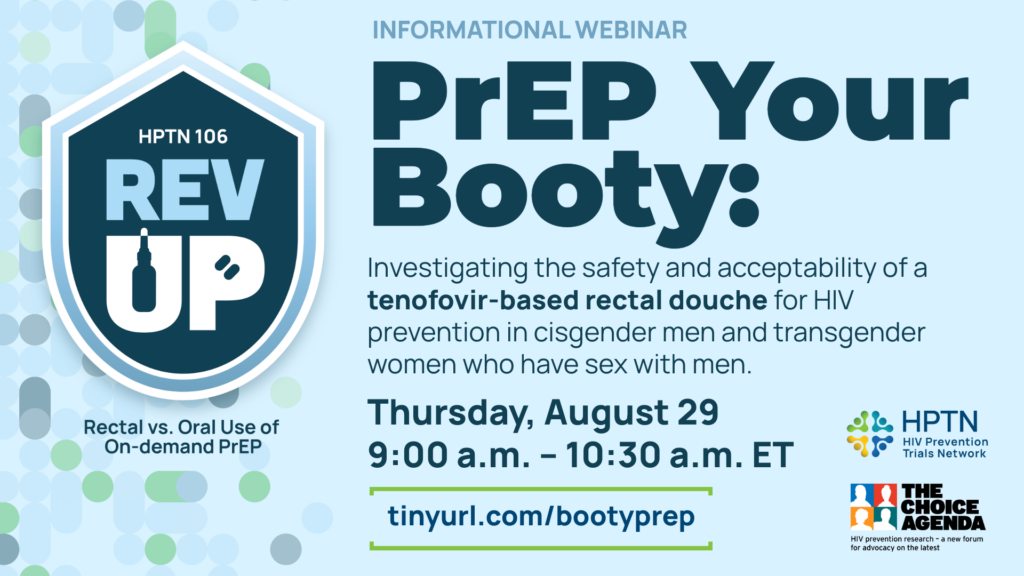
PrEP Your Booty – The Launch of HPTN 106 “Rev Up”
HPTN 106 (REV UP) is an innovative clinical trial from the HIV Prevention Trials Network that will investigate the safety and acceptability of a tenofovir-based rectal douche for HIV prevention among cisgender men and transgender women who have sex with men. This webinar featured researchers leading the study.
Speakers:
Dr. Craig Hendrix, Johns Hopkins University School of Medicine
Dr. Mark Marzinke, Johns Hopkins University School of Medicine
Moderator:
Jim Pickett, The Choice Agenda
Co-sponsor:
HIV Prevention Trials Network

Avac Event
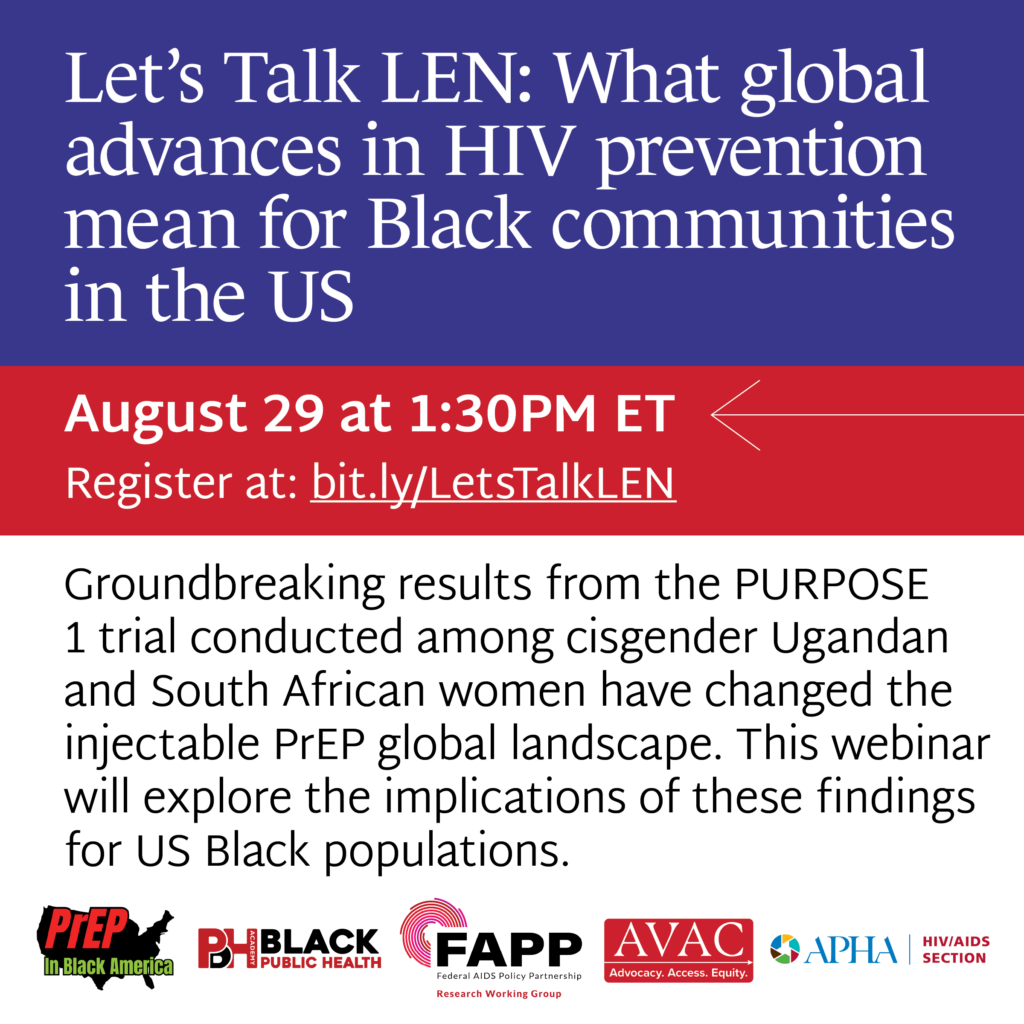
Let’s Talk LEN: What global advances in HIV prevention mean for Black communities in the US
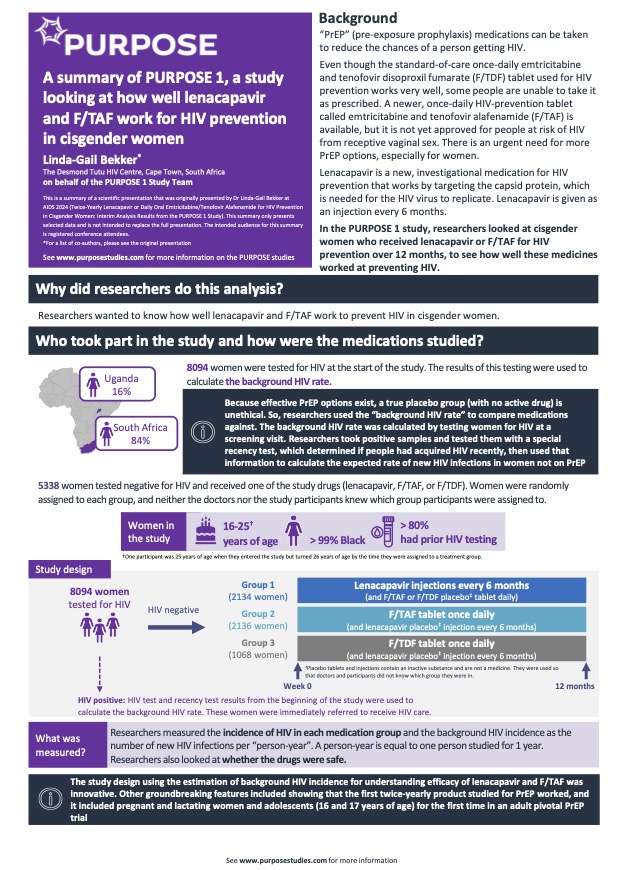
Groundbreaking results from the PURPOSE 1 trial conducted among cisgender Ugandan and South African women have changed the injectable PrEP global landscape. This webinar explored the implications of these findings for US Black populations.
This webinar was co-hosted by PrEP in Black America, Black Public Health, Federal AIDS Policy Partnership (FAPP), AVAC, and APHA.

Avac Event
2024 IUSTI World Congress
The International Union Against Sexually Transmitted Infections (IUSTI) and ASHM are pleased to invite you to the 25th IUSTI World Congress, which will this year incorporate the Australasian Sexual and Reproductive Health Conference.
Taking place 17-20 September 2024 at the International Convention Centre in Gadigal Country, Australia, this conference will provide an opportunity to meet, discuss and learn about the latest research and innovation in sexual and reproductive health. The program will incorporate a range of world leading speakers and presentations, providing an opportunity to expand your professional knowledge through local and international insight.
Avac Event
2024 STI Prevention Conference
The STI Prevention Conference is a biennial conference that brings together international leading researchers with government experts, clinical STD care providers, and state and local public health administrators. The 2024 STI Prevention Conference is organized by the American Sexual Health Association, the American Sexually Transmitted Diseases Association, the Centers for Disease Control and Prevention, and the National Coalition of STD Directors.
Join more than 1,200 conference attendees September 16-19, 2024, in Atlanta, Georgia, for four days of scientific updates and cutting-edge sessions on science, program, and policy.
Global HIV Prevention Advocates Call for Accelerated Timeline for Widespread Access to Injectable Lenacapavir for PrEP
Today a global cadre of HIV prevention advocates is calling for an accelerated timeline for access to the HIV prevention drug lenacapavir. Gilead, the developer of the drug, announced topline results from a large study among cisgender African women on 20 June, followed shortly thereafter with a statement about access.
There is much to do before this twice-yearly HIV prevention option can be included in comprehensive prevention programs, and this coalition of civil society groups is calling for all stakeholders to urgently come together to apply lessons of past PrEP introduction to accelerate the timeline for this important new option to become widely available to those who need and want to use it.
“This is an incredibly important day for African women. Twice-yearly injectable lenacapavir will be an important addition to HIV prevention choices and has the potential to expand access to more women who need and want effective prevention options.”
Ntokozo Zakwe, Community Media Trust in South Africa and a member of the PURPOSE 1 Global Community Advisory Group (GCAG)
“African women need and want new HIV prevention options. We need everyone who has a role to play in bringing lenacapavir to our communities to prioritize the most progressive timeline the world has seen for rollout of a new prevention option, while collaborating with civil society and advocates to ensure introduction plans will result in uptake and impact.”
Chilufya Kasanda Hampongo of Treatment Advocacy and Literacy Campaign in Zambia and a co-leader of the Civil Society Caucus of the Coalition to Accelerate Access to Long-Acting PrEP
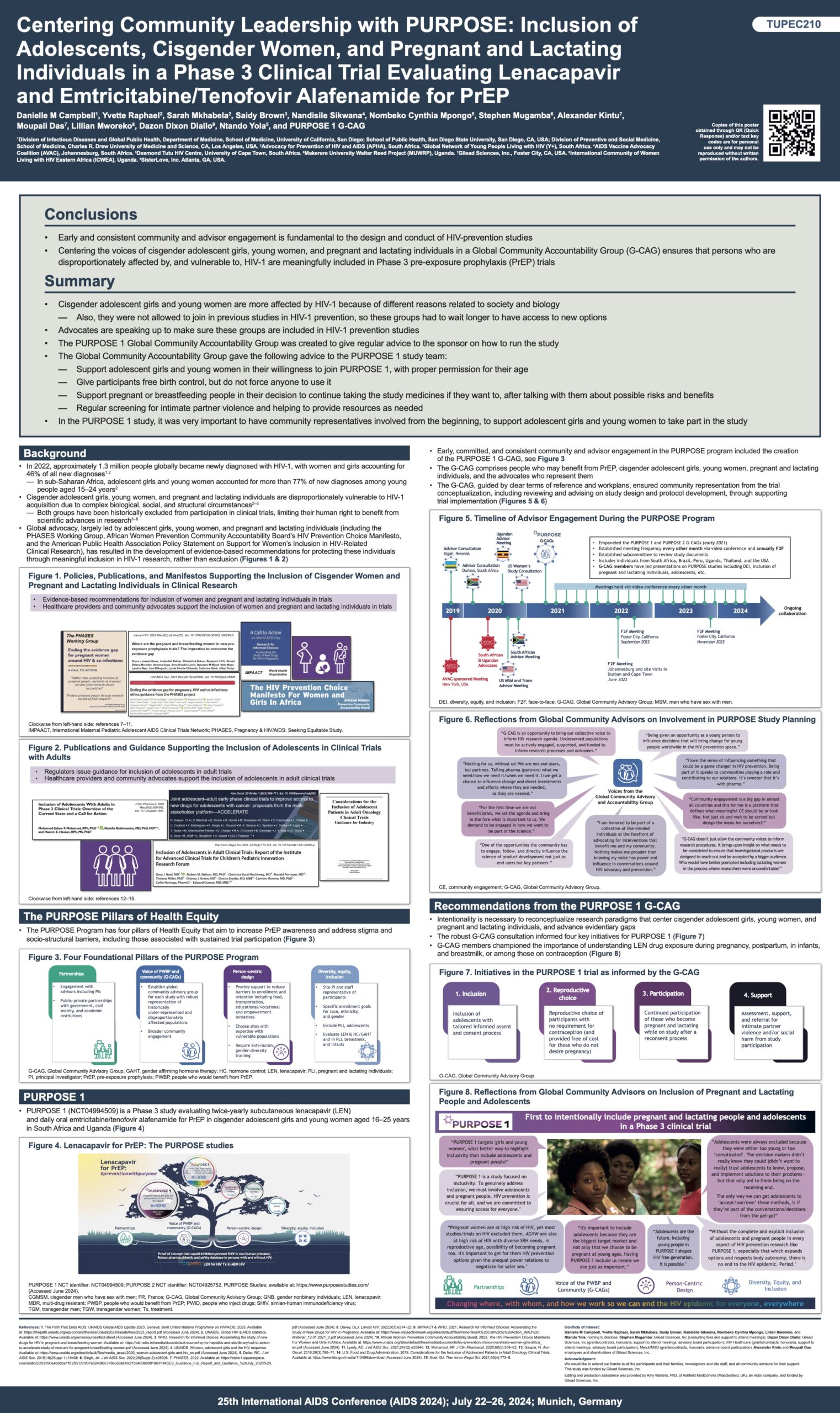
Leaders of the PURPOSE 1 Global Community Accountability Board (GCAG), the Civil Society Caucus of the Coalition to Accelerate Access to Long-Acting PrEP, the African Women Prevention Community Accountability Board, and the Coalition to Accelerate and Support Prevention Research (CASPR) have partnered with AVAC to identify the following actions for Gilead, regulators, normative agencies, funders and national policymakers:
- All stakeholders must prioritize and uplift community voices and community choices for including lenacapavir in the range of HIV prevention options that offer the widest choice to the most people.
- Gilead should prioritize and quickly share analysis of the data from PURPOSE 1 and begin submission to multiple regulatory agencies on an accelerated and parallel schedule, with the potential to add data from PURPOSE 2 (among other studies) on a rolling basis to the regulatory portfolio. At the same time, national regulatory agencies need to be ready to review the data once submitted and act swiftly in making regulatory decisions.
- WHO must begin preparations now for including lenacapavir, once approved, in HIV prevention guidelines as swiftly as possible, in time for regulatory approval.
- Gilead should transparently share clear plans for pricing of lenacapavir and access for communities most in need, and commit to providing enough drug to support early launch and rollout.
- Following Gilead’s announcement last week that they are developing a direct voluntary licensing program for lenacapavir, it is imperative that Gilead grants non-exclusive licenses to multiple generic manufacturers in multiple geographies before the end of the year; that license agreements are made publicly available; and that the licenses include access to finished product based on public health imperatives, and not on World Bank country classifications or geographical location.
- PEPFAR and the Global Fund should work urgently with other donors and Ministries of Health to negotiate price and volume guarantees with Gilead to ensure there is a sustainable supply for the initial introduction period until generics are registered and readily available.
- Funders, Ministries of Health, implementers and civil society partners need to collaboratively design a comprehensive introduction strategy that breaks the sequential nature of traditional approaches to scale and speed up introduction. Part of accelerating speed is moving toward a parallel approach where research, implementation science, and scale-up programs are designed, funded and implemented in parallel. All stakeholders, working through the Coalition to Accelerate Access to Long-Acting PrEP, should commit to developing a robust introduction strategy ahead of regulatory approvals and WHO guidelines to ensure time is not lost.
- Ministries of Health and policymakers must work together and with donors to ensure lenacapavir is integrated swiftly into national guidelines and prevention programs and made available to all populations for which the drug is approved and recommended.
- Ministries of Health, policy makers and donors must work to ensure strategic demand creation and health-systems strengthening to support robust HIV prevention programs that provide a full range of HIV prevention options that allow people to choose what works best for them.
- All stakeholders must commit to speeding long-term access to lenacapavir to trial participants and to the women in the communities that hosted the study in parallel with increasing access to a full range of HIV prevention options to those who need and want them.
Advocates know that there are many more actions that will be needed to ensure lenacapavir and other HIV prevention options are widely available. Transparency, speed, scale and cooperation are essential as we work to end HIV as a public health threat.
“We have never seen such a good outcome from an HIV prevention trial, and to see such a result first among African women is groundbreaking. Gilead listened to advocates and followed Good Participatory Practice Guidelines to include two of the populations most in need of HIV prevention – adolescent girls and pregnant women – in the study. National prevention programs must also prioritize these populations in PrEP programs that will provide lenacapavir.”
Lillian Mworeko, ICW East Africa and a leader of the African Women Prevention Community Accountability Board
“Results like this are what we’ve been waiting for throughout decades of HIV prevention research. We know what is needed now to move this drug swiftly to communities. Civil society stands ready as watchdogs of the process and as essential partners in a successful rollout.”
Stacey Hannah, director of the Coalition to Accelerate and Support Prevention Research (CASPR) and AVAC’s director of research engagement
Results from the ongoing PURPOSE 2 study among cisgender men who have sex with men, transgender men, transgender women and gender non-binary individuals who have sex with partners assigned male at birth are expected in late 2024 or early 2025. This second pivotal study will provide data, not just for gay men, but for trans and gender non-binary people, populations that have often been ignored by HIV prevention studies. Data for PURPOSE 2, along with PURPOSE 3, 4 and 5 studies, will provide the most comprehensive range of data across populations that has been seen to date. A schematic of the suite of studies is here.
“We eagerly await the PURPOSE 2 data and hope to see similar results for the populations represented in that study who also need new choices for HIV prevention. Lenacapavir has the possibility of transforming the HIV prevention landscape and changing the lives of millions of people around the world. There must be no delays in making it available globally. Now more than ever, we need speed, scale and equity to ensure we get impact.”
Mitchell Warren, AVAC’s executive director.
About
- PURPOSE 1 Global Community Accountability Board (GCAG): The PURPOSE 1 and 2 efficacy trials each include Global Community Accountability Groups (GCAGs). Members of the GCAGs include leaders in HIV advocacy and experience with engagement in research and development. Individual trial sites also have their own community-specific community advisory board, creating multiple layers of advocacy feedback.
- Civil Society Caucus of the Coalition to Accelerate Access to Long-Acting PrEP: Established in 2022 to ensure civil society expertise influences the rollout of long-acting PrEP options, this Caucus includes representation from many civil society groups working on longer-acting PrEP introduction. These include, but are not exclusive to, the following: African Women Community Prevention Accountability Board; AfroCAB; APCOM; AVAC; Coalition to Accelerate and Support Prevention Research (CASPR); Frontline AIDS; Global Black Gay Men Connect (GBGMC); the Global Key Population Advisory Group; and ITPC.
- African Women Prevention Community Accountability Board: The Accountability Board led the development of the Choice Manifesto and works ensure that the manifesto is translated into reality for all women, and is composed of 12 women from 7 countries representing East and Southern African nations.
- Coalition to Accelerate and Support Prevention Research (CASPR): CASPR is an Africa-led coalition of 13 partners, funded by USAID and supported by AVAC, working together to change how HIV prevention is pursued and delivered. CASPR activities are focused primarily in key African countries with the highest burden of new HIV infections, and where biomedical HIV prevention research is ongoing or planned.
- AVAC: AVAC is an international non-profit organization that provides an independent voice and leverages global partnerships to accelerate ethical development and equitable delivery of effective HIV prevention options, as part of a comprehensive and integrated pathway to global health equity.
Upcoming Webinars and a Roundup of New Resources
Last week’s interim result of the PURPOSE 1 HIV prevention study of injectable lenacapavir is captivating headlines. Check out AVAC’s statement here and one from the PURPOSE 1 Global Community Accountability Board and the African Women’s Prevention Community Accountability Board here. But there are LOTS of other things also happening in HIV prevention, and we’re delighted to share this roundup.
Upcoming Webinars

Responding to Project 2025’s Threats to Science, Rights and Resources
Project 2025 is part of an ongoing multi-pronged backlash to the sexual and reproductive health, gender and LGBTQ+ movements. Building on the experience of the HIV movement in fighting these same far-right forces, join this Choice Agenda webinar discussing potential responses through the lens of HIV affected communities and programs. Register here

You Get What You Measure: Why Monitoring for PrEP Choice Helps Tell Our Story
The data collected on a program determines its path and priorities. This Choice Agenda webinar will cover the current state of PrEP monitoring and evaluation, and efforts to improve and simplify data-gathering to better reflect how people use PrEP and to support choice amongst the growing array of PrEP methods. And the discussion will also focus on how data can be used to enhance the stories we tell about PrEP program implementation. Register here
Recordings and Resources

From The Lab To The Jab Webinar and Issue Briefs
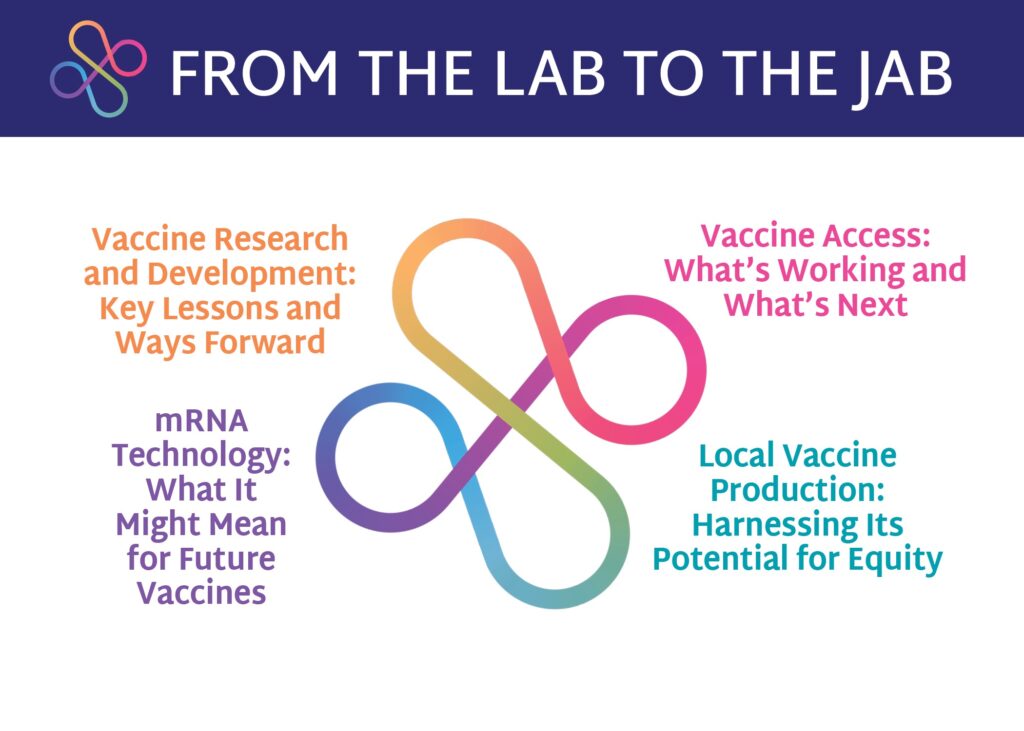
Earlier this month, AVAC hosted a webinar highlighting our series of issue briefs, From The Lab To The Jab, covering research and development, mRNA technology, vaccine production, issues relevant to equitable global access to vaccines. The webinar featured panelists from the International Vaccine Institute, International Treatment Preparedness Coalition, and æqua, a think tank focused on equity and economic justice for health. Panelists discussed international initiatives for vaccine development, the current state of vaccine research and access, and how they can be improved. Read more

The GPP Body of Evidence: GPP Monitoring and Evaluation Frameworks, REAL and REAL2
GPP is an essential part of clinical trials research, and an ethical imperative to creating equitable and effective clinical trials. GPP is created by and for communities, so it looks different and takes multiple forms in different cultural contexts. This kind of responsiveness is inherent to GPP, but it also makes it difficult to measure and evaluate. In this webinar, participants will learn from the Realist Review of Community Engagement and the REAL2 review of participatory research. Each examined frameworks for evaluating community engagement efforts. We’ll also learn about the Global Health Network’s new course on evaluation, and other efforts in the field to evaluate the impact of GPP. View the recording

It’s Not Just about the Trial: GPP from discovery to delivery in TB research
GPP enhances every stage of the research lifecycle. In this webinar, our partners at TB Alliance, SMART4TB, and THINK shared experiences, lessons learned, and innovative approaches in integrating GPP at the organizational, network and situational level, from drug development through delivery. View the recording

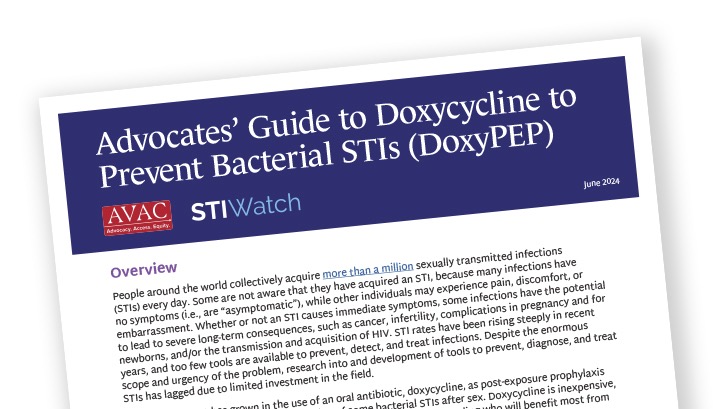
Advocates’ Guide to Doxycycline to Prevent Bacterial STIs (DoxyPEP)
Doxycycline, an oral antibiotic, can be used as a post-exposure prophylaxis, commonly referred to as DoxyPEP, when used to prevent the acquisition of some bacterial STIs after sex. Doxycycline is inexpensive, easily tolerated, and widely available. However, questions remain regarding who will benefit most from DoxyPEP and how to implement this strategy broadly to ensure equitable access and minimize antimicrobial resistance. This guide seeks to explore and address these critical questions. Read the guide

Episode 3: The Promising Science
Our Mitchell Warren speaks to ViiV’s Kimberly Smith in this episode of the Foreign Policy podcast series ‘can we end epidemics?’ about the future of HIV science and the challenges we need to overcome on our journey to finding a cure. Listen
We hope these conversations and resources are helpful in your advocacy. Stay tuned for our upcoming advocates’ primer on lenacapavir and our roadmap to the AIDS 2024 conference in Munich.
Avac Event
AIDS 2024: New Ways for the Next Wave: Innovative R&D for the future of women’s prevention
This session will be 9:30AM to 11:00AM Munich time.
Women need a range of HIV prevention options to meet different needs, preferences and life circumstances. Currently available pills, rings and injectables are necessary but insufficient. How might we accelerate the delivery of methods we have while developing additional ones – including systemic and non-systemic methods, short-acting and on-demand products, to complement longer-acting ones? Product developers and advocates are collaborating on new approaches to expedite R&D of additional HIV prevention options. Notably, MATRIX is taking a unique approach, endorsed by the CASPR network of advocates, that aims to improve the odds of success of new products – through development, delivery and use.
This session will focus on new efforts to identify and develop promising options, strategically engage all stakeholders, decolonize R&D and involve potential users in all their diversities throughout the process.
Speakers:
- Jeanne Marrazzo, National Institute of Allergy and Infectious Diseases
- Sharon Hillier, University of Pittsburgh / Magee-Womens Research Institute
- Thesla Palanee-Phillips, Wits RHI
Followed by a moderated panel with:
- Chimwemwe Chamdimba, African Medicines Regulatory Harmonization (AMRH) initiative- AUDA/NEPAD
- Kelly Chibale, Holistic Drug Discovery and Development Centre -H3D, University of Cape Town
- Nyaradzo Mgodi, University of Zimbabwe- Harare Health Research Centre
- Jerop Ruth Limo, Ambassador for Youth and Adolescents Reproductive Health Program (AYARHEP)
Moderators:
- Navita Jain, AVAC
- Kenneth Ngure, Jomo Kenyatta University of Agriculture and Technology
Session Chairs:
- Sharon Hillier, University of Pittsburgh / Magee-Womens Research Institute
- Imelda Mahaka, Pangaea Zimbabwe
This satellite session will be co-hosted by CASPR and MATRIX, with support from USAID and PEPFAR.
Advocates’ Guide for PPPR
If you’re having trouble making sense of all of the initiatives around pandemic prevention, preparedness, and response (PPPR) this year, don’t worry—you’re not alone! This Advocates Guide provides a reference for the relevant information all in one place. The contents explain the major initiatives, key dates for involvement, how to get involved and make sure your priorities are heard by decision makers.
Tracking PrEP Rollout & Learning Lessons
Accelerating the rollout of the full range of proven HIV prevention options depends on learning from what’s been done in the past and investing in coordination and innovation to put improved solutions in place. The Biomedical Prevention Implementation Collaborative (BioPIC) is doing just that. Over the last two years, BioPIC—a project led by AVAC with support from the Gates Foundation—has been gathering and sharing evidence on these critical lessons to ensure the next generation of HIV prevention products reaches everyone who needs and wants them with much greater speed and equity.
What We’re Learning—Highlights from 2024 Convenings
An ongoing series of think tanks, convened by BioPIC and WHO since 2021, are generating key insights for people-centered product delivery. Below, read the latest reports from these think tanks that are informing decision-making on priorities for accelerating access to PrEP. Go to the BioPIC’s page on PrEPWatch to find reports on all think tanks since 2021.
- Early Insights from EBONI and PILLAR, February 2024: Early insights from ViiV Healthcare, the manufacturer of CAB for PrEP, from two CAB for PrEP implementation studies, EBONI and PILLAR. Conducted by ViiV in the US, these are among the first studies gathering data in real-world settings. Learn more
- Taking Stock of PrEP Evidence, March 2024: An analysis of current data and priority evidence gaps. This inquiry was not focused on any one PrEP product, and its findings are informing the focus of future think tanks. Learn more
- Linking Modellers with the Latest Implementation Science Evidence, March 2024: A consideration of the latest modelling data and insights on injectable cabotegravir (CAB) for PrEP. Read about the biggest takeaways from CAB for PrEP modelling here, and learn more about the big questions that require further inquiry here
- Discussing Early Results from the SEARCH Dynamic Choice Study, April 2024: Professor Moses Kamya of Makerere University shares early insights from the SEARCH Dynamic Choice Study in Kenya and Uganda, which gave participants a choice between oral PrEP, PEP, and CAB for PrEP, and analyzes the role of choice in PrEP coverage. Watch here
- PrEP and the Role of HIV Self-Testing, May 23: Highlights from the WHO guidance on use of self-testing (HIVST) as an innovative way to increase PrEP access and coverage and further simplify PrEP delivery. Panelists also share experiences with procurement, costing, rollout and scale-up. Watch Here

As other new biomedical HIV prevention products roll out, BioPIC will continue to hold strategic convenings, identify and address evidence gaps, and work to accelerate equitable product introduction. To learn more efforts to coordinate the introduction of CAB for PrEP, check out the JIAS article Shaping and coordinating the implementation science agenda for injectable cabotegravir for PrEP: the role of the Biomedical Prevention Implementation Collaborative (BioPIC). To learn what’s needed to better coordinate rollout for not-yet-approved products in Phase III clinical trials, check out BioPIC’s Adaptable Product Introduction Framework.
We hope you will book mark these resources, and stay up to date on findings from future think tanks and webinars in 2024 on the BioPIC page of PrEPWatch.