Spotlight highlights research on broadly neutralising antibodies (bNAbs) and their potential role in the future of HIV treatment and prevention. As AVAC explains, “About 20 percent of people living with HIV naturally develop bNAbs, after many years. By the time bNAbs have developed in these individuals, the constantly mutating HIV has outpaced these defenders, changing too fast and too significantly for bNAbs to be effective in that individual. But that same bNAb, or a combination of them, may work in someone else.”
In The Spotlight | What are broadly neutralising antibodies and what do they mean for the fight against HIV?
Avac Event
2026 US Conference on HIV/AIDS (USCHA)
The annual US Conference on HIV/AIDS will take place in Anaheim, California, from September 17-20, 2026. The conference is the nation’s largest convener of community, workforce and frontline service providers, government, policymakers, and healthcare industry across the HIV movement.
Avac Event
Conference on Retroviruses and Opportunistic Infections (CROI 2027)
The annual Conference on Retroviruses and Opportunistic Infections (CROI) will take place March 21–24, 2027, in San Diego, California. Check back closer to the conference for more info on AVAC at the conference.
The Conference on Retroviruses and Opportunistic Infections (CROI) was established in 1993 to provide a forum for basic scientists and clinical investigators to present, discuss, and critique their investigations into the epidemiology and biology of human retroviruses and associated diseases. The synergy of basic science and clinical investigation has been a major contributor to the success of the meeting. CROI has facilitated the presentation of important discoveries in the field, thereby accelerating progress in HIV and AIDS research. CROI highlights the latest research in HIV, hepatitis viruses, SARS-CoV-2 (including long COVID), mpox, and their related conditions.
Global Health Watch: NIH reopens South Africa Research Funding; DRC Ebola Strains Outbreak Response; WHO + FDA Leadership Shifts
Issue 82
The US National Institutes of Health (NIH) lifted research funding restrictions on South Africa; the DRC’s Ebola outbreak grows, exposing the consequences of weakened outbreak-response systems; and leadership changes at the World Health Organization (WHO) and the US Food and Drug Administration (FDA) raise questions about the future of global health decision-making.
NIH Reopens Research Funding to South Africa
The US National Institutes of Health (NIH) lifted its ban on funding research in South Africa. This comes after 18 months of “holding all research awards” for NIH research partnerships with South African institutions as the country was designated a “country of concern” alongside China. As Science reports, an internal memo notes that the “[NIH] decided it was exempt from a February 2025 executive order…that halted ‘foreign aid or assistance’ to South Africa” because “the Foreign Assistance Act of 1961 does not govern NIH funding.” The lift of this order reopens the door to new grants. However, the NIH also announced that South African scientists will no longer be eligible to receive training grants from its Fogarty International Center, because the country is upper middle-income and part of the G20. This follows last month’s announcement from the Department of State that it will phase out PEPFAR support to South Africa.
IMPLICATIONS: South Africa is one of the world’s most important HIV, TB and infectious disease research centers – built through decades of diplomacy and partnership with the NIH and US State Department, with numerous South African scientific leaders of today partnering with the Fogarty International Center. This is part of a wider unraveling of this decades-long scientific partnership spanning HIV research, treatment and prevention, emanating from false accusations made by the White House against the South African government for “not doing enough” to address unfounded claims of discrimination purportedly against the country’s white Afrikaner community. While this week’s reversal of the ban restores an important piece of that scientific collaboration, the larger relationship remains strained, including the planned PEPFAR phase out. US investments in PEPFAR and NIH partnerships in South Africa have resulted in significant contributions and innovations in the treatment and prevention of HIV, TB and other infectious diseases for people around the world, including in the US. For the HIV field especially, this reversal shows the interconnectedness of the research partnerships and bilateral programs and why both research and programmatic funding matter. The simple restoration of scientific collaboration, while continuing to withdraw and erode programmatic infrastructure will stifle scientific progress when it relies on strong public health infrastructure and partnerships made possible through PEPFAR.
READ:
- NIH lifts ban on funding research in South Africa—Science
- US agency lifts ban on South Africa research funding after 17-month freeze, $450 million loss—Business Insider (SA)
- NIH Lifts Ban on Research in South Africa—Health Policy Watch
DRC Ebola Outbreak Illustrates Impact of Foreign Aid Restrictions
The ongoing Ebola Bundibugyo outbreak in the Democratic Republic of the Congo (DRC) is now the country’s deadliest Ebola epidemic and the second deadliest ever recorded. At an emergency WHO meeting, Director-General Tedros Adhanom Ghebreyesus said, “We must be frank: The epidemic is far from being under control… It had a big head start, and we are still playing catch-up.” WHO says it could still be brought under control within approximately three months, but only if resources and response capacity are rapidly scaled up. WHO figures report that only 60 percent of the $115 million needed to finance the response has been raised. Currently, there is no licensed vaccine or treatment for the Bundibugyo strain. Many new cases are appearing outside known transmission chains, which indicate infections are continuing to spread undetected.
READ:
- DR Congo’s Ebola outbreak ‘global emergency’ as infections pass 5,000: WHO—Al Jazeera
- WHO and Africa CDC welcome the allocation of Ebola vaccines to the Democratic Republic of the Congo—World Health Organization
- The Guardian view on the Ebola outbreak in the DRC: a case study in why international aid matters—The Guardian
- WHO says Congo Ebola outbreak can still be brought under control within three months—Reuters
Leadership Shifts at WHO and US Food and Drug Administration
The WHO and US Food and Drug Administration (FDA) are undergoing leadership changes. WHO’s chief scientist and Assistant Director-General for health promotion and disease prevention and control Jeremy Farrar will leave at the end of September. This latest departure comes amid WHO’s challenge to continue charting its future in the face of reduced donor funding, a smaller senior leadership structure, and the end of Director-General Dr. Tedros Ghebreyesus tenure later this year. Meanwhile, in the US, White House adviser on the Domestic Policy Council, Dr. Heidi Overton was nominated to lead the FDA as commissioner. She helped shape several of the Administration’s health initiatives, including its recent overhaul of childhood vaccine recommendations and is a proponent of the government’s anti-abortion policies. Her nomination comes after months of turmoil and a leadership vacuum at the FDA, which saw Marty Markary depart from the role in May after a short tenure of 13 months. Some Senators who are now debating her nomination are questioning her role in the recent vaccine order as they prepare for confirmation hearings.
IMPLICATIONS: As WHO is being forced to redefine its role and priorities amid shrinking resources, the US FDA is facing significant scrutiny and political pressure over vaccines and scientific decision-making. For global health and HIV, leadership stability and scientific independence at both agencies matter beyond the internal structure as WHO normative guidance and FDA regulatory decisions will determine which products move forward, how quickly they reach countries and communities who need them. Many national regulatory authorities around the world rely heavily on FDA’s rigorous regulatory review and approval processes to inform their decision-making in local approval, procurement, and implementation of new and emerging biomedical innovations. Similarly, countries without the capacity or expertise to independently develop treatment and prevention guidelines rely heavily on WHO’s normative guidance to ensure health policies are grounded in the latest evidence. The looming question at the FDA is whether its leadership and decisions will continue to be guided by evidence, as political pressure increasingly shapes the ideologues may potentially helm the world’s premier regulatory agency. as political pressure increasingly shapes the agency’s leadership and priorities.
READ:
- High-Profile Departures Shake Up WHO Leadership, ‘Controversial’ Appointee Returns—Health Policy Watch
- New CDC director tells staff she is prepared to speak ‘truth to power’—STAT
- Senate Health Panel Chairman Voices Strong Reservations About F.D.A. Nominee—New York Times
- Trump to Nominate Heidi Overton, a Top Domestic Policy Aide, for F.D.A. Commissioner—New York Times
- Dr. Jeremy Farrar to leave WHO—Devex
What We’re Reading
- SA and Zambia’s HIV shot dilemma: Demand versus supply—Bhekisisa
- The post-PEPFAR playbook is already being written—Lights. Camera. Equity! Substack
- Graveyard for Grants’: NIH Is Holding Up Medical Research Funding—Notus
- The State of HIV Prevention: Big News, Big Moves: Reflections from AIDS 2026 in Rio de Janeiro, Brazil—AVAC
- Trump 2.0 has deleted or altered nearly 400 US datasets, endangering public health, education and more—The Guardian
- Exclusive: NSF set to issue lowest number of new grants in four decades—Nature
- Senators Criticize Trump Administration’s Demands to Access Health Data as a Condition for Lifesaving Aid—ProPublica
- USAID fallout: In Nepal, when the aid workers stopped coming, the women and babies started dying—Associated Press
- Fauci: The Oracle Who Went Silent At The Wrong Time – Health Policy Watch—Health Policy Watch
- Ex-Fauci adviser pleads guilty to plotting to conceal COVID-19 research records during pandemic—Associated Press
- The Wrong Kind of American—The Atlantic
- US policies are making a resurgence of vaccine-preventable diseases inevitable—BMJ
- WHO Officials Condemn Trump’s Vaccination Changes—Health Policy Watch
- More than 210 leading medical, health and patient advocacy groups oppose recent executive order on childhood vaccines—IDSA
- The global health aid architecture is collapsing. The faith economy isn’t—STAT
- Big Ideas in Brief: State Strategies to Sustain HIV Prevention, Care, and Treatment—O’Neill Institute
- Scientists Scramble for Private Cash in Response to Fresh Funding Turbulence—Wall Street Journal
SA and Zambia’s HIV shot dilemma: Demand versus supply
Early data shows South Africa and Zambia have high demand for lenacapavir (LEN), the twice-yearly HIV prevention injection. But clinics don’t yet have enough doses for everyone who wants it. In Bhekisisa, AVAC’s Executive Director Mitchell Warren weighs in on the excitement surrounding LEN and what a successful rollout will require.
The Latest Resources from AVAC: Advancing Science, Expanding Access
Scientific breakthroughs accelerate HIV prevention—but only when they are matched with bold advocacy, sustained investment and equitable access. This month’s roundup highlights key prevention news, developments and takeaways from AVAC and explores what’s needed and what’s next to ensure the latest innovations move beyond headlines and into the hands of the communities that need them most.
Science Creates the Possibilities, Communities Create the Future
AIDS 2026, the 26th International AIDS Conference, took place 26-31 July 2026. AVAC and partners were there, convening critical conversations, bringing timely analysis and advancing advocacy to turn scientific breakthroughs into public health impact. From the mainstage to the hallways, the importance of moving from innovation to impact rang clear. As AVAC Program Manager Grace Kumwenda shares in her reflections on the conference, “we need to move from products to programs at scale; from clinics to community-centered delivery platforms; from product-focused interventions to choice-based prevention; and from scientific breakthroughs to political courage, financing, solidarity and accountability.”
AVAC’s coverage highlights what it will take to act on evidence with equity and speed. Explore conference highlights, key takeaways and resources from Rio here.
Prevention Access News
High Demand for LEN Faces Real-World Supply Challenges
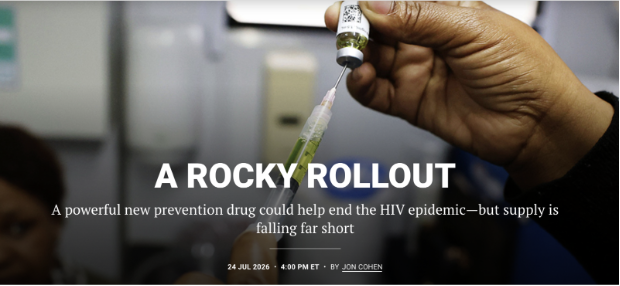
AVAC’s Mitchell Warren recently spent a week in Zambia with AVAC partner Ascend Futures Foundation, which is playing a leading role in the introduction of injectable lenacapavir (LEN) for PrEP. Mitchell was joined by Science’s Jon Cohen, who was reporting on the rollout of LEN and the real-world challenges being faced on the ground, including lack of supply. While LEN has met critical milestones with record speed, AVAC, Access Bridge and partners continue to advocate to ensure the science is matched with political will, financing and community leadership to get LEN to the people who need it most. “Science alone doesn’t change the world – people do,” said Mitchell in the article.
Merck Announces Global Access Plans for Monthly Oral Alimatravir (AMI)
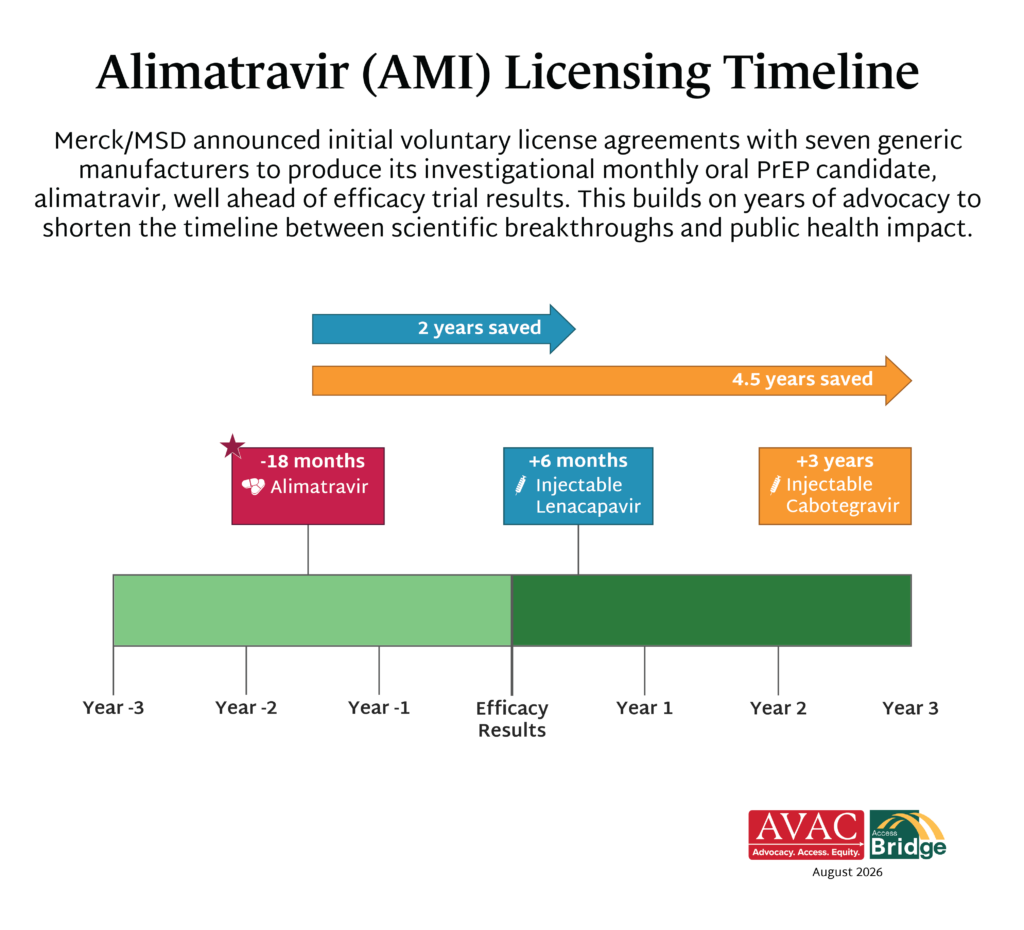
On July 24, Merck announced that it granted seven direct licenses to generic manufacturers – including three in Africa – to produce and market their investigational monthly pill for HIV prevention, known as alimatravir (MK-8527, or AMI), in 129 countries while Phase 3 clinical trials are still enrolling. Since 2012, each successive PrEP introduction has gone faster than the previous one, yet the time to market and to public health impact remains too slow. AVAC is committed to changing that, and has worked to influence trial design and implementation, and to ensure strong engagement with community representatives in the research program. These efforts coincide with broader AVAC efforts to engage stakeholders in preparation for results from the trials, and, in the case of efficacy, building the foundation for a swift path to wide-scale uptake and access.
AVAC partner Kenneth Mwehonge of HEPS Uganda told the New York Times: “Our engagement with pharma has always been fights, but it is amazing to sit with them and have them say, ‘We are learning from the other products’. It all sounds good for now, but we will wait to see how it’s put to action.”
Learn how AVAC and partners have shaped alimatravir trials.
Accelerating policy approval and uptake of the dual prevention pill in Zambia through early stakeholder engagement
The Dual Prevention Pill (DPP), a combination of daily oral PrEP and combined oral contraception, offers a novel, female-controlled option for HIV and unintended pregnancy prevention. However, promising technologies like the DPP often face delays in regulatory approval and uptake due to limited stakeholder involvement early in the introduction process. This new article in AIDS Care, authored by AVAC Fellow alum Rhoda Msiska, AVAC Senior Program Managers Kate Segal and Cindra Feuer, and Dr. Newton Donkola of Copper Rose Zambia, illustrates how early, multisectoral stakeholder engagement could accelerate DPP approval and adoption in Zambia.
Threats to Science in the U.S.
NIH Budget Cuts Threaten HIV Research
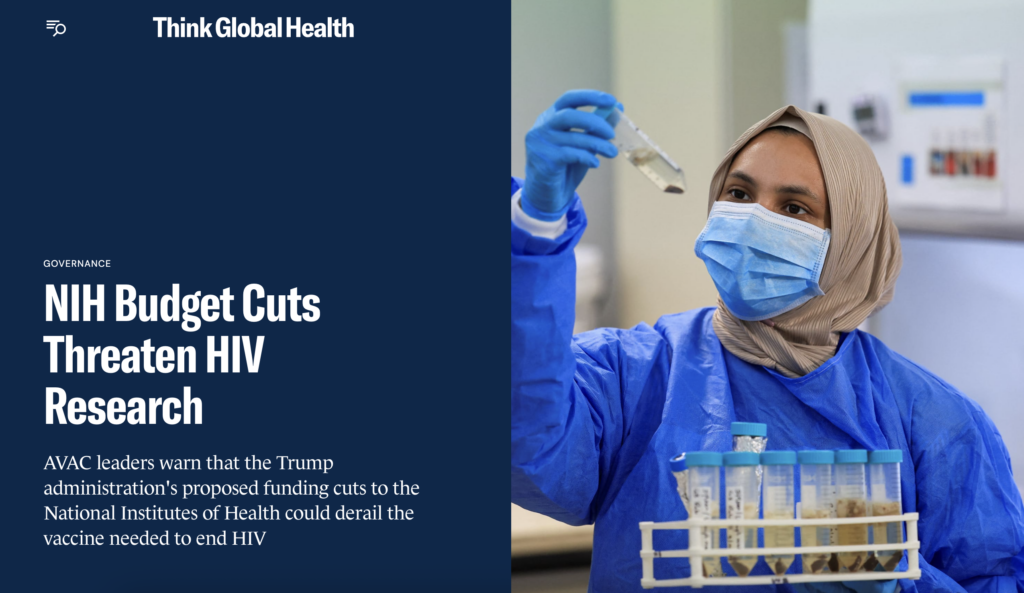
In this commentary for Think Global Health, AVAC’s Stacey Hannah and Mitchell Warren argue that ending the HIV epidemic will require sustained investment in the basic science that makes future breakthroughs possible. They warn that attacks on science and growing anti-vaccine sentiment threaten progress toward an HIV vaccine and could undermine advances across global health. “At a moment when scientific progress is advancing,” they write, “advocates, researchers, policymakers and communities should push back against politically motivated, fringe, anti-vaccine sentiments that threaten decades of investment to develop the tool that would finally break the back of the epidemic.”
AVAC Says Stop the Waste, Fraud and Abuse in the Persecution of Tony Fauci
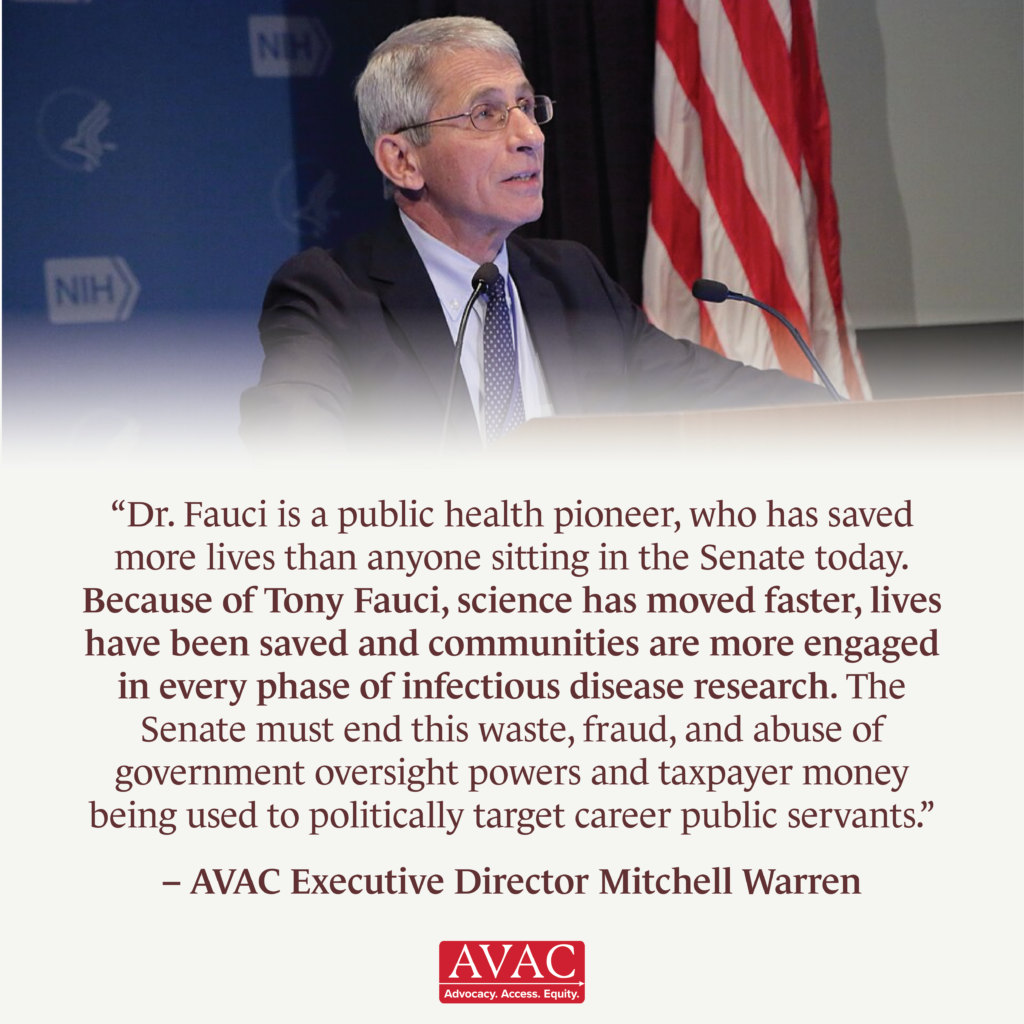
Former NIAID Director and longtime champion for HIV and AIDS research Dr. Anthony Fauci is facing renewed attacks from Congress, after a Senate committee voted to hold him in contempt following a hearing about the COVID-19 response. The attacks on Dr. Fauci raise alarm bells about the current state of congressional oversight, constitutional protections and attacks on science and scientists. In a letter of support for Dr. Fauci, AVAC urged the committee to recognize the deep history of partnership that Dr. Fauci has forged with the HIV/AIDS community; one that has resulted in numerous biomedical innovations and programs that have ultimately saved millions of lives.
Podcasts
Let’s Talk About PrEP: The Future of HIV Prevention with Mitchell Warren

In this new podcast, Mitchell Warren joined Global Black Gay Men Connect (GBGMC) to talk about the future of HIV prevention and what it takes to turn scientific innovation into impact. As Mitchell puts it, “the future of HIV prevention isn’t just about groundbreaking science; it’s about making sure that science reaches the communities who need it most.”
The Future of PrEP: LEN and the Fight for Access
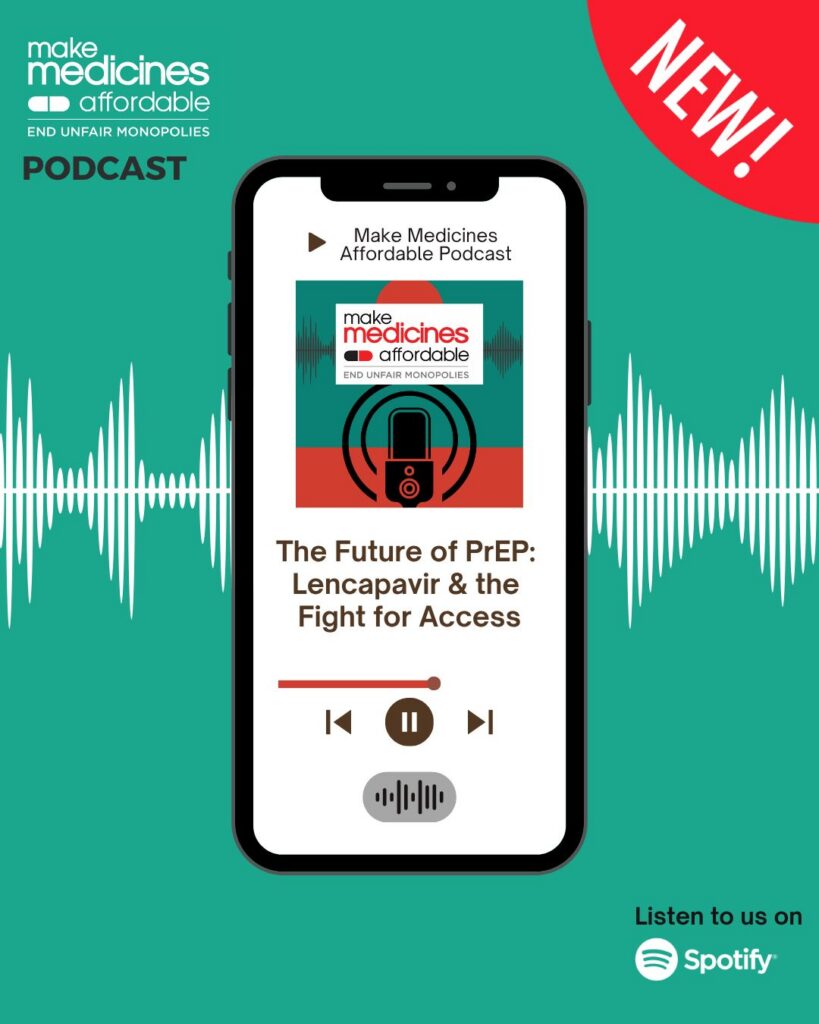
Mitchell also joined ITPC’s Make Medicines Affordable podcast to discuss the future of PrEP. While LEN is a transformative option for HIV prevention that is being rolled out with unprecedented speed, Warren discusses why scientific progress means nothing without fierce political will, stronger, resilient health systems and true equity for low- and middle-income countries.
EXPrESSIVE Phase III Program Countries of Alimatravir
Seventeen countries are hosting sites for the Phase III efficacy trials of a monthly PrEP pill, called MK-8527, now known as alimatravir, being developed by Merck (also known as MSD outside of the US and Canada). Merck announced the launch of the Phase III trials at IAS 2025 in Kigali. Alimatravir (AMI) was found to be safe and well-tolerated in Phase II clinical trials.
Years Ahead in HIV Prevention Research: Time to Market
This timeline shows the potential time points when the next-generation of HIV prevention options might find their way into new programs.
The HIV Prevention Pipeline
This graphic shows currently available options for HIV prevention, newly approved and recommended treatment, and those in development.
An “Innovation Pile-Up” in Next-Generation LA-PrEP is Possible
The HIV prevention market is headed toward a period of significant opportunity—and possible congestion—as a slate of new products are on track for continued development and potential introduction to the market in 2027 and 2028. Markets and policies must be built to support the products in the market already, so that new options can be rapidly deployed and deliver impact. Otherwise, the field will squander time and money, with epidemic control slipping further out of reach.