As clinical trials in HIV prevention grow in complexity, advocacy for future trial design is more important than ever
HIV research must be conducted in collaboration with the communities it intends to serve. AVAC’s Clinical Trial Design Academy (CTDA), established in 2019, equips advocates to understand, assess and influence HIV research, clinical trial design and product-development decisions.
Why Now?
The HIV research pipeline has become remarkably exciting, spanning long-acting prevention and treatment, vaccines and bNAbs, and cure research. But the science is also growing more complex, and many of the decisions that matter most, about which products get developed and how they’re tested, are made early, long before anything reaches a clinic.
That’s why advocacy has to start upstream. Communities need the knowledge, confidence and opportunity to influence the questions researchers ask, how trials are designed and carried out, and how decisions about new technologies are made. That includes asking who will benefit, under what conditions and when, and thinking about access early, rather than waiting until a product is ready for introduction.
Jerop Limo, CTDA member, Kenya
Advocates and communities must play a central role in shaping future trial design. Their input is essential for community acceptance of clinical trials, and for results that advance the field.
Communities are now the real ink. We are not there to rubber stamp.
Jacqueline Wambui
Kenya
About the Academy
Launched in September of 2019, AVAC’s CTDA convenes HIV research advocates from across the globe to confront the technical challenges, engage with researchers, statisticians, product developers and regulators, and help shape the decisions to move the research agenda forward. AVAC has hosted three in-person Academies, most recently in Cape Town in October 2026.
The academy is built on the belief that meaningful community engagement is critical, and it draws on frameworks like the Good Participatory Practice (GPP) Guidelines to ensure that trial design and conduct is transparent, inclusive and aligned to community priorities. Through immersive learning, ongoing skills strengthening, and direct engagement with research teams, members are engaged across the research cycle, from priority setting and trial design through conduct and results dissemination. Academy members apply their knowledge to review clinical trial protocols, engage researchers and regulators, influence ethics discussions, shape national research priorities and translate complex science for their communities.
Key contributions to the field include:
Shaping the research agenda: CTDA members helped shape the development of the People’s Research Agenda (PRA), a community-led accountability framework that assesses the state of HIV prevention research across the pipeline, and use the PRA to advocate for concrete, community-driven recommendations for research conduct.
Influencing a major trial: The CTDA participated in the first consultations for what became Merck/MSD’s EXPrESSIVE program to assess efficacy of a monthly pill for HIV prevention, alimatravir. Seven CTDA members then participated in follow-up protocol consultations, and six CTDA members serve on the trial’s Global Community Advisory Board. Merck has publicly recognized the role of community input in trial design, study protocols and implementation, including the selection of daily oral TDF/FTC as the comparator.
Leaders at the table: Members also serve on other research accountability and advisory structures, including the African Women’s Prevention Community Accountability Board, the Global Key Population HIV Prevention Forum, the Zambia Community Advisory Platform, the AIDS Clinical Trials Group Community Advisory Board (CAB), the Baylor College of Medicine CAB, the FASTER Pediatric and Adolescent CAB, and others.
The CTDA is demonstrating that investing in advocates is not just about building knowledge; it is about building the power to influence science, policy and access.
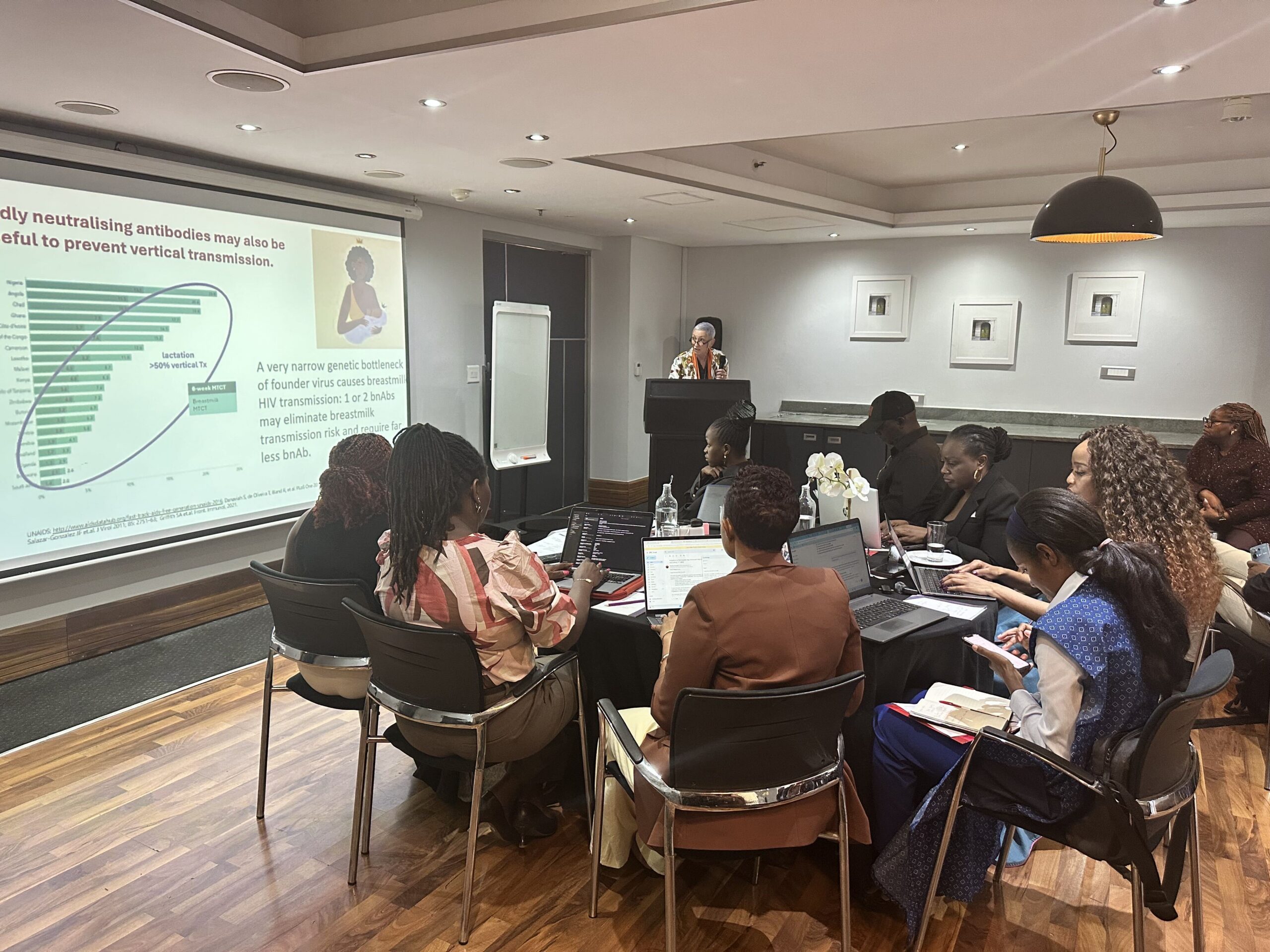
AVAC hosted its 3rd in-person Clinical Trial Design Academy on 7–8 October 2026 in Cape Town, South Africa, bringing together 21 research-informed advocacy leaders from 10 countries. Over two intensive days, participants took a deep dive into the state of HIV prevention, treatment and cure research, exploring emerging scientific innovations, what advocates and communities should be watching over the next 12–24 months, and the critical gaps and priorities that must shape the future of HIV R&D. Participants also generated priorities for the next version of the People’s Research Agenda.