Innovation Without Access is Injustice: AIDS 2026 Opens in Rio

“Innovation without access is injustice.” That message, delivered during Monday evening’s opening ceremony of the 26th International AIDS Conference (AIDS 2026) by Brazil’s Minister of Health, Alexandre Padilha and media personality, Alberto Pereira Jr. captured the defining theme emerging from the first days of the meeting. As scientific innovation accelerates with new prevention options, cure research and long-acting antiretroviral treatment advancing, advocates, researchers, health officials and donors are warning that shrinking funding, unequal access and fragile delivery systems threaten to undermine decades of progress. The message is clear: scientific innovation alone will not end the epidemic.

Read on for AVAC’s highlights from the preconference, satellite and opening sessions.

Innovation Without Access Is Not Innovation

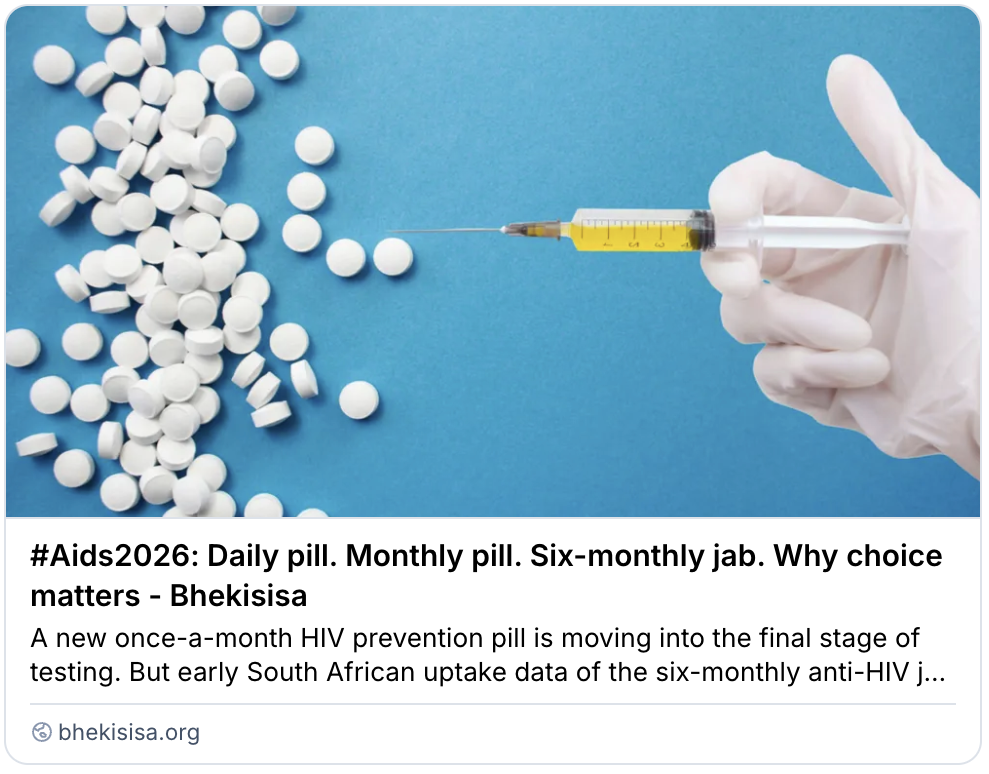
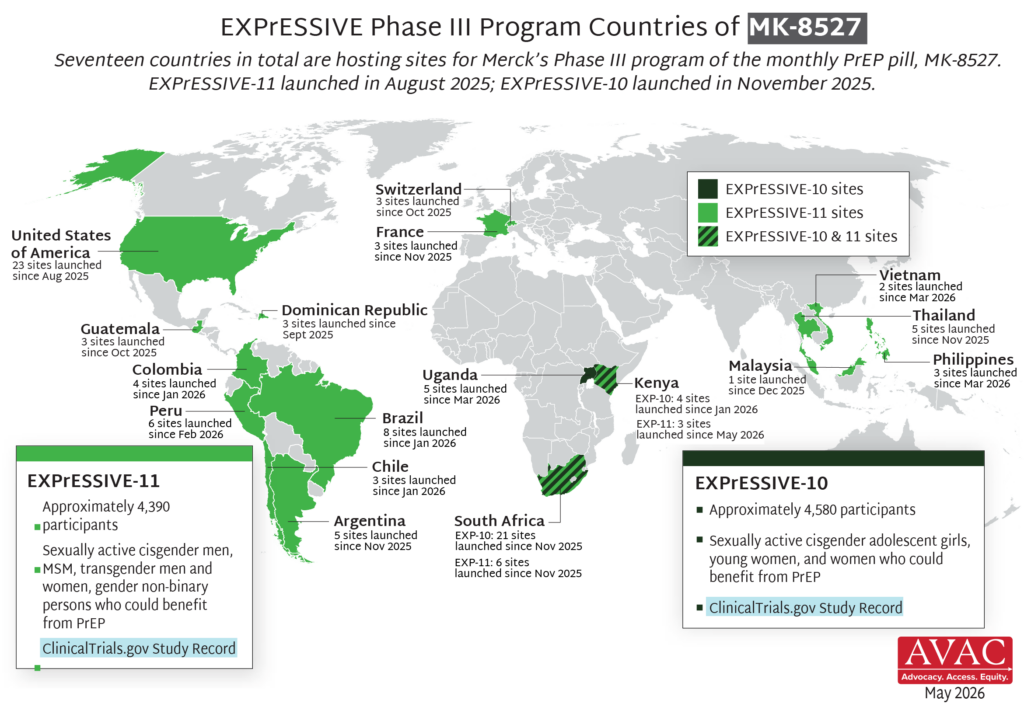
Even before the conference officially opened, Merck/MSD announced voluntary licensing agreements with seven companies in four countries – including Kenya, South Africa and Uganda – for its investigational monthly oral PrEP pill, alimatravir (MK-8527). While the announcement represents an important step toward earlier access planning, advocates quickly noted that several countries involved in the clinical trials, including conference host Brazil, Argentina, Colombia and Peru, are excluded from the licensing territory. As AVAC’s Mitchell Warren noted in this Bhekisisa piece, “We don’t yet know if the medicine will work…but…adding a monthly pill to the choice of options could increase demand even more… [however] for this, we need volumes—tens of millions of doses—which we don’t yet have in the HIV prevention market.”  
Activists interrupted the conference opening ceremony calling for affordable HIV prevention and treatment, patent reform and investment in cure research, chanting, “Pills cost pennies, greed costs lives.” Brazil’s Minister Padilha reinforced the broader stakes: “Defending the response to HIV is, more than ever, defending science, human rights, democracy and life.”  

An Alarm Bell for the Global HIV Response 

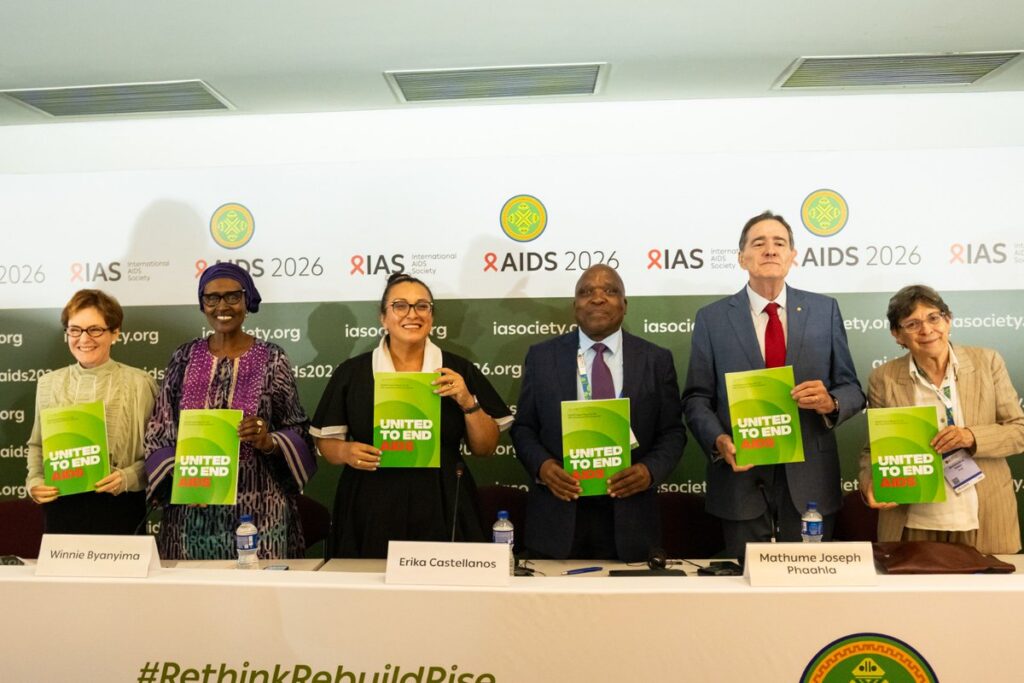
The release of UNAIDS’ United to End AIDS special report and a companion KFF-UNAIDS analysis sharpened those concerns. Despite the recent UN Political Declaration on HIV/AIDS, the reports show the challenge of translating scientific progress into the impact needed to end AIDS as a public health threat by 2030. The report shows HIV financing entering one of its most precarious periods in decades, with international assistance declining 18% between 2024 and 2025. Donor government funding fell by $2.1 billion in 2025—the largest annual decline since global HIV funding began scaling up—and epidemiological progress has stalled, with new HIV infections remaining essentially unchanged for the third consecutive year. Warren described the UNAIDS report as an alarm bell: “It’s not just a warning. It’s not just a ‘cautious stabilization of where things are’,” he said. “It is an alarm bell that we have to change how we do what we do, and how we fund what we do, if we want to succeed.”  
Community Engagement is Reshaping R&D and Access

The Advancing HIV Prevention Science and Access preconference session offered a glimpse of how product development, delivery and access are evolving. Merck’s Rebeca Plank recognized that communities and advocates were advising on the development of alimatravir (MK-8527) from the outset, “even before the Phase 3 protocols were written.” Their input influenced the decision to generate data during pregnancy and lactation earlier in development, giving people the information they need to make informed decisions rather than waiting until after approval. Plank also highlighted Merck/MSD’s recently announced initial access plan, including voluntary licensing agreements with seven generic manufacturers while Phase 3 trials are still underway and noted that “these are the initial plans. They’re not comprehensive. They’re not final. We’re still working, working in close collaboration with communities and global health stakeholders as our Phase 3 studies continue.” 

HIV Cure: Expanding the Research Agenda

Cure research is also evolving beyond a single strategy. At the HIV Cure Without Borders preconference session, researchers and advocates highlighted the emerging potential of efavirenz as part of future cure approaches, not as a cure itself, but as a way to reduce inflammation and help clear the HIV reservoir before “kick-and-kill” interventions. The session featured the strength of community voices, highlighting Advocacy Academy alumni Pisci Bruja who reminded the audience cure is a “process not a product”. Tuesday’s satellite session on broadly neutralizing antibodies (bNAbs) will explore their growing role in achieving durable viral control without antiretroviral therapy. As Thumbi Ndung’u of the African Health Research Institute in KwaZulu-Natal, South Africa, observed, “This is a very exciting time to be working on HIV cure.” Together, the sessions reflected a cure agenda that is expanding beyond eradication alone toward long-term remission and reinforced the need for continued investment in basic science, community engagement and advocacy. 

The Future of PEPFAR

The science and policy discussions went hand in hand in the pre-conference. At a packed session on the US Administration’s America First Global Health Strategy new global health strategy Senior State Department officials defended the MoU agreements as voluntary partnerships designed to build country ownership, in the wake of a civil society demonstration. US delegation leader Jeff Graham said they are “commitments we did not force anybody to make” and are intended to help countries “build the capacity to solve their own challenges, rather than perpetuating dependency.” Activists interrupted the session chanting “Restore PEPFAR now,” challenging the withholding of congressionally-appropriated PEPFAR funding and highlighting increasing evidence on the impact of US policy decisions on health and lives. Jirair Ratevosian summarized the session with 15 takeaways. The following day, the George W. Bush Institute released a set of policy recommendations as next steps for Congress and the Administration in the America First Global Health Strategy, calling for stronger implementation, preserving PEPFAR’s core strengths, and supporting greater country ownership.

These early conversations have set the agenda for AIDS 2026. Stay tuned for our Thursday update after the scientific sessions Tuesday and Wednesday, where we’ll report on the latest data and what it means for the future of the HIV response.

Resources

Global Health Watch: First real-world PEPFAR disruption data, long-term LEN results, US foreign assistance, HIV supply chain vulnerabilities

Issue 78

New evidence ahead of next week’s International AIDS Conference continues to illustrate the challenges and opportunities facing the global HIV response. This week’s issue covers the first real-world evidence of PEPFAR disruptions, new data reinforcing the long-term potential of lenacapavir for HIV PrEP (LEN), the emerging US foreign assistance architecture and a timely analysis of the vulnerabilities facing HIV medicine supply chains.

First Real-World Evidence of PEPFAR’s Disruptions

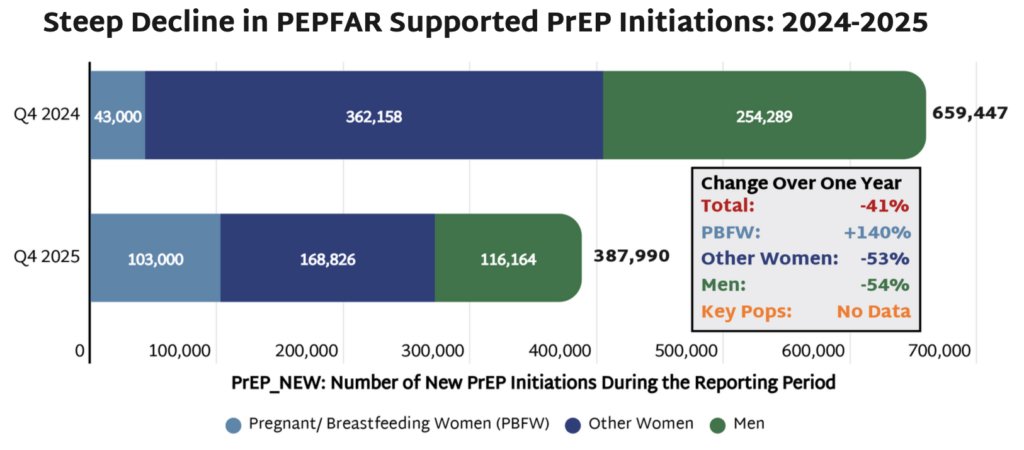
Ahead of the AIDS 2026 conference starting this weekend in Brazil, amfAR released the first real-world evidence—not modeling—of the impact of the dismantling of PEPFAR-supported HIV prevention programs through a survey of 1,700 PEPFAR service delivery sites. In their report, amfAR found that three-quarters of US-funded organizations surveyed terminated services to those at highest risk from HIV — sex workers, men who have sex with men, transgender people and people who inject drugs and that “among partners providing prevention services, 43% permanently stopped at least one prevention activity, with the deepest cuts to condom programming and PrEP.” CHAI also shared new analyses of PEPFAR program data that found a 14.2% decline in children receiving PEPFAR-supported HIV treatment in 2025 compared with 2024, with five countries showing steeper-than-expected declines. The findings closely align with AVAC’s analysis showing steep declines in PEPFAR-supported PrEP initiations.

IMPLICATIONS: These findings document “not a collapse, but the narrowing of PEPFAR services concentrated among the populations and programming that, in the long term, often decide whether epidemic control is won or lost,” amfAR’s Elise Lankiewicz shared at a July 21 press conference. “Trying to carve out and cancel certain awards had ripple impacts throughout the whole program.” The system that is left “is really a treatment-heavy model, which isn’t really conducive to controlling the HIV epidemic long-term.” Lankiewicz’s remarks illustrate the urgency to reinstate and immediately scale-up the suite of lost prevention services provided by PEPFAR to all those vulnerable to HIV, as a vital component to the program’s vision for sustainability and epidemic control. The fiscal urgency was further emphasized in US Senator John Cornyn’s call for the Administration to release $1.3 billion in Congressionally-appropriated PEPFAR funding, which underscores the critical role of Congress in ensuring people remain on treatment, prevention services reach those at greatest risk and new infections continue to decline.

READ:

52-Week Data Strengthen the Case for Lenacapavir for HIV PrEP

New results from the open-label extension studies of the PURPOSE 1 and PURPOSE 2 trials testing lenacapavir for HIV PrEP show that the six-monthly injectable can deliver sustained HIV prevention. The studies answered three critical implementation questions: Would people choose LEN over daily oral PrEP? Would they continue returning for injections every six months? Would the remarkably high efficacy seen in the randomized trials be sustained? The answer to all three was yes. Most participants chose to remain on or switch to LEN, adherence exceeded 90%, and the high level of protection was maintained a year after the original trial results, with just one HIV acquisition reported.

IMPLICATIONS: As AVAC’s Mitchell Warren argues in a new journal commentary, “the central challenge is no longer the absence of effective tools, but the failure to deliver them equitably and at scale.” The open-label data should give policymakers, implementers and communities greater confidence that scaling-up access and investments in national rollout can translate into sustained real-world impact. To help, Unitaid announced Thursday an additional US15 million to accelerate the introduction, adoption and uptake of breakthrough HIV prevention products, including long-acting PrEP, across diverse regions. This all reinforces a growing theme across the AIDS 2026 conference next week: scientific breakthroughs alone will not end the epidemic. Success will depend on sustained financing, accelerated policy actions, robust community engagement and resilient delivery systems that can ensure people who want HIV prevention options can actually access them.

READ: 

Foreign Assistance After USAID

Devex published a comprehensive analysis of the US Administration’s evolving foreign assistance architecture in the 18 months since the dismantling of USAID. In line with the recent reflections from global health leaders, the piece concludes that US foreign assistance is coalescing around three priorities: humanitarian response, global health and commercial diplomacy. These pillars are being delivered through a smaller, more centralized system that emphasizes bilateral partnerships, country burden-sharing and funding through a limited number of “trusted, vetted” implementing partners.

IMPLICATIONS: How this new architecture will function in practice is in question. Emily Bass reports that the US Department of State is increasingly relying on sole-source, fixed amount awards (FAAs) issued under a broad class waiver to support the transition. While the approach may help sustain HIV and other health services as the Administration finalizes bilateral health implementation plans, it raises questions about transparency, competition and oversight. FAAs tie payments to predefined milestones as opposed to actual costs, so they shift financial and operational risk to the organizations responsible for delivering programs. Whether these enlisted organizations can take on these risks while maintaining essential HIV health services is a major question to be answered.

READ

What We’re Reading

CASPR Impact Report: Celebrating Growth, Inspiring the Future

The future of HIV prevention won’t build itself—it will be built by communities. AVAC’s new report celebrates what is possible when long-term investment in African leadership, partnerships and coalition-based advocacy is matched with shared purpose.

Access the Report

AVAC and Access Bridge Applaud Monthly PrEP Pill Access Announcement; Call for Speed, Scale and Equity in Future Monthly Oral Alimatravir Introduction

AVAC and Access Bridge applaud Merck’s announcement today that it has granted seven direct licenses to generic manufacturers to produce their investigational monthly pill for HIV prevention, known as MK-8527, or alimatravir, while Phase 3 clinical trials are still enrolling.

The announcement from Merck/MSD reflects responsiveness to advocates’ longstanding calls to accelerate access to PrEP options. Since 2012, each successive PrEP introduction has gone faster than the previous one yet the time to market and to public health impact remains too slow.

In advance of the AIDS 2026 conference, Merck, known as MSD outside the US and Canada, today announced voluntary licensing agreements with seven manufacturers, including three in East and Southern Africa, to produce and market alimatravir for PrEP in 129 countries.

“Today’s news reflects truly positive momentum in future access to alimatravir for PrEP, if proven safe and effective,” said Mitchell Warren, AVAC’s executive director. “Granting licensing agreements to generic manufacturers while clinical trials are still enrolling, before it is known if the product is effective, should significantly reduce the time to market for the product. The timeline announced today gives us ample opportunity to work with ministries of health, donors, communities, and Merck to plan for broad access to the monthly PrEP pill. This option lends itself to innovative delivery models – from pharmacies to community-based distribution approaches. While trials are still enrolling, we have the time to collectively ensure models are well-conceived and planned, adequately funded, and set up for success. With this timeline in hand, there’s no excuse for getting it wrong.”

“Merck’s early access announcement represents significant potential time-savings, compared to the experience with cabotegravir (CAB) and lenacapavir (LEN) in both timeline for licensing, and inclusion of those with greatest need. With three generic manufacturers in Kenya, Uganda, and South Africa included, these agreements go beyond those put in place for CAB and LEN and help to ensure that countries with some of the highest HIV burdens and largest PrEP markets will be able to make the product locally, should alimatravir prove safe and effective in phase 3 trials,” Warren added. “But while these voluntary licenses are essential, they are not sufficient on their own to translate exciting science into public health impact. Ultimately, access is about far more than licensure alone.”

Merck has worked with communities and advocates throughout the development of alimatravir, as exemplified by community representatives helping conceptualize the design of the phase 3 trials, even before Merck spoke to regulators. “We’ve appreciated the partnership between Merck and advocates in the research process. We’re seeing that commitment to community priorities translate into product introduction and access steps. As advocates, we will continue to watchdog this space, ensure communities remain at the center of access planning as it moves forward, and ensure accountability among all stakeholders,” said Stacey Hannah, AVAC’s Director of Research Engagement. 

Every step in the process of moving a product to market can and should go faster with alimatravir than it went with CAB and LEN. To ensure the monthly PrEP pill is introduced and broadly accessible with speed, scale, and equity, AVAC and Access Bridge call on the broad range of stakeholders ensure these critical actions take place:

  • Merck/MSD, governments, and donors to commit to reach at least two million people with alimatravir within the first year of product launch and five million people within the first two years.  
  • Merck/MSD to agree to sell the product to any public health procurer or donor at a price no more than the price of generic daily oral PrEP and injectable lenacapavir. 
  • Merck/MSD to guarantee that alimatravir will be available in low and middle-income countries within three months of first approval; halving the timeline it took for LEN to become available.  
  • Merck/MSD to articulate a transparent and robust plan for ensuring affordable, equitable access to alimatravir in Latin America, with a specific priority on countries hosting the EXPrESSIVE 11 trial, and direct work with advocates to navigate country specifics where voluntary licenses are not in place.  
  • WHO to accelerate the guidelines development process.Merck/MSD to clarify its regulatory strategy and prioritize broad regulatory submissions in parallel with its FDA submission, working with the WHO’s Collaborative Registration Procedure, the EMA’s Medicine4All program, and the African Medicines Agency. 
  • Donors working with WHO and ministries of health to design and embed a robust implementation science agenda within programmatic rollout to answer critical questions, particularly about adherence, for this new, monthly method of prevention, as part of introduction.  
  • All stakeholders to create and plan now for innovative service delivery that continues to simplify PrEP, working with private pharmacies, community-based organizations, and other innovative service delivery efforts.
  • National governments start to prepare ambitious and costed implementation plans, guidelines, and comprehensive programs to integrate alimatravir into existing HIV prevention programs.

“Today’s announcement shows that the HIV prevention field can learn and apply lessons in real time. LEN for PrEP is now in limited distribution in ten African countries within two years of proven efficacy; this was a huge step forward, but we as a field can still do better,” said Wawira Nyagah, executive director of Access Bridge. “Now is the time to plan for even speedier and wider access if alimatravir works. This must include pricing transparency from Merck and their generic licensees, accelerated investments by donors to design and implement integrated programs that offer the monthly pill as part of choice of product and service delivery models that actually reach people who need and can benefit from it, everywhere, based on public health imperatives, and not on World Bank country classifications or geographical location. Anywhere the HIV epidemic is increasing must be included, full stop.”

For more than a decade, AVAC has mapped the roadmap and timelines for moving PrEP products from earliest research stages to market. With each successive option, AVAC has flagged what is failing, where the global community is watching, where things are improving, and where there’s room to do better still. As a result of this work, the global community is executing better, faster, more inclusively, and more equitably with every new option. Learn more about AVAC’s work on alimatravir. AVAC and Access Bridge will continue to monitor the research, approval processes and product implementation of PrEP options at https://avac.org/prevention-option/prep/ and www.prepwatch.org.

CASPR Impact Report: Celebrating Growth, Inspiring the Future

The future of HIV prevention won’t build itself—it will be built by communities. 
 
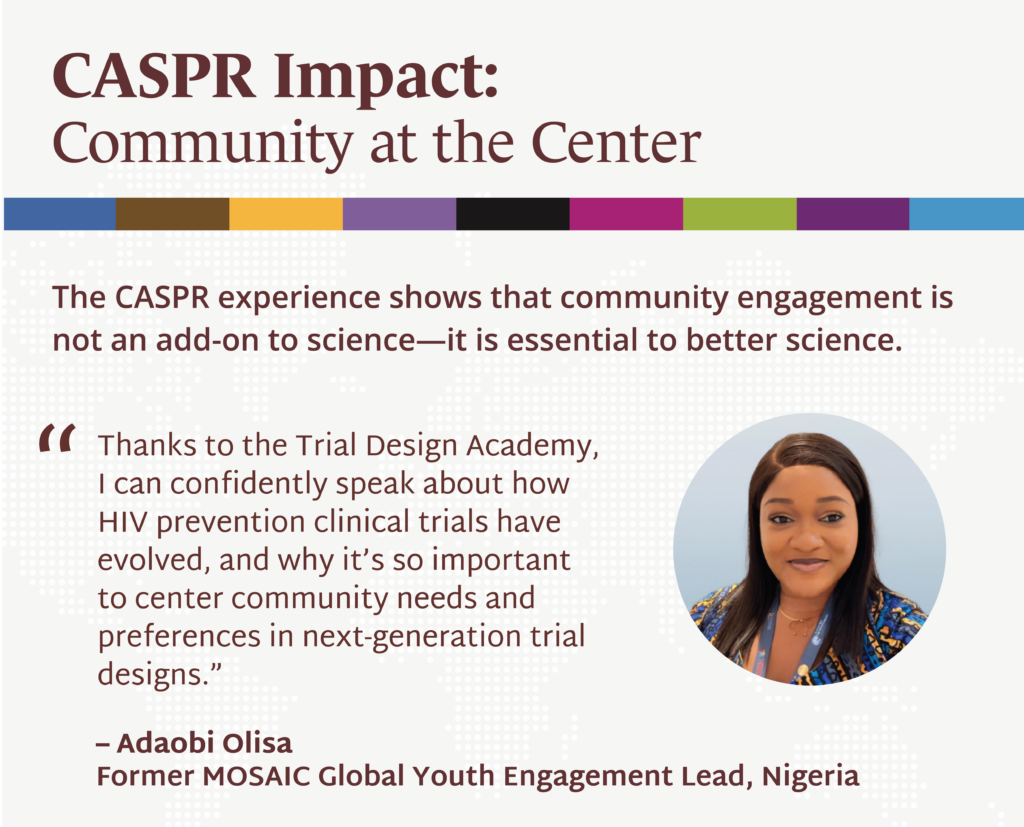
AVAC is proud to release the CASPR Impact Report: Celebrating Growth, Inspiring the Future, celebrating what is possible when long-term investment in African leadership, partnerships and coalition-based advocacy is matched with shared purpose. CASPR, the Coalition to Accelerate and Support Prevention Research, proved that community-led coalitions are central to turning innovation into action, and ensuring that advances in HIV prevention are shaped by the people they are meant to serve.  

From 2016 through 2025, CASPR built an Africa-led movement that connected communities, researchers, policymakers, journalists and funders to transform HIV prevention advocacy. At our recent webinar, The Future Won’t Build Itself: Lessons from CASPR and the Future of Africa-Led HIV Prevention Advocacy, CASPR partners Chilufya KasandaIda Jooste and Yvette Raphael delivered powerful remarks on the impact of CASPR and how they’re carrying its legacy forward.

In addition, our latest blog post, by AVAC’s Breanne Lievense and Navita Jain and CASPR partner Barbra Ncube from Pangaea Zimbabwe, reflects on CASPR’s legacy and how community leadership shaped research agendas, improved accountability and helped accelerate the translation of scientific discovery into public health impact.

“As we honor CASPR’s legacy, let us carry forward African-led, evidence-based, community-grounded coalition advocacy from research to rollout.”

Yvette Raphael
Advocacy for Prevention of HIV and AIDS South Africa

“CASPR has shaped the prevention landscape in Africa and globally. By fighting for community-centric research agendas, and for research to move to rollout as efficiently and equitably as possible, this global network of advocates has helped improve prevention options and realities for their communities, countries, and the world.”

Stacey Hannah
AVAC, CASPR Director

Coming Up

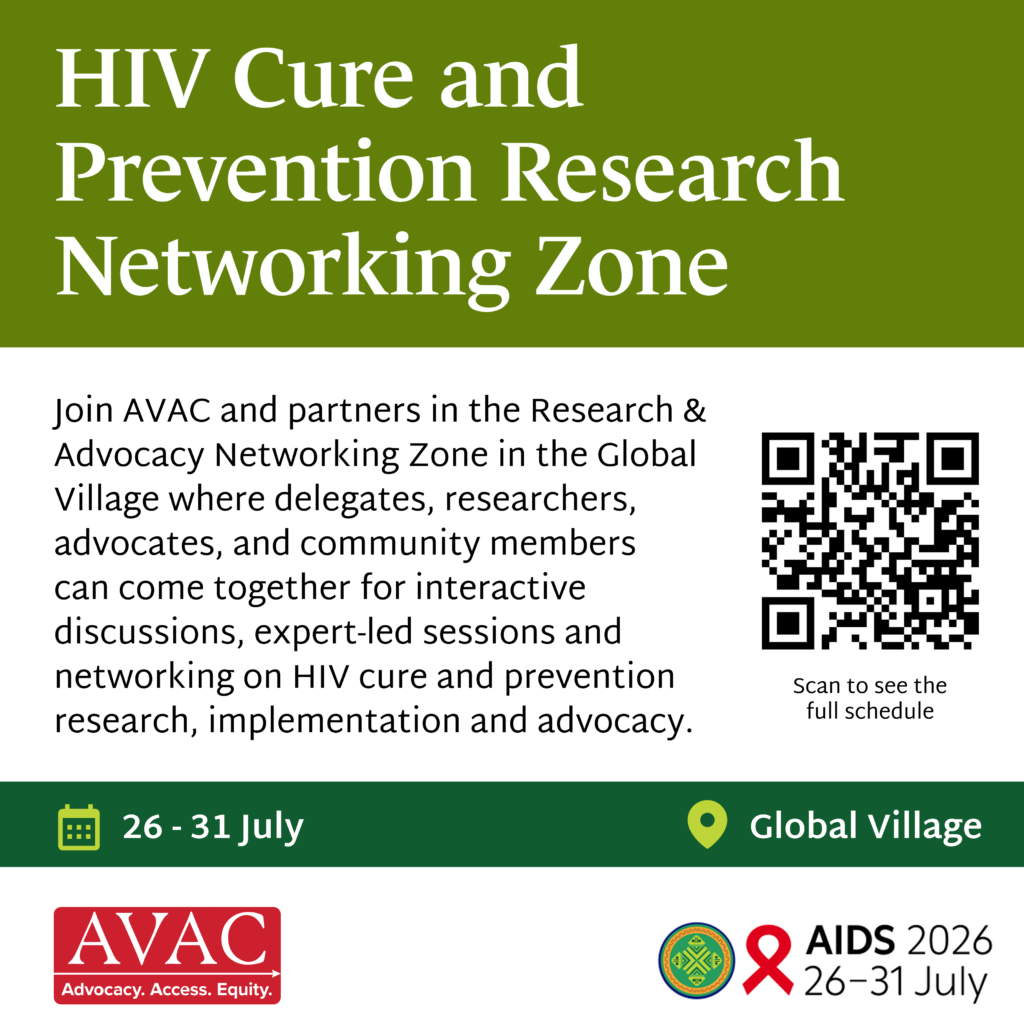
Several CASPR partners will be leading key discussions next week at the AIDS 2026 conference in Rio de Janeiro, Brazil. AVAC’s roadmap lists the key HIV prevention sessions at the conference you won’t want to miss, and we’ll be covering conversations and events at the conference in real-time. Be sure to join us at the HIV Cure and Prevention Research Networking Zone in the Global Village where delegates, researchers, advocates and community members can come together for interactive discussions, expert-led sessions and networking. Follow along on social media and find updates on our AIDS 2026 page

Global Health Watch: 500,000 oppose White House grant rule, CDC & PEPFAR’s future, global health transition strategy, Gawande & AIDS 2026

Issue 77

More than half a million comments were submitted in response to the White House’s proposal to politicize federal research grants – with a significant majority opposing it. At the same time, questions mounted over the future of the CDC, PEPFAR, and the Administration’s vision for transitioning US global health programs. This week also features reflections from former USAID global health leader Atul Gawande on the human cost of dismantling USAID and the likely discussions ahead at AIDS 2026 on the consequences of US policy changes for HIV programs and global health.

Scientists Respond to Escalating Political Attacks

As the assault on scientific independence continues on multiple fronts, an extraordinary response came from scientists, advocates, universities, professional societies and civil society organizations. It culminated in a wave of submissions as the public comment period ended on Monday for the White House Office of Management and Budget’s (OMB) proposed regulation to give political appointees greater authority over federal grant decisions. Nearly 500,000 comments were submitted and analyses published in STAT show nearly 95% opposed the proposal, with many warning it would replace independent peer review with political and ideological oversight, thereby undermining the integrity of publicly-funded biomedical research. At the same time, hundreds of scientists, public health leaders and advocates have signed an open letter supporting former NIAID Director, Anthony Fauci and others who have come under political attack for their work, arguing that defending scientists from intimidation is essential to protecting evidence-based policymaking and the integrity of the US scientific enterprise

IMPLICATIONS: The OMB’s proposed Regulation for Federal Financial Assistance “would politicize grantmaking, dismantle merit-based peer review and severely restrict professional infrastructure necessary for quality research,” AVAC wrote in its comment. While the 500,000 submissions may not stop implementation of this regulation, they could slow the roll-out, set-up impending legal challenges and bolster congressional efforts to intervene. However, together, this all points to growing community recognition and collective action around the importance of safeguarding science now.

READ:  

CDC Leadership and PEPFAR’s Future

The US Administration’s nominee to serve as Director of the US Centers for Disease Control and Prevention (CDC), Erica Schwartz faced questions at her Senate confirmation hearing where members pressed her on vaccine science, scientific independence and the CDC’s future under Health and Human Services (HHS) Secretary Robert F. Kennedy Jr. Schwartz was criticized for failing to provide direct answers to questions on vaccine safety, political interference in science and CDC guidance. At the same time the hearing was taking place, 84 partners submitted a letter urging Congressional leadership to intervene after the US Department of State confirmed plans to phase out or fundamentally restructure the CDC’s role in implementing PEPFAR, including allowing more than 100 CDC awards to expire without clear replacement mechanisms and transitioning the agency to a fee-for-service technical assistance model.

IMPLICATIONS: Schwartz’s testimony and inability to provide clear responses on vaccine science and scientific independence reinforces concerns about the CDC’s future in evidence-based decision making. This, plus the potential ending to long-standing transfer of PEPFAR resources to CDC, leaves many questions about the CDC’s future role and independence. As the 84 organizations wrote, “coming on the heels of USAID’s closure in 2025, this change removes the last institutional anchor of a proven, lifesaving program. This shift will pull the plug on lifesaving treatment programs serving millions of patients today and destroy public health systems keeping Americans safe from the health threats of tomorrow.”

READ:

Eighteen Months Later: Global Health in Transition 

Just over 18 months into the new US Administration, global health leaders continue to reflect on the human and institutional consequences of the dismantling of USAID and the restructuring of PEPFAR. While greater country ownership has been a shared goal across multiple Presidential Administrations, abrupt funding cuts and weakened technical partnerships risk undermining decades of progress. As former USAID global health leader Atul Gawande said on The New Yorker Radio Hour, “We’ll halt worsening the damage, but it’ll take joint effort to actually stop it and regain our momentum.” Chris Collins of Friends of the Global Fight similarly argues that if the Administration is serious about transitioning from donor-led programs to sustainable national systems, it must pair that vision with predictable financing, stronger country capacity and a deliberate transition plan rather than an accelerated withdrawal

IMPLICATIONS: As implementation of the US Secretary of State’s US global health strategy becomes clearer and the Administration’s bilateral health agreements moves forward, focus must shift to the practical realities of achieving it without reversing gains in HIV epidemic control or weakening broader global health security. These questions will take center stage at AIDS 2026, where multiple sessions will examine the consequences of US policy changes for HIV programs and the future of global health cooperation. See AVAC’s roadmap and resources for Rio.

READ

AVAC’s Guide to AIDS 2026

Visit AVAC’s conference hub, which shares curated session roadmaps on prevention and AI & HIV, resource hubs on the prevention pipeline, lenacapavir and MK-8527, a schedule of key sessions, and more.

Learn More

What We’re Reading

The Legacy of CASPR: Building the Future of Africa-led HIV Prevention Advocacy 

By Breanne LievenseBarbra Ncube & Navita Jain

The future of HIV prevention will depend not only on scientific breakthroughs, but on advocacy to bring those breakthroughs to communities to achieve impact. With global health undergoing profound change, the way forward requires new models of collaboration that are community-led, locally owned and sustainably funded. The Coalition to Accelerate and Support Prevention Research (CASPR) offers one such model for the field as we collectively work to end the HIV epidemic.

AVAC’s newly released CASPR Impact Report: Celebrating Growth, Inspiring the Future shows what is possible when long-term investment in African leadership, partnerships and advocacy is matched with shared purpose. CASPR proved that community-led coalitions are not just a complement to scientific progress, but are central to this progress. They have proved to be essential to turning innovation into action and ensuring that advances in HIV prevention are shaped by the people and communities they are meant to serve.

CASPR was funded by the United States Agency for International Development (USAID) and designed by AVAC in collaboration with 13 partners. The project was intended to run from 2016 through 2026, but was paused in early 2025 amidst sweeping cuts to US federal funding for foreign assistance and the dismantling of USAID. During its eight years, CASPR built an Africa-led movement that connected communities, researchers, policymakers, journalists and funders to transform HIV prevention advocacy. CASPR strengthened community leadership, shaped research agendas, improved accountability and helped accelerate the translation of scientific discovery into public health impact.

CASPR built an intergenerational movement that influenced HIV policy, research and implementation. For example, CASPR partners played a pivotal role in ensuring the PURPOSE trials (studying injectable lenacapavir for PrEP) centered affected communities from trial design to results dissemination. CASPR members chaired the PURPOSE 1 global community advisory group (GCAG), held six of its eight seats and ensured young women were included on the GCAG and in the research, from the start. The GCAG also ensured the trial protocol allowed pregnant and breastfeeding individuals to remain in the trial after re-consent, and the Civil Society Caucus for Long-Acting PrEP (a CASPR-supported initiative) pushed Gilead to publicly announce a commitment to ensuring equitable access. CASPR made certain that the trials were conducted ethically and included communities, setting a standard for future clinical research.

At the same time, CASPR partners established the African Women Prevention Community Accountability Board (AWPCAB) as a network led by and for African women, advocating for sustained financial and political commitment to HIV prevention choice. The AWPCAB launched the Choice Manifesto in 2023, securing commitments and endorsements from high-level stakeholders such as Winnie Byanyima, Executive Director of UNAIDS, representatives from USAID and African ministries of health. The Choice Manifesto shifted the global narrative on choice in HIV prevention, elevating it as core to achieving equity in the HIV response. With the Choice Manifesto in hand, CASPR partners achieved significant policy wins, like the inclusion of the Dapivirine Vaginal Ring in the Zambia Consolidated Treatment and Prevention Guidelines.
CASPR also redefined how – and by whom – HIV prevention research priorities are set by ensuring that communities most affected by HIV have a direct voice in shaping the research agenda. CASPR developed the People’s Research Agenda (PRA) through a collaborative process with 138 advocates and community representatives from 23 countries. The PRA puts forward community-driven recommendations to strengthen and diversify the HIV prevention research and development (R&D) pipeline, increase investment in prevention research and guide advocacy that reflects the needs of communities from research to rollout. First launched in 2024 and updated in 2025, the PRA serves as a living accountability tool that continues to guide advocates, researchers and funders in ensuring that HIV prevention R&D remains responsive to the people it is intended to serve. It also now provides ongoing analysis of the pipeline of products in various stages of research and development.

Through CASPR, and building on and incorporating the long-standing AVAC Advocacy Fellows program, more than 700 advocates were mentored, almost 400 adolescent girls and young women were trained in HIV prevention literacy and advocacy and emerging leaders across 15 countries strengthened their capacity to influence HIV prevention research, policy and implementation.

“Before the fellowship, I never imagined I could convene high-level policy dialogues, engage decision-makers or negotiate for stronger HIV prevention responses,” said 2022 AVAC Fellow Ruth Akulu. “The fellowship built my capacity, strengthened my confidence and helped me recognize my ability to lead and influence change.” Today, Ruth is the founder and Executive Director of HopeStone Insight Uganda, a forward-thinking organization that seeks to influence economic policy to advance equitable health outcomes and access to quality healthcare.

In addition to advocates, CASPR engaged journalists as essential partners in translating HIV prevention science and fostering public trust. CASPR held over 200 Media Science Cafés, equipping hundreds of journalists across six countries with the knowledge and skills needed to report HIV prevention science accurately. Convened by local journalist organizations, cafés are informal gatherings that bring together journalists, scientists and advocates to discuss the latest HIV prevention and public health updates. The Café program supported by CASPR forged critical cross-sector relationships and facilitated accurate journalism, ultimately leading to community trust of science and R&D. Café journalists played an especially important role in facilitating trust in the wake of complicated or disappointing results, mobilizing their network within hours of results announcements to translate information for the public, ensure robust community engagement and champion continued research efforts.

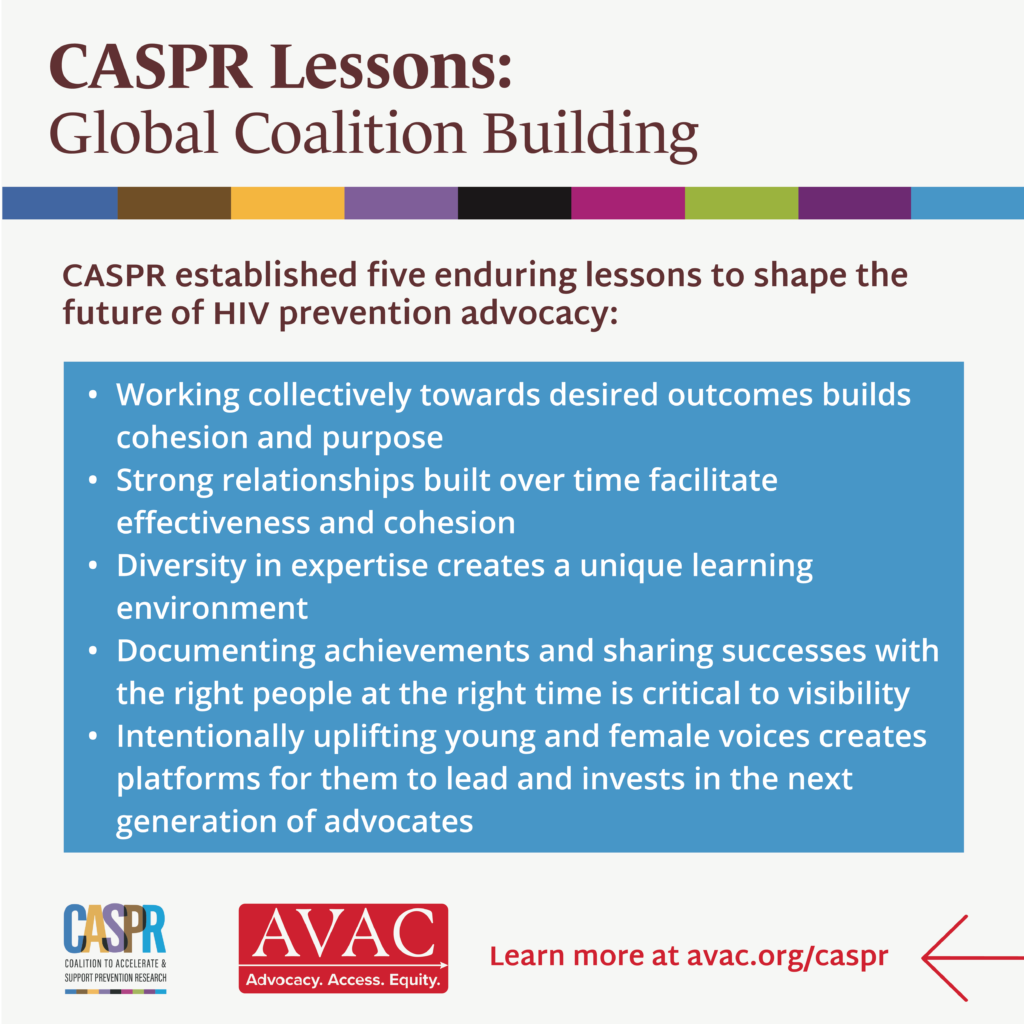
CASPR succeeded because it invested deeply in local organizations and embraced shared power, co-created strategy and African leadership. CASPR demonstrated the power of coalitions for generating sustainable advocacy, but that building a coalition takes time. After eight successful years of global coalition-building, CASPR leaves five enduring lessons that will continue to shape the future of HIV prevention advocacy: 

  • Shared goals create stronger, more resilient coalitions capable of sustaining collective action through changing political and funding landscapes. 
  • Long-term relationships build trust, effectiveness and collective impact, enabling organizations to move beyond coordination towards genuine collaboration. 
  • Diverse expertise strengthens learning, innovation and problem-solving; it drives effective advocacy anchored by the complementarity of partner strengths. 
  • Documenting and communicating successes is essential for visibility, influence and sustainability. 
  • Intentionally investing in young people and women builds the next generation of advocacy leaders, equipped with confidence, credibility and purpose. 

CASPR’s legacy lives in the resilient organizations and networks it incubated such as the AWPCAB and the Civil Society Caucus, which ensure communities drive HIV prevention research and access, as well as in the tools and resources created for advocates, journalists, policymakers and researchers that are still used today to translate HIV prevention research to rollout.

The foundation built by CASPR is also shaping what comes next. As new networks form and the landscape evolves, CASPR partners and other experienced civil society organizations and advocates from East and Southern Africa are engaged in discussions around what comes next for the future of HIV prevention advocacy and mentorship. Advocates are finding innovative ways to advance a renewed vision for African-led HIV prevention advocacy—one that is collaborative, resilient and designed for the challenges ahead. These initiatives are vital so that communities continue to shape the future of HIV prevention—not simply respond to it.

“One of the many things I take with me [from CASPRis that when you invest in leadership, even when the program or the project closes, the infrastructure remains.”

Rosemary Mburu
Executive Director of WACI Health

The lesson from CASPR is clear: strong, community-led advocacy will safeguard the future of HIV prevention. Coalition models build resilience, strengthen accountability and ensure that scientific advances translate into equitable access. But these networks require sustained investment, trust and time to flourish. With the shift in global health funding, now is the moment to invest in the leaders, partnerships and platforms that have already demonstrated their impact.

AVAC’s Guide to AIDS 2026

The AIDS 2026 conference in Rio de Janeiro, Brazil, starting in less than two weeks, comes at a defining moment for the global HIV response. Under the theme, Rethink. Rebuild. Rise., the conference convenes as the field grapples with funding disruptions, shifting geopolitics and the challenge of sustaining progress while translating scientific breakthroughs into equitable, community-led access. Alongside the latest research, discussions are expected to focus on scaling-up long-acting HIV prevention, strengthening health systems, advancing country ownership, sustaining the research enterprise, and ensuring the HIV response remains grounded in innovation, implementation and investment.

AVAC’s resources below aim to help those attending and those following from afar to navigate the discussion and debate in and around Rio.

Read on for resources and ways to navigate AIDS 2026.

AVAC’s Guides to AIDS 2026

HIV Prevention Session Roadmap
Explore AVAC’s curated roadmap of HIV prevention sessions and key presentations to watch throughout AIDS 2026.

AI and HIV Session Roadmap
AVAC and Audere’s AI & HIV Session Roadmap, features key conference sessions on artificial intelligence in HIV prevention, care, research and global health.

HIV Research & Advocacy Networking Zone

Resources

Resource Hubs

Resource Hub: Lenacapavir for Long-Acting PrEP
The introduction of injectable lenacapavir for HIV PrEP (LEN) is underway–in some places. While the field is moving faster than it did during the first decade of oral PrEP or the rollout of injectable cabotegravir, ensuring LEN—and future prevention options—reach everyone who needs them will require even greater speed, scale and equity. This resource hub contains all the tools, resources and insights on the latest with LEN rollout.

Resource Hub: MK-8527
Expanding prevention choice means investing in a diverse pipeline of HIV prevention options. MK-8527 is an investigational antiretroviral (ARV) once-monthly oral PrEP pill currently in Phase III clinical trials. If proven safe and effective, it could offer another important PrEP option. This resource hub provides advocates with an overview of the MK-8527, the science behind it and the latest on its clinical development. It also houses our guide to MK-8527 at AIDS 20206.

Resource Hub: People’s Research Agenda
The People’s Research Agenda (PRA) sets out a people-centered framework for equitable and accelerated R&D and product introduction. This resource hub offers an online, interactive dashboard for tracking, translating, and advocating for HIV prevention research and development (R&D). It also shows where investments align—or fail to align—with community-defined priorities, and spotlights critical gaps in the pipeline of prevention options needed to meet the diverse realities of all populations.

Pre-conferences, Satellites, Sessions and Workshops Featuring AVAC and Partners

  • Pre-conference: Advancing HIV prevention science and access
    08:00 – 19:00
    Hosted by the International AIDS Society, this pre-conference features six sessions showcasing the latest advances in HIV prevention science and access—including the Global Forecast of Long-Acting PrEP Need for Key Populations (2025–2030), developed jointly by GBGMC and AVAC. AVAC board, staff and partners will also explore the science behind next-generation HIV vaccine candidates and how to translate.

Monday, 27 July

Tuesday, 28 July

  • Symposium: bNAbs for cure: Hope or hype?
    10:30-11:30
    AVAC Board Member Marina Caskey will present in this symposium exploring the promise—and limitations—of broadly neutralizing antibodies (bNAbs) for HIV cure.

Wednesday, 29 July

Thursday, 30 July

  • Workshop: Skills Lab: Community-led monitoring
    12:00 – 13:30
    Facilitated by the International Treatment Preparedness Coalition (ITPC), NACOSA, the Network of Journalists Living with HIV (JONEHA) and community monitoring experts, including AVAC Senior Advisor Maureen Luba, this interactive workshop will strengthen practical skills in community-led monitoring (CLM).
  • Symposium: From community to innovation to scale
    16:30 – 17:30
    AVAC’s Grace Kumwenda will join community leaders, researchers, clinicians, policymakers and funders to discuss the partnerships, inclusive research and implementation strategies needed to accelerate innovation and ensure equitable access from the outset.
  • Satellite: From choice to impact: Long-acting and multipurpose HIV prevention technologies
    18:00 – 19:30
    Hosted by IPM South Africa, AVAC and Access Bridge’s Kate Segal and Ascend Futures Foundation’s Chilufya Kasanda will join researchers, advocates, implementers and policymakers to examine the latest scientific advances, implementation strategies and pathways to equitable access for long-acting options and MPTs.

Friday, July 31

Follow Us

AVAC will be covering conversations and events at the conference. Be sure to follow along on social and find updates on our AIDS 2026 page.

Global Health Watch: Latest on White House OMB Federal Rx Grant Proposal, Global Fund Gains Stability, New Model for GH Partnerships

Issue 76

As the comment period to oppose the White House Office of Management and Budget’s (OMB) proposal to give political appointees greater authority over federal research grants closes next Monday, the Global Fund avoided new ideological restrictions on US funding even as it prepares for a new Executive Director. And new articles and analyses of US bilateral health agreements under the “America First Global Health Strategy” suggest the Administration’s vision for global health is shifting from supporting epidemic control to managing country transitions.

The Latest on the White House OMB’s Proposal Politicizing Federal Grants

The last day to submit comments opposing the OMB’s proposal to give political appointees greater authority over federal research grant decisions is Monday, July 13. The proposal has drawn major and widespread opposition from scientists, advocates, universities, associations, former government officials, the biotechnology industry and members of Congress, all calling out the weakening of a long-standing scientific peer-review process and injection of political considerations into federal funding. The proposal has already drawn more than 93,000 public comments and submissions opposing the rule. See AVAC’s submission. The US Administration aims to finalize the rule by October 1.

IMPLICATIONS: These rules, if adopted, would mandate that federally-funded science align with a politically motivated “America First” agenda aimed at dismantling decades of transformative global collaboration. These rules have the potential to dramatically reshape how federal dollars are spent and who decides, replacing evidence-based decision-making with political priorities. Notably, the published proposed rule specifically and falsely references PEPFAR as justification for increased political scrutiny of federal grants, linking HIV and global health programs to a broader debate over federal spending, oversight and executive authority. For the HIV field, these changes could affect the entire research-to-rollout continuum and global partnerships, at a time when scientific collaboration is necessary to achieving 2030 HIV targets and advancing global health equity.

TAKE ACTION: The proposed rule is still open for public comment through July 13. Click here to comment or see  AVAC’s Action Alert for more instructions. Submitted comments could slow implementation of any changes to the process because the OMB must reply to them all. The outpouring of comments could also persuade Congress, which has repeatedly rejected the Administration’s previous proposals to gut research funding, to use its power to stop these changes. Comments also put into the public record that are not adequately addressed, could be raised again in lawsuits to stop the changes.

READ:

Global Fund Gains Stability Amid Leadership Transition

The US government will continue funding the Global Fund without imposing its expanded global gag rule or other ideological funding conditions to US contributions. This will allow US funding to continue without restrictions related to abortion, diversity, equity and inclusion policies. At its Board meeting this week, the Global Fund also confirmed that its search for a new Executive Director will proceed as planned despite reports that the confidential nomination process might be restarted following media leaks. The Board is expected to appoint its next Executive Director in October.

IMPLICATIONS: While the decision not to impose the expanded global gag rule removes one immediate challenge, the Fund still faces significant financial uncertainty. Its next Executive Director will inherit an organization facing the major challenges of constrained resources, evolving donor expectations and increasing pressure to sustain impact in a changing global health landscape.  

READ: 

The New Model for US Global Health Partnerships 

PEPFAR and US bilateral health agreements continue to evolve. This week, Think Global Health expanded its tracker of the US Administration’s bilateral health agreements, showing that 31 countries have now signed five-year agreements that increasingly shift financing and implementation responsibilities to national governments through co-investment and country ownership models. Andrew Green focuses on one country, South Sudan, in a Devex piece that looks at the country’s new three-year, $166 million MoU with the US, noting that while it preserves support for HIV and disease surveillance, funding may be insufficient to offset recent aid reductions and the country may struggle to meet its own financial commitments. 

In a separate analysis, Jirair Ratevosian broke down what five reports from the US Department of State to Congress reveal about the Administration’s vision for global health. He writes, “Read together, these excerpts are overwhelmingly about the mechanics of transition: MOUs, implementation plans, co-investment, funding adjustments, corrective actions, benchmarks, workforce transfer, and reductions in US assistance. There is much less discussion of incidence, viral suppression, advanced disease management, prevention gaps, community systems, or epidemic control… It suggests they are no longer the organizing principle.”  

IMPLICATIONS: These pieces reflect a move toward implementation of the new global health agreements. As implementation continues, we’ll be watching whether the financing assumptions, implementation systems and country commitments that are the foundation of these agreements are sufficient enough to sustain HIV and broader health gains. As Ratevosian notes, “Every Administration has its own priorities. But organizing principles matter because they determine what leaders measure, what they reward, and ultimately what they protect. When transition becomes the primary frame, there is a risk that epidemic control becomes something assumed rather than something actively managed.” 

In a separate analysis, Jirair Ratevosian broke down what five reports from the US Department of State to Congress reveal about the Administration’s vision for global health. He writes, “Read together, these excerpts are overwhelmingly about the mechanics of transition: MOUs, implementation plans, co-investment, funding adjustments, corrective actions, benchmarks, workforce transfer, and reductions in US assistance. There is much less discussion of incidence, viral suppression, advanced disease management, prevention gaps, community systems, or epidemic control… It suggests they are no longer the organizing principle.”

READ

What We’re Reading

Presenting at AIDS2026?

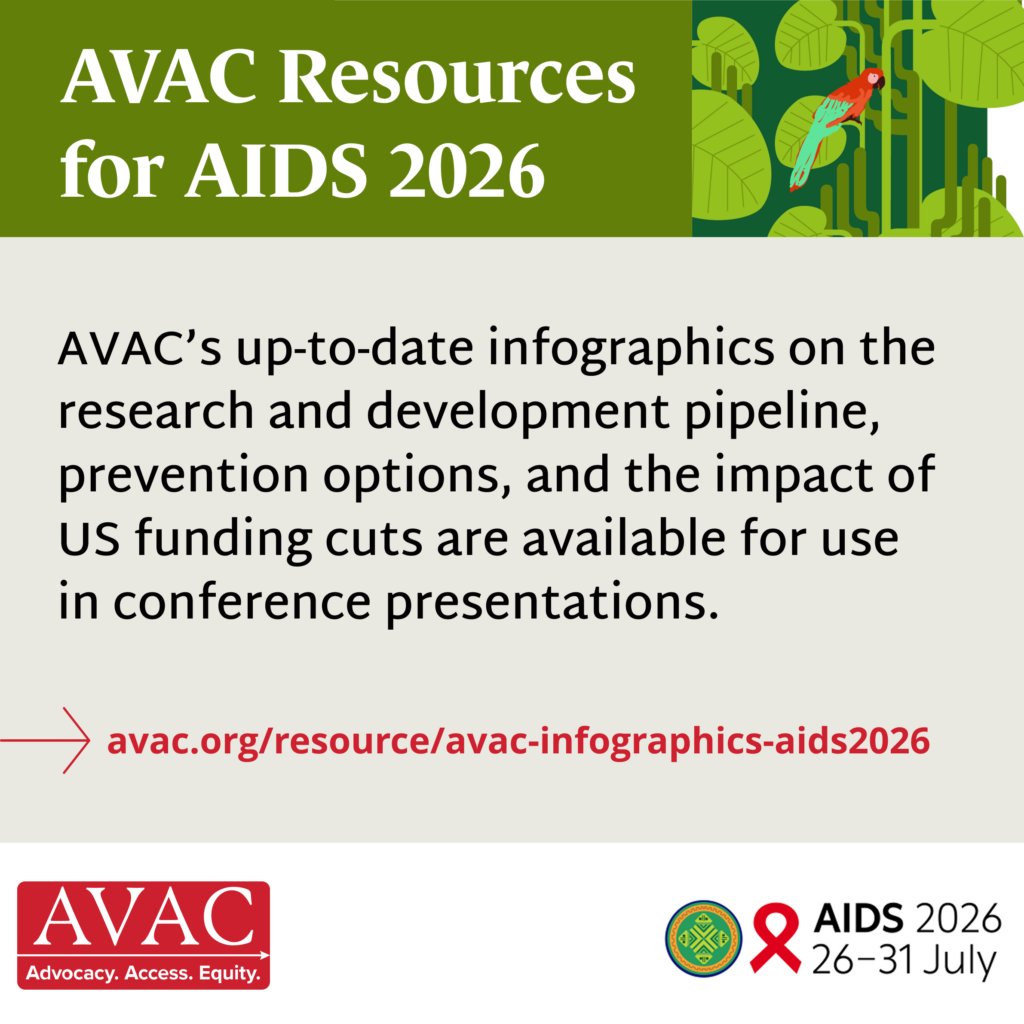
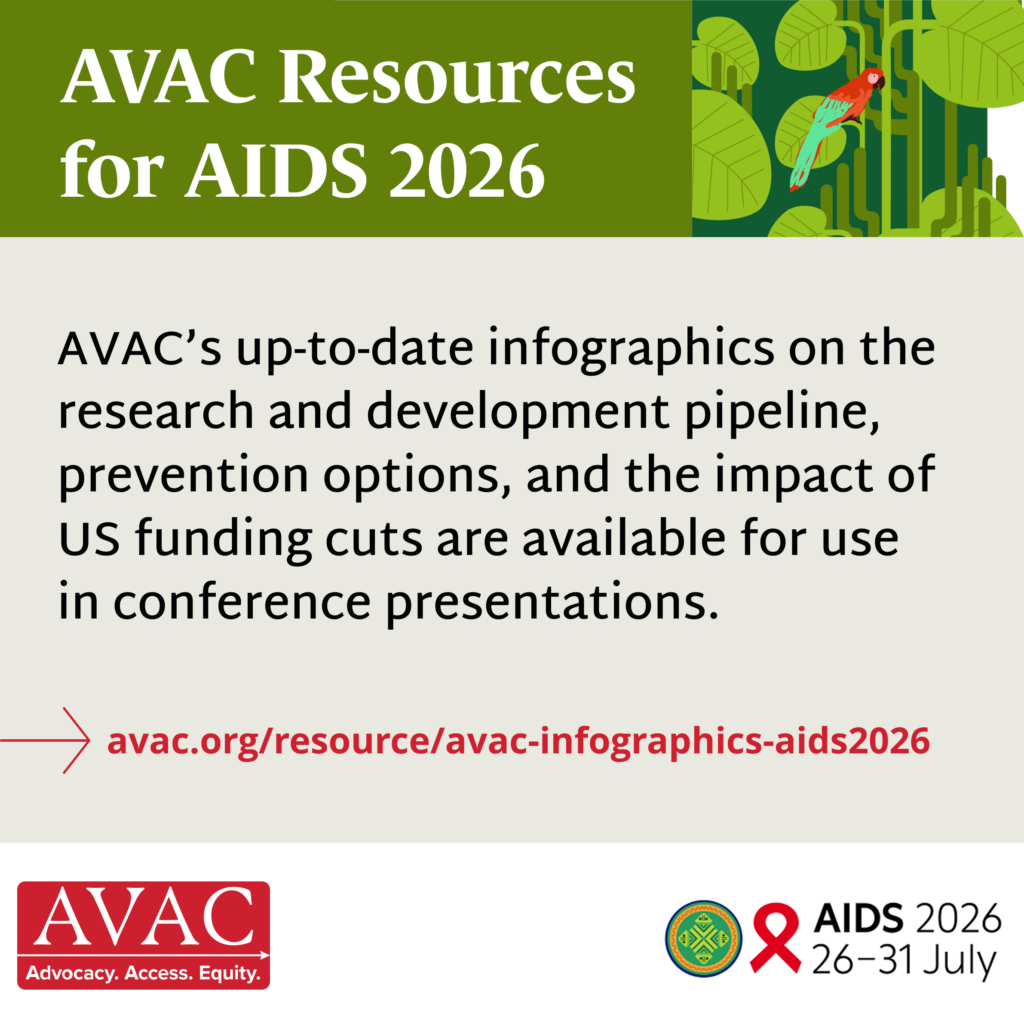
Access AVAC’s latest infographics on the research and development pipeline, prevention options, and the impact of US funding cuts.

Access the Graphics

Best of AVAC’s Advocacy Guides

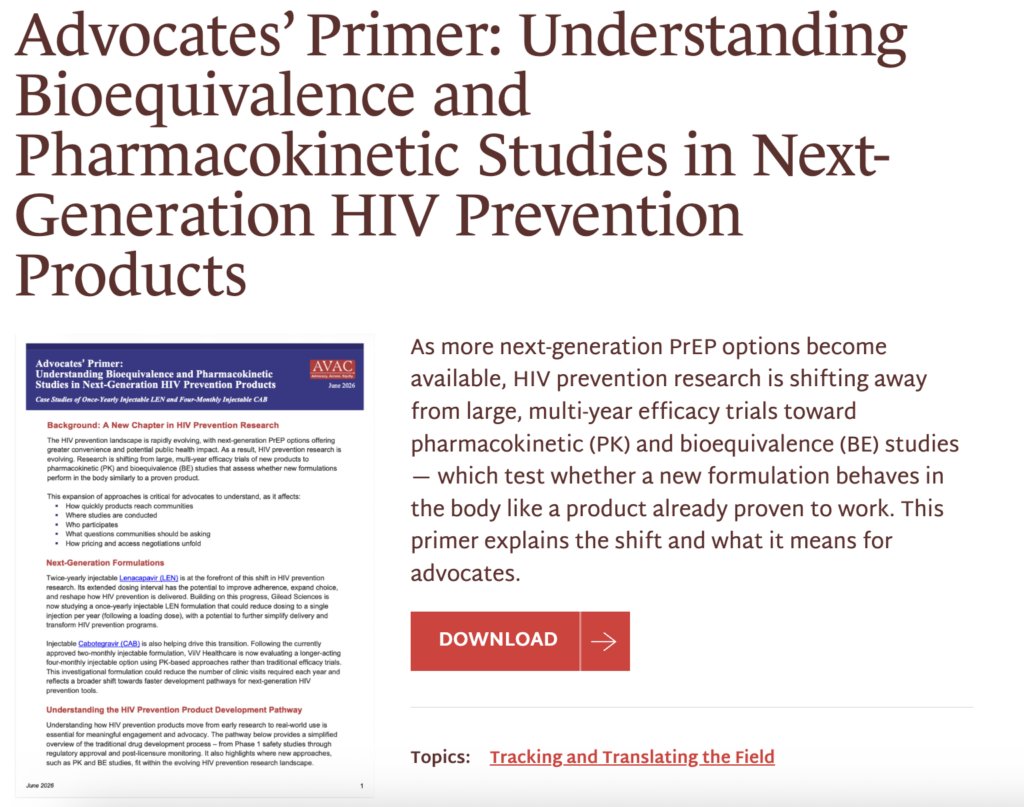
The AIDS 2026 conference is fast approaching. To help advocates stay informed and engaged, AVAC has curated a collection of its Advocates’ Guides covering the science, policy, implementation and advocacy conversations shaping the future of the HIV/AIDS response. Developed with partners across the field, these guides help translate complex science and policy to help inform advocacy before, during and after the conference.

For those presenting at AIDS 2026, please check out AVAC’s slide deck containing the latest infographics on the research & development pipelines, the delivery of new prevention options and the impact of US funding cuts on foreign assistance and on research and science. We will be continuously updating it, so be sure to check back for updates as the conference approaches.

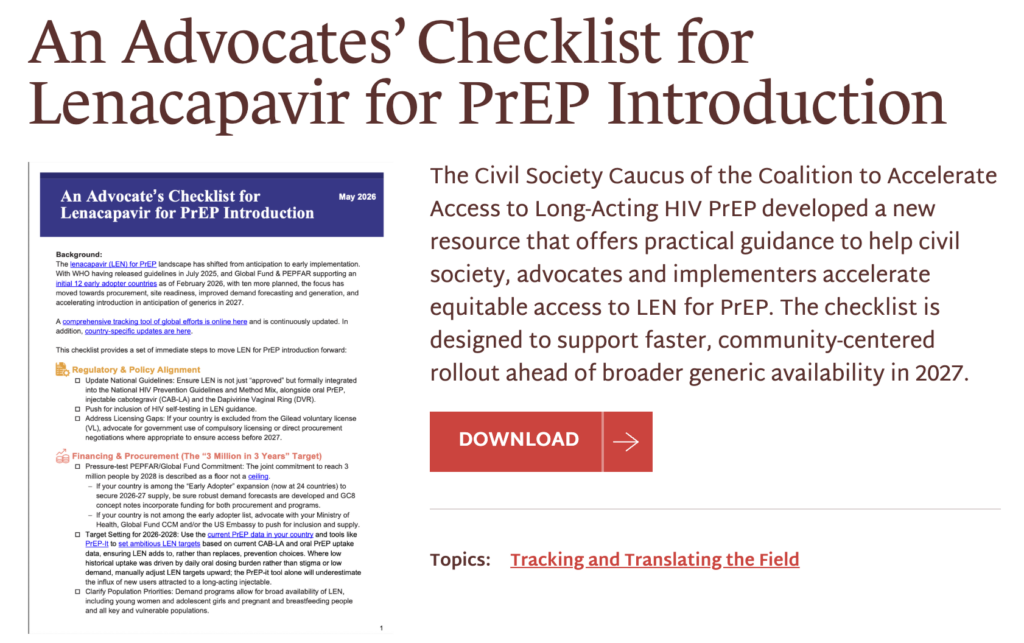
The introduction of injectable lenacapavir for HIV PrEP (LEN) is underway–in some places at least. To ensure communities remain at the center of LEN rollout, this new Advocates’ Checklist for Lenacapavir for PrEP Introduction is an immediate, actionable blueprint. And read more in this blog by the co-chairs of the Civil Society Caucus of the Coalition to Accelerate Access to Long-Acting PrEP and AVAC staff.


Planning For MK-8527

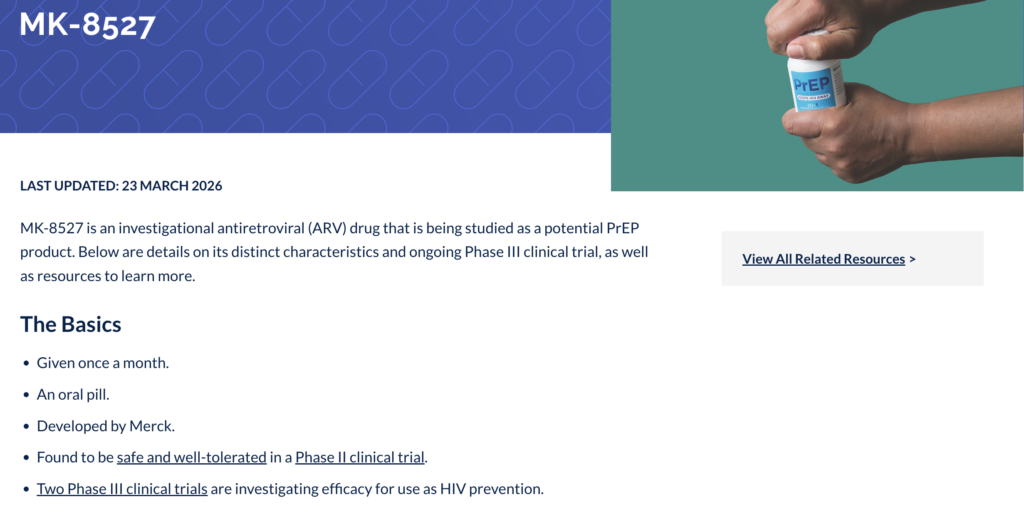
Expanding prevention choice means investing in a diverse pipeline of HIV prevention options. MK-8527 is an investigational antiretroviral (ARV) once-monthly oral PrEP pill that is currently in Phase III clinical trials. If proven safe and effective, it could offer another important PrEP option. This resource provides advocates with an overview of the MK-8527, the science behind it and the latest on its clinical development.  


Podcast: The Future of PrEP

AVAC’s Executive Director Mitchell Warren joined ITPC’s Make Medicines Affordable podcast to discuss the future of PrEP. While Lenacapavir is a transformative option for HIV prevention, Warren shares what it will take to ensure it reaches the people who need it most.


Download the Latest Infographics from AVAC


Presenting at AIDS 2026?

These graphics are updated regularly, so be sure to check back.  


Additional Resources

  • People’s Research Agenda: This people-centered framework guides equitable and accelerated HIV prevention research, development and product introduction. It tracks scientific progress, assesses whether investments align with community-defined priorities, and identifies critical gaps in the prevention pipeline needed to meet the diverse needs and preferences of all populations 
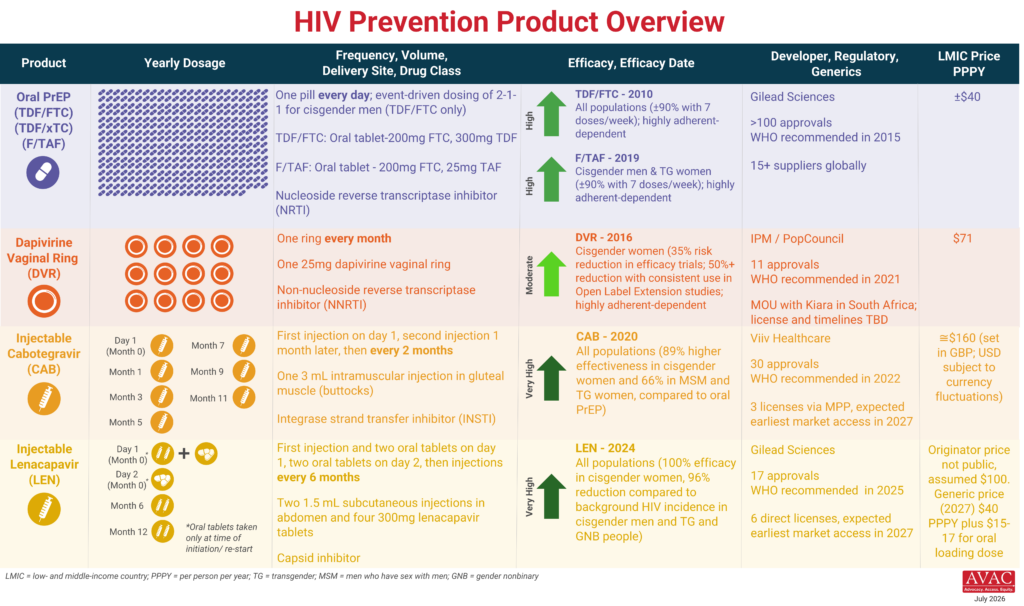
  • HIV Prevention Product Overview: The graphic provides an overview of PrEP products currently available and in late-stage clinical trials. 
  • Lenacapavir Resource Hub: Your one-stop resource for all things lenacapavir, this page brings together the latest news, advocacy resources, scientific updates, implementation tools and infographics to help advocates stay informed and ensure LEN rolls out with speed, scale and equity. 

P.S. On Tuesday, July 14 AVAC and partners will share the impact stories of ten years of the Coalition to Accelerate and Support Prevention Research (CASPR). We hope you’ll join us

Global Health Watch: Global Governance Shifts, ACIP Charter + Vaccine Policy, PEPFAR Transition

Issue 75

As many in the United States pause to commemorate Independence Day – and, hopefully, re-commit to the fundamental principles of democracy – the global health community continues to navigate the far-reaching effects of US policy decisions. Institutions are changing, governance is being redefined and the systems that have underpinned the global HIV response are being reshaped. This issue covers developments in global health governance, the continued restructuring of US vaccine policy and growing concerns that PEPFAR’s transition is outpacing the systems needed to sustain it.

Global Governance Shifts

The last two weeks, and the week ahead, mark key moments for global health governance with implications for the HIV response. Last week, for the first time in 25 years, UN Member States adopted a new Political Declaration on HIV/AIDS with a vote (with the US voting no), as opposed to the historic consensus of all past declarations. This week, both the UNAIDS Programme Coordinating Board (PCB) and the Unitaid Executive Board met against the backdrop of financial strain and uncertainty. Conversations and debates about their future roles continued, including questions about UNAIDS’ future structure within the UN system. Next week, the Global Fund Board will meet as it prepares to select its next Executive Director who is expected to shape the Fund’s strategic direction during one of the most challenging periods in its history.
IMPLICATIONS: In all these meetings, there is a reassessment of each entity and a reenvisioning of how global health organizations will coordinate, finance and sustain the HIV response in an era of constrained resources and shifting geopolitical priorities. As countries work toward the 2030 goal of ending AIDS as a public health threat, the decisions made by these governing bodies in the coming weeks will help determine whether and how the HIV response maintains the leadership, financing, accountability, collaboration and civil society engagement needed to carry the response forward.

READ:

US HHS Rewrites ACIP Charter, Further Reshaping US Vaccine Policy

The US Department of Health and Human Services (HHS) issued a new charter for the CDC’s Advisory Committee on Immunization Practices (ACIP), broadening the Committee’s mandate and reducing the qualifications required for membership. Previously, vaccine expertise was a requirement, but the revised charter states that members should collectively represent a “balanced range of scientific, clinical, and public health expertise”. The new charter also expands the Committee’s focus beyond reviewing vaccines to considering alternative approaches to disease prevention.

IMPLICATIONS: This is the latest step in the restructuring of ACIP. By broadening the Committee’s remit and redefining membership qualifications, vaccine policymaking is further politicized and vaccine confidence continues to erode. This creates further instability and uncertainty for vaccine manufacturers, healthcare providers and immunization programs worldwide.

READ:

PEPFAR In Transition

Two commentaries this week recognize the breaking point to which PEPFAR is nearing. The Health Security Policy Academy argues that despite the temporary extensions, which have kept and continue to keep parts of PEPFAR operating, the US Department of State has not yet built a viable implementation system to keep HIV treatment, supply chains, laboratories and community programs working. At the same time, Emily Bass, Yvette Raphael, Nono Eland and colleagues at Physicians for Human Rights argue in Think Global Health that the planned phase-out of all US PEPFAR support for South Africa by early 2027 is not a routine transition to country ownership, and caution that this accelerated withdrawal risks severed disruption to HIV prevention, surveillance, research and community programs that have long depended on US partnership.

IMPLICATIONS: Without a clear implementation strategy and carefully managed country transitions, these abrupt changes to PEPFAR threaten essential HIV services. A more deliberate, evidence-based approach that preserves critical infrastructure while supporting long-term country ownership is needed. “The dismantling of USAID showed what happens when the Administration destroys an operating system before a replacement exists. That chaos was not an accident, but it was sudden,” writes the Health Security Policy Academy. It remains even less clear what happens next with leadership transitions at the State Department: Jeremy Lewin who has led the State Department’s foreign aid bureau for the last year is heading to the National Security Council, and is being replaced by Andrew Veprek, who has pushed immigration and refugee restrictions at the State Department – and confirmation hearings are yet to be scheduled for Johnny Figueroa as the ambassador-at-large for global health security and diplomacy and PEPFAR.

READ:


What We’re Reading