African Leadership and Global Health Advocacy

A Journey of growth, change, sustainability and success for the COMPASS Coalition

By Jeanne Baron, AVAC Senior Producer & Editor

The Coalition to build Momentum, Power, Activism, Strategy & Solidarity in Africa (COMPASS) has finalized a transformative and power-sharing approach to the governance and leadership of South-North coalitions. This new approach represents innovation that harnesses the power of the coalition. It is redefining and strengthening South-North relationships, and it offers a model for a field seeking to decolonize global health. The effort was built on a founding principle of power-sharing, and a commitment that COMPASS would ultimately be led by an African-based organization. Pursuing this vision has involved a multi-year, member-led process for creating a participatory governance framework. And it has resulted in reimagining COMPASS leadership, with African organizations in control.  

This case study explores the COMPASS approach that made these changes possible, the growing pains that informed the process for instituting change, and what others can learn from this experience.

Tune in for a podcast from AVAC!

Hear from COMPASS partners on the pioneering approach to power sharing, and from Dr. Madhukar Pai on the global context.

Learn More

What is COMPASS?

COMPASS was founded in 2017 as a data and evidence-based South-North civil society coalition. The coalition from its beginnings has been dedicated to advancing strategic advocacy campaigns to influence policies, programs and funding for the HIV response in East and Southern Africa, with a particular focus in Malawi, Tanzania, and Zimbabwe, and at the global level. In December 2023, Pangaea Zimbabwe signed a new two-year, $4.9 million grant agreement with the Bill & Melinda Gates Foundation as the new secretariat of COMPASS Africa, a role previously served by AVAC. In recent years, AVAC was part of a coalition-wide effort to develop a clear transition plan for COMPASS to be led by African civil society organizations.

Since 2017, with a grant from the Bill & Melinda Gates Foundation, 29 COMPASS partner organizations have launched dozens of campaigns and logged 31 significant advocacy wins, with many multi-year campaigns still in progress. To name just a few of the wins from COMPASS campaigns:

  • Tanzania has changed the legal age of consent to access HIV services from age 18 to 15 and uptake has since seen a marked increase in testing, and increased awareness of HIV status among people 15 and older from approximately 60% to 82%.
  • Zimbabwe and Tanzania piloted community-led monitoring (CLM), which funds communities to track data on HIV services and report back on progress toward country targets, and whether services are meeting community needs. CLM was so successful, PEPFAR expanded the program in Zimbabwe and rolled it out globally.
  • Malawi’s once marginalized civil society now serves on technical working groups, influences the allocation of PEPFAR dollars and has become an essential partner to the national government in planning for HIV policies and programs. All three countries have secured funds for key population programs.

In the initial three years, results like these were delivered from a coalition with centralized leadership. Africa-based partners identified priorities, activated strategic relationships, navigated in-country challenges and executed co-created campaigns. US-based COMPASS partner organizations shared expertise on data and other technical assistance and leveraged access to global-level decision makers, with AVAC holding the primary grant and coordinating the coalition Secretariat. Coalition guidelines, partnership agreements and a robust process for co-developing strategy kept the coalition on track, but with success came challenges. 

Partners wanted more opportunities to share lessons learned from each other’s campaigns and to lend capacity to one another. Roles and responsibilities needed more clarity. Partners sought broader participation and transparency in coalition decision-making, in selecting new members, and having a more formalized governance. Partners also sought to improve the existing channels for sharing feedback and resolving conflicts transparently and equitably. 

Coalition members were ready to see power structures rearranged, redistributed, formalized and documented.

Ulanda Mtamba, a COMPASS member based in Malawi, put it this way: “For us partners in the South, it could feel like someone else is driving the vehicle from afar, while all the work is happening here.” 

These sentiments reinforced the founding plan to shift management of the primary grant to an African-based partner. Just as important, these considerations informed an effort to re-shape the coalition and create structures to support an African partner-led, multi-country, multi-continent coalition. 

Coalition Governance: Transparency, Participation and Trust

To create the needed structures and support for greater transparency and power-sharing among all partners in the coalition, COMPASS spent one year developing a governance manual that increases accountability and consistency, formulates the coalition structure, clarifies roles and responsibilities, and establishes a process for determining who holds the Secretariat. 

Thirty-six volunteers from across the COMPASS Africa responded to an open call to develop a comprehensive, participatory governance framework. The volunteers selected a two-chair leadership team and a steering committee to run the development process. 

“Partners were given a chance to select the leaders of the process. It was important that the process was community-led and participatory, so coalition members truly felt ownership of COMPASS. That itself was something very important,” said Francis Luwole, COMPASS country coordinator in Tanzania. 

As four working groups tackled issues such as sub-granting protocols, new membership and definition of roles and responsibilities, the steering committee focused on overall goals to be reflected in the governance manual: prioritize transparency; ensure accountability to COMPASS values; maximize opportunities for members to participate in decision-making; and ensure the country coalitions had ample opportunity to review, provide feedback and validate the manual. Through regular in-person and remote meetings, anonymous surveys and country visits, the co-chairs fostered a shared ownership of the coalition’s structure, purpose and future.

“Before now… there were no guidelines to answer questions such as ‘who we are, why we’re here, or who are we doing this for—there was no clarity in some of the roles and responsibilities of members in the coalition, especially for new members. The expectation now is for the governance manual to provide an outline of what the structure of the coalition is and the roles and responsibilities of all coalition members,” said Ulanda Mtamba.

The case study found that the participatory nature of the process ensured that diversity and inclusivity were at the forefront of the new COMPASS governance structure by allowing the opportunity for as many voices as possible to have their opinions and inputs considered. It also fostered a shared sense of ownership that empowered many coalition members to invest and believe in the change to create an African-led coalition. 

The 63-page governance manual now covers, among other things: member obligations and benefits; a protocol for conflict resolution; a selection process for new members; guidelines for meetings; sub-grant management; an M&E framework; a process for ending coalition membership and terminating the secretariat; and defined principles and core values. It also establishes a governance committee to serve as a decision-making and strategy-setting body with representatives from every COMPASS country, global partners, and key constituencies such as adolescent girls and young women, key populations and people living with HIV. The governance committee will be the primary leadership structure of COMPASS going forward, with coordination support from Pangaea Zimbabwe as the coalition secretariat.

“It speaks to inclusion. It speaks to equity. Our core values and principles have been reflected in the way we have structured the coalition. I’m very optimistic that, once we fully operationalize the governance manual, we are going to come up with something really beautiful, something that other partners or other coalitions may want to adapt,” said Maureen Luba, Malawi-based COMPASS member.

For more on the colonial legacy of global health, The Choice Agenda held a discussion examining the historical legacies and power dynamics that continue shaping global health. Watch the recording.

Shifting the Secretariat

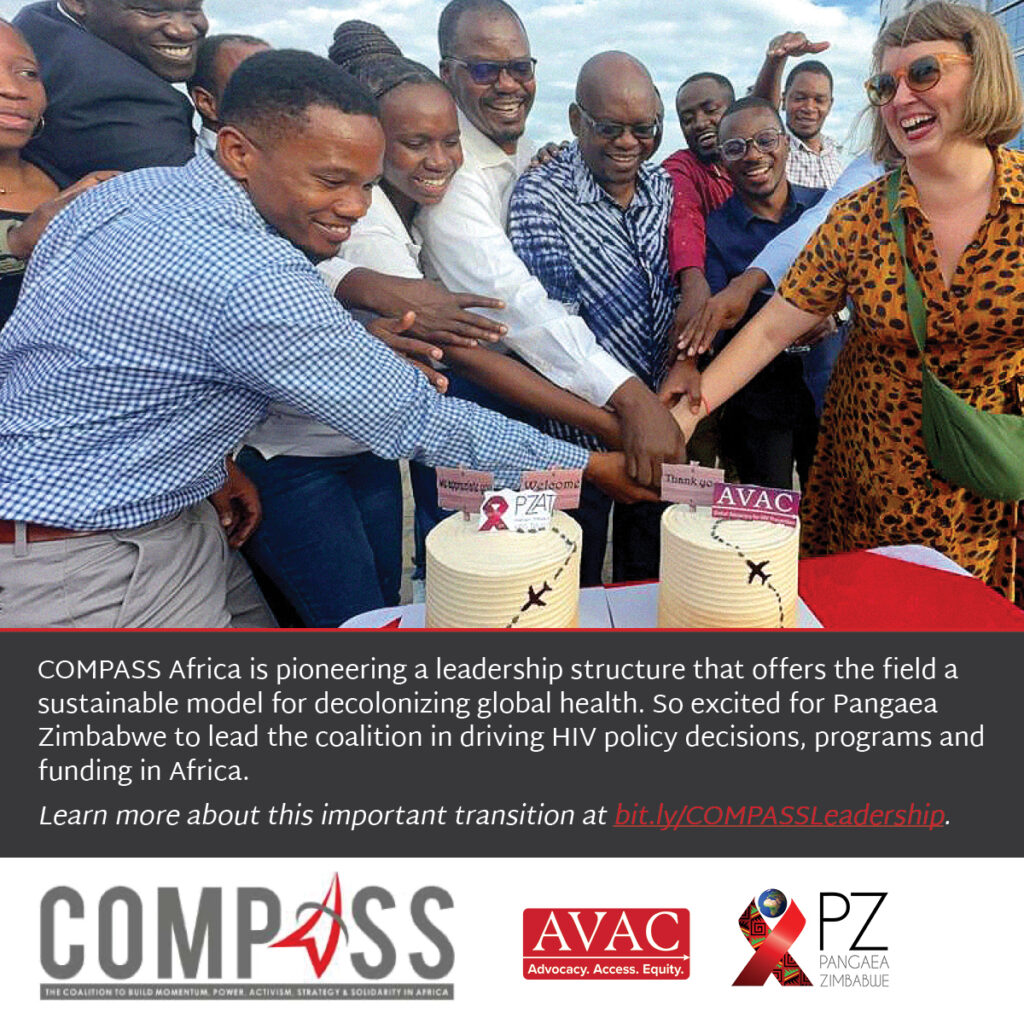
As of December 2023, coalition member Pangaea Zimbabwe became the primary grant-holder and COMPASS Secretariat. In this role, Pangaea Zimbabwe will make sub-grants, convene the coalition, and be the primary point of contact for the coalition with its donors, support campaign tracking & evaluation, and administer the process that selects coalition leadership and new members. Dedicated teams comprised of in-country partners with expertise on data analysis and monitoring & evaluation will provide technical assistance across the coalition. AVAC is now a sub-grantee partner of COMPASS, continuing to coordinate the team that provides strategic and technical support to partner campaigns, provide status updates and background on the R&D pipeline for HIV prevention, support COMPASS partners in their engagement with PEPFAR and the Global Fund, and link the coalition to global platforms and advocacy initiatives. 

“From our earliest conception, we outlined a vision of collective power and shared decision-making that has been central to COMPASS’s success. For that success to be sustainable, AVAC and the COMPASS coalition at large pursued a future in which governance would be centered among African-based partners,” said Mitchell Warren. 

“Since 2017, we’ve been breaking new ground under COMPASS. We’ve expanded our networks and brought together the superpowers of seasoned advocates with diverse strengths to develop and share technical expertise and winning strategies,” said Imelda Mahaka, Executive Director of Pangaea Zimbabwe. “COMPASS has built a strong foundation based on collaboration, knowledge-exchange and trust that can and will accelerate innovative advocacy under African leadership.” 
Putting in the Time: Sustaining the partnerships 

The development of the manual and Pangaea Zimbabwe’s assumption of the Secretariat involved a phased, transparent multi-year transition plan to guide the handover of the secretariat and sub-grants management. AVAC and Pangaea Zimbabwe held weekly calls on the process, COMPASS partners contributed feedback to the plan, and the entire coalition was able to track milestones defined for the transition process.    

“Partners stressed to us repeatedly the importance of not rushing the process. All coalition partners needed time and opportunity to meaningfully participate in designing the new governance framework. Integrating this input into the governance manual was more important than finding quick solutions. We found the same was true in the process of transitioning the secretariat. Pangaea Zimbabwe wanted an appropriate on-ramp to get comfortable in their new role, with plenty of support and other partners also wanted to know how AVAC was supporting the relationship between Pangaea Zimbabwe and the project’s donor. We all invested time in building trust and confidence. For those in power who are now looking for a sustainable way to shift that power to others, my message to you is that you can’t just throw the bag and run,” said Justine MacWilliam, AVAC’s senior program manager. 

“This process has showed how to share power and take away the dominance of power. The desire for social justice has underpinned these values, the desire to equalize power, and the desire to contribute to something that is a legacy,” said David Kamkwamba of the Network of Journalists living with HIV (JONEHA) in Malawi. 

As COMPASS campaigns continue apace with a freshly inked grant from the Gates Foundation, coalition members, and Pangaea Zimbabwe are referencing the manual, testing its strength, making changes and sharing their insights. It is bold, careful and imperative work to build and use structures for collective power and effective action. 

“AVAC and COMPASS have set new benchmarks in effective civil society mobilization, advocacy and collaboration between global North and South. AVAC’s commitment to empowering African leadership within the coalition reflects a profound dedication to ensuring sustainability and maximizing impact. Coalition members are beginning a new chapter, founded on their inspired, tireless commitment to deepening the impact of COMPASS under African leadership,” said Uganda-based COMPASS member, Kenneth Mwehonge.

This is giving hope, especially to global south partners, especially in these times when we are talking about decolonizing global health. It’s timely and strategic. It’s proving to each other our readiness to say ‘This is possible. We can have leadership in the Global South where the work is happening, where the epidemic is being fought,” said Luba.  

The COMPASS Coalition understands that doing business as usual will not advance HIV prevention or global health equity. And this new power-sharing model cannot turn the tide all by itself. But COMPASS partners hope fellow travelers who see the necessity of decolonizing global health will be interested in this model and will follow its progress. The work will certainly change and evolve based on what is learned in the months and years ahead, but there’s no going back.
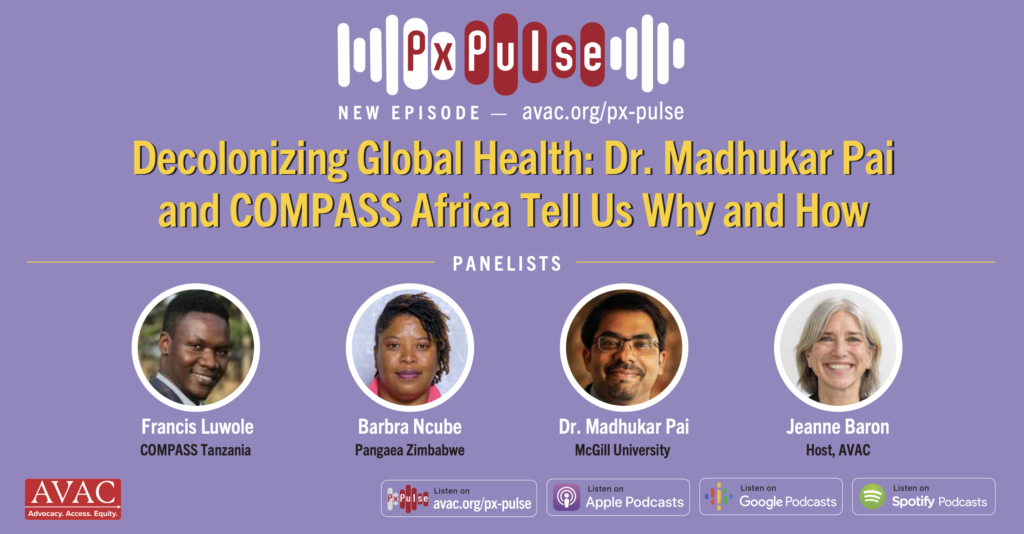

New Podcast Episode: Decolonizing Global Health

Dear Advocate,  

Investing in the long-term success of African leadership is essential to breaking cycles that perpetuate inequity and that stall progress in the HIV response. In our newest episode of PxPulse, we explore why and how the decisions that shape global health must be made by those facing the greatest risks. As the world evaluates the pandemic response and debates on decolonizing global health gain momentum, equity in global health has never been more urgent.   

For more than seven years, COMPASS Africa, a civil society coalition of 29 organizations working in three countries as well as regionally and globally, has used data-driven advocacy to improve the HIV response with high-impact campaigns. In January, the coalition underwent a major transition, with Pangaea Zimbabwe assuming the role of secretariat (previously held by AVAC), marking a historic milestone in the development of innovative models for power-sharing in coalition and an important step toward decolonizing global health. These changes in COMPASS come as other efforts, such as negotiations on the Pandemic Accord, are struggling to advance, uphold or safeguard equity. 

Now is the time to test new models. In Decolonizing Global Health: Dr. Madhukar Pai and COMPASS Africa Tell Us Why and How, we explore what it takes to invest in equity and power sharing.

New Episode of PxPulse!

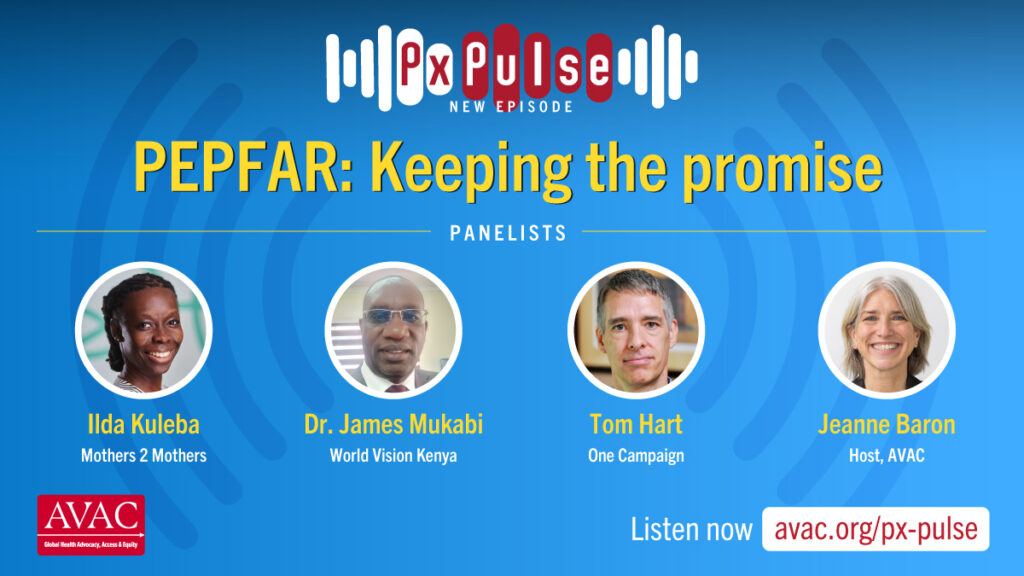
This episode of PxPulse features global health leader, Dr. Madhukar Pai, along with two leaders of COMPASS AfricaFrancis Luwole and Barbra Ncube, talking about new models of power-sharing.

Listen now!

Tune in to Hear

Join the Conversation

To continue the conversation, register for the March 26 Choice Agenda webinar, Decolonizing Global Public Health: Exploring the how, from now, til as long as it takes.  

Celebrating Rep. Barbara Lee and the Black Women Who Helped Shape the AIDS Movement

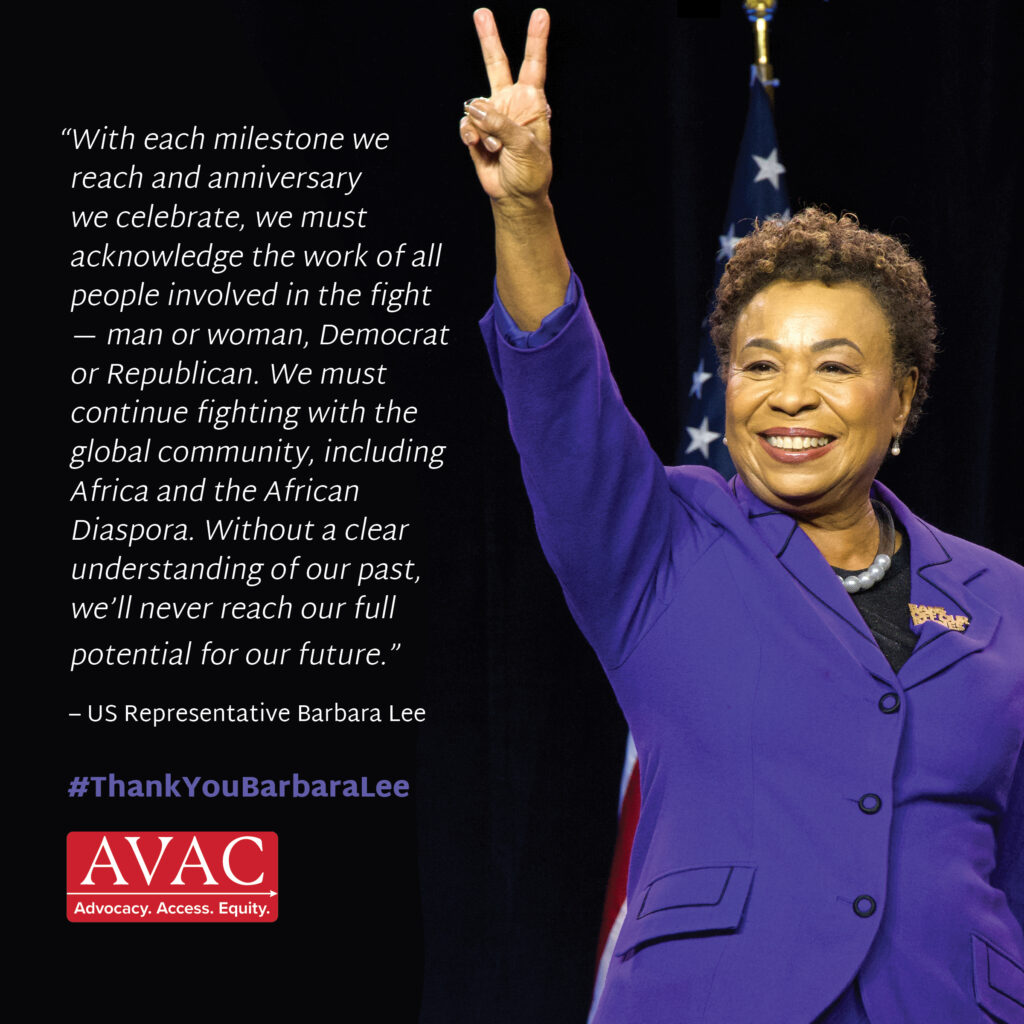
Following Black History Month and during Women’s History Month, it is important to honor Black women who have championed efforts in ending the epidemic and have led the ongoing fight in ensuring healthcare equity and justice for all. Someone who has worn multiple hats both as an advocate and as a US policymaker is no other than Representative Barbara Lee.  

Throughout Rep. Lee’s close to three decades-long tenure as a member of the US House of Representatives, She has single-handedly created material change for people living with HIV and those at risk of infection, marginalization and stigmatization, both in the US and around the world. As AVAC’s executive director Mitchell Warren says, “when the definitive history of this pandemic is finally written, there is no greater shero in our collective story than Barbara Lee. The AIDS response wouldn’t be where it is today without her.” 

From co-authoring the Global AIDS and Tuberculosis Relief Act of 2000 and establishing the framework for the Global Fund to Fight AIDS, Tuberculosis and Malaria, to her instrumental work in drafting and passage of the President’s Emergency Plan for AIDS Relief (PEPFAR), to introducing legislation that would eventually lift the decades-old discriminatory HIV travel ban to the US, to her relentless efforts advocating to reform HIV/AIDS criminalization laws in the US, most recently with the Repeal Existing Policies that Encourage and Allow Legal (REPEAL) HIV Discrimination Act, Rep. Lee has walked the walk. She put grassroots-led efforts at the center of US and global policy in relation to those directly impacted by the HIV/AIDS epidemic. 

Thank you, Rep. Barbara Lee, for the legacy you have built in forging an AIDS-free generation and for centering impacted communities throughout your work. We look forward to your efforts as co-chair and co-founder of the bipartisan and bicameral Congressional HIV/AIDS Caucus and a member of the full appropriations committee in continuing to support HIV/AIDS prevention, education, research and access to treatment while combatting stigma.   

In addition to celebrating the tireless advocacy of Rep. Barbara Lee during Women’s History Month, it’s important to name the Black women who have changed the course of the AIDS epidemic including, but of course not limited to Raniyah CopelandDázon Dixon DialloLeisha McKinley-BeachYvette Raphael, and those we honor in our everyday actions, Hydeia BroadbentKatrina HaslipDawn Smith, and the recently passed, Joan Gibbs

HIV Cure Updates and Opportunities

Last week’s Conference on Retroviruses and Opportunistic Infections (CROI) in Denver, Colorado, was full of new research, provocative discussion and debate on a wide range of issues from longer-acting injectable PrEP; the dapvirine vaginal ring (DVR) in pregnancy; doxycycline as post-exposure prophylaxis (DoxyPEP) to prevent sexually transmitted infections (STIs); and so much more. Check out our daily summaries of highlights from CROI and recordings and resources from the daily Community Breakfast Club sessions

It was also the setting for important updates on the HIV reservoir lending to new insights into potential HIV cure strategies. Progress in HIV cure research, as part of a pipeline of biomedical tools to help end the epidemic, must be supported and guided by an advocacy agenda that puts communities first. Read on for cure highlights from CROI, new opportunities for cure advocates, and an upcoming webinar on pediatric cure research with Deborah Persaud and Gabriela Cromhout.

Cure Highlights from CROI – Q&A with AVAC’s Jessica Salzwedel

AVAC’s Jessica Salzwedel who leads our advocacy for HIV cure research and serves as the community engagement coordinator for Research Enterprise to Advance a Cure for HIV (REACH), Immunotherapy for Cure (I4C), and Pediatric Adolescent Virus Elimination (PAVE) shares her highlights from the research presented at CROI and insights into what it means for advocacy in this Q&A.

Read the Q&A

“Four preclinical and clinical results stood out because they advanced how researchers might tailor cure strategies to optimize the impact for people with HIV. We heard more about the potential role of sex hormones in directing the immune system in a study looking at fetus acquisition of HIV. Another study showed that women may be better candidates for the so-called “block and lock” strategy. We also heard results from the IMPAACT P1115 trial, which showed that early HIV treatment can lead to control of the virus in children. And a nonhuman primate study of adeno-associated virus (AAV), which delivered broadly neutralizing antibodies (bNAbs) may offer a pathway to a scalable, durable control option for pediatric cure. In basic science new data suggests that autologous neutralizing antibodies in some people delay rebound. And finally, we heard about rare T-cells that seem to resist killing, which could be important in developing strategies that could lead to durable control and eradication of HIV. ” Read the Q&A to see what it all means.  

Join Us for the 2024 Cure Academy

The Advocacy-for-Cure Academy, organized in partnership with the International AIDS Society, awards fellowships to advocates or peer educators to take part in workshops on HIV cure advocacy with international experts. The academy develops fellows’ cure research literacy and reinforces their advocacy and engagement skills in line with recommendations from Research priorities for an HIV cure: International AIDS Society Global Scientific Strategy 2021Applications are now open. Deadline Monday, 25 March 2024. The next Cure Academy runs June 8 – 10, 2024 in eastern Africa. 

And check out what five alumni from the program are doing with their fellowships intended to create solutions that advance HIV cure research in their local context. 

Webinar

Updates on Pediatric HIV Cure Research From CROI

Thursday, March 2, 10:00-11:30 am EST

Researchers Deborah Persaud and Gabriele Cromhout join AVAC’s Jessica Salzwedel to discuss the latest from CROI on pediatric cure.

REGISTER NOW

Resources

Avac Event

MOSAIC Global PrEP Learning Network – Building a Brand for PrEP: Positioning PrEP in the Hearts and Minds of Young People


With choice of PrEP products on the horizon – including oral PrEP, the PrEP ring, and injectable cabotegravir for PrEP (CAB PrEP) – PrEP marketing and demand generation must evolve with the availability of new PrEP products. Young people, in particular, need PrEP demand generation campaigns tailored to their needs and aspirations. In this webinar, we will hear from teams working to change the landscape of PrEP marketing by applying private sector approaches to brand the PrEP category. We will also hear how they are developing fresh, dynamic, and evidence-informed campaigns to increase PrEP awareness and encourage PrEP use among young people in Africa.

This webinar is being hosted by PEPFAR, USAID, and MOSAIC.

Avac Event

Global Key Populations HIV Prevention Pre-Conference

The Global Key Populations HIV Prevention Pre-Conference is a groundbreaking pre-conference, aimed at revolutionizing HIV prevention for key populations and LGBTQI communities, is set to take place in Munich, Germany, on July 20th, 2024. Organized by the Global Black Gay Men Connect (GBGMC) in collaboration with the Key Population Advisory Group, AVAC, Coalition PLUS, and Fierté Afrique Francophone this event is a critical precursor to the 25th International AIDS Conference.

Avac Event

Decolonizing Global Public Health: Exploring the how, from now til as long as it takes

An interactive and thought-provoking discussion, this webinar critically examined a trend of historical legacies and power dynamics which if not checked, continue to shape global public health.

Participants engaged in deep reflection and dialogue to understand how colonialism, imperialism, and other systems of oppression have influenced the development and implementation of public health policies, practices, and research methodologies. The webinar further explored and contextualized strategies and approaches for decolonizing public health to promote equity and justice.

Speakers:

  • Preethi John, University College London
  • Bridget Malewezi, Mothers2mothers Malawi
  • Mareli Claassens, University of Namibia
  • Julieta Kavetuna, Member of Parliament, Namibia

Moderator:

  • Alice M. Kayongo – O’Neill Institute for National and Global Health Law

Recording / Slides / Audio Transcript

What You Should Know About the FAPP, GAPP and PEPFAR Reauthorization

By Kenyon Farrow

Engaging the US government is vital to advocacy for HIV prevention, as one of the world’s largest contributors to implementation and research and development. The reach and scale of US funded global health programs have profound impact on the lives and health of people in the US and around the world. Two coalitions, founded by advocates, make it their central mission to inform and influence the US federal government to advance funding and policies to end the HIV epidemic.  

In 2024, their work will be as important as at any time in the history of HIV advocacy; as funding for US programs is at stake and advocacy continues for the reauthorization of PEPFAR, one of the greatest US foreign policy and global development achievements in history.

AVAC’s John Meade was just elected co-chair of the Federal AIDS Policy Partnership (FAPP), a national coalition of more than 120+ local, regional, and national organizations advocating for federal funding, legislation and policy to end the HIV epidemic in the United States. John and co-chairs, Mike Weir of NASTAD and Kathie Hiers of AIDS Alabama,  will support the work of seven affiliated working groups, including the AIDS Budget and Appropriation Coalition and the Research Working Group, to produce analysis, build relationships with federal entities, and champion policies and funding that are essential to making progress.  

And AVAC’s Suraj Madoori co-chairs the Global AIDS Policy Partnership(GAPP), a 70 member coalition that leads advocacy for continued robust funding, expansion and improvement of US global HIV/AIDS programming through PEPFAR and the Global Fund. With co-chairs Katie Lapides Coester of EGPAF and Shannon Kellman, formerly of Friends of the Global Fight, now at UNAIDS, this coalition — comprised of civil society and faith-based organizations, funders, professional membership organizations and organizations that implement programs — will continue working every channel to spotlight success, combat misinformation and seize opportunities to secure a new five-year reauthorization of PEPFAR. See AVAC’s blog here.  

Since its creation in 2003 and through previous 5-year reauthorizations, PEPFAR has received near universal, bipartisan support in Congress. This past year, partisan lobbyists and their congressional allies derailed easy passage of its next 5-year reauthorization. In 2024, the GAPP will be mobilizing against efforts to politicize this singularly successful program, and will be working for renewed bipartisan support through the final resolution of federal budget negotiations.  

The efforts of the GAPP and the FAPP will remain essential to ensure sustained funding for efforts to end the epidemic, to save overall HIV funding and advance a national PrEP program in the US, and to win the reauthorization of PEPFAR. Be sure to watch this space for updates. 

Webinars to Look Out for in February!

2024 is off and running and a slew of webinars are on the calendar. This selection of topics is both broad and deep, providing updates on the pipeline from cure to vaccines, insights on critical advocacy, a conversation with the new director of NIAID, and opportunities for you to engage. Scroll down for what’s coming up and recordings of webinars from December and January that you may have missed.  

Coming up!

AVAC in Conversation with NIAID’s Jeanne Marrazzo

February 27, 11:30 am – 12:00 pm EST 

Join AVAC in conversation with the new Director of NIAID, Jeanne Marrazzo. Register here.

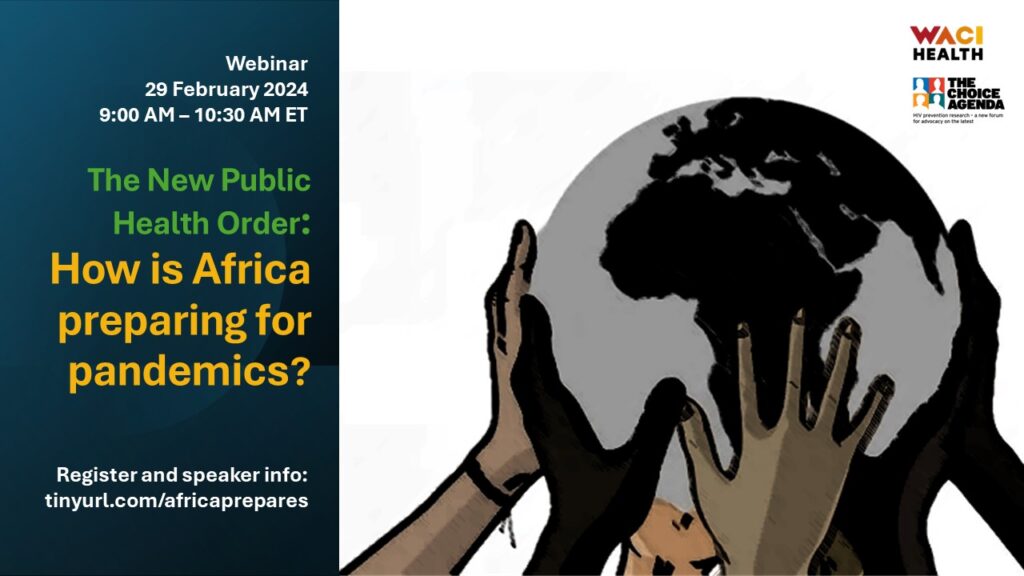
The New Public Health Order: How is Africa preparing for pandemics?

February 29, 9:00-10:30 am EST 

WACI Health and The Choice Agenda invite you to join us for a webinar introducing key initiatives of the Africa CDC and the African Union. It will illuminate roles for civil society and community engagement. Register here.

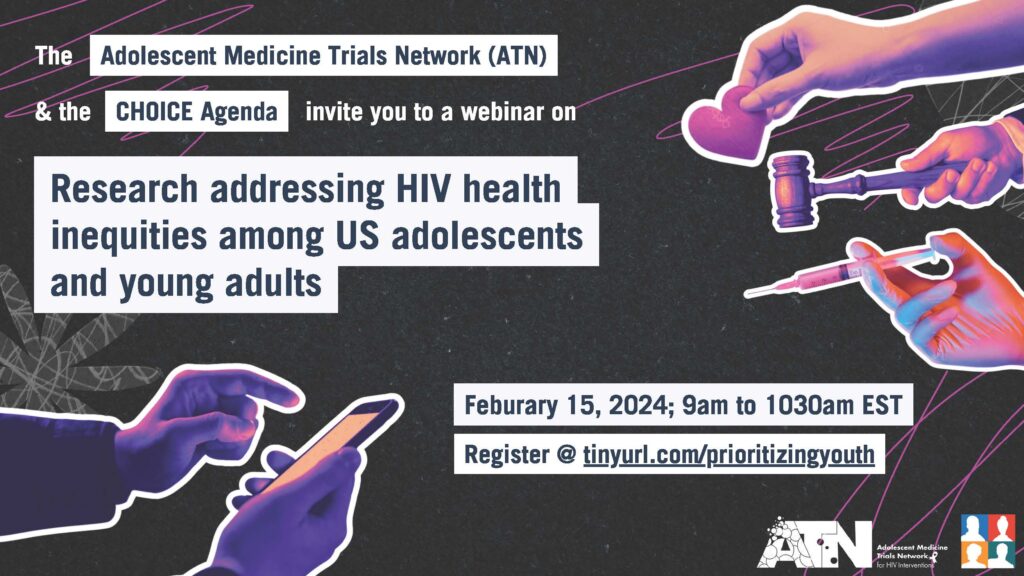
The Adolescent Medicine Trials Network (ATN): Research addressing HIV health inequities among US adolescents and young adults

Join The Choice Agenda for an overview of the newest cycle of the Adolescent Medicine Trials Network! This webinar includes highlights of: ATN 165: Linking Youth to PrEP Services, which tests an innovative mobile delivery and mHealth intervention for PrEP adherence and persistence among sexual minority men; ATN 167: Legal, Economic, and Affirming Peer Support (LEAP) for transgender and gender diverse youth; and how the network prioritizes and amplifies the voices of youth directly impacted by the ATN’s pivotal research. Register here.

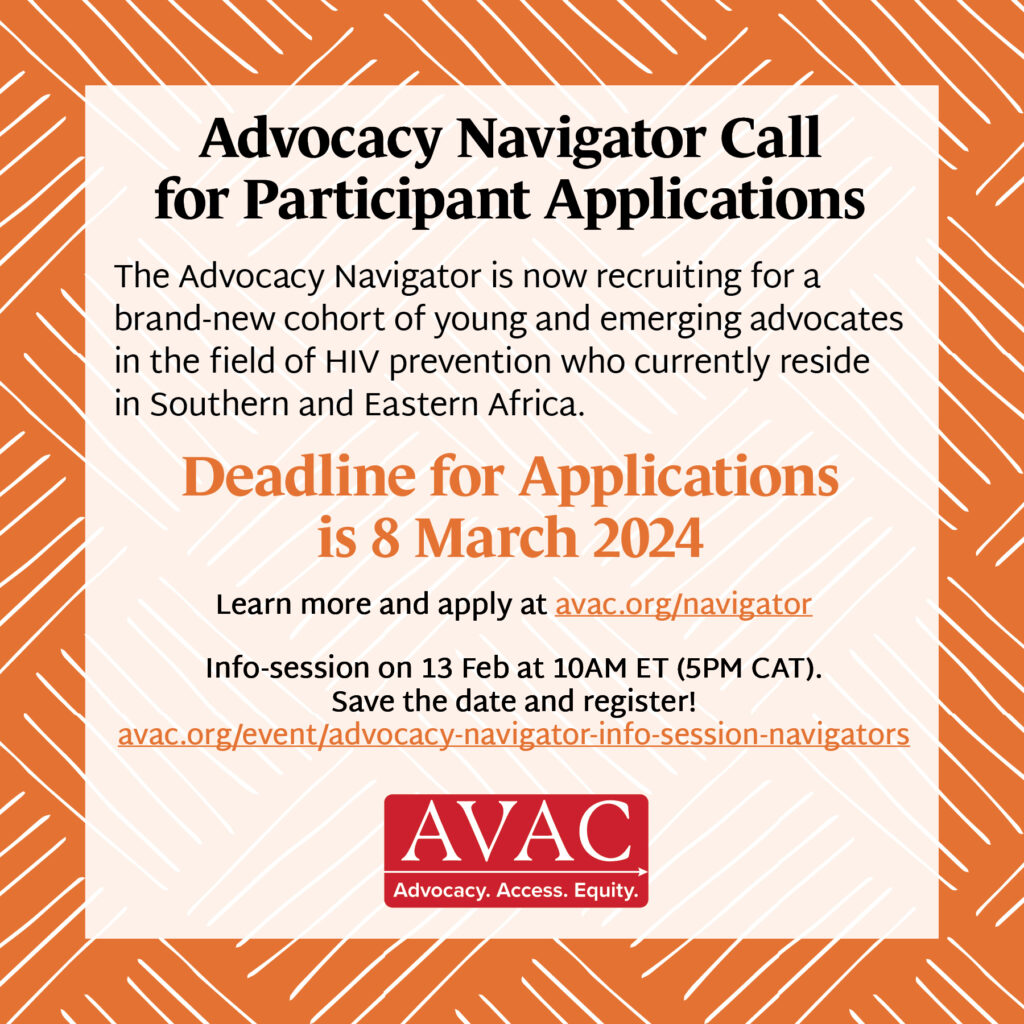
Advocacy Navigator Program Info Session

February 13, 10:00-11:00 am EST

This webinar is intended for anyone interested in applying to participate in AVAC’s Advocacy Navigator program. The session will provide an overview of the program, expectations, eligibility, and application process, followed by Q&A with the AVAC team. 

In case you missed it!

Reporting the African Science Story: Decoding scientific research to support public health in Africa

Through the Media Science Café Program, AVAC partners with health media associations in Kenya, Tanzania, Uganda, Zambia and Zimbabwe to bring journalists together with researchers, implementers, civil society, policy makers, regulators and policy makers to build relationships that will foster accurate reporting of HIV, COVID and other science or health stories in those countries. Learn about the model! Recording, slides and resources.

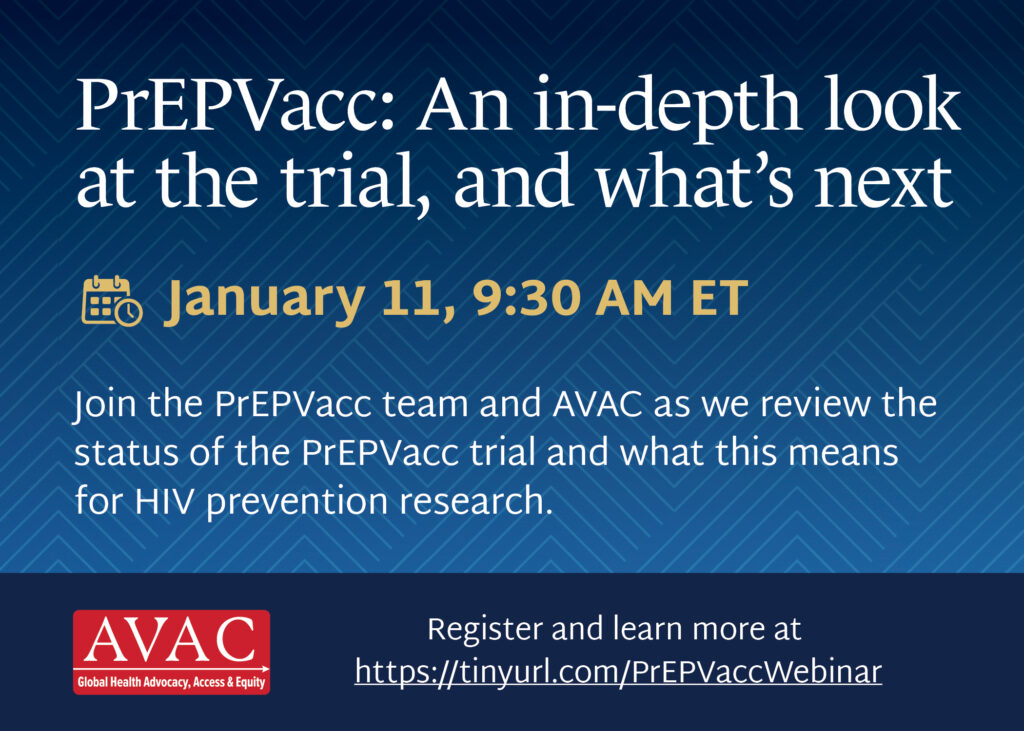
PrEPVacc: An in-depth look at the trial, and what’s next

This webinar reviewed key aspects of PrEPVacc, including its innovative study design, implementation, integrated social science, and data analysis plans. An engaging conversation about what we’ve learned from PrEPVacc, what we can still learn, and what this may mean for the HIV prevention field. Recording, slides and resources.

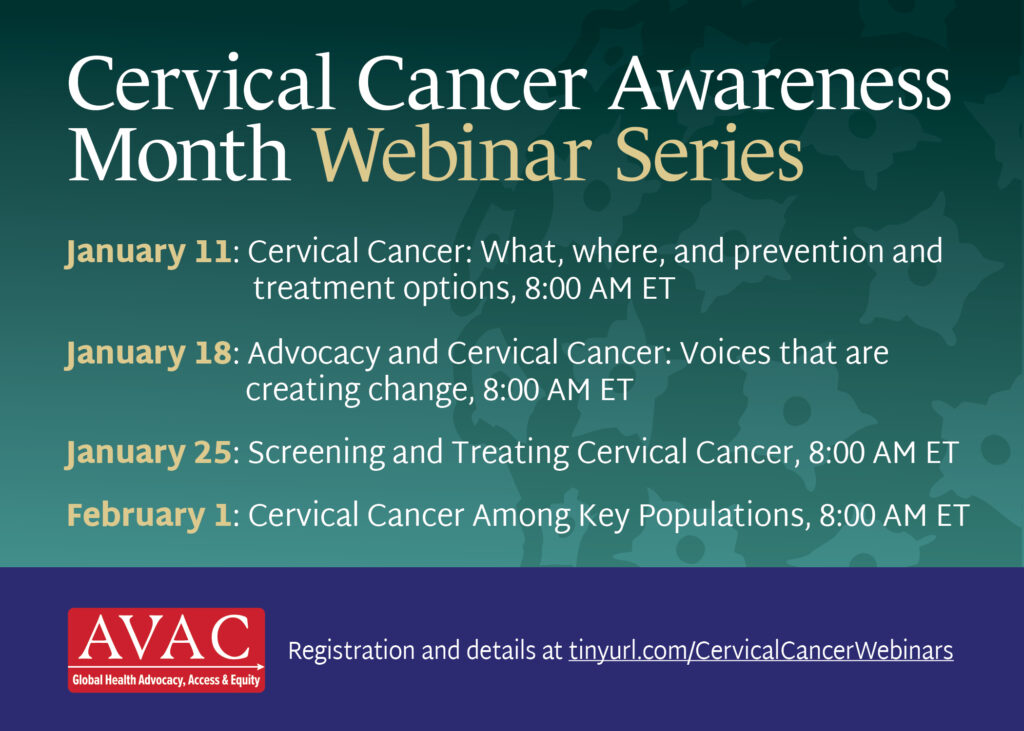
Cervical Cancer Awareness Month Webinar Series

Check out our 4-part webinar series on cervical cancer, which featured a deep dive on: what cervical cancer is, who is impacted, and prevention and treatment options; advocacy strategies to bring more attention to cervical cancer and its impact on communities; options for screening and treating cervical cancer along with ongoing research; and the impact of cervical cancer on key populations and those vulnerable to HIV infections. Recording, slides and resources.

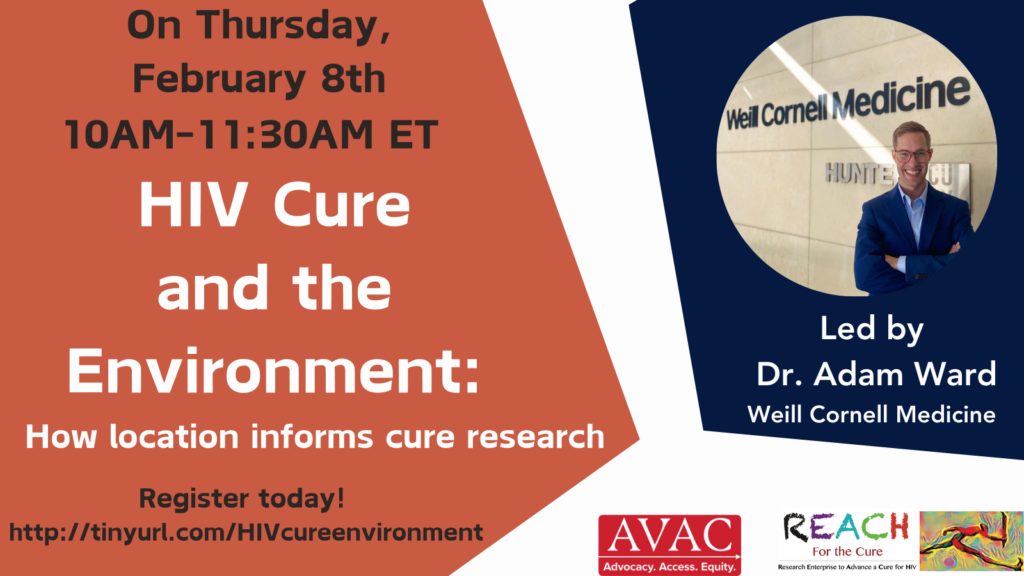
HIV Cure and the Environment: How location informs cure research

This webinar reviewed core concepts discussed in the previous webinar, Let’s Talk About HIV Cure Research: An Introduction to the science under investigation, and introduced how the environment may impact cure strategies. Recording, slides and resources.

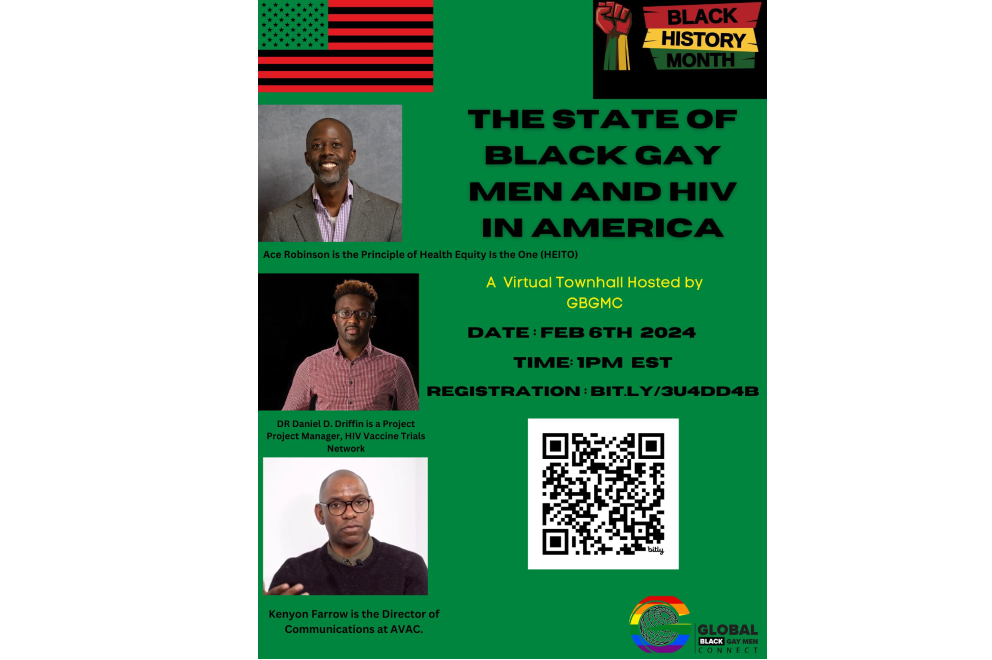
Learn more about the townhall discussion on Black Gay Men and HIV in the US featuring influential figures in the Black Gay community, including Ace Robinson, Daniel D. Driffin, and Kenyon Farrow by checking out highlights on AVAC’s Twitter page and watch the full recording

Thanks for checking out these conversations. We hope you will join us in these rich discussions and watch this space for future webinars!  

Avac Event

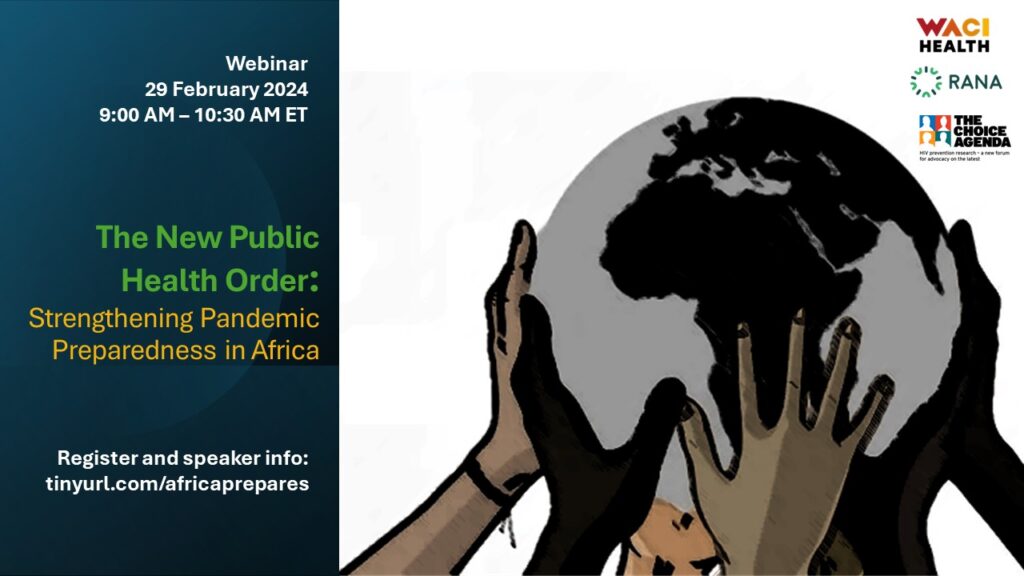
The New Public Health Order: Strengthening Pandemic Preparedness in Africa

WACI Health, RANA and The Choice Agenda hosted a webinar on Thursday, February 29 called, “The New Public Health Order: Strengthening Pandemic Preparedness in Africa”

This webinar introduced key initiatives for the coming year from Africa CDC and the African Union and illuminate roles for civil society and community engagement. We heard from both Africa CDC representatives and key advocates on the development of these initiatives and what goals they intend to achieve.

Speakers: 

  • Jens Pedersen – Senior Advisor for Africa CDC 
  • Dr. Fifa Rahman – Pandemic Negotiations Consultant for Africa CDC
  • Dr. Landry Tsague – Senior Advisor for Africa CDC

Moderator:

  • Samantha Rick – AVAC

Recording / Resources / Transcript