One Year Later #2: An Assault on Vaccine Science and Policy, and the Stakes for Global Health

AVAC’s ‘One Year Later’ series reflects on the tumultuous events of the past 365 days across five global health issues. Our second piece is below. View the full series here.


In less than a year, actions by the new US Presidential Administration have resulted in an unprecedented dismantling of vaccine science and abdication of the country’s historic role as a leader in evidence-based public health. Driven by ideology, these actions have systematically undermined research institutions, disrupted long-standing vaccine programs, and fueled confusion and mistrust in and outside the US. As tracked in AVAC’s Global Health Watch, the cumulative effect of these actions has had worldwide consequences for vaccine development, delivery, and confidence.

The implications for global health moving forward are stark. Vaccine science is cumulative: today’s innovations depend on investments made over many years. Undermining the research infrastructure now risks slowing progress for years to come—for HIV, other STIs and infectious diseases, pandemic preparedness, routine immunization, and emerging threats. And retreating from global partnerships weakens multilateral systems precisely when coordination and solidarity are most needed.

In just 12 months, the US administration has systematically weakened the scientific ecosystem supporting vaccine development and delivery. In May, the National Institute of Allergy and Infectious Diseases (NIAID) announced that funding for the Consortia for HIV/AIDS Vaccine Development (CHAVD) would end after the current grant cycle in June 2026. CHAVD is a network of unique collaborations linking basic immunology and early-stage clinical testing. This decision eliminates approximately $67 million annually (~10% of global HIV vaccine research funding) at a moment when sustained investment is essential to build on decades of scientific progress. Ending CHAVD does not merely reduce funding; it dismantles collaborative networks, erodes institutional memory, and slows the discovery process that vaccine science requires.

The Administration then cancelled $500 million in Biomedical Advanced Research and Development Authority (BARDA) grants supporting mRNA vaccine research and development. These investments had positioned the US as a leader in a platform with transformative potential for cancer, influenza, RSV, HIV, and other infectious diseases. As The Guardian noted, mRNA vaccines represent the future of immunization “with or without Donald Trump.” Abandoning this platform sends a chilling signal to researchers, manufacturers, and global partners alike.

The damage has not been confined to research funding. Members of the Centers for Disease Control and Prevention’s Advisory Committee on Immunization Practices (ACIP), a gold-standard panel of medical experts representing the country’s top experts on vaccine science and the cornerstone of evidence-based vaccine policy, were replaced with a mix of anti-vaccine, anti-science representatives, undermining the independence and credibility of a body that guides vaccine recommendations relied on by clinicians and public health programs worldwide, and prompting wide concern from medical experts, including the American Medical Association. Simultaneously, language on CDC websites was quietly altered to reflect anti-science and anti-vaccine rhetoric, further fueling confusion and mistrust.

In August, Paul Offit, a pediatrician, leading vaccine expert, and co-inventor of the rotavirus vaccine was removed from the FDA’s Vaccines and Related Biological Products Advisory Committee. And soon after, the President publicly challenged pharmaceutical companies to “prove” that their COVID-19 vaccines still work, despite overwhelming and ongoing evidence of their safety and effectiveness.

Compounding these disruptions, new pediatric vaccine recommendations were issued departing from long-standing, evidence-based guidance without scientific justification or consensus from pediatric and public health experts. As Center for Infectious Disease Research and Policy (CIDRAP) reports, providers and families are grappling with mixed messages about vaccine timing, safety, and necessity. As the year ended, a federal court ruled in favor of major medical societies, including the American Academy of Pediatrics to proceed in their lawsuit against the Department of Health and Human Services (HHS) challenging changes to COVID-19 vaccine policy and replacement of members of the ACIP with people who lack the credentials and required experience.

More recently, RFK Jr. appointees at the CDC made an unethical study in Guinea-Bissau a “funding priority”, awarding funds to two Danish researchers who have faced accusations of “questionable research practices”. Katherine Eban describes the full anti-science, ideologic story in Rolling Stone.

Perhaps most alarming for global health, the US halted its support for Gavi, the Vaccine Alliance. For more than two decades, Gavi has been one of the most effective mechanisms for expanding access to life-saving vaccines in low- and middle-income countries. As Seth Berkley wrote in Science, Gavi is “a model for international, public-private collaboration that works with countries to provide vaccines for about half of the world’s children and has been a powerful force behind the halving of global child mortality in the last 25 years. Gavi also… [maintains] the global stockpiles of cholera, Ebola, meningitis, and yellow fever vaccines.” US withdrawal threatens immunization programs far beyond its borders, putting millions of children at risk and destabilizing fragile health systems.

As AVAC’s Alison Footman PhD, MPH warned in an August statement, “These actions dangerously sow vaccine disinformation and mistrust, which has proliferated since the COVID-19 pandemic. Dangerous ideology results in dangerous policymaking, putting many lives at stake and complicating efforts to both discover and implement clinical and cost-effective interventions.” That warning has only grown more urgent. Public trust—once lost—is extraordinarily difficult to rebuild, and vaccine hesitancy fueled in one country reverberates globally through media, politics, and policy.

This moment clarifies what is at stake, and what must be defended. Science works when it is grounded in evidence, and accountable to communities. Vaccines remain one of the most powerful tools in public health history, capable of saving millions of lives when paired with trust, access, and sustained commitment.

One Year Later #1: The Foreign Aid Freeze & Abuse of Executive Power

AVAC’s ‘One Year Later’ series reflects on the tumultuous events of the past 365 days across five global health issues. Our first piece is below. View the full series here.


Nearly one year ago, the new US Presidential Administration issued a deeply cruel executive order: on January 20, 2025, they froze nearly all foreign assistance, halting billions of dollars in already-approved funding under the bad-faith claim of a “90-day review”. What followed was not a brief pause, but a drawn-out, chaotic disruption that stopped life-saving work across the globe, shutting down valuable organizations, and harming lives, health, and livelihoods.

The subsequent 12 months have laid bare the risks when executive power overrides Congressional authority in ways that threaten lives at home and abroad and erode the longstanding US role as a reliable partner in global development. When the freeze first happened, Lauren Bateman from the Public Citizen Litigation Group said, “The Trump administration’s freeze on foreign assistance funding is dangerous and illegal. When programs are abruptly shuttered, the impacts are felt throughout the world—with the most vulnerable people bearing the deadliest impact.”

Medicines sat in warehouses while clinics closed. Organizations across continents suspended HIV prevention services and were unable to meet community needs as critical contracts and grants were terminated or left in limbo without planning or justification. Research was halted, undermining years of trust-building and data-gathering.

The freeze forced AVAC to stop CASPR, a coalition of African civil society organizations that supports research on HIV prevention and provides resources for local communities, including medical research trial participants, journalists, and policy makers.

In response to the freeze, AVAC and the JOURNALISM DEVELOPMENT NETWORK sued the President, the State Department, the US Agency for International Development (USAID), and others, seeking emergency relief. A day later, an additional case was brought against the federal government by Global Health Council and partners and was assigned to the same District Court judge.

One year later, these cases—like many other lawsuits filed against the many unjust and unconstitutional acts of this administration—have become the symbol of something much larger: whether the executive branch can ignore Congressional power of the purse and dismantle decades of bipartisan foreign policy with the stroke of a pen and whether the courts or Congress will step in to stop it.

An early ruling in AVAC’s case successfully unlocked nearly $2 billion in US government payments for work already completed. The judge’s ruling affirmed Congress’ power of the purse and that the executive branch cannot refuse to spend money that Congress has appropriated. But over the course of 2025, the administration filed appeals and sought so-called “emergency relief”.

A partial stay allowed the government to withhold funds while they ran down the clock on the 2025 fiscal year. While they stalled, billions of already-appropriated dollars in foreign assistance expired without being spent, eliminating interventions that would have made America and the world stronger, safer, healthier and more prosperous. As AVAC Executive Director Mitchell Warren said in NPR, “Time and again, this administration has shown their disdain for foreign assistance and a disregard for people’s lives in the United States and around the world. More broadly, this decision, which we will appeal to the extent possible, further erodes Congress’s role and responsibility as an equal branch of government, and the majority opinion makes the court complicit.”

In November 2025, the parties filed a joint statement to the District Court to put the case in abeyance while awaiting separate Court decisions that could inform it. As a result, AVAC’s case remains active in 2026, but lawsuits will never bring back everything that was taken away. As Warren said, “it takes time to build up these programs and relationships … it will take more time to re-build, no matter who funds these efforts.”

A year ago, the foreign aid freeze was falsely framed as a temporary step as the administration began testing the limits of executive power. Today, the reverberations of their cruel and unconstitutional actions are clearer than ever: disrupted care, weakened institutions and relationships, and ongoing chaos and constitutional conflict.

This moment demands more than concern. It demands public outrage, Congressional oversight and legislative safeguards. If lawmakers do not step in to do more, this administration will continue to roll over Congressional decision-making. We cannot accept this as the new normal—and must insist that the rule of law, including the lives it protects, still matters.

Global Health Watch: Health Policy Decisions Reversed, FY26 US Global Health Funding, America First MoUs Scrutinized & LEN for PrEP Advances

Issue 51

United States financing decisions, global governance and scientific innovation collide as US lawmakers advance the fiscal year 2026 (FY26) bills. The foreign assistance budget, passed by the House on Wednesday, if enacted, would restore some global health funds in a broader context of uncertainty, as US bilateral “America First” health MoUs advance without transparent plans for implementation or accountability. At the same time, abrupt reversals by the US Department of Health and Human Services (HHS) of troubling health policy decisions underscore the instability of the Administration’s decision-making process. These developments are taking shape amid momentum around lenacapavir for PrEP, which was approved by the Brazilian regulatory agency and received additional funding from Unitaid to reach more populations in South Africa and Zambia.

US Reverses Harmful Health Policy Decisions After Outcry 

The US rescinded one, and possibly two, very troubling health policy decisions following outcry from communities and experts. Health and Human Services (HHS) reversed plans that would have canceled billions of dollars in funding for overdose prevention and substance use treatment programs. In addition, The Guardian reports that an HHS-sponsored hepatitis B vaccine trial in Guinea-Bissau has been halted following serious ethical concerns related to informed consent, standards of care, and potential exploitation in a low-income setting. While Scientific American reports that the study may still be ongoing, in both cases, sustained objections from public health experts, advocates, and affected communities played a decisive role in forcing scrutiny of deeply troubling decisions. 

IMPLICATIONS: These rapid announcements followed by abrupt reversals and confusion expose deeply flawed leadership at HHS, where ideological hostility to evidence-based public health has driven attempts to dismantle lifesaving programs and advance vaccine-skeptical agendas. At the same time, they offer a clear reminder that advocacy works. Public outcry from communities directly affected by overdose deaths, global health experts, ethicists, and civil society played a critical role in helping to prevent harmful actions. While these outcomes prevent immediate harm, they do not erase the broader instability facing US health policy.

READ:  

FY26 US Global Health Funding Update 

The US House and Senate Appropriations Committees released their negotiated FY26 funding bill covering National Security, the State Department, and Related Programs (previously referred to as the State, Foreign Operations, and Related Programs/SFOPs bill). Also released was a summary statement of what’s in the bill, including timelines, reporting and other requirements for specific budget allocations. Together, these signal a return to a bipartisan appropriations process and, if enacted, provide basis to push back against unilateral cuts by the Administration. The House has approved the bill, and it now heads to the Senate. Overall, approximately $50 billion is allocated for foreign assistance, $20 billion more than the President’s Budget Request, with $9.4 billion directed toward global health programs. Importantly, Congress maintained funding for core global health priorities, including HIV, tuberculosis, malaria, polio, family planning and reproductive health, neglected tropical diseases, Gavi, and UN agencies such as UNAIDS, UNICEF, and UNFPA. As KFF’s analysis shows, the bill reflects strong bipartisan congressional support for global health even as the Administration sought deeper cuts and eliminations across several programs.

IMPLICATIONS: The FY26 bill underscores ongoing uncertainty in US global health priorities and financing. As AVAC’s Mitchell Warren told Devex, “Almost a year since the US administration decimated the U.S. Agency for International Development … Congress is coming back with a bill that rejects the administration’s shortsighted decisions last year. But this is just a start and major challenges remain: Will both houses of Congress approve the bill? Will the President sign it? And, perhaps more importantly, will the President actually spend Congressional appropriations and accept at last that it is Congress, and not him, who has the power of the purse?” Congress’s decision to protect key investments signals continued bipartisan recognition that global health programs, including HIV prevention and treatment, are essential to US and global security. However, the overall funding reduction leaves programs in limbo, prolonging instability for implementing partners and countries that rely on US support.

READ:  

America First Global Health MoUs Under Scrutiny 

Discussion and scrutiny is intensifying around the five-year bilateral Memorandums of Understanding (MoUs) signed with the US under the America First Global Health Strategy. Fifteen nations have now signed these agreements and more than $16 billion has been committed. The Implementation Planning Period, where operational details would be worked out, including who would deliver services, where, and for which populations, was supposed to happen upon signing of the agreements through March 31, 2026. However, as many tracking these agreements suggest, completing the MoUs does not guarantee a detailed, transparent, or people-centered implementation strategy.  

IMPLICATIONS: Without clear implementation plans that specify roles, funding flows, safeguards, and mechanisms for civil society engagement, billions in health assistance could be deployed in ways that weaken coordination, sideline communities, and fail to reach those most affected. As the Implementation Planning Period unfolds, sustained oversight will be essential to ensure these agreements translate into measurable health gains. 

READ

Unprecedented Momentum for Lenacapavir for PrEP

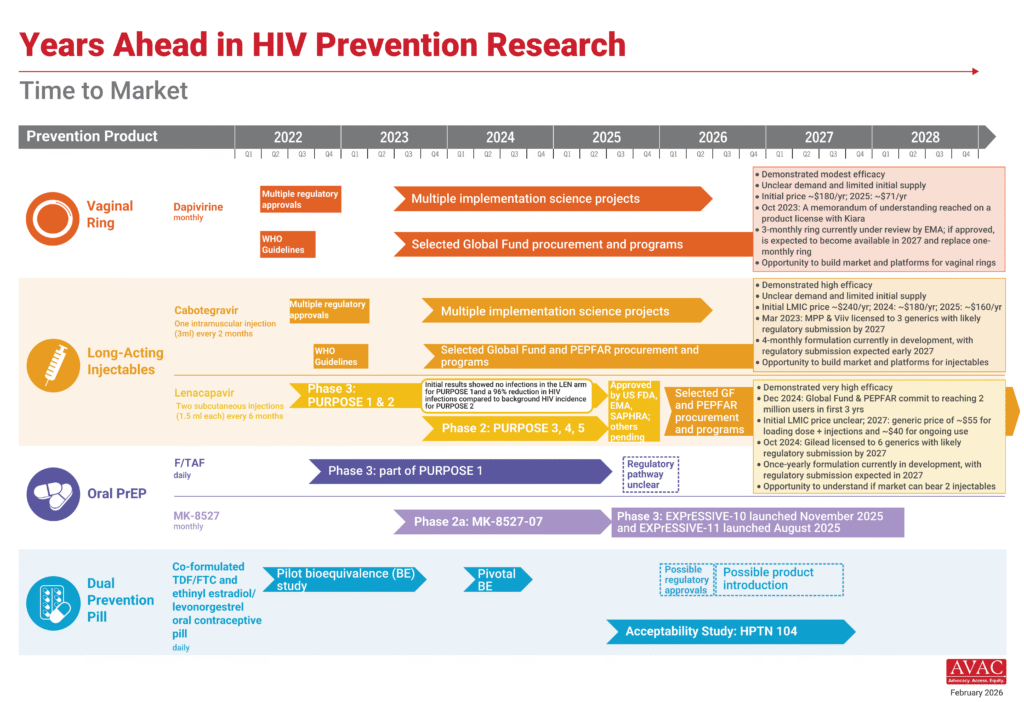
Unitaid, a convener of the Coalition to Accelerate Access to Long-Acting PrEP, announced a new $31 million commitment to accelerate access to injectable lenacapavir for PrEP (LEN) in South Africa and Zambia. The investment aims to expand delivery of LEN beyond traditional clinic settings and reach populations often left behind, including young women and key populations. In addition, Brazil became the 14th regulatory agency to approve LEN this week, and Gilead submitted an application to Peruvian regulatory authorities, marking nine pending regulatory approvals (see AVAC’s regulatory tracker).  
 
IMPLICATIONS: The momentum of LEN activity to date is unprecedented. In less than 18 months, the field has moved from initial LEN efficacy results to a series of critical milestones (including this week’s announcements) that took over seven years with oral PrEP and three years with injectable CAB. This momentum underscores both what is possible—and what is at risk. Rolling out LEN with speed, scale, and equity must be an uncompromising priority if this breakthrough is to change the trajectory of the epidemic. Without robust community engagement, intentional planning, sustainable financing, and strong delivery systems, high costs and weak infrastructure could confine LEN to a limited number of countries and populations. While this has not yet translated into infections averted at scale, it provides clear proof that faster pathways are possible, and that this accelerated model must now become the new benchmark for how effective global health technologies (not just HIV prevention options) are designed, developed and delivered.

READ:  

What We’re Reading

The Future of HIV Prevention with Dr. Jeanne Marrazzo

January 20 Webinar

[UPDATE] View recording / download slides

As the new year begins, AVAC and partners are hitting the ground running to advocate for speed, scale, and equity in the HIV response and with a focus on The People’s Research Agenda (PRA) to advance critical priorities. First developed in 2024, in partnership with global advocates and communities, the PRA offers essential guidance on community priorities to inform HIV prevention, and features an online dashboard for tracking, translating and advocating for HIV prevention research and development (R&D).

On January 20, join us and Jeanne Marrazzo, IDSA CEO and AVAC board member, for The Future of HIV Prevention: A People’s Research Agenda for Speed, Scale and Equity, a webinar exploring the PRA’s people-centered framework, what the PRA tracks, why it matters and what’s at stake.

In 2026, the fields of HIV and global health are rethinking and rebuilding. The PRA can help power the work ahead, which depends on determined voices fighting for a reimagined and reenergized HIV response—one that doesn’t give up on science, confronts a changed landscape head-on, and is led by the people most impacted by the epidemic.

Global Health Watch: Assault on US vaccine policy, contradictions in HPV and HIV vaccine science; 14 countries sign America First MOUs

Issue 50

The assault on vaccine policy and confidence intensified this week as the US overhauled its childhood immunization schedule, reducing the number of vaccines recommended and breaking decades of evidence-based practice. At the same time, the human papillomavirus (HPV) vaccine recommendations remain intact, and a new Phase I HIV vaccine trial launched demonstrating the contradictions of the moment.

Beyond the US, 14 countries have now signed bilateral health agreements with the US under the America First Global Health Strategy. At the same time, the US President signed a new executive order withdrawing the US from and defunding over 60 international organizations and treaties. And as this issue began to publish, Health Policy Watch reported that Germany plans to cut its funding by half for the World Health Organization’s Hub for Pandemic and Epidemic Intelligence. This suite of decisions shows sweeping upheaval in global health policy, governance and funding.

Continued Assault on Vaccines: US Shifts Vaccine Policy

The US Administration overhauled its childhood immunization schedule, reducing the number of vaccines universally recommended for children and moving several (including rotavirus, influenza, hepatitis A & B, respiratory syncytial virus [RSV], and others) to recommended categories only for children deemed at high-risk. Researchers at the US Centers for Disease Control and Prevention (CDC) and leading pediatric and public health organizations are criticizing the new policy, warning it could weaken protections against preventable diseases and is contrary to decades of evidence-based practice and adds confusion among providers and families. They also note that this change was made without broad scientific consensus or a transparent process and bypassed traditional advisory review. Just after the change in policy, a federal court ruled in favor of major medical societies, including the American Academy of Pediatrics, to proceed in their lawsuit against the Department of Health and Human Services (HHS) challenging changes to COVID-19 vaccine policy and replacement of members of the CDC’s Advisory Committee on Immunization Practices (ACIP) with people who lack the credentials and required experience.  

IMPLICATIONS: These changes to the US vaccine schedule, which come on the heels of reduced US support for global vaccine initiatives such as Gavi, the Vaccine Alliance, and cuts to mRNA vaccine development, represent yet another assault on vaccine science and confidence. By narrowing recommendations for routine vaccines without clear evidence or expert consensus, the Administration risks weakening public trust in vaccine programs at a time when vaccine acceptance is critical to controlling preventable diseases. This policy shift could fragment national standards, spur state-level pushback, and increase disparities in vaccine uptake, undermining decades of progress and complicating global efforts to sustain strong immunization coverage.

READ:  

HPV Vaccine Update and Self-Collection for HPV Test 

Amid these broader changes to pediatric vaccine policy, the human papillomavirus (HPV) vaccine remains recommended for 11–12-year-olds in the US, easing concerns that it might be removed from the routine guidance. The updated guidelines also endorse a single-dose HPV vaccine schedule, which reflects emerging evidence that one dose can be highly effective. At the same time, new recommendations from the US Health Resources and Services Administration say that women ages 30 to 65 with an average risk of cervical cancer can opt for a self-administered HPV test.

IMPLICATIONS: While this shift could simplify delivery and improve uptake, important questions remain. Experts caution that the strongest one-dose data come from studies in females with limited follow-up and note that there is very little evidence on one-dose efficacy in males. As implementation moves forward, continued data collection and careful monitoring will be essential to ensure long-term protection for all. For self-collection of samples for testing, this shift could improve screening rates.READ:  

New HIV Vaccine Strategy Kicks off Amid Larger Assault on Vaccines and Science 

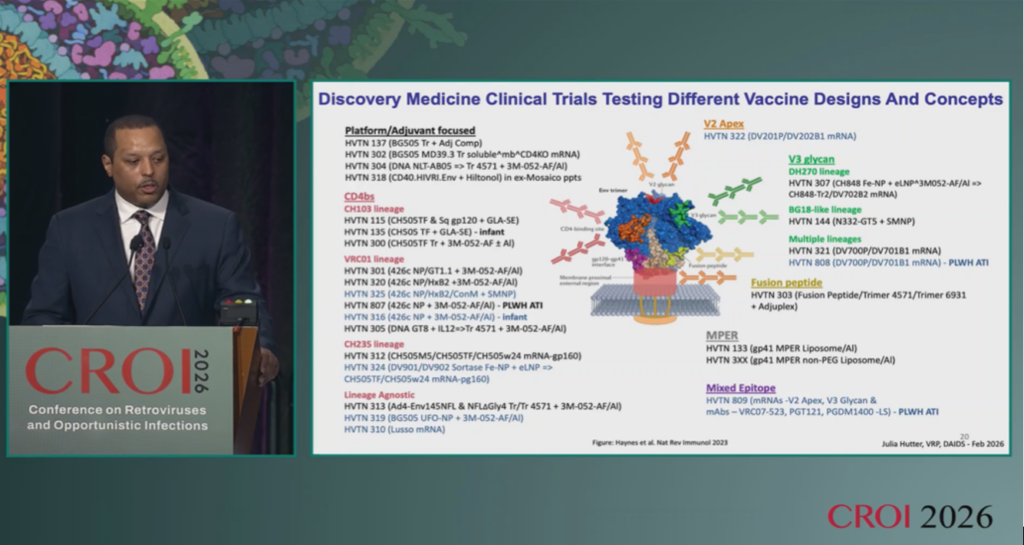
Meanwhile, a new chapter in HIV vaccine research begins as first vaccinations for the IAVI G004 Phase I clinical trial were announced this week. This early-stage HIV vaccine trial stands out because it is the first germline-targeting vaccine designed to induce broadly neutralizing antibodies (bNAbs) against more than one major site on the HIV envelope—specifically both the CD4 binding site and the V3 glycan region. Most prior HIV vaccine candidates have focused on the CD4 binding site alone, making IAVI G004 a long-anticipated scientific advance. Importantly, this trial also reflects recent political shifts: it was initially envisioned as part of a larger NIH-partnered collaboration (DESIIGN), but changes in US government priorities have reduced the size of the trial. See AVAC’s tracker of the full HIV vaccine clinical trials pipeline.  

IMPLICATIONS: This trial continues to show a cruel irony in HIV prevention. Scientifically, it represents a meaningful step forward in germline-targeting strategies that could strengthen immune responses and lead to an eventual HIV vaccine. But, it also highlights how political and funding disruptions are constraining the breadth and depth of vaccine research by limiting collaborations, reducing funding and placing greater strain on already fragile pipelines.

READ

14 African Countries Have Signed Bilateral Agreements with US Under its America First Global Health Strategy

At least 14 African countries have now signed five-year agreements with the United States under the “America First” Global Health Strategy. Recent deals with Botswana, Ethiopia, Ivory Coast, Madagascar and Sierra Leone, cover HIV, malaria, maternal and child health, pandemic preparedness, and other priority areas, require co-investment from partner governments, and include commitments on data sharing (which has been controversial; a court case in Kenya has challenged this provision), and health system reforms. The total now surpasses the $16 billion mark.

IMPLICATIONS: While these agreements may restore some funding after earlier foreign aid disruptions, they also reinforce a shift away from multi-stakeholder cooperation and toward government-to-government agreements with conditions that may come at the expense of low-and-moderate-income countries. As this model extends to more countries across Africa, how nations navigate sovereignty, accountability, and long-term health system strengthening will be critical for ensuring these billions translate into sustained, equitable impact. 

READ:  

What We’re Reading

Six Resolutions and Resources for Advocates in 2026 

As we look to the year ahead, we start by taking stock of the profound disruptions of 2025 and how the field responded. We have seen partners around the world persevere, despite threats and losses, and demonstrate remarkable leadership. We look forward to another year in solidarity with all of you, bringing unflinching determination to demand and defend an equitable and effective HIV response. The cause demands grit, adaptation, and vision.

With immense challenges and historic opportunities ahead, we are making resolutions for the new year and sharing resources to advance our collective work in the months to come.

Together with our partners, 2026 will be marked by our commitment to:

1. Rethink and rebuild an architecture for global health that insists on equity. 

We launched Global Health Watch just as the new US Administration started its assault on foreign assistance and the HIV/AIDS response. This weekly newsletter breaks down critical developments in US policies and their impact on global health. Read the latest issue, and subscribe to get your weekly edition.

2. Amplify and drive the call for effective and equitable R&D with the People’s Research Agenda (PRA).

The 2025 update of the PRA is a people-centered framework to drive equitable and accelerated HIV prevention research and development (R&D) and product introduction. This update includes an expanded online dashboard for tracking, translating, and advocating for HIV prevention R&D.

3. Accelerate speed, scale and equity in access to long-acting PrEP.  

This collection of resources to accelerate access to long-acting PrEP includes infographics, advocacy guides, reports and tools that draw on lessons from oral PrEP rollout to help get injectable lenacapavir for PrEP introduction right.

Also check out this dashboard tracking long-acting PrEP for a timely snapshot of the progress towards scale-up of all long-acting PrEP products. For more on the historic opportunity LEN for PrEP represents and the profound threats that must be overcome to fulfill its promise, check out our blog: The Future of HIV Prevention Depends on Speed, Scale and Equity.

4. Work in solidarity to champion science, evidence-based policies and investments in HIV research. 

This 24-hour program features more than 70 scientists, researchers, and advocates from around the world who give first-hand accounts of the achievements and impact of decades of federal investments in HIV research, and what’s at stake if those investments are not sustained. View the recording here, available to stream in 1-hour segments.

5. Monitor, analyze, and document the impact of policies, programs, and investments. 

AVAC tracks and documents the impact and consequences of the US administration’s attack on science and divestment from global health institutions. 

6. Empower the field with real-time updates that track and translate the pipeline of HIV prevention research, from basic science to product rollout.

PxWire is AVAC’s quarterly update on developments, challenges and opportunities in biomedical HIV prevention research. The latest issue maps the status of delivering injectable cabotegravir for PrEP, funders and countries on track for early introduction of injectable LEN, and where the new Phase 3 EXPrESSIVE efficacy trials testing MK-8527 as a monthly pill for PrEP are taking place. For more on the trials, check out The EXPrESSIVE Trials Test a Monthly Pill for PrEP: Advocates speak.

We hope these resources fortify the vital work that must continue. The year ahead promises to be no less challenging, but together we can meet the moment with a bold agenda to bring HIV prevention and equity in global health to everyone who needs it.

AVAC Board Member Jeanne Marrazzo named CEO of IDSA 

AVAC enthusiastically applauds the selection of Jeanne Marrazzo, MD, to serve as the new chief executive officer of the Infectious Diseases Society of America (IDSA). Marrazzo brings outstanding leadership and research expertise to this role. She has demonstrated decades of unwavering commitment to research and advocacy for HIV and STI prevention, and a deep understanding of the importance of equity, accountability and trust in science, research and global health.

“Jeanne Marrazzo is an extraordinary choice and perfectly suited to lead IDSA and the larger infectious disease field into the future, especially at this particularly perilous moment,” said AVAC’s executive director, Mitchell Warren. “Her deep commitment to rigorous science, inclusion and equity in research, community engagement, and accurate, evidence-based communications is unparalleled — and is needed now more than ever.”

IDSA represents clinicians, scientists and public health experts from around the world, who are driving policy and advocacy to address critical issues in combating infectious disease, from workforce development to clinical guidelines to pandemic preparedness. Marrazzo’s vision, abiding integrity and leadership at IDSA will be a boon for the field.

Marrazzo, an AVAC board member, previously served as the director of the NIH’s National Institute of Allergy and infectious Disease (NIAID). Marrazzo was put on administrative leave by the new US presidential administration earlier this year and was formally dismissed from her position in September. She has consistently displayed extraordinary commitment, courage and leadership in responding to attacks on the NIH and on science generally.

“Her actions are a model for all who believe equity and evidence are the bedrock of science, research and health. We proudly stand with Dr. Marrazzo, and we look forward to her leadership and partnership in sustaining progress against HIV and other infectious diseases and in helping re-build trust and confidence in science and public health,” said Warren.

Global Health Watch: 4 African Countries Sign Bilateral Health MoUs with US, New People’s Research Agenda, Hepatitis B Vaccine Shift

Issue 46

This week covers fast-moving developments with new US bilateral Memos of Understanding (MoU) across Africa, including reactions from Kenya’s High Court, which suspended the agreement over the issue of sharing of health data, alongside new reporting on the adverse impact of US policy changes affecting science and research institutions, and a major reversal in US hepatitis B vaccine policy. We also track the newly updated People’s Research Agenda.

Four African Countries Signed Bilateral Health MoUs with US; Kenya’s Court Intervenes 

So far, four Africa countries have signed bilateral health MoUs with the US under the “America First Global Health Strategy”: KenyaLiberiaRwanda and Uganda. These agreements provide 5 to 10 years of funding and health support in exchange for co-financing, health data, pathogen-specimens, and national health system data, marking a major shift in how global health cooperation is structured under US leadership. Kenya’s agreement, which was the first and largest to date, promises about US $1.6–1.7 billion over five years and a commitment from Kenya to raise domestic health spending. Civil society groups across Africa and globally are sounding alarms about the process noting that agreements have been negotiated and signed without public consultation, parliamentary oversight, or community input. Thursday, Kenya’s High Court issued a conservatory order, temporarily blocking any transfer or sharing of sensitive health data until a full hearing in early 2026. The Court is reviewing two major petitions: one on data protection and digital rights, and another on whether the MoU bypassed constitutional requirements for parliamentary approval. 

IMPLICATIONS: These MoUs begin to reconstruct US-led global health investments, moving away from multilateral frameworks and programs informed by community and civil society input toward bilateral, government-to-government agreements. This raises critical questions about sovereignty, transparency, and equity with health data and biological samples being treated as bargaining chips, and unclear protections for privacy, benefit-sharing, or local ownership. The Kenya High Court’s ruling underscores the seriousness of these concerns. African nations with larger economies, such as Kenya, may be better positioned to push back against problematic provisions, but many other countries may not have the same leverage.  

READ:  

The Consequences of US Policy Decisions on Science and HIV Research 

A wave of new reports and commentary are showing the far-reaching impacts of recent US policy decisions on science and global health. STAT released American Science, Shattered, a multipart investigation detailing how actions taken under the US Administration have disrupted research labs, upended scientific careers, and fractured an eight-decade partnership between universities and the federal government.  

In case you missed it, scientists, researchers, and advocates participated in the Save AIDS Research Marathon sharing firsthand accounts of what decades of federally supported HIV research have delivered—and what stands to be lost. Their stories highlight how foundational US investments have driven breakthroughs in the treatment and prevention of HIV and other diseases that have saved tens of millions of lives, and how recent project terminations and budget cuts are already reverberating across the research landscape.

US Panel Votes to Change Longstanding US Hepatitis B Vaccine Policy 

Last Friday the Advisory Committee on Immunization Practices (ACIP), which was dismissed and replaced with vaccine-skeptical members, voted (contentiously) to change longstanding US hepatitis B vaccine policy. Instead of universally recommending that all newborns receive a hepatitis B vaccine at birth, without any new data or evidence, the committee now advises that a birth dose be given only to infants born to mothers who test positive for the virus or whose infection status is unknown. The panel recommended that mothers who test negative for hepatitis B delay vaccination for two months and use antibody testing to determine whether to administer a third dose, further decreasing the likelihood that infants will receive full immunization against a leading cause of liver cancer.  

IMPLICATIONS: This decision reflects broader disruptions at the US Centers for Disease Control and Prevention (CDC) that are eroding evidence-based vaccine policy in the US and raising alarm among global health advocates. Leading physician groups and public health experts issued a warning that the policy change could result in unnecessary illness and death, arguing that it departs from the robust scientific evidence that underpinned the universal birth-dose strategy. At a time when confidence in vaccine programs remains essential to strategies for the control of infectious disease, this decision brings uncertainty into routine vaccine recommendations and risks further eroding trust in public health institutions. 

READ:  

Just Launched! The 2025 update of The People’s Research Agenda

AVAC and partners released the 2025 update of The People’s Research Agenda (PRA), a people-centered framework to drive equitable and accelerated HIV prevention research and development (R&D) and product introduction. The PRA tracks the science, highlights where investments align—or fail to align—with community priorities and identifies critical gaps that must be addressed for the pipeline of HIV prevention to meet the needs of diverse populations. This year’s update includes an expanded online dashboard for tracking, translating, and advocating for HIV prevention R&D. 

CONTEXT: The past ten months have wreaked havoc on biomedical research, and the path forward now demands sharper priorities, smarter investments, and a deliberately balanced portfolio that reflects what is both needed and achievable to drive real epidemic impact. Every funding decision carries greater weight in determining whether communities will have meaningful choices in prevention. Sustaining progress requires protecting the full continuum of research: investing in basic science and early-phase discovery, supporting late-stage trials and product development, and ensuring community engagement and implementation science remain central to translating advances into access. Ultimately, the goal is a pipeline that delivers viable, effective, people-centered prevention options to those who need them most.   

READ:  

What We’re Reading

Track the Science; Advance the Priorities

The 2025 Update of the People’s Research Agenda

We are delighted to share our 2025 update of The People’s Research Agenda (PRA), offering an online, interactive dashboard for tracking, translating, and advocating for HIV prevention research and development (R&D). First developed in 2024 in partnership with global advocates and communities (and launched at the HIV Research for Prevention (R4P) conference in Lima), the PRA sets out a people-centered framework for equitable and accelerated R&D and product introduction. The PRA tracks the science, shows where investments align—or fail to align—with community-defined priorities, and spotlights critical gaps in the pipeline of prevention options needed to meet the diverse realities of all populations.

Explore the dashboard and register for our upcoming webinar, The Future of HIV Prevention: A People’s Research Agenda for Speed, Scale and Equityon January 20, 2026, at 9am ET. With featured speaker Jeanne Marrazzo, former Director of National Institute of Allergy and Infectious Diseases and AVAC board member, we will cover what the PRA is tracking, why it matters and the advocacy priorities that will shape the future of prevention R&D.

Because HIV prevention R&D must remain a core priority in the HIV response, the PRA offers the evidence and insight needed to secure support for a community-centered research pipeline. More than a report and data tool, the PRA is a continually updated accountability mechanism that can transform information into influence.

Since the People’s Research Agenda first launched in 2024, much has happened. US funding cuts terminated an entire portfolio of critical HIV prevention research programs, including ADVANCE and BRILLIANT, which were studying African-led vaccine concepts; MATRIX, which was studying shorter-acting, user-controlled ARV-based PrEP and dual-purpose options; and MOSAIC, which was conducting an implementation science study of PrEP options. But new efficacy trials are now underway testing a monthly PrEP pill and several early-phase vaccine candidates are investigating a number of strategies.

The field must face head-on this new reality with sharper priorities and smarter investments. We invite you to dig into this 2025 update of the PRA, to join in our calls to action, and continue the fight for critical research that will finally bring the HIV epidemic to an end.

Global Health Watch: World AIDS Day advocacy, first injections of LEN for PrEP, CDC turmoil, Kenya signs US MoU

Issue 45

In 1990, the US Centers for Disease Control and Prevention (CDC) codified five principles under the late Walter Dowdle as its pledge to the American people, including a promise to ground every public-health decision in the highest-quality scientific data and to treat all people with dignity, honesty and respect. But today, as political forces undermine science and erase commitments like World AIDS Day, we are reminded just how fragile those principles have become, and how essential they remain. 

This week we track both momentum and mounting threats in the HIV response: powerful World AIDS Day advocacy even as the US refused to recognize it; first recipients of lenacapavir for PrEP in Brazil, Eswatini, South Africa and Zambia; continued CDC turmoil that threatens trust in vaccines and science-based public health; the US’ “New G20” without South Africa; and Kenya signs the first US global health Memo of Understanding (MoU).

World AIDS Day

Despite the current US administration refusing to recognize December 1 as World AIDS Day (as described here in National Public Radio’s Goats & Soda), global media coverage and action were strong. On South Africa’s eNCA evening newscast, CAPRISA’s Slim Abdool Karim and AVAC’s Mitchell Warren underscored the need for smart, strategic decisions to prevent infections and ensure access to treatment. ABC News featured additional warnings about the devastating impact of US cuts and politics, and CNN highlighted what happens when ideology trumps epidemiology.  

For additional reflection, Emily Bass and Ben Plumley offered a powerful—and sobering—conversation via the Shot in the Arm podcast about how political decisions can upend global HIV progress, and how affected countries are increasingly taking control of their responses.  

The Journal of the International AIDS Society also published two commentaries for the day. Former CDC leader and longtime HIV advocate and clinician Demetre Daskalakis penned This is not normal: a call for HIV activism, and IAS president Beatriz Grinsztejn and colleagues wrote From Kigali to Rio: advancing an evidence‐based and equitable HIV response.  

At ICASA, the Lancet published a six-paper series on Sustainable HIV prevention in Africa, which shares why epidemic control depends on shifting from fragmented, donor-led programs to country-led, integrated systems, using examples of impact from seven African countries. 

And in New York City, the #SaveHIVFunding campaign rang the NASDAQ stock market’s opening bell in recognition of World AIDS Day and a national week of action, sending a powerful message of unity, resilience, and national resolve to protect the lifesaving HIV programs that millions of people in the US and around the world rely on. 

First Injections of LEN for PrEP

This week people in Brazil, Eswatini, South Africa and Zambia received the first injections via implementation programs outside of the US of lenacapavir for PrEP (LEN). The Global Fund to Fight AIDS, Tuberculosis and Malaria anticipates additional deliveries of LEN in the coming months to both Eswatini and Zambia as well as to Kenya, Lesotho, Mozambique, Nigeria, South Africa, Uganda and Zimbabwe. See AVAC’s updated map of Global Fund and PEPFAR supplies to early introduction countries. Meanwhile, national regulatory agencies in Malawi and Zimbabwe approved LEN for PrEP, bringing the total number of approvals to six. See AVAC’s updated LEN regulatory map

IMPLICATIONS: These milestones signal a new dawn for HIV prevention—the speed at which LEN is being approved and delivered shows what’s possible when political will, funding, community engagement and innovation align. But this speed must now be matched by scale and equity: to truly change the trajectory of the epidemic, LEN must reach all who need it and be sustained over time. Read more about the events by advocates and partners on LinkedIn herehere and here. Also GBGMC’s Micheal Ighodaro explored the transformative potential of LEN for PrEP if countries commit to access, especially for key populations in Think Global Health

READ:  

Continued Chaos at the US Centers for Disease Control and Prevention (CDC)

A recent New Yorker investigation captures the political interference at the CDC under Health and Human Services (HHS) Secretary, Robert F. Kennedy Jr., which includes changes that are undermining the scientific consensus that vaccines do not cause autism. This week the Advisory Committee on Immunization Practices (ACIP), which was dismissed and replaced with vaccine-skeptical members, meets to consider delaying the hepatitis B vaccine dose at birth, which would be a major departure from decades of proven public-health practice. The Committee meets under a new chairperson, Kirk Milhoan, who has blamed vaccines for causing cardiovascular disease, and began his post just this week. Meanwhile, the CDC issued a warning to clinicians to watch for Marburg virus cases linked to an outbreak in Ethiopia, highlighting emerging global health threats amid institutional instability. 

IMPLICATIONS: By dismantling long-standing expert advisory processes and politicizing vaccine guidance, the US is undermining domestic immunization programs and also global confidence in science-driven public health. The potential delay or rollback of routine immunizations threatens to reverse decades of progress, fueling distrust that could spill over into HIV, TB, and other health areas. At such a pivotal moment for HIV prevention, cure research, and vaccine development, destabilizing vaccine policy in the US risks eroding momentum worldwide. 

READ:  

US Announces a “New G20” Excluding South Africa

Following the closure of the widely hailed G20 summit in South Africa last week where the US was notably absent, this week, the US shared plans for a “New G20” for 2026, which adds new members and excludes South Africa from the summit in Miami next December. In a statement, US Secretary of State, Marco Rubio unfairly and alarmingly called out South Africa’s current government: “Rather than take responsibility for its failings, the radical ANC-led South African government has sought to scapegoat its own citizens and the United States”. In response, South Africa signaled it will take a “commercial break” from G20 participation during the US-led presidency.  

IMPLICATIONS: The exclusion of South Africa in the US-led 2026 summit is a warning sign. South Africa has been a leading voice for African and Global South priorities, including equitable access to health, the HIV/AIDS response, and social justice. By sidelining the country with mis- and dis-information, the US risks marginalizing regions already facing unequal burden of disease and limited resources. Key funding, efforts to expand access to medicines and HIV prevention tools may suffer from fractured governance and most vulnerable communities could lose out on representation, accountability, and the collective leverage needed to secure health equity worldwide. 

READ:  

Kenya Signs MoU Under New US Global Health Strategy For $1.6B

Kenya became the first country to sign the controversial US Health Memos of Understanding (MoU) earning $1.6B in funds disbursed through the next five years in exchange for health care data and specimens for the next 25 years. US Secretary of State Rubio suggested this was the first of many countries (up to 50) to sign the MoUs. 

IMPLICATIONS: Kenya’s decision trades long-term access to health data and biological samples for short-term funding raising serious concerns about sovereignty, consent, and accountability. If this agreement becomes the model for dozens more countries, the future of global health cooperation could shift toward transactional arrangements that prioritize US geopolitical interests over community rights and health equity. 

READ:  

HIV UnWrapped

Now streaming on Hulu: HIVUnwrapped: Where Fashion Meets Science — a powerful look at how HIV researchers and fashion designers are teaming up to bring information on HIV to new audiences.

Watch!

What We’re Reading

Upcoming Webinar

Join us for a conversation on the state of HIV cure research in Africa and the opportunities to strengthen and scale Africa-led innovation with leaders from Africa Health Research Institute, KwaZulu-Natal, Root to Rise and moderated by Anna Miti.