September 16, 2026
Alimatravir (AMI, known as MK-8527) is an investigational monthly pill being studied for PrEP in the EXPrESSIVE program. The addition of a monthly PrEP pill, if proven safe and effective in the EXPrESSIVE trials, will expand the number of prevention options and open the door to new and innovative delivery models.
AVAC and partners have been engaging with Merck/MSD since the very start of the Alimatravir product development program and helped conceptualize the EXPrESSIVE efficacy trial design. Building on this foundation of community-centricity, advocates can now push for AMI to be rolled out with speed, scale and equity. Since 2012, each successive PrEP introduction has gone faster than the previous one, yet the time to market and to public health impact for PrEP remains too slow. Read on for AVAC’s insights on AMI, from accelerated licensing and affordability to community priorities and meaningful engagement.
The Latest on AMI
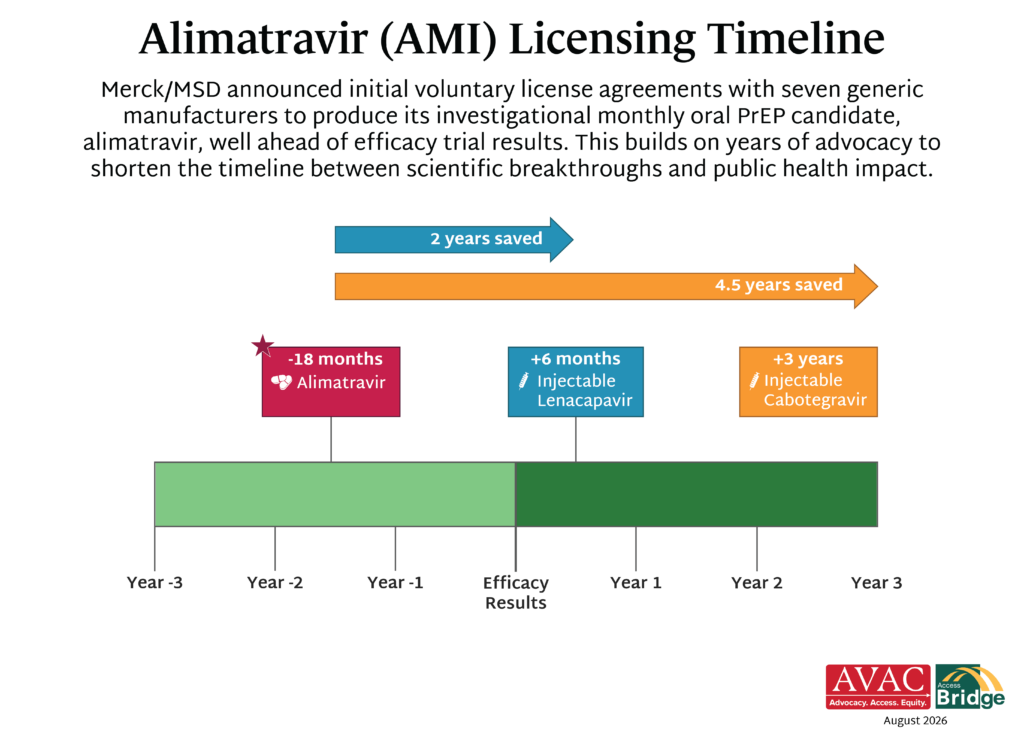
Just before the AIDS 2026 conference in July, AMI developer Merck/MSD granted seven direct licenses to generic manufacturers to produce and market the drug in 129 low- and middle-income countries, including all of Africa and much of Asia, while the trials are still enrolling. These agreements are in place 18 months before a possible efficacy result, and substantially earlier than for lenacapavir or cabotegravir. If AMI is found safe and effective, these agreements could greatly accelerate the introduction process. AVAC and Access Bridge welcomed the announcement, highlighting the challenges that remain to ensure future access is equitable and widespread among the populations that need it most.
While overall good news, several countries that are hosting the EXPrESSIVE 11 trial are left out of the voluntary license territory, reflecting a broader trend of ;excluding Latin American countries and some Asian countries from voluntary licenses. Merck/MSD did subsequently sign a memorandum of understanding with Fiocruz, a Brazilian manufacturer, to supply AMI for Brazil and the region, but the terms, timing and next steps remain unclear. Furthermore, key populations in high-income countries also face access disparities.
Find all the latest updates on AVAC’s alimatravir page.
PxWire Explores AMI Generic Licensing Agreements
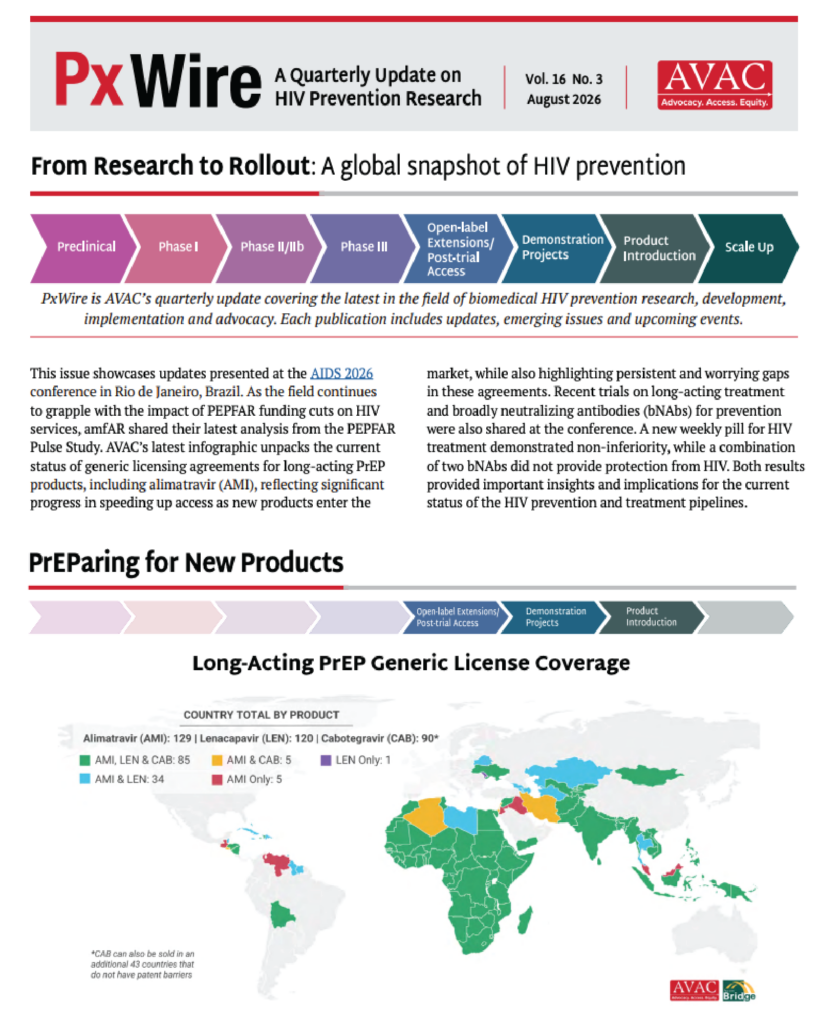
AVAC’s latest edition of PxWire features an analysis of generic licensing for AMI and what it means for the field, and an explainer on generic licensing agreements and current coverage across long-acting prevention products. The explainer examines the promise of generics for advancing affordable, equitable access and raises questions about the persistent and worrying gaps in these agreements.
Read the latest edition of PxWire.
AMI Could Be the Cheapest HIV Prevention Option Yet, But Does Affordable Mean Accessible?

Photo credit: aidsmap
A new academic analysis presented at AIDS 2026 suggests that AMI could be manufactured at large scale by generic companies and sold for as low as $3 per person per year, and a separate New York Times report highlighted estimates that generic AMI could be sold to national health systems for as little as $5 per person per year. But an affordable product is only impactful if people can access it. As the Gates Foundation’s Max Lataillade said in an AVAC satellite session at AIDS 2026, “Innovation without global access or implementation does not create the impact that we want. Science creates the possibility, collaboration creates the impact, but communities create the future.”
Read AVAC’s coverage of the AMI modeling data presented at AIDS2026.
From Research to Access: Community Statement from the Global Community Advisory Group (GCAG) on the Future of Alimatravir for HIV Prevention
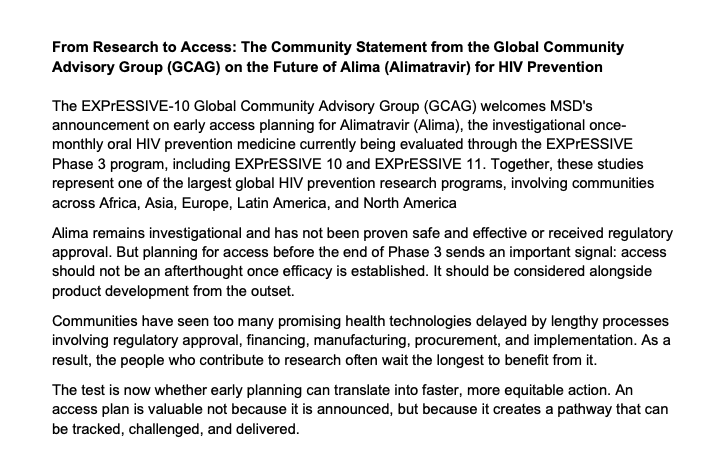
Following Merck/MSD’s generic licensing announcement for AMI, the EXPrESSIVE-10 Global Community Advisory Group (GCAG) released a statement on community perspectives and priorities around prevention choice, meaningful community engagement, equitable access and ensuring that communities have a voice as research progresses toward potential introduction. As the GCAG writes, “The test is now whether early planning can translate into faster, more equitable action. An access plan is valuable not because it is announced, but because it creates a pathway that can be tracked, challenged, and delivered.”
Read the EXPrESSIVE-10 GCAG statement.
Putting Communities at the Center of EXPrESSIVE

The EXPrESSIVE program includes two phase 3 efficacy trials studying AMI for HIV prevention—EXPrESSIVE-10 among cisgender women and EXPrESSIVE-11 among cisgender men who have sex with men, transgender men, transgender women and gender non-binary individuals. The trials are anticipated to have results in the latter half of 2027. With support from the Gates Foundation, AVAC is supporting strong, consistent community engagement across the program. As a part of this work, AVAC partnered with community-based organizations in Argentina, Brazil, Kenya, Peru, the Philippines, South Africa, Thailand and Vietnam to develop educational materials for EXPrESSIVE-11 through a participatory human-centered design (HCD) process. Luciana Kamel, the Community Education Team Lead for HIV studies at Fiocruz, AVAC’s partner in Brazil for this work, described how this approach changed what was possible: “The trust, openness and respect for our work with the community made it possible to move beyond simply producing recruitment materials and instead build something that reflected the people and contexts the study was intended to engage.”
Learn more about community-led design in EXPrESSIVE-11.
Check out all the communications materials here.
Additional AMI Resources
- Video: AVAC’s Recap of AMI from AIDS 2026
- Blog: Grace Kumwenda’s AIDS 2026 Reflections, including on AMI
- Press Release: AVAC and Access Bridge Applaud Monthly PrEP Pill Access Announcement; Call for Speed, Scale and Equity in Future Monthly Oral Alimatravir Introduction
- Podcast: PxPulse – Next Up: A monthly pill for PrEP?
- Article: Merck’s alimatravir licensing deal receives mixed response
- Past analyses of real-time lessons learned about PrEP introductions: Getting PrEP Rollout Right This Time and Getting Rollout Right: Lessons from Oral PrEP.